
















































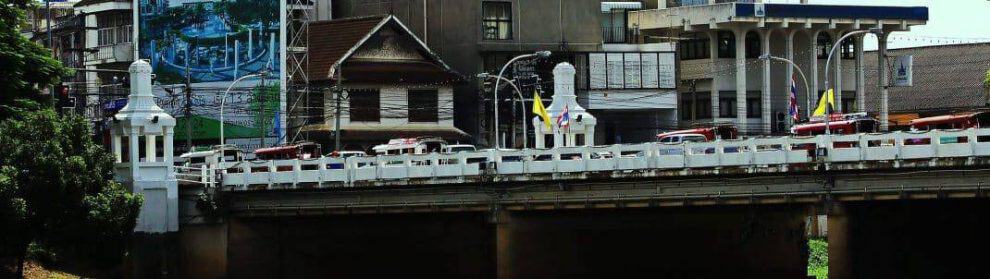
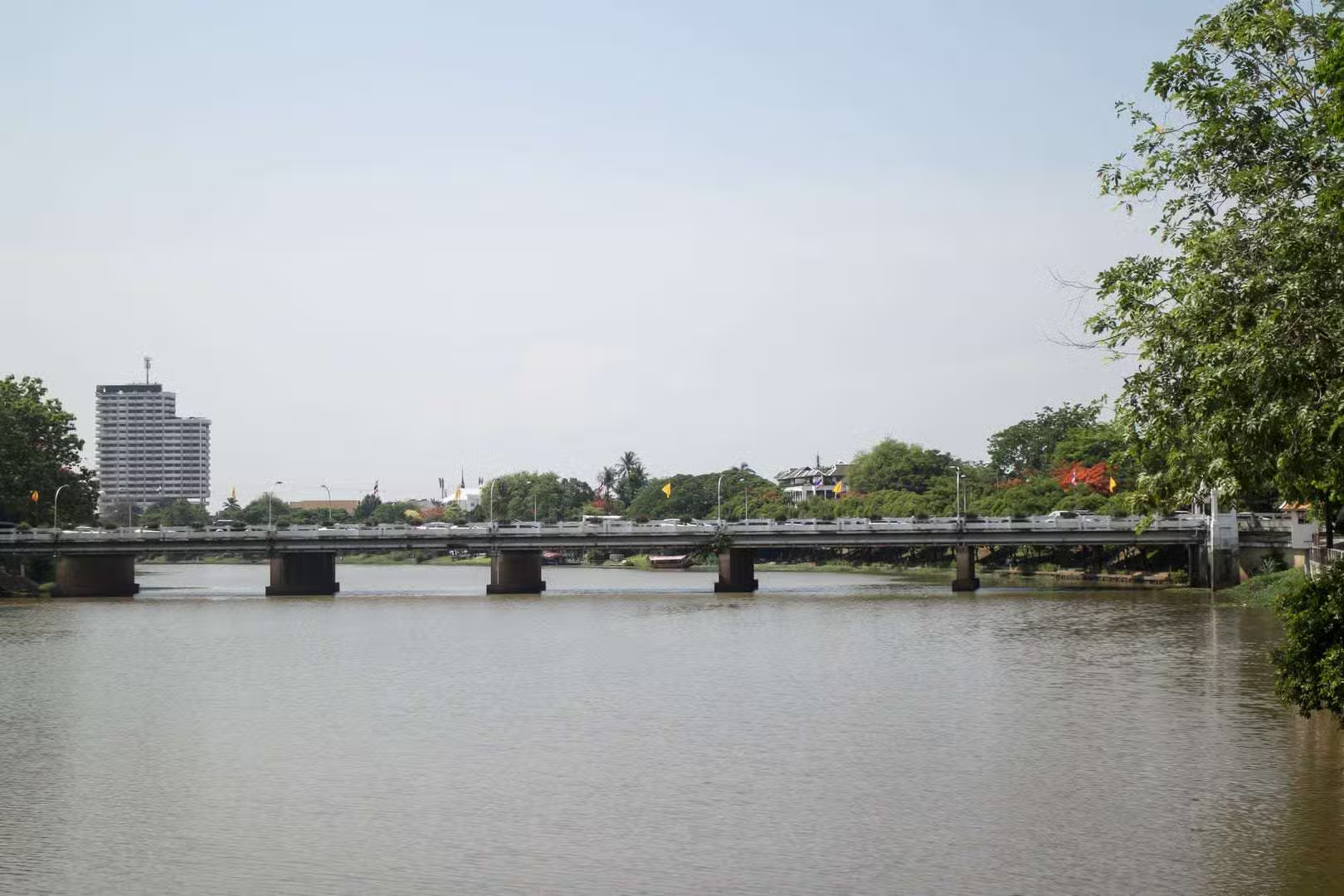
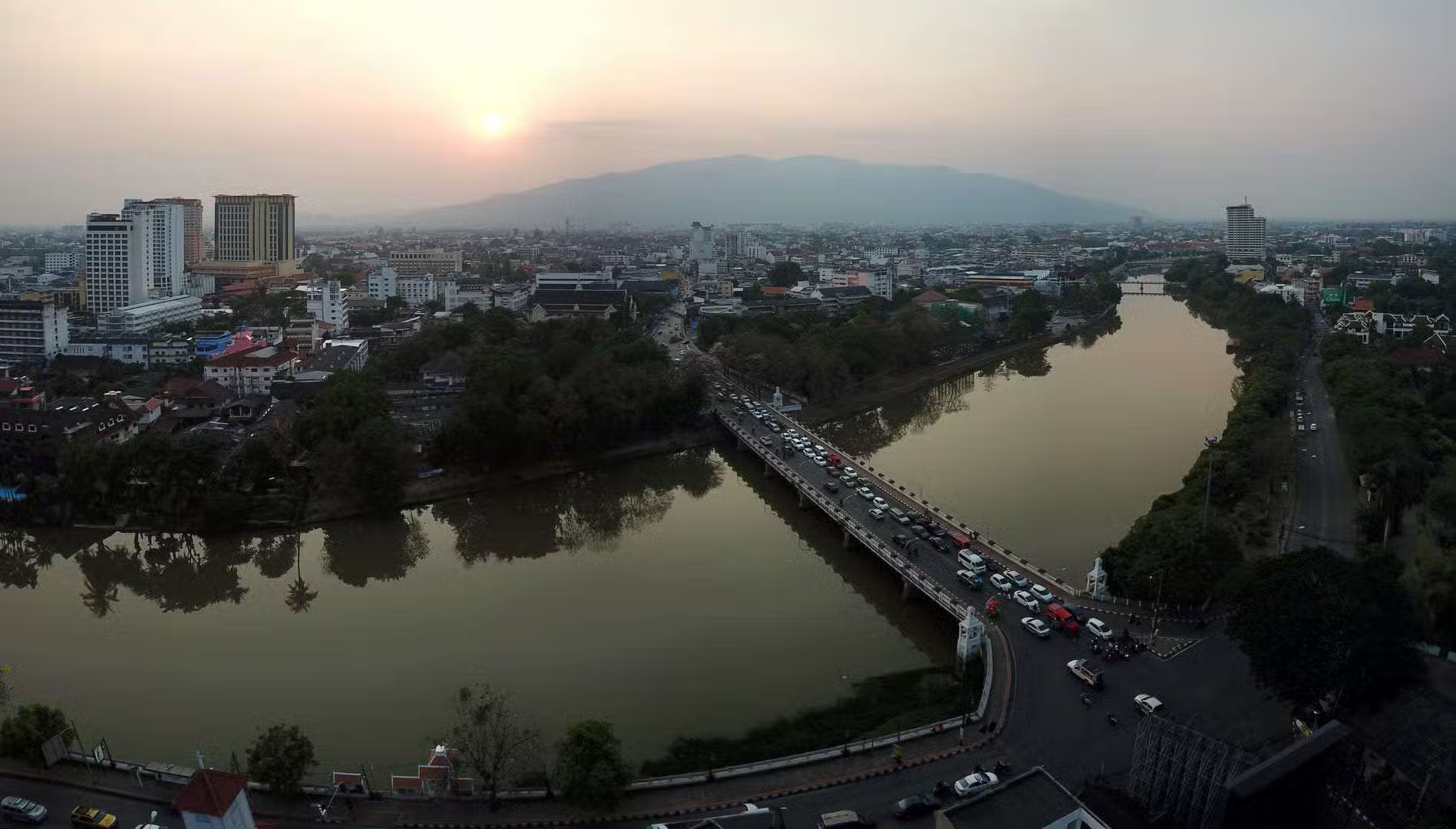
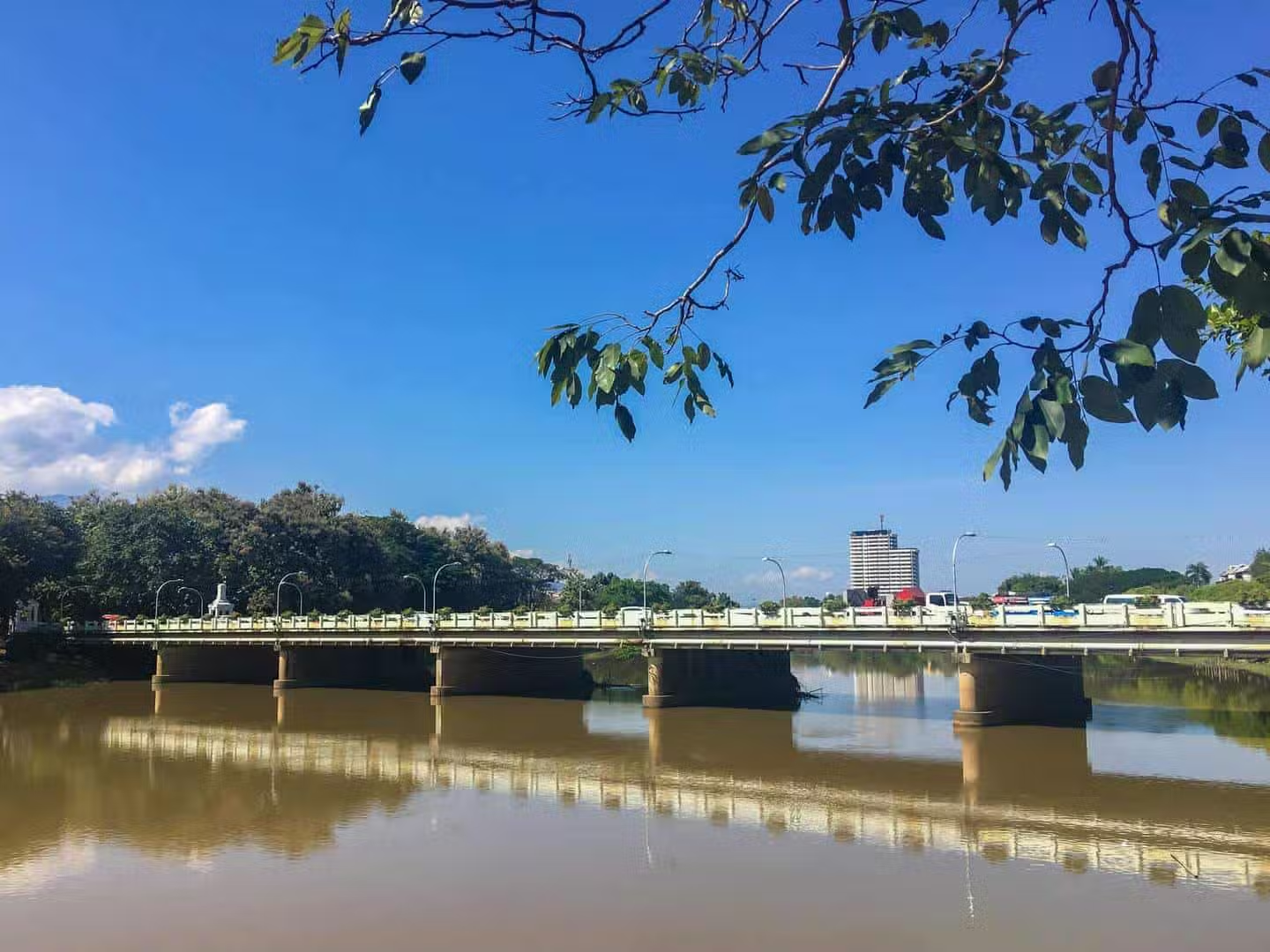
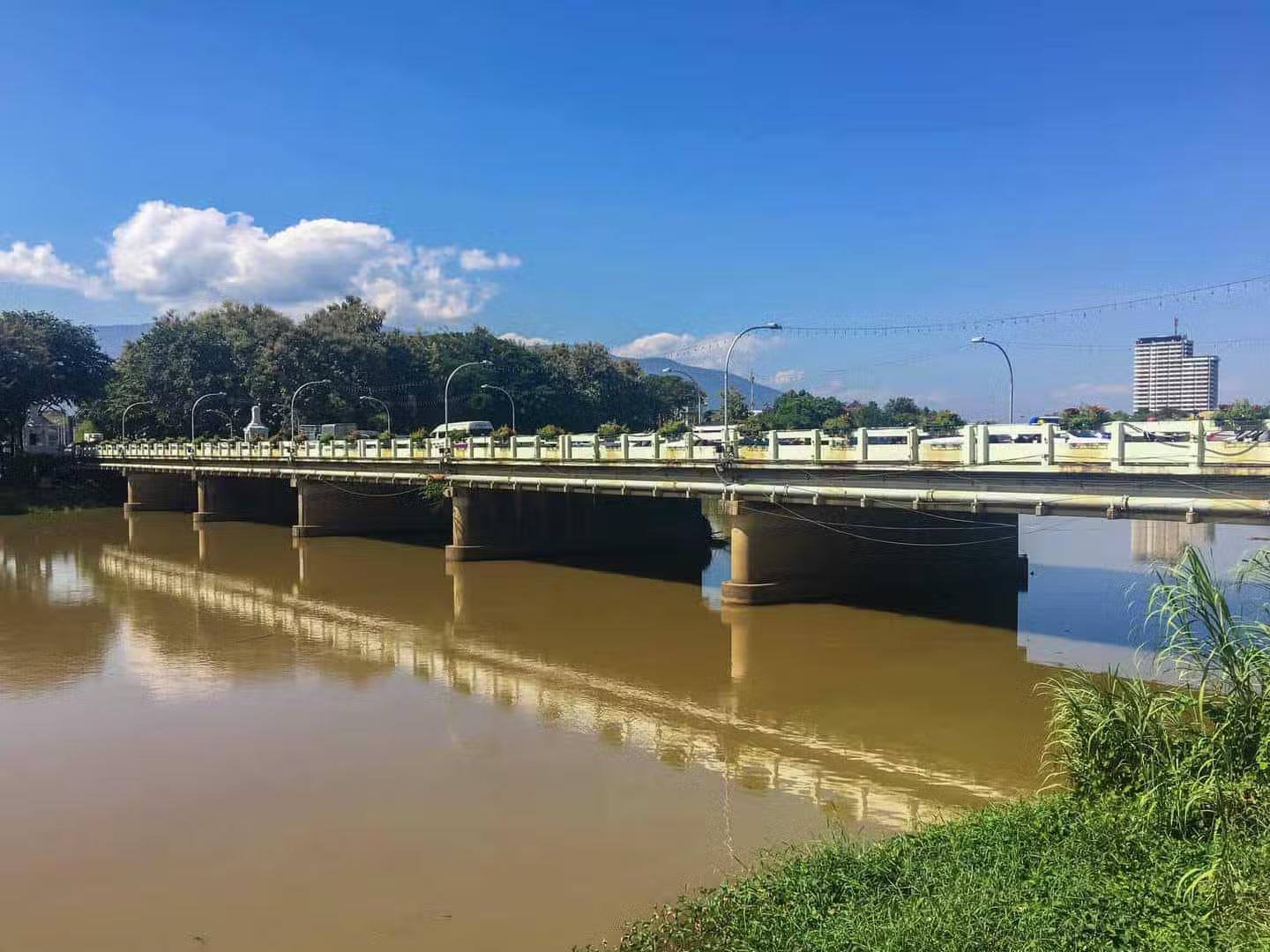
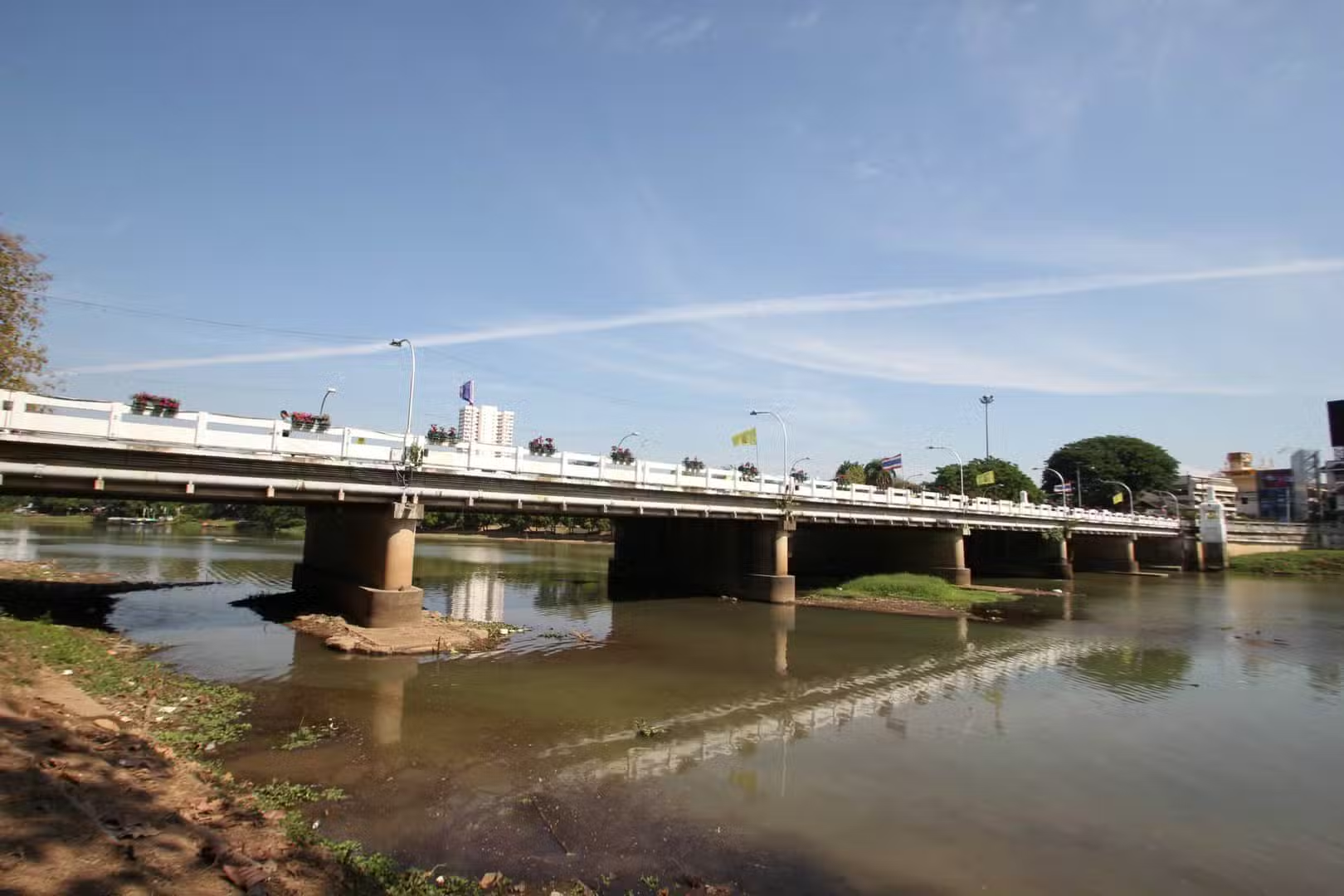
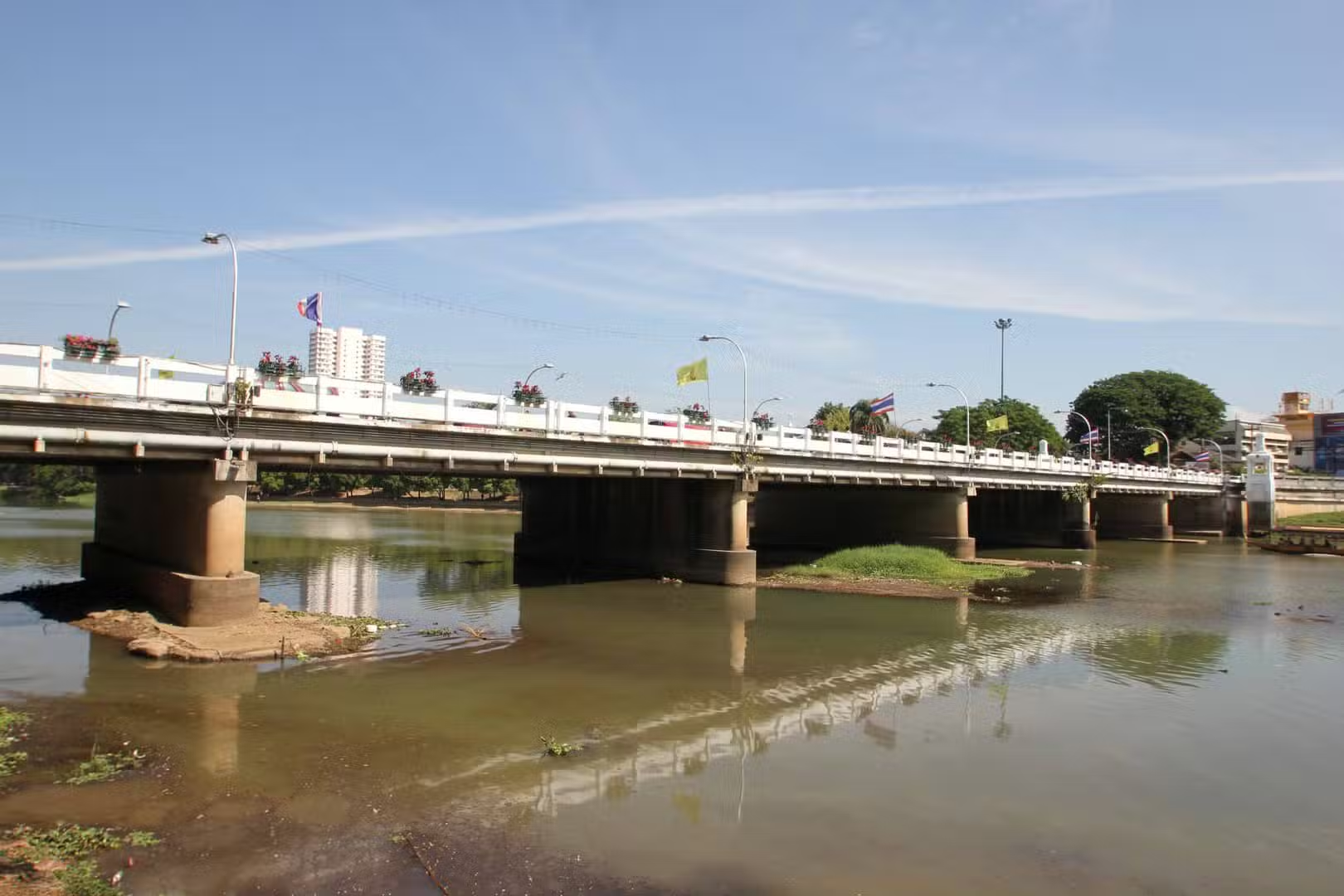
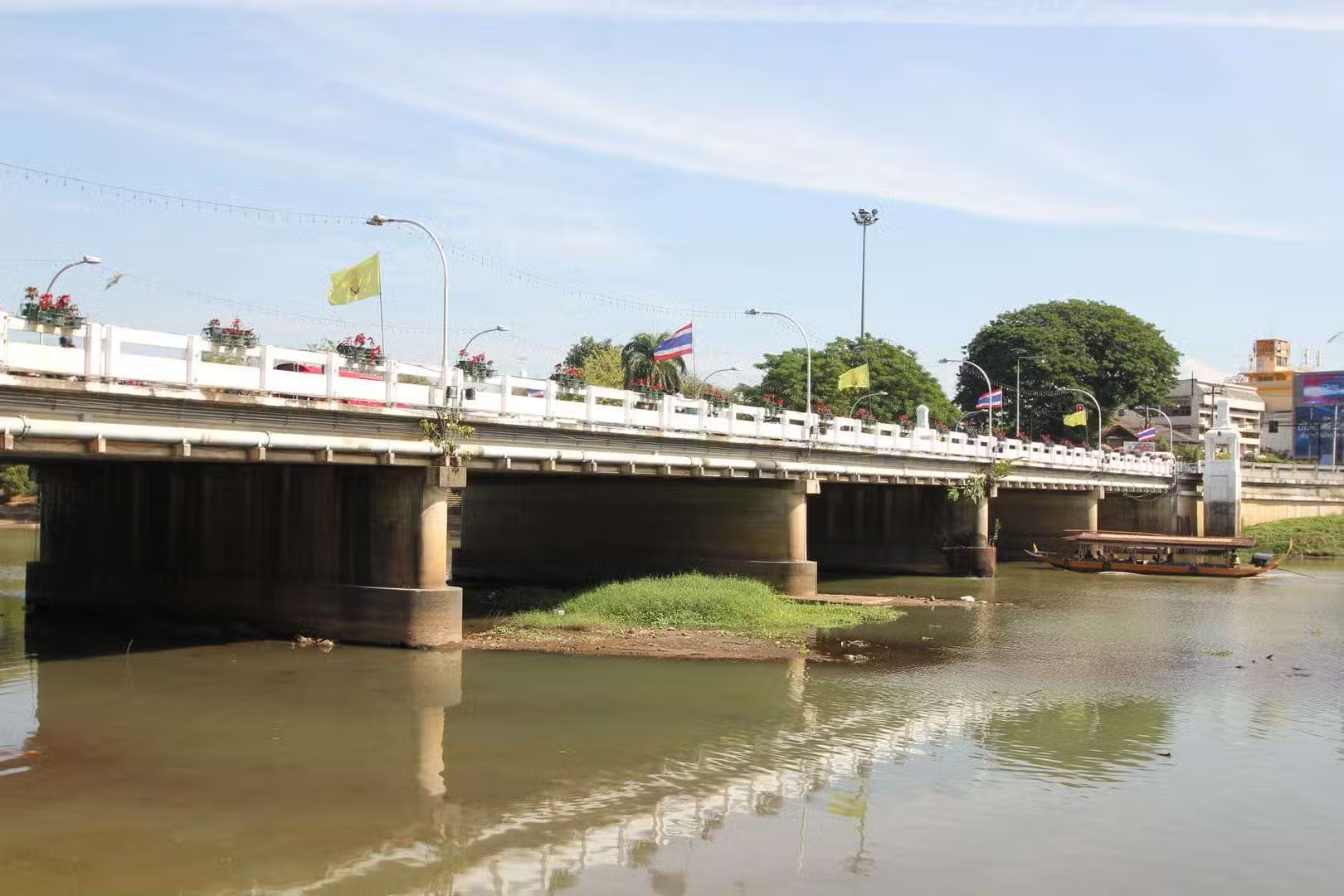
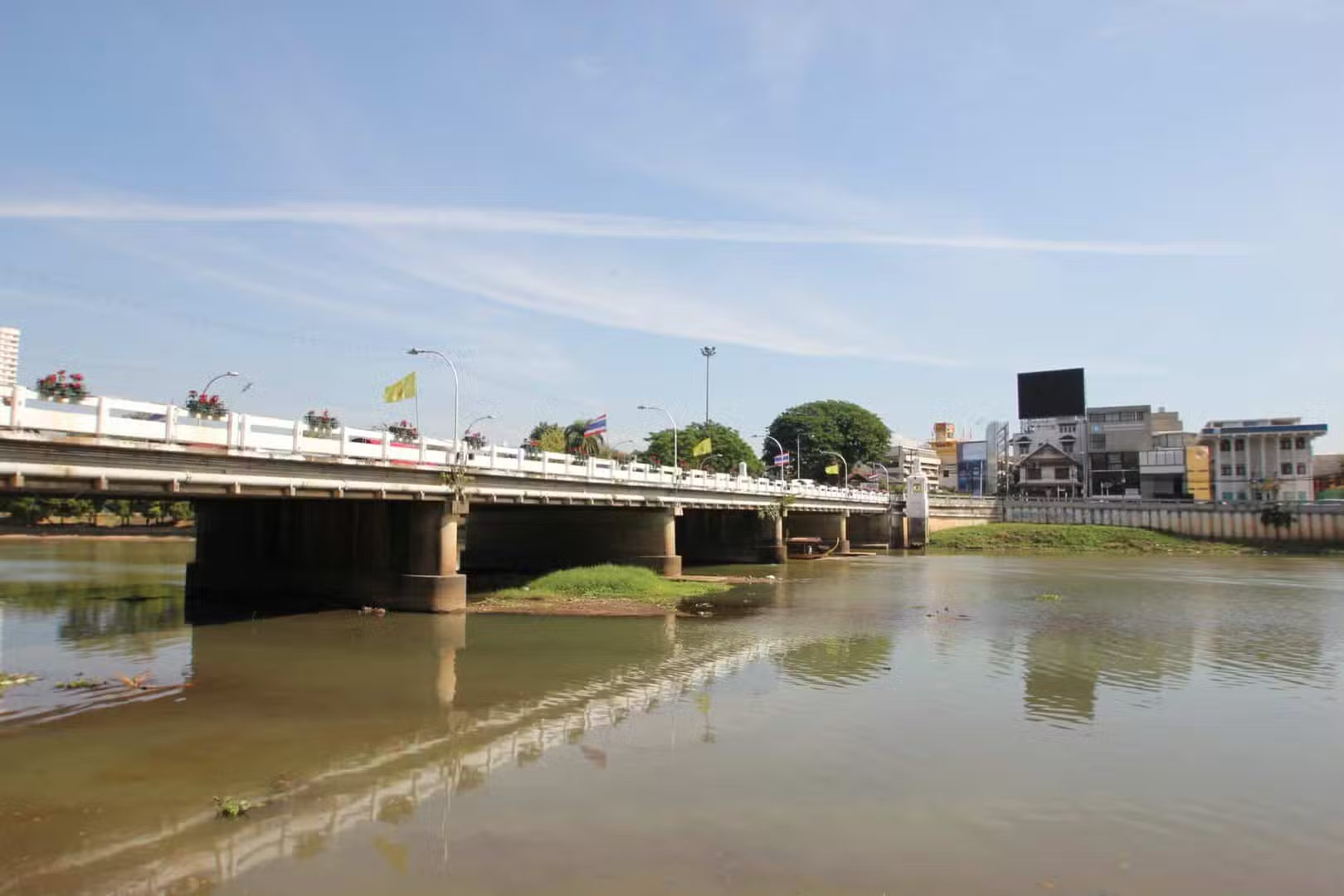
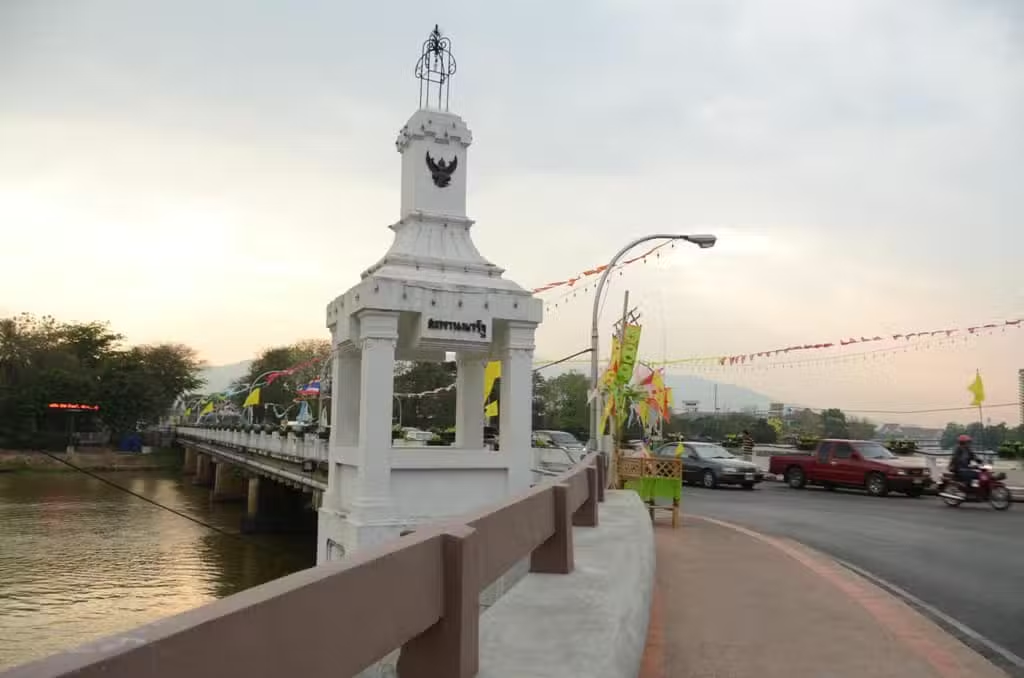
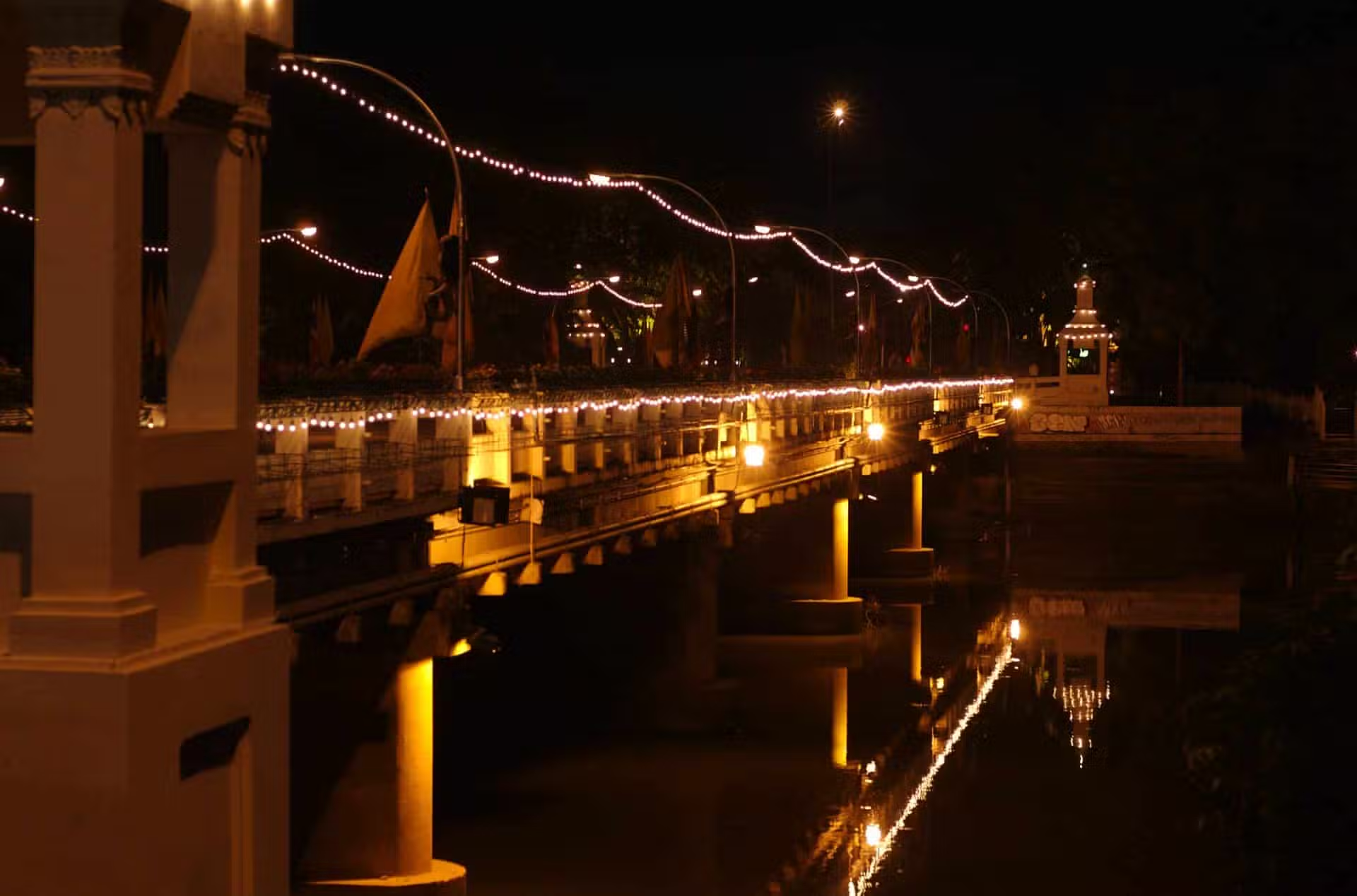
Nawarat Bridge crosses the Ping River east of Chiang Mai’s Old City, linking Tha Phae Road with Charoen Muang Road. It is a working road bridge with pedestrian access, offering a useful crossing and a short view of the city’s riverfront.
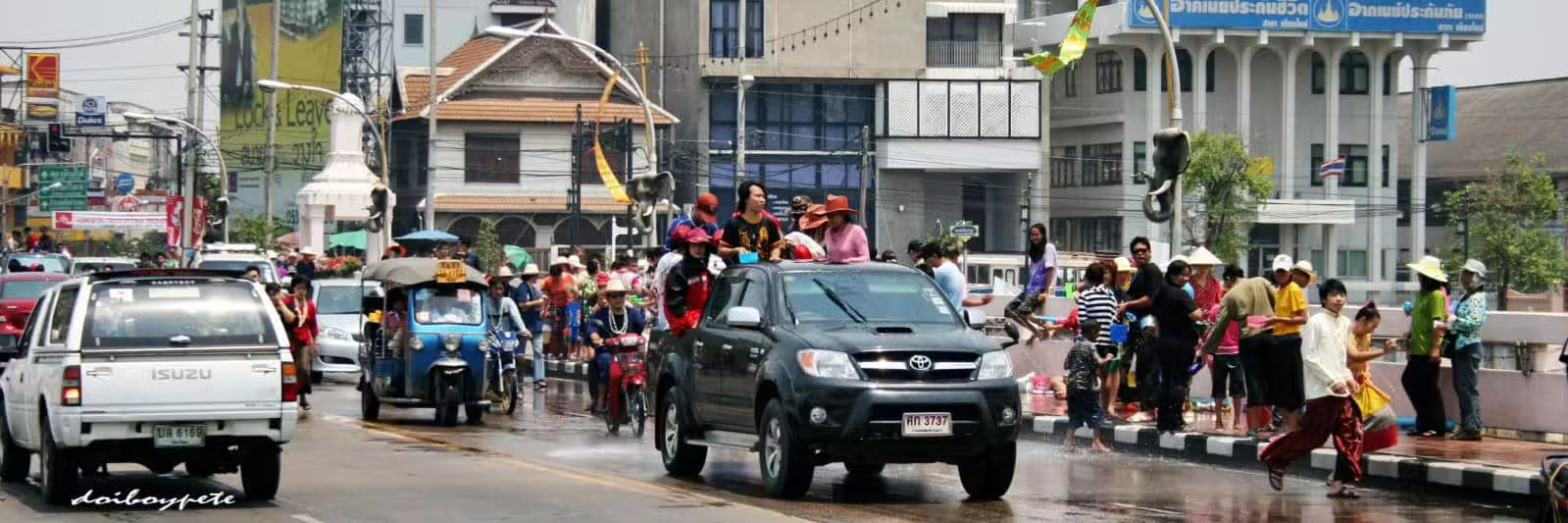
The bridge and nearby riverside become especially lively during Loy Krathong and Yi Peng celebrations. On an ordinary day, it is better treated as a stop within a longer walk than as a destination requiring a separate sightseeing trip.
Views of the Ping River
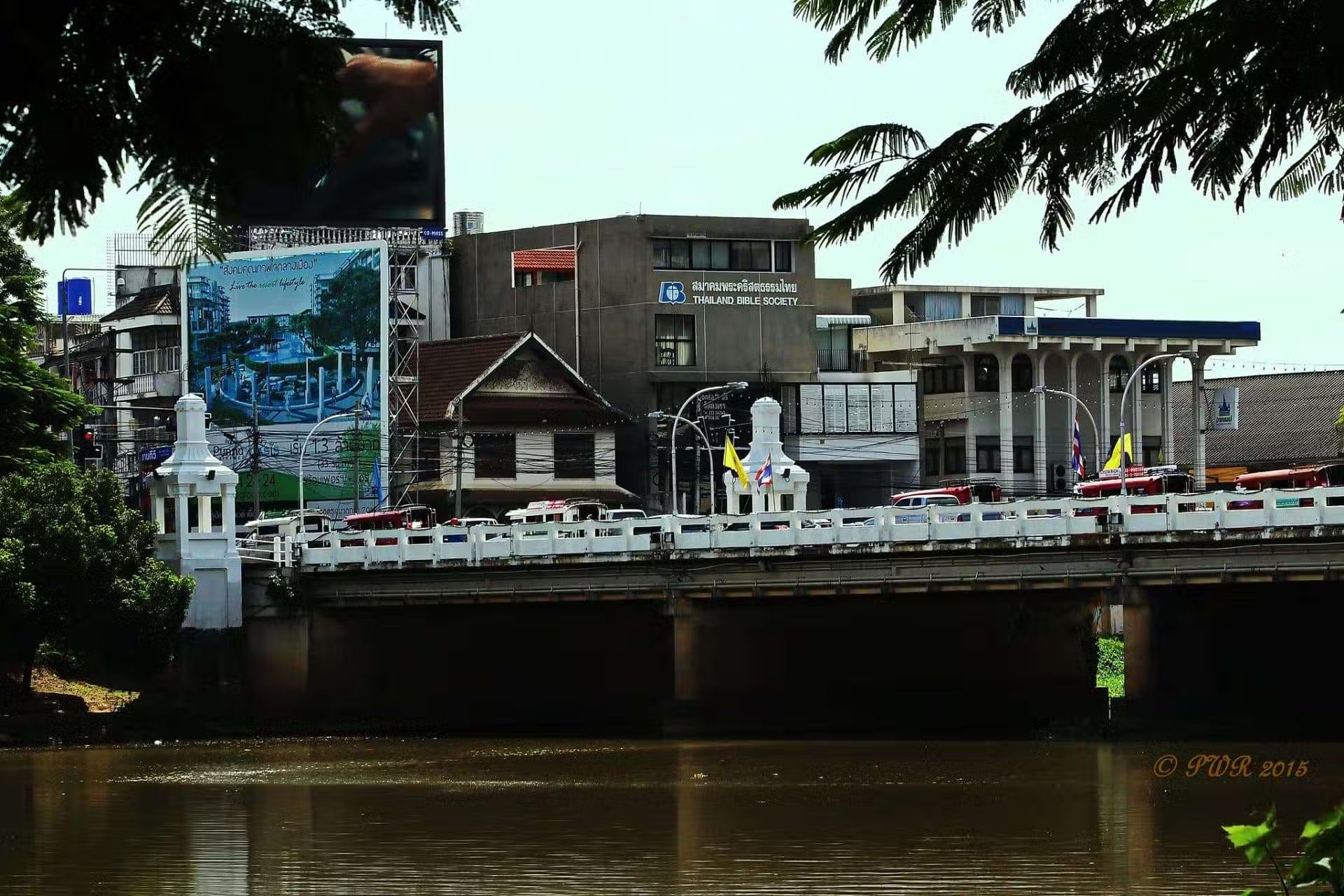
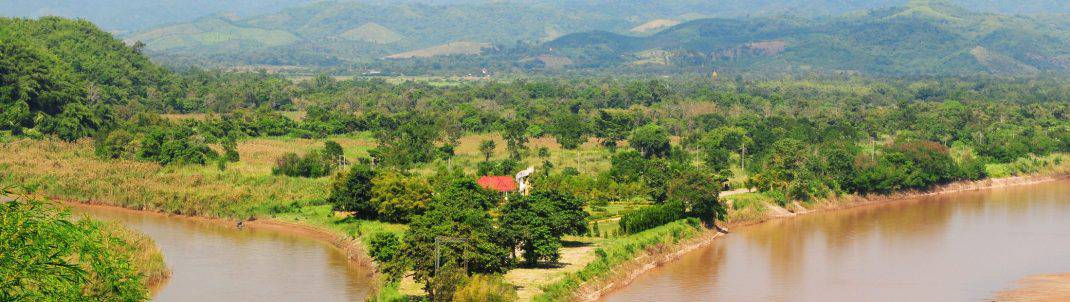
From the pedestrian walkway, you can look along the river towards the waterfront buildings and nearby crossings. The view gives a sense of Chiang Mai beyond its city walls, where roads, markets, businesses and residential neighbourhoods meet the Ping.
Allow about 10 to 20 minutes to cross and pause for photographs. Traffic continues alongside you, so this is not a secluded lookout or an escape from city noise. For a longer break, move to an accessible riverside cafe or public space rather than remaining in the flow of pedestrians.
Loy Krathong and Yi Peng
The riverfront near Nawarat Bridge is a well-known gathering area during the festival period. Loy Krathong involves floating small decorated offerings on water, while Yi Peng is associated with northern Thai lantern traditions. They overlap in Chiang Mai’s celebrations but are distinct traditions.
Festival nights bring crowds and changing traffic arrangements. Check the current city programme before choosing a viewing spot, follow barriers and instructions, and leave extra time to get back to your accommodation. Do not assume the bridge will provide an unobstructed view or space to release an offering.
Sky lanterns are subject to local restrictions, particularly around aviation safety. Being at Nawarat Bridge does not give permission to release one, and a large lantern display cannot be guaranteed here.
Walking to the Bridge
From Tha Phae Gate, follow Tha Phae Road east towards the Ping River. It is roughly a kilometre to the bridge, so allow around 15 to 20 minutes on foot, plus time for road crossings and stops.
Nawarat Bridge can be included in an outing through the Night Bazaar, Warorot Market and the riverside, although these are separate stops rather than attractions on the bridge itself. A taxi or songthaew can also bring you to the riverfront; ask for a safe drop-off near either end rather than stopping on the crossing.
Use the pedestrian walkway, keep clear of traffic and supervise children near the road and river. Access is normally available around the clock without an admission fee, but temporary closures, flooding or festival controls can change the route.
Nawarat Bridge FAQs
Do I need a ticket?
There is no admission charge for using the public bridge. Festival events elsewhere may have separate tickets, so distinguish them from this river crossing.
Can I walk from Tha Phae Gate?
Follow Tha Phae Road east for roughly a kilometre. Allow about 15 to 20 minutes and use appropriate crossings along the route.
Is it a quiet place to relax?
Traffic runs across the bridge, so expect road noise. It suits a brief river view or crossing rather than a long, peaceful stay.
Can I release a sky lantern here?
Do not assume this is permitted. Follow the current local rules and official festival arrangements, which can restrict lantern releases for safety reasons.
How much time should I spend at the bridge?
About 10 to 20 minutes is enough for the crossing and photographs on an ordinary day. Festival crowds can make the same route take much longer.




Do You Have a Question to Ask?