



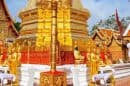

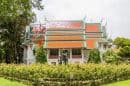

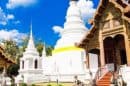
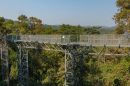































Wat Phra That Doi Suthep is Chiang Mai’s most important mountain temple, standing high above the city on the forested slopes of Doi Suthep. Its gilded chedi is one of northern Thailand’s most recognisable religious landmarks, but the site is much more than a scenic tourist attraction. It remains an active Buddhist monastery and pilgrimage destination, with worship continuing around the central shrine throughout the day.
The temple’s origins date to the late 14th century and are closely connected to a sacred Buddha relic. According to the best-known legend, King Kuena placed part of the relic on a white elephant and allowed the animal to determine where it should be enshrined. The elephant climbed Doi Suthep, stopped near the present temple site, trumpeted three times and died.
A shrine was subsequently established on the mountain. Over the following centuries, the original structure was enlarged, restored and embellished to create the extensive temple complex visitors see today.
The Naga Staircase and Funicular
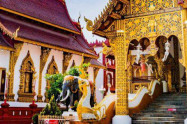
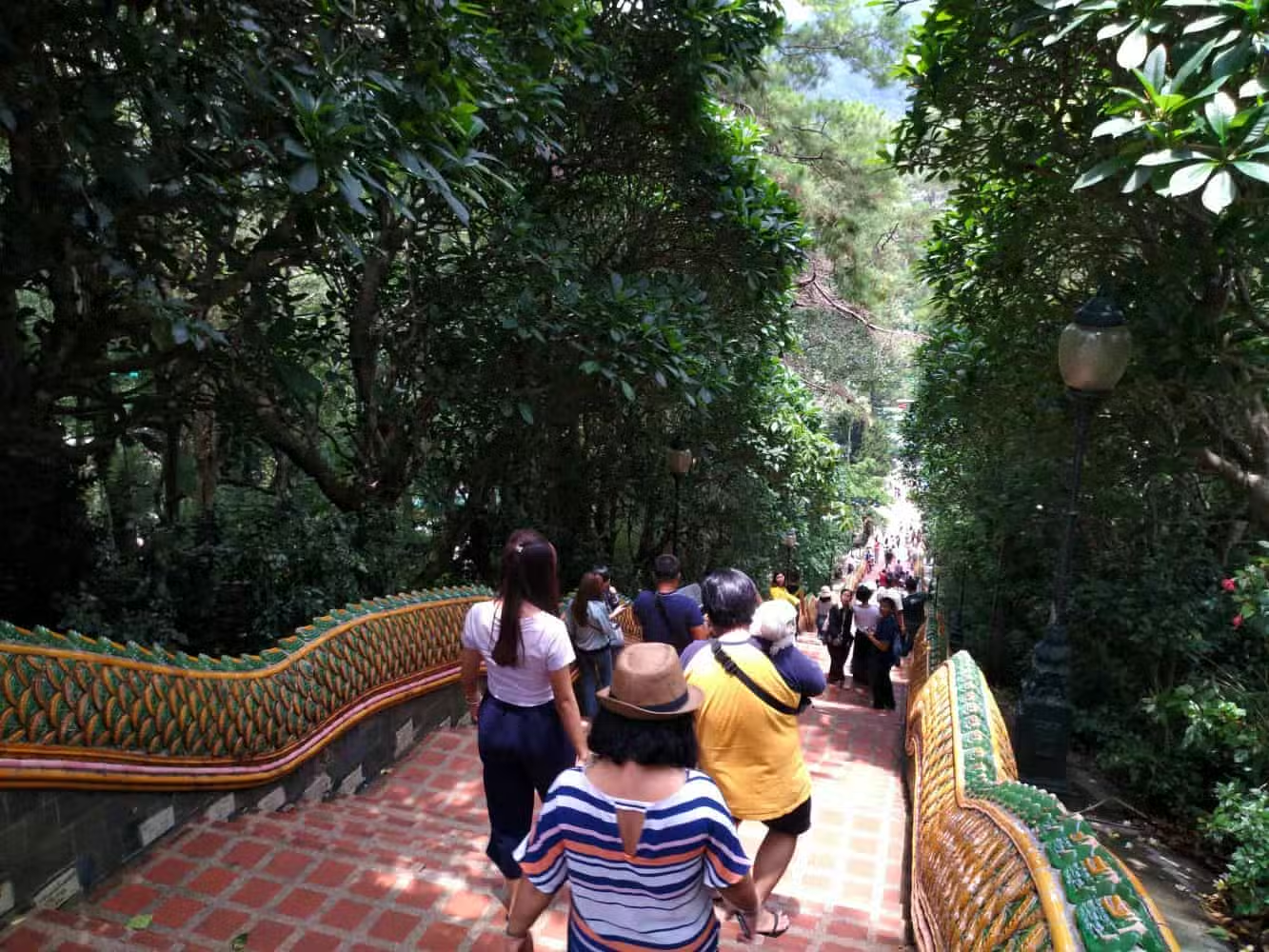
The traditional approach to Wat Phra That Doi Suthep is the 306-step staircase rising from the lower entrance. The steps run between colourful mosaic-covered naga balustrades whose serpent-like bodies extend for almost the entire climb.
The staircase is one of the temple’s defining features and an important part of the experience. Most reasonably fit visitors can complete the climb at their own pace, although Chiang Mai’s heat and humidity can make it more tiring in the middle of the day. The tiled steps may also become slippery after rain.
A funicular provides an alternative for visitors who do not want to climb the staircase. It travels between the lower entrance and the upper temple level for an additional fare.
The funicular avoids the main climb but does not make the entire historic complex step-free. Visitors may still encounter thresholds, smaller steps, polished surfaces and changes in level around the temple buildings.
The Golden Chedi and Temple Terrace
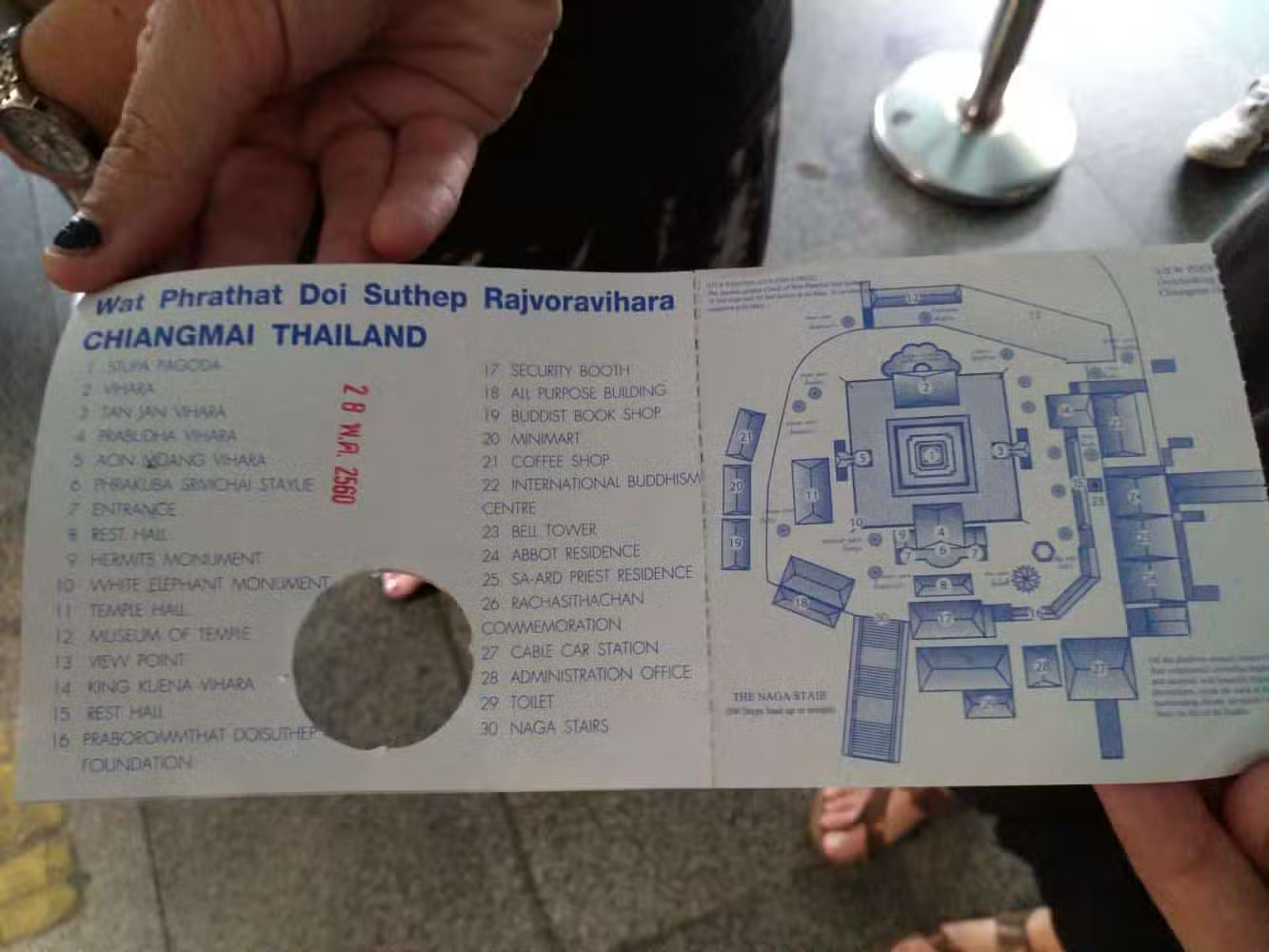
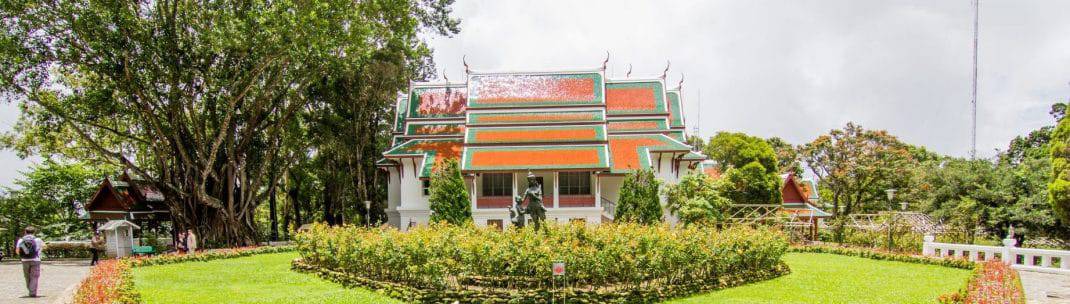
At the top of the mountain, visitors enter a collection of shrines, prayer halls, terraces, monuments and monastic buildings rather than a single temple structure. Visitors must remove their shoes before entering the sacred inner terrace surrounding the chedi.
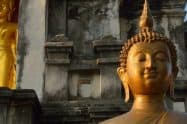
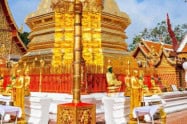
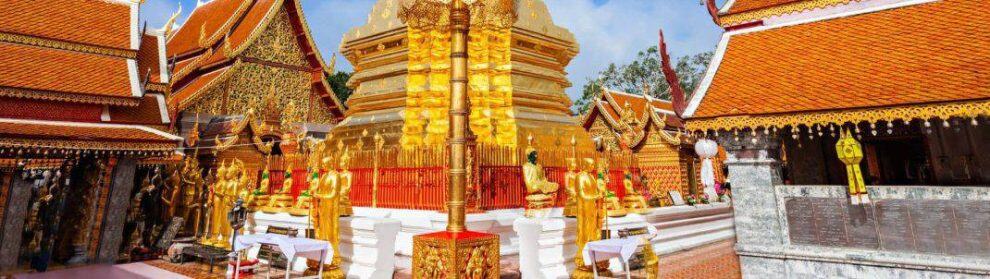
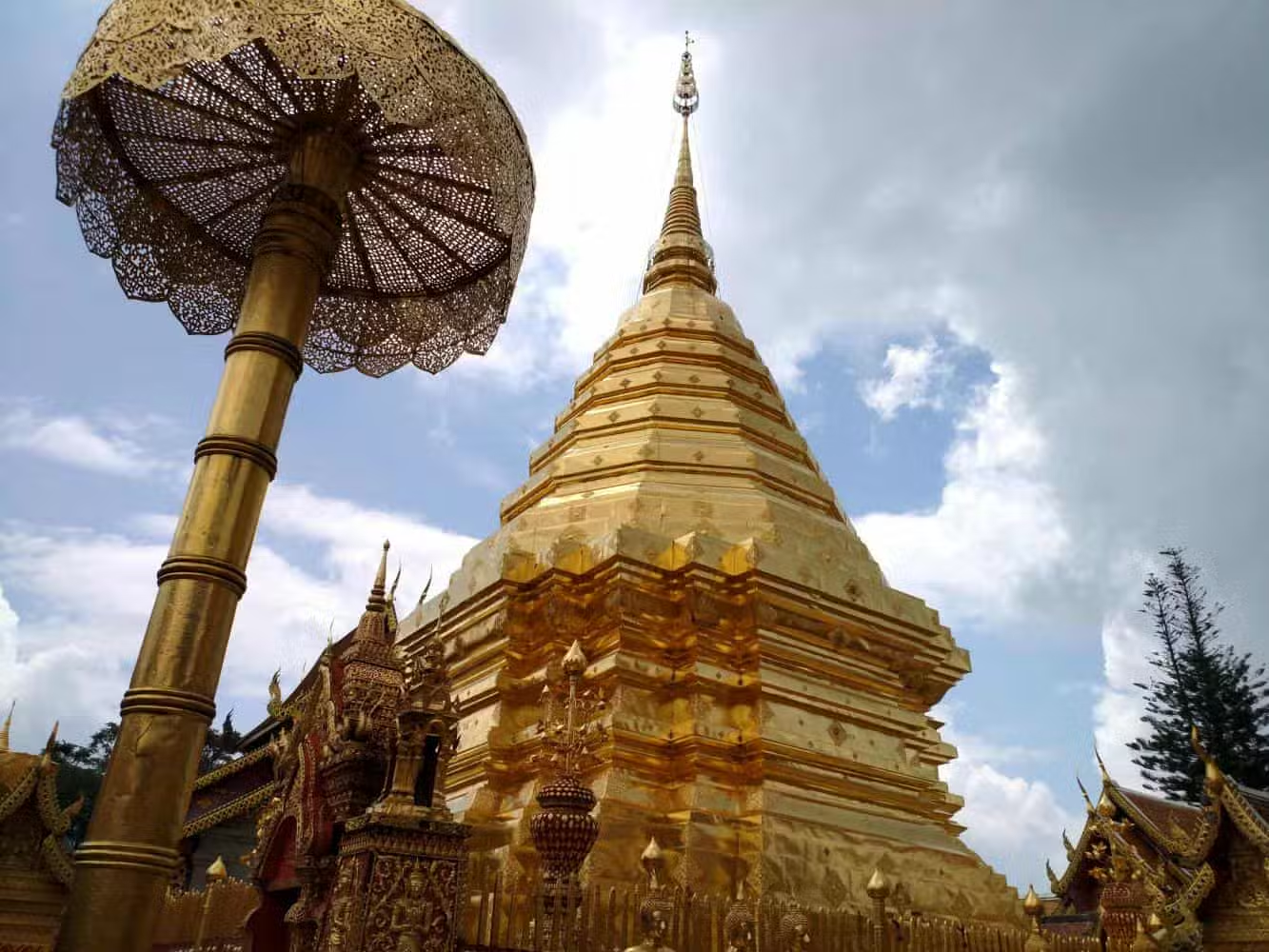
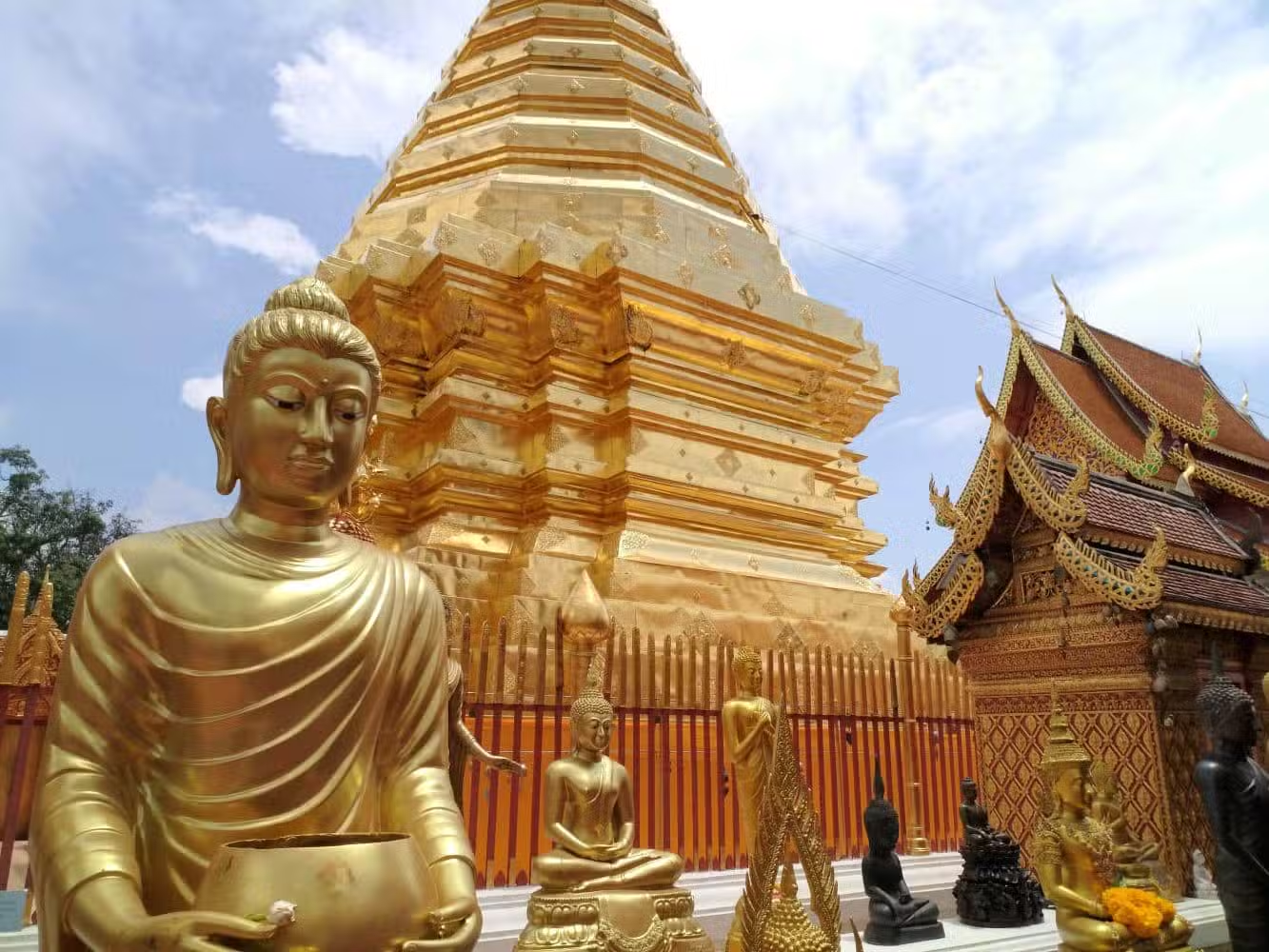
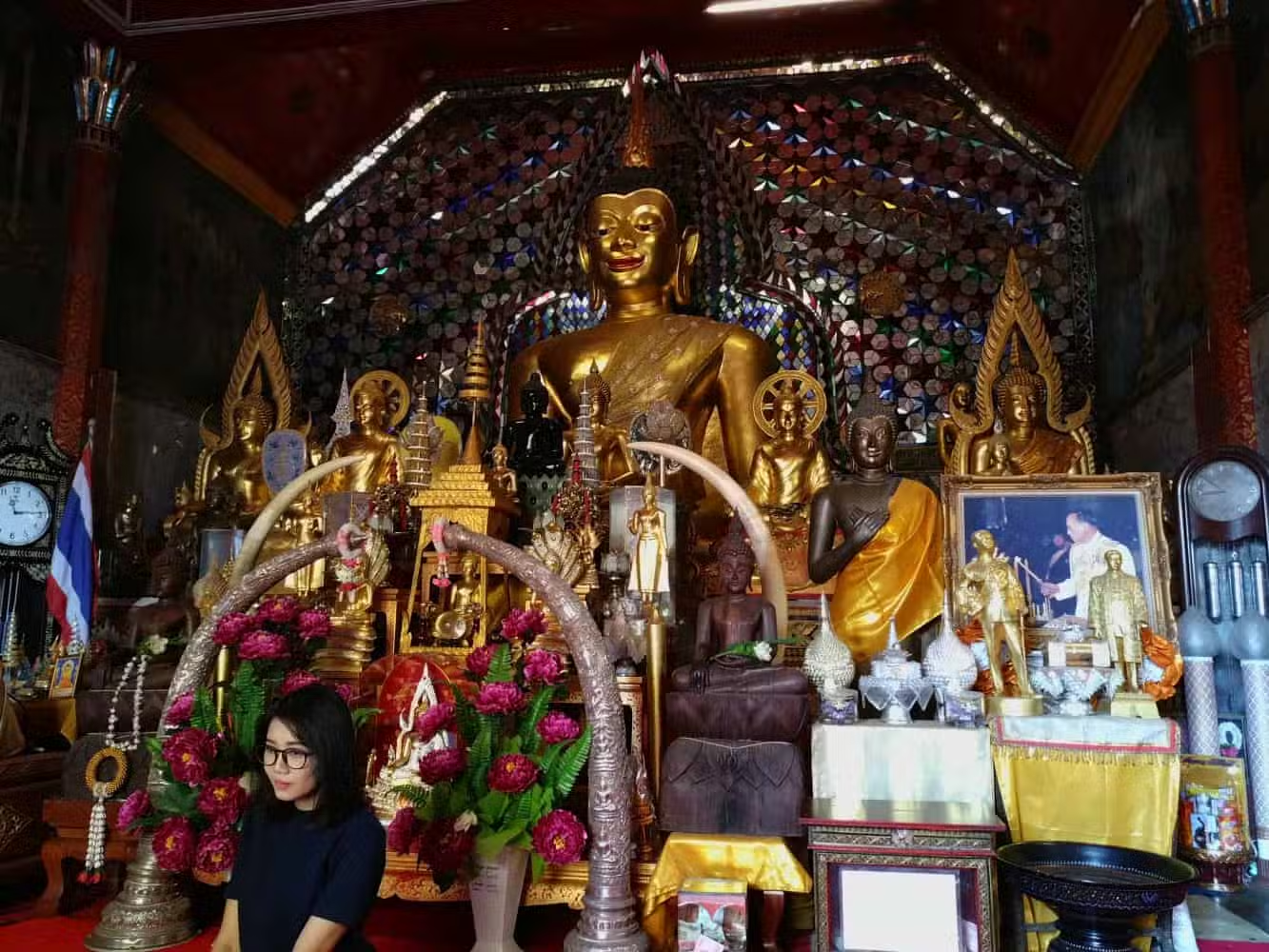
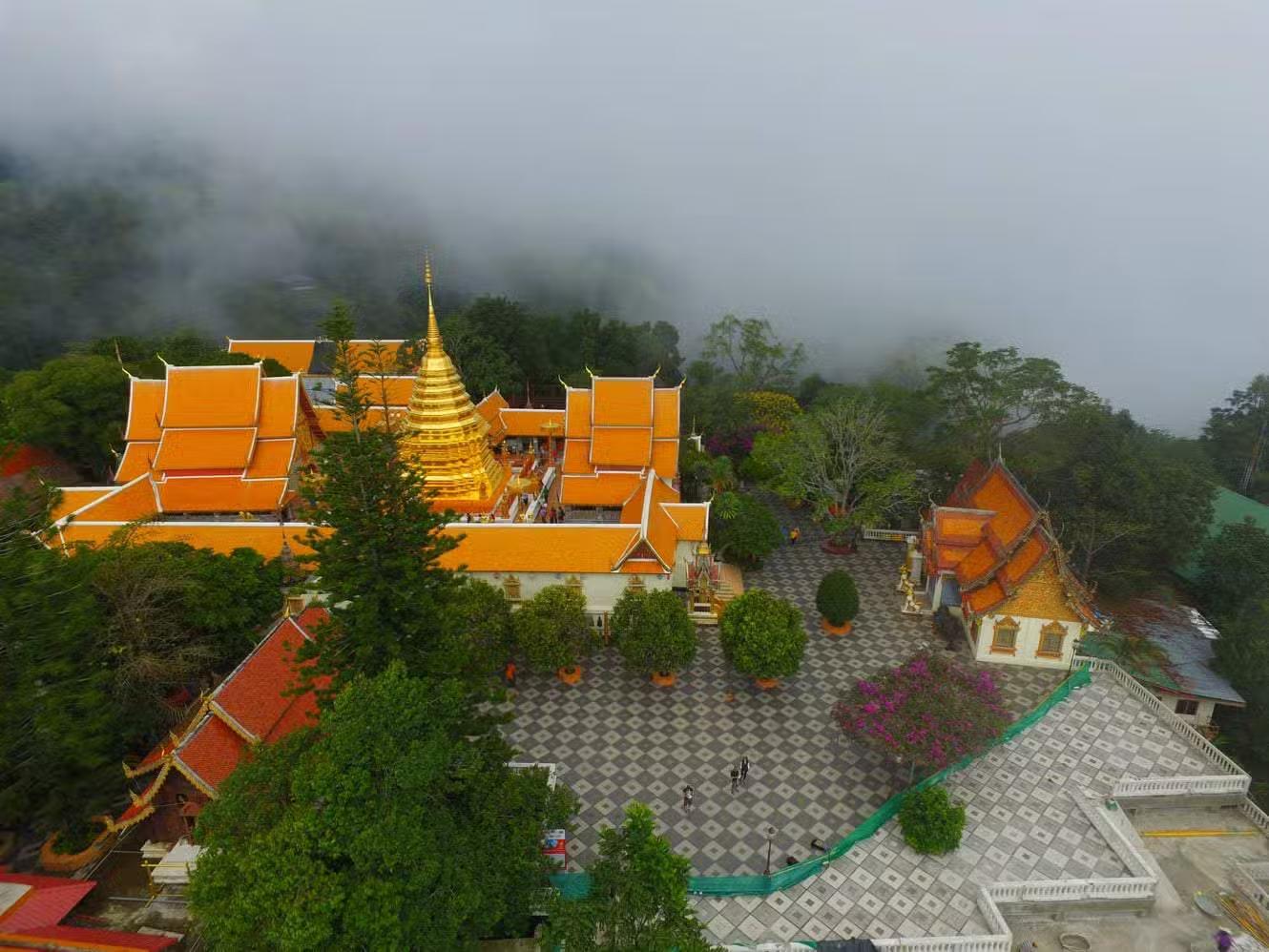
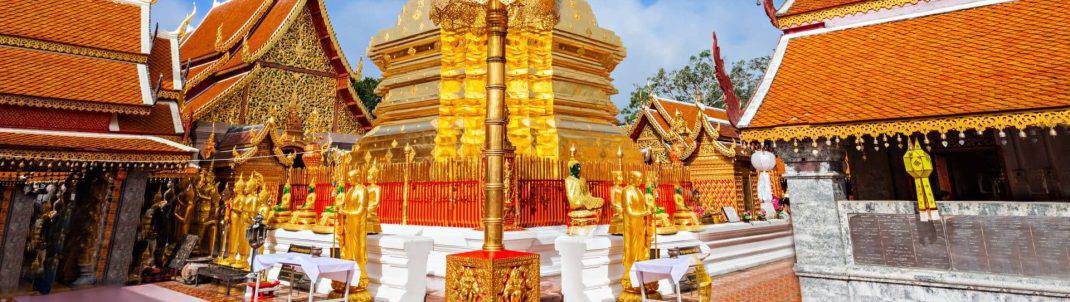
The gilded chedi is the spiritual centre of Wat Phra That Doi Suthep. It is believed to enshrine the Buddha relic associated with the temple’s foundation and is surrounded by a cloister containing Buddha images, bells, shrines and richly decorated religious structures.
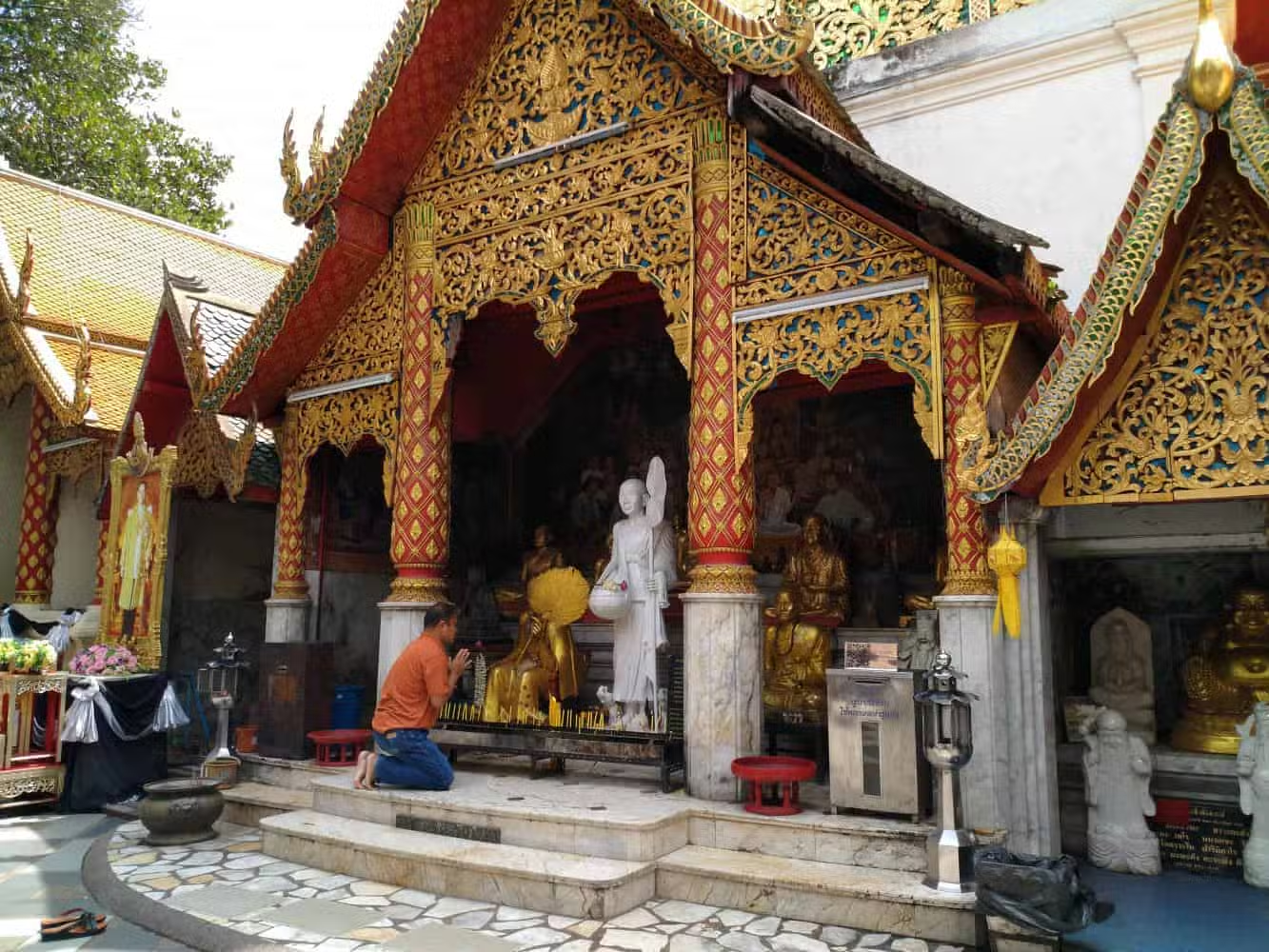
Worshippers frequently walk clockwise around the chedi while carrying lotus flowers, candles and incense. Visitors may quietly observe these practices and can participate respectfully where appropriate.
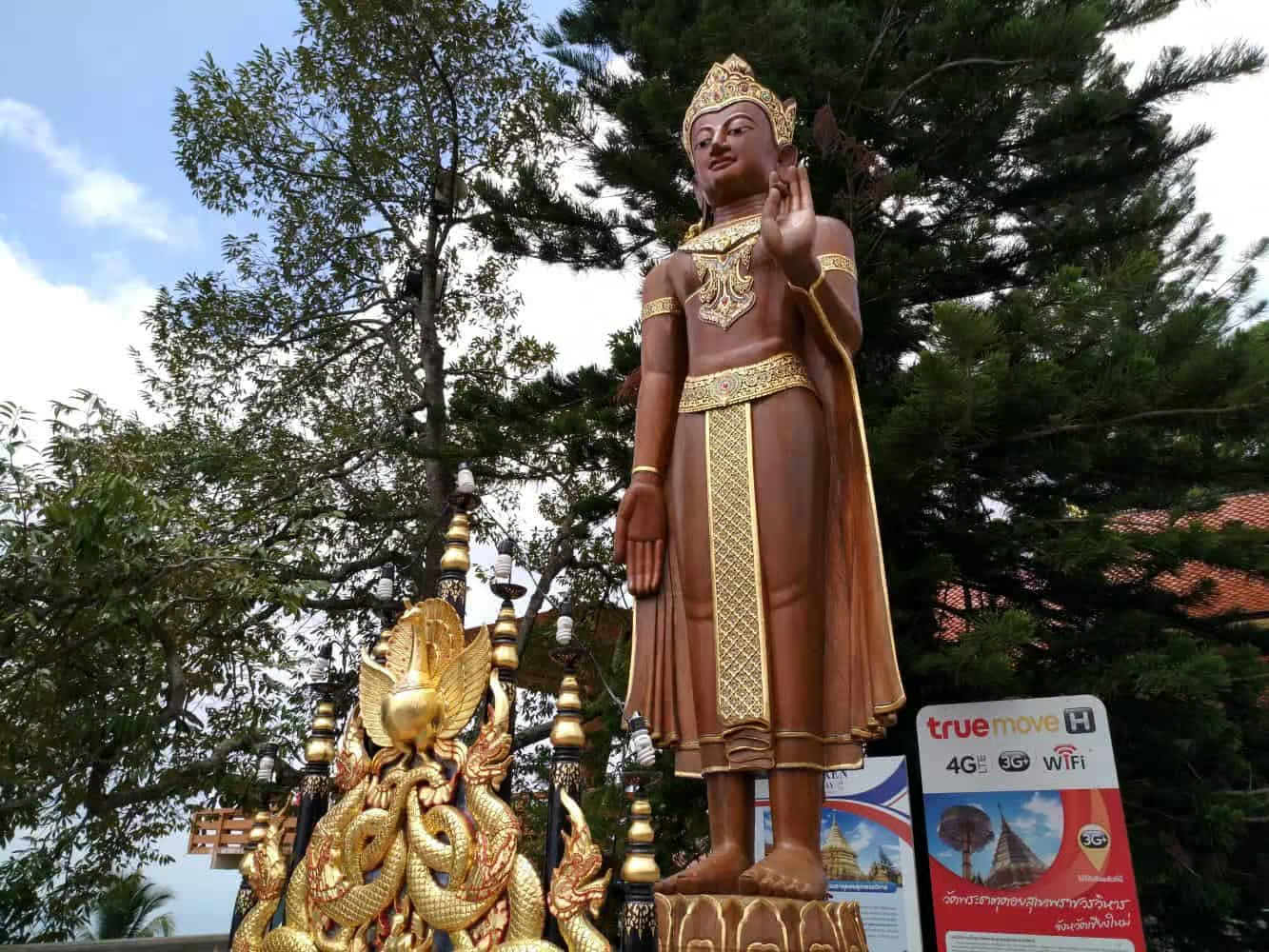
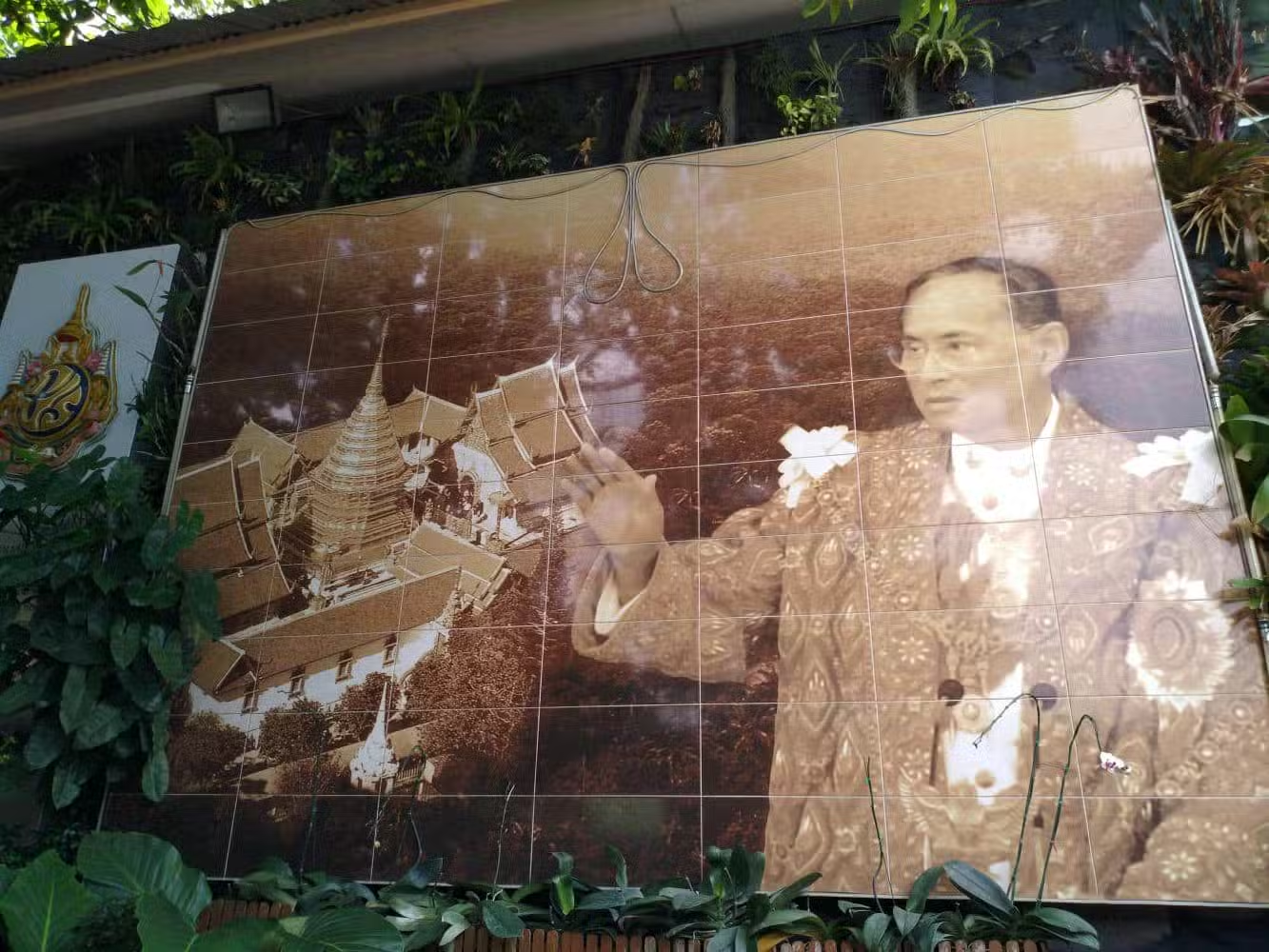
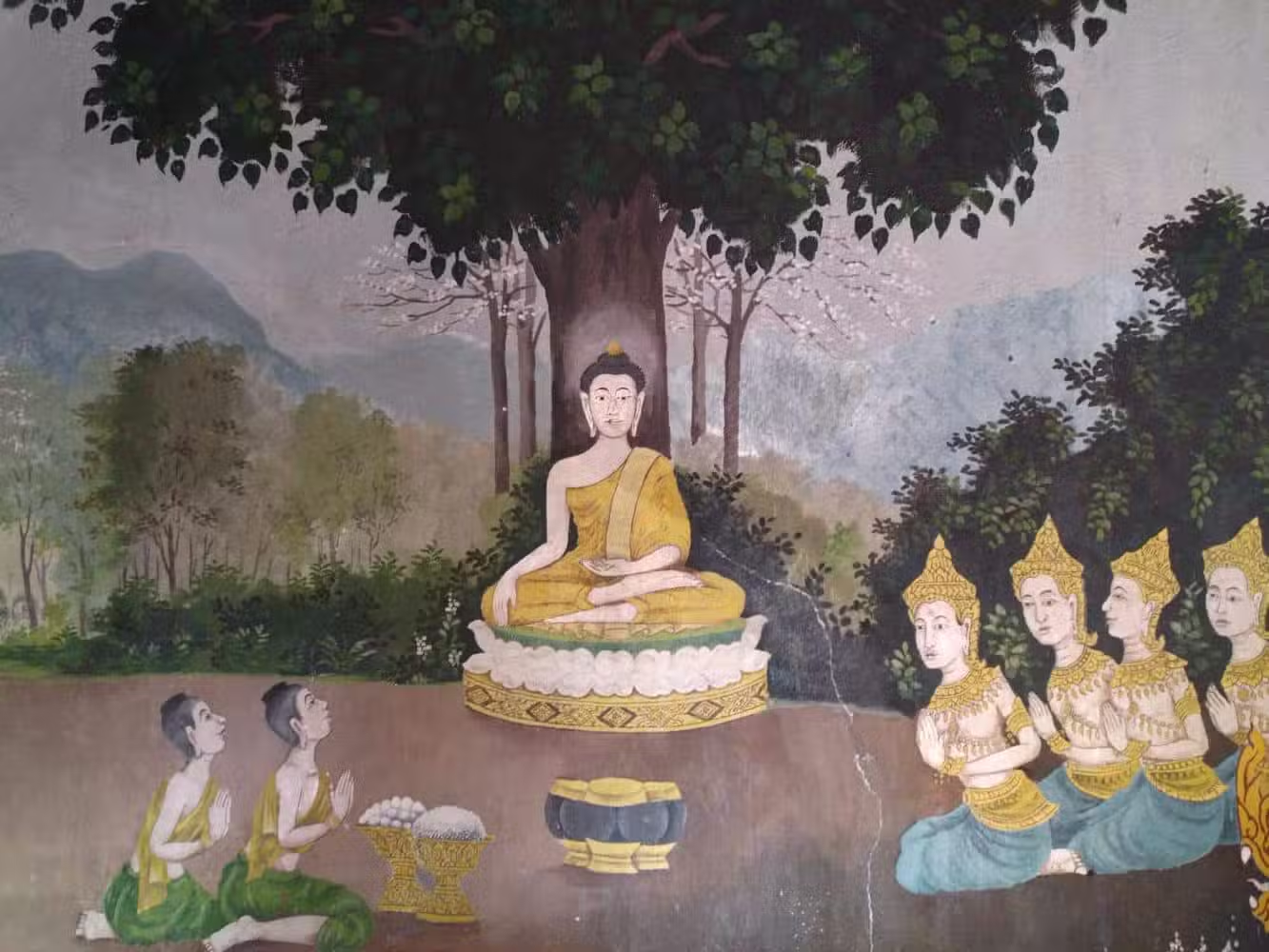
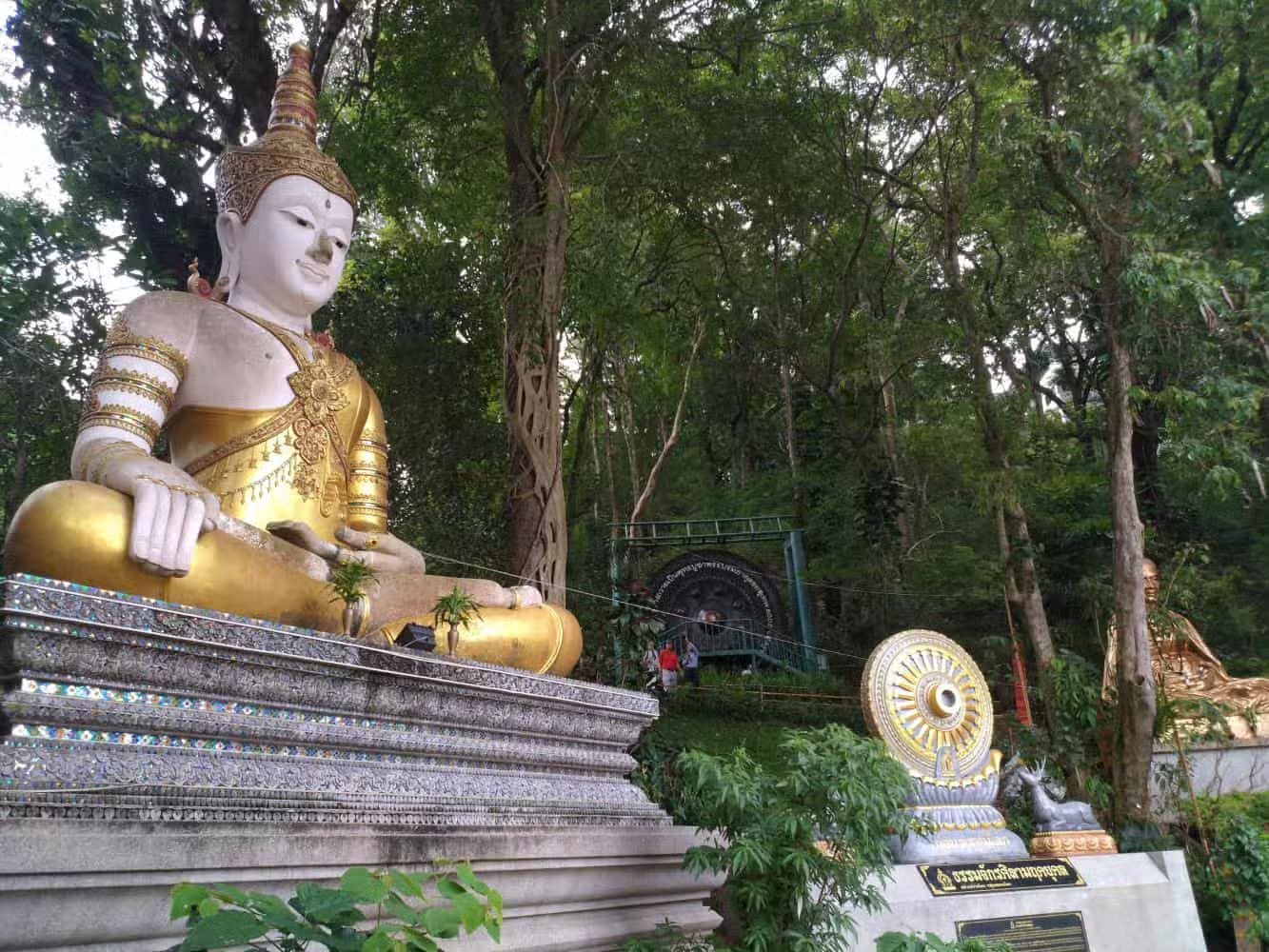
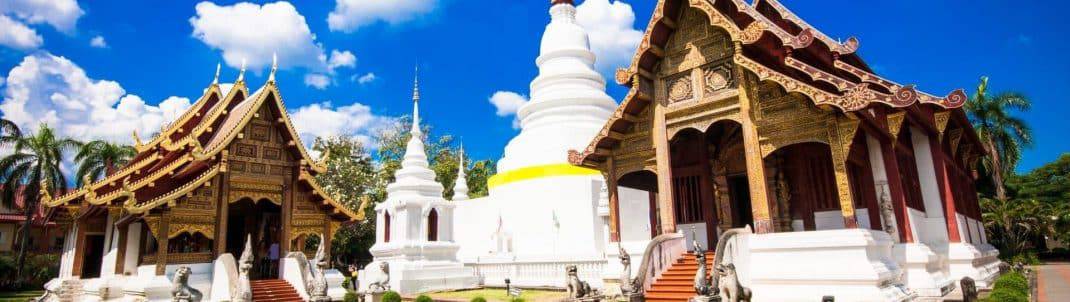
The surrounding architecture reflects the Lanna Buddhist traditions of northern Thailand. Gilded surfaces, tiered roofs, carved timber details, murals and colourful decoration appear throughout the complex. Images and monuments depicting the legendary white elephant also connect the temple to its founding story.
Visiting an Active Buddhist Temple
Wat Phra That Doi Suthep receives large numbers of tourists, but religious activity takes priority over sightseeing.
Both men and women should wear clothing that covers their shoulders and knees. Remove shoes before entering designated sacred areas, and keep your voice low around people who are praying.
Avoid pointing your feet towards Buddha images or monks, touching religious objects without permission or standing directly in front of worshippers. Photography is generally allowed in public areas, but give ceremonies and people praying space.
Some parts of the temple may be temporarily restricted during ceremonies or important Buddhist observances.
Visakha Bucha is particularly significant at Doi Suthep. Devotees traditionally walk up the mountain towards the temple as part of an important annual pilgrimage. Visiting during a major observance can provide a memorable cultural experience, but it also brings substantially larger crowds.
Views Over Chiang Mai
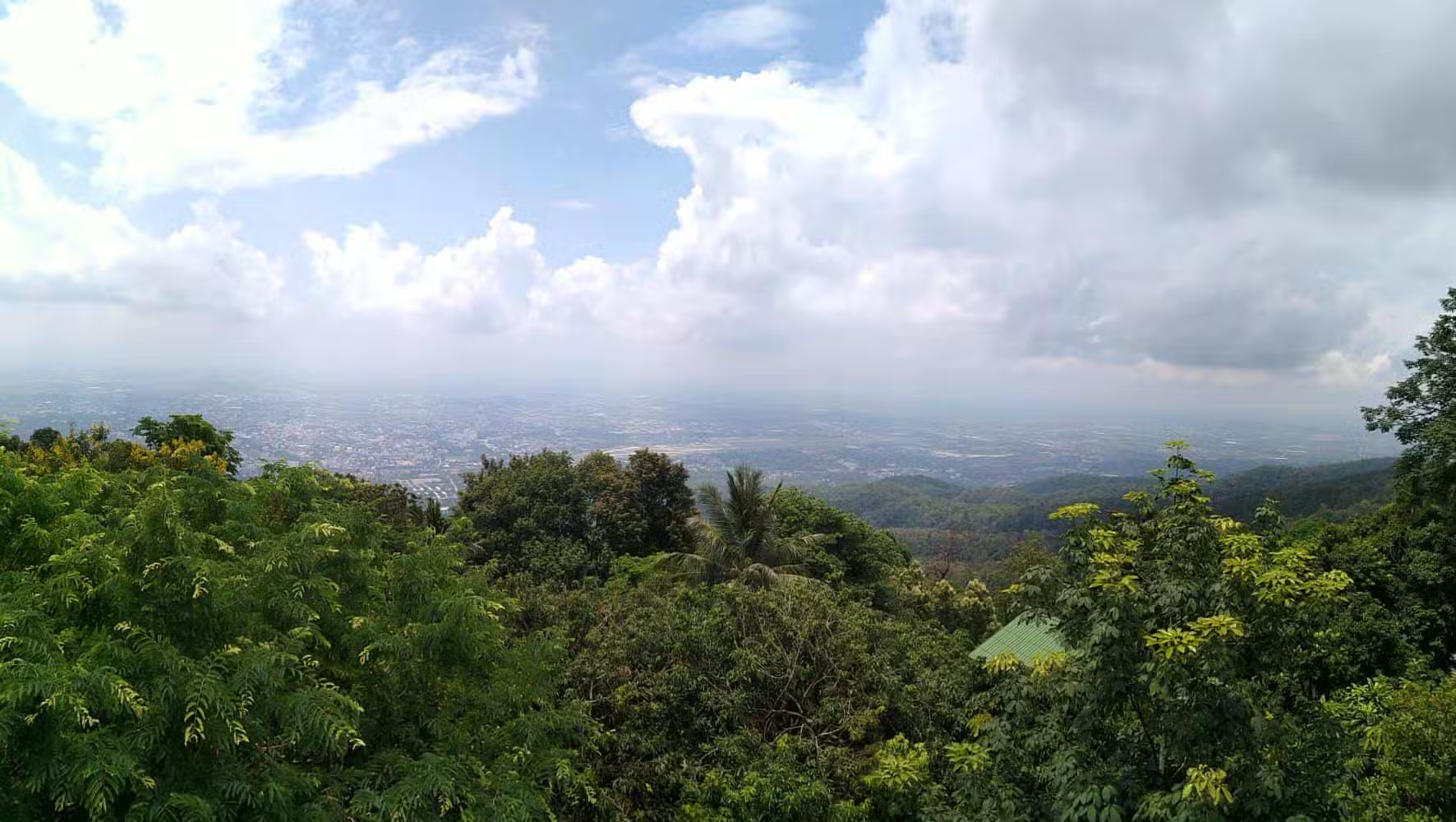
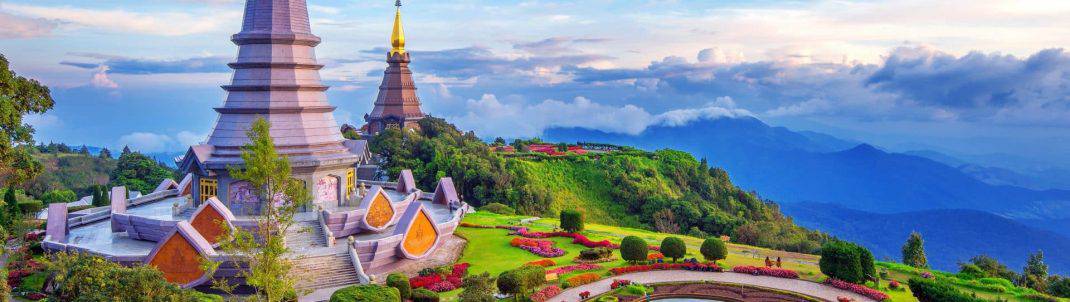
An outer terrace provides panoramic views over Chiang Mai, including the airport, surrounding urban area and valley below. However, a clear view is not guaranteed.
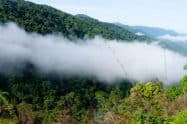
Clouds, rain, humidity and seasonal haze can obscure part or all of the city. Air pollution during northern Thailand’s burning season may significantly reduce visibility.
Early morning generally offers cooler conditions, fewer visitors and a better chance of clear views. The mountain can also feel noticeably cooler than central Chiang Mai, particularly during the cool season and early in the day.
Planning Your Visit
Allow approximately one to two hours to explore the temple. This provides enough time to use the staircase or funicular, visit the inner terrace, see the main religious structures and stop at the viewpoint.
Wat Phra That Doi Suthep is approximately 15 kilometres west of Chiang Mai Old City. The journey takes longer than the distance might suggest because the final section follows a steep and winding mountain road through Doi Suthep-Pui National Park.
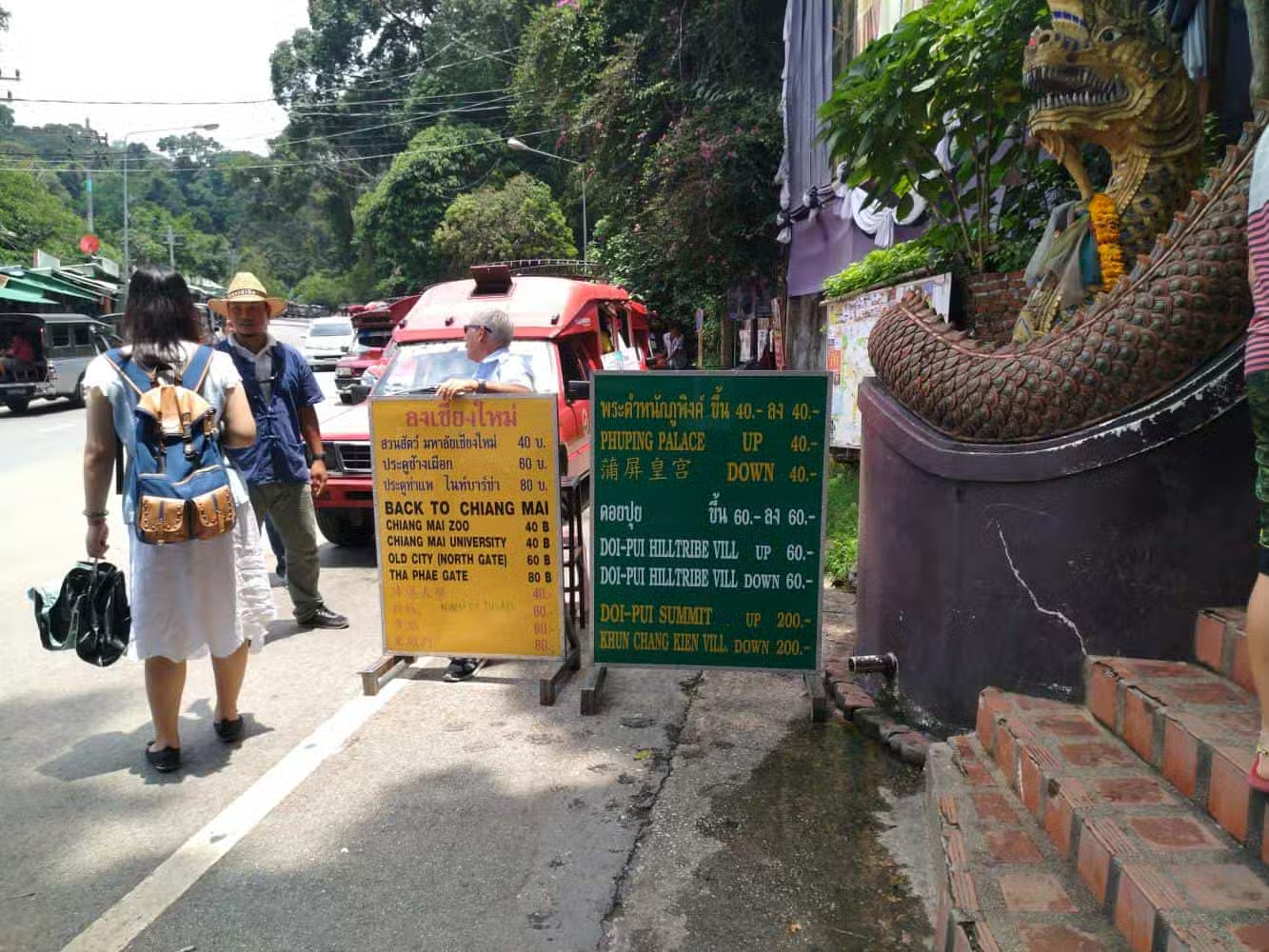
Shared red songthaews are one of the most common ways to reach the temple. Services often depart near Chiang Mai Zoo, though drivers may wait until enough passengers have gathered. Confirm the fare and return arrangements before departing.
A private songthaew, taxi or car with a driver provides greater flexibility, particularly when combining Doi Suthep with Wat Pha Lat, Bhubing Palace or Doi Pui. Visitors using a private vehicle should agree on the itinerary, waiting time and return journey in advance.
The mountain road is sealed but contains numerous sharp bends. Travellers who are not experienced or confident riding scooters on steep mountain roads should use a songthaew, taxi, private driver or organised tour.
Stalls near the lower entrance sell drinks, snacks, flowers, clothing and souvenirs. Carrying small-denomination Thai baht is useful for admission, the funicular, offerings and purchases from smaller vendors.
Wat Phra That Doi Suthep FAQs
How many steps are there at Wat Phra That Doi Suthep?
The traditional naga staircase has approximately 306 steps between the lower entrance and the temple level.
Is there an alternative to climbing the stairs?
Yes. A funicular travels between the lower entrance and upper level for an additional fare. It avoids the main staircase but does not make every area of the historic temple complex step-free.
How long should you spend at Wat Phra That Doi Suthep?
Allow around one to two hours at the temple. You’ll need extra time to travel from Chiang Mai or visit other attractions on Doi Suthep.
What should you wear to Doi Suthep?
Wear clothing that covers your shoulders and knees. You must also remove your shoes before entering the sacred inner terrace around the chedi.
Is Wat Phra That Doi Suthep still an active temple?
Yes. It is an active Buddhist monastery and pilgrimage site, not a historic monument maintained only for tourism.
Can you see Chiang Mai from Doi Suthep?
Yes, when conditions are clear. Clouds, rain and seasonal haze can substantially reduce visibility from the temple’s viewing terrace.
When is the best time to visit Doi Suthep?
Early morning is usually best for cooler temperatures, lighter crowds, and potentially clearer views.
Can you combine Doi Suthep with Wat Pha Lat?
Yes. Wat Pha Lat is located lower on the same mountain road and is one of the easiest attractions to combine with Doi Suthep.
Is Wat Phra That Doi Suthep wheelchair accessible?
Accessibility is limited. The funicular avoids the main staircase, but the historic complex still contains thresholds, steps, uneven surfaces and changes in level.








Do You Have a Question to Ask?