


















































Doi Inthanon National Park protects Thailand’s highest mountain, rising 2,565 metres above sea level southwest of Chiang Mai. A visit combines cool high-elevation forest, waterfalls, nature trails, royal pagodas and farming communities across a substantial mountain landscape. The change from Chiang Mai’s lowland heat to the damp, mossy summit forest is part of the experience, even when cloud hides the distant views.
This is a full-day road trip or an overnight excursion rather than one attraction you can explore entirely on foot. Stops are spread along Route 1009 and its side roads, with driving time between the lower waterfalls, village area, pagodas and summit. Choose a few priorities and leave room for weather, walking and traffic instead of attempting every named sight in a single day.
The summit and upper mountain
Thailand’s highest point
The summit road reaches parking close to the highest-point marker. A short path passes through shaded forest to the marker and the memorial associated with King Inthawichayanon, the Chiang Mai ruler after whom the mountain is named. Reaching the summit does not require a long mountain climb, although paths and surfaces can be wet.
The exact highest point lies among trees, so do not expect an uninterrupted panorama from the marker. The appeal is the cool air, dense vegetation and sense of entering a different habitat. Nearby road viewpoints can offer more open views when weather allows, but cloud and fog may arrive quickly.
Ang Ka Luang Nature Trail
Near the summit, Ang Ka Luang follows a short boardwalk through moist high-elevation forest. Mosses, ferns and plants growing on other plants create a layered green setting, with a quieter atmosphere than the roadside stops. It is a good choice for experiencing the mountain’s vegetation without committing to a longer ridge walk.
Take your time and look into the forest rather than expecting a distant view. The boardwalk can be damp and slippery, and its steps or uneven sections may affect visitors with limited mobility. Ask about current conditions before starting, and keep noise low for other visitors and wildlife.
Kew Mae Pan Nature Trail
Kew Mae Pan combines forest with exposed ridge landscapes and wide views to the west in clear conditions. The loop is roughly 2.5-3 km, with steps, slopes and uneven ground. It is more demanding than Ang Ka even though it is not an all-day hike, and time is needed for the guide, stops and changing conditions.
A local guide is required and hired through the trailhead arrangements. Confirm the current fee and group conditions there. The trail normally closes from June through October for forest recovery, so an October visit should use other open stops and check reopening before planning a later trip. Follow the current park notice when choosing a trail.
The twin royal pagodas
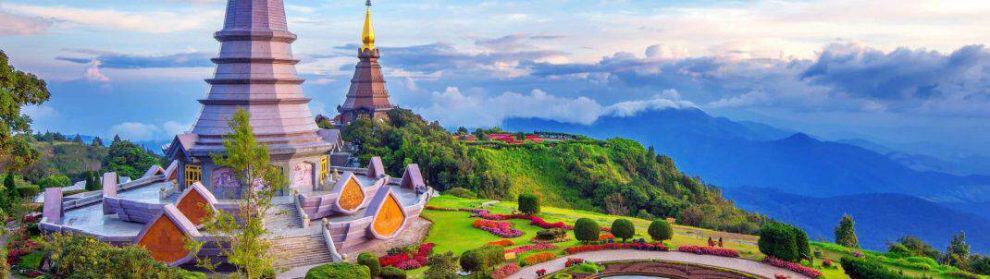
Phra Mahathat Naphamethinidon and Naphaphonphumisiri stand below the summit in a landscaped complex dedicated to King Bhumibol Adulyadej and Queen Sirikit. The two structures, garden terraces and mountain setting make this a distinct experience from the forested summit. Clear weather can reveal views across the surrounding slopes, while mist gives the gardens a different character.
The pagoda complex is separately managed and has its own admission arrangements. Check the current charge, opening time and any shuttle arrangements when planning the stop; the national-park ticket does not automatically cover it. Steps and slopes remain relevant even where assistance is available, so ask about the route if mobility is a concern.
Choosing waterfall stops
Wachirathan and Sirithan
Wachirathan is a popular stop close to parking on the main mountain route. Its broad flow and spray make it a dramatic introduction to the park, particularly after rain. Nearby food and drink outlets make it practical to pause here, though the area can become busy with tour groups.
Stay on the designated viewing paths and protect cameras or phones from spray. Sirithan provides a different, forest-framed view reached by a short stepped path from the road. It is viewed from a platform rather than by scrambling down to the base, so follow the designated route and barriers.
Mae Klang, Mae Ya and other options
Mae Klang lies near the lower approach and can fit into an itinerary before heading higher. Mae Ya is a broad, tiered waterfall on a separate approach, which means a visit adds more travel than another quick stop on Route 1009. Choose it deliberately rather than treating every waterfall as equally close to the summit road.
Other waterfalls sit along side routes or walking trails. Their access and demands vary, so confirm the route before adding one to an already full day. Rain can produce powerful water flow while making paths slippery; waterfall visits are primarily for viewing the scenery, and a pool should not be assumed safe or open for swimming.
Mae Klang Luang and the agricultural landscape
Mae Klang Luang introduces a different side of the mountain through rice terraces, coffee and village life. The terraces change through planting, growth and harvest, so the landscape may look different from photographs taken in another month. Pause for locally produced coffee or a meal where offered, and treat the settlement as a community of homes and workplaces.
The guided Pha Dok Siew route can connect forest, waterfall scenery and the village area. Arrange a local guide and confirm the open route and walking demands before setting off. It is a separate trail from Kew Mae Pan, and the fact that one route is closed does not establish the condition of the other.
The Royal Agricultural Station Inthanon near Khun Klang adds gardens and agricultural interest. It is a separate stop with its own access arrangements, so include it if flowers, cultivation or the Royal Project particularly interest you. Allow time for the detour and avoid turning a full mountain itinerary into a series of rushed arrivals.
Planning one day or an overnight stay
A balanced day from Chiang Mai
Leave Chiang Mai early and allow a full day, with roughly 1.5-2 hours to reach the lower park area depending on traffic and additional driving to the upper mountain. A practical sightseeing day might combine Wachirathan, the pagodas, the summit and Ang Ka, then a village or coffee stop on the descent. Weather and your interests should determine the order.
A Kew Mae Pan hike needs a substantial place in the schedule when the trail is open. Replace some shorter stops rather than simply adding the walk to every other attraction. A private driver offers flexibility, while a shared tour follows a set itinerary; check which trails and fees are actually included before booking.
Staying near the park
An overnight stay gives you more time for trails, changing weather and birdwatching. You could see lower waterfalls and the village area on the first day, then visit the upper mountain the next morning. It also reduces the pressure of combining a return journey to Chiang Mai with a long walking programme.
Park accommodation, camping and private lodgings have different locations and conditions. Confirm availability, booking method and seasonal access directly, particularly for cool-season weekends and holidays. Campers need suitable equipment for cold, damp nights; staying lower down does not mean the summit will have the same temperature.
Seasons, clothing and visitor facilities
November-February generally brings the coolest weather and busy holiday periods. Higher elevations can be very cold around dawn, while afternoons and lower stops feel warmer. Bring layers even if you leave Chiang Mai in light clothing, and add rain protection for a mountain where conditions can change during the same visit.
The wet season brings lush vegetation, strong waterfalls and frequent cloud, along with seasonal trail restrictions. Haze can affect distant views during the later dry season. Check weather and park notices close to departure, and choose forest and waterfall experiences as well as viewpoints so the day does not depend entirely on a clear horizon.
Food outlets, toilets and parking are available at several main stops, including the waterfall, headquarters and upper-mountain areas. Facilities are separated by long drives, so carry water and use toilets when convenient. Birdwatchers may prefer a specialist guide and a quieter itinerary rather than a general sightseeing circuit, as different elevations offer different habitats.
Admission and opening arrangements
National-park admission is listed at 300 THB for foreign adults and 150 THB for foreign children, with lower Thai-citizen rates of 60 THB for adults and 30 THB for children. A car is charged separately at 30 THB. Check age categories and any conditions at the entrance, and keep the ticket for checks at other park entry points.
The visitor centre is listed as opening daily from 8am-4pm. Access to early-morning viewpoints, trails, waterfalls and separately managed attractions follows different arrangements, so confirm the access times for your intended route. Guides, tours, pagoda admission and agricultural attractions may add separate costs.
Stay on marked routes, respect seasonal closures, take rubbish away and do not feed wildlife. Check with the park before bringing a drone or planning filming that may need permission. An elephant sanctuary offered in a combined tour is a separate booked experience, not a guarantee of seeing wild elephants within the national park.
Getting there and travelling between stops
From Chiang Mai, follow Highway 108 south towards Chom Thong and turn onto Route 1009 for Doi Inthanon. The main entrance checkpoint is around kilometre 8 on Route 1009, while headquarters and the summit are much farther along the mountain road. Confirm which entrance and first stop your driver will use.
A hired driver, organised tour or suitable self-drive vehicle is the most practical way to connect the attractions. Local songthaew travel involves transfers and does not solve the long distances between stops once you arrive. Arrange transport for the whole itinerary instead of assuming you can walk from the entrance to the summit or easily find a vehicle at every stop.
The road is sealed but steep and winding, and fog, rain and holiday traffic can slow the journey considerably. Drivers unfamiliar with mountain roads should consider hiring an experienced local driver. Leave enough time to descend in suitable conditions and avoid scheduling a tight onward flight or intercity journey after a full park day.
Doi Inthanon National Park FAQs
Can I visit in one day from Chiang Mai?
Yes, but allow the whole day and choose a manageable set of stops. The drive to the lower park is only part of the journey, with more travel between waterfalls, villages, pagodas and the summit.
Do I need to hike to Thailand’s highest point?
No. The road reaches parking near the summit marker, followed by a short forest path. Longer walks such as Kew Mae Pan are separate choices, and wet paths or steps still need care.
Will I get a panoramic view at the summit?
The exact highest-point marker is among trees, so it is mainly a forest and landmark stop. More open viewpoints and the pagoda area offer distant views when cloud, fog and haze allow.
Is Kew Mae Pan open throughout the year?
No. It normally closes June-October for forest recovery. Check the park’s current notice before planning a hike, and use other open stops rather than entering a closed trail.
Do I need a guide for the trails?
A local guide is required for Kew Mae Pan and for the Pha Dok Siew route. Arrange this through the relevant trailhead or programme, and ask about the route, fee and group conditions before starting.
Does the park ticket include the twin pagodas?
The pagoda complex has separate admission arrangements. Guides, tours and other separately managed stops can also cost extra, so check the inclusions in any organised trip before payment.
What should I wear?
Bring warm layers, rain protection and shoes with grip for wet steps and boardwalks. Temperatures higher on the mountain can be very different from Chiang Mai, particularly at dawn and during the cool season.
Is public transport convenient?
It is difficult for a multi-stop sightseeing visit because transfers are needed and attractions are widely separated. A driver, tour or suitable vehicle arranged for the whole day provides a more practical way to reach your chosen stops.
Is an overnight stay worthwhile?
It can be useful for a longer trail programme, birdwatching or a slower visit that allows for changing weather. Confirm the location and availability of accommodation or camping, since facilities and seasonal access differ.











Do You Have a Question to Ask?