







































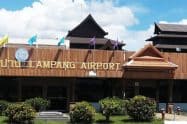



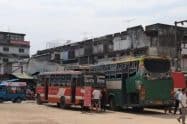


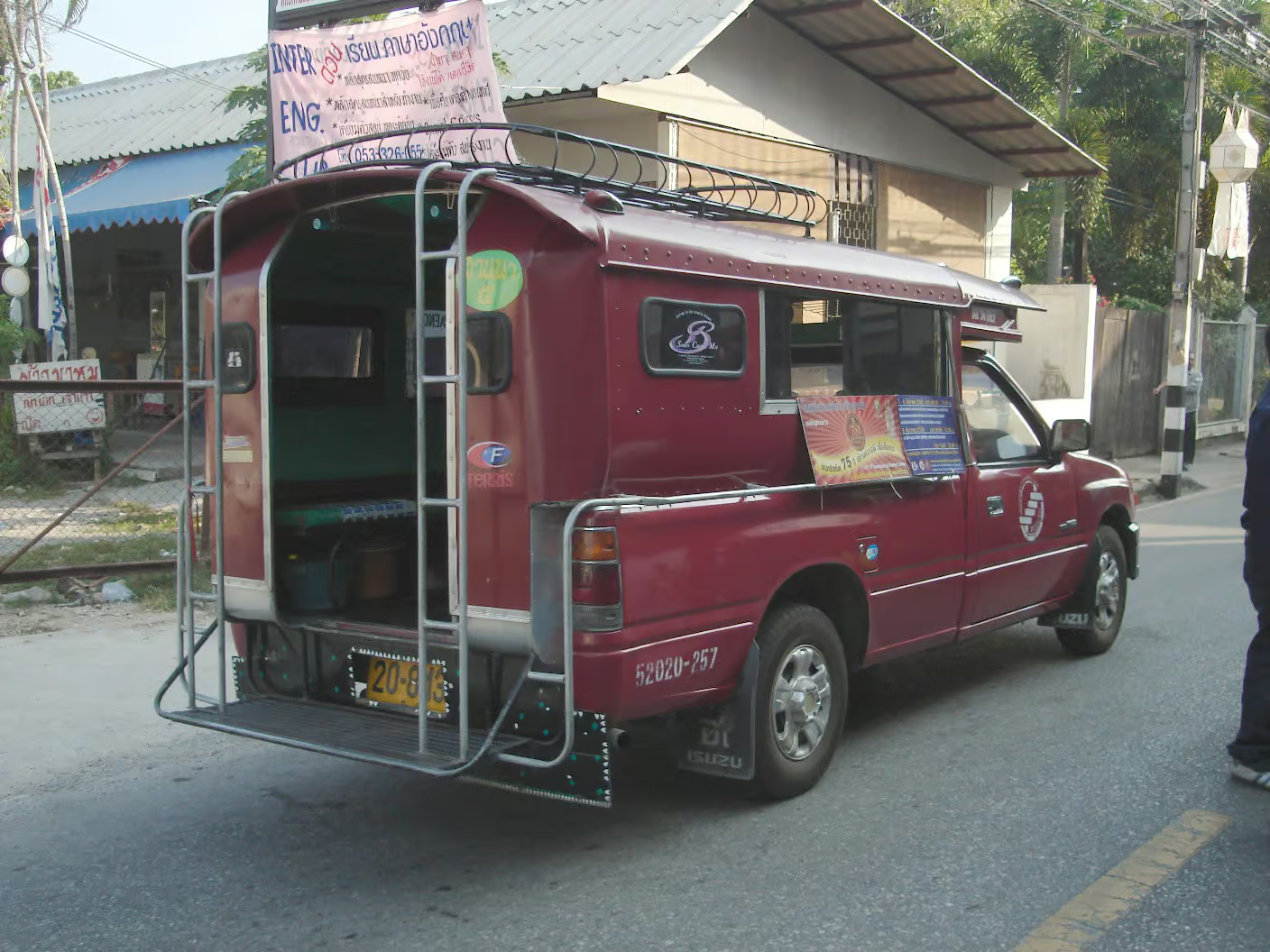
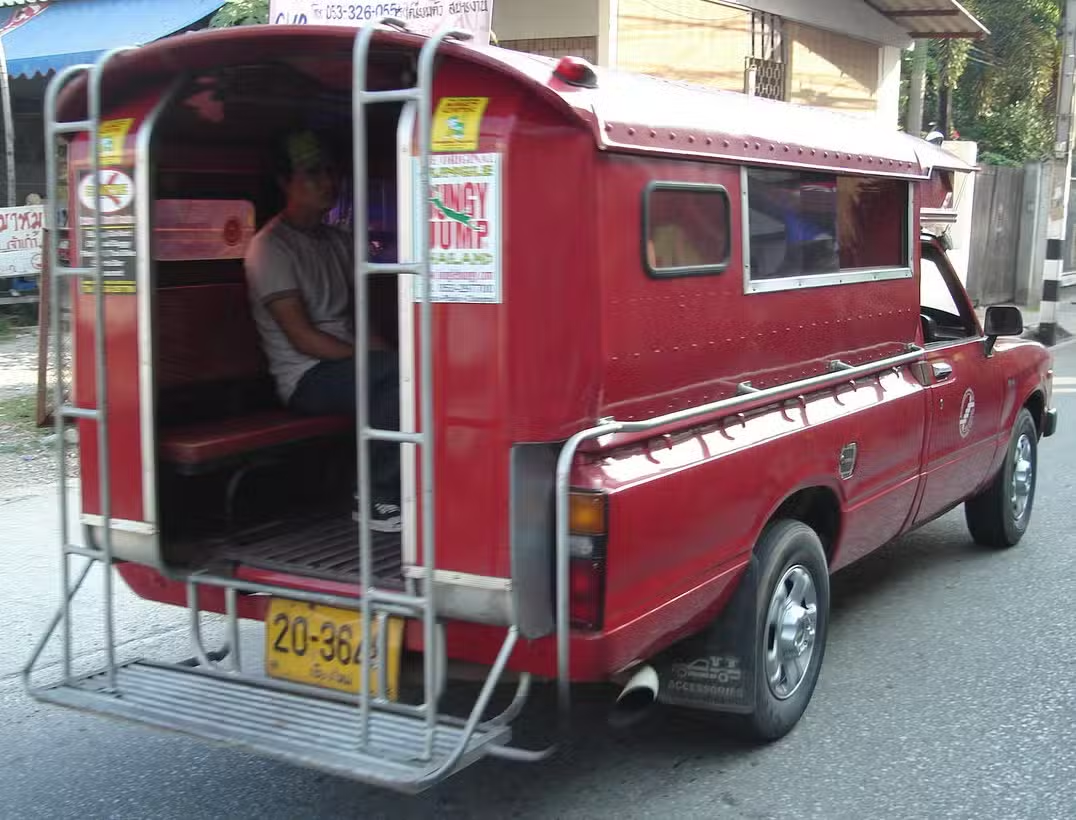
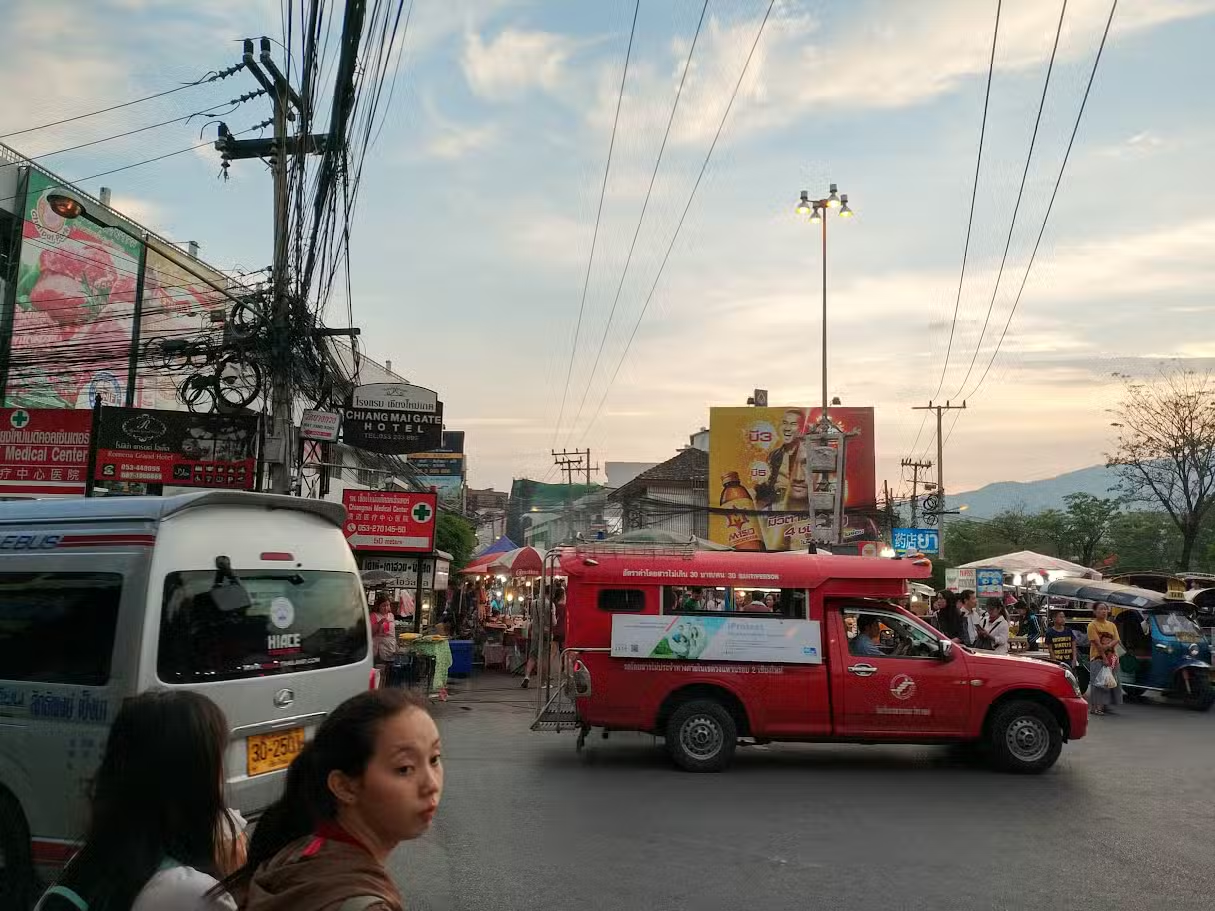
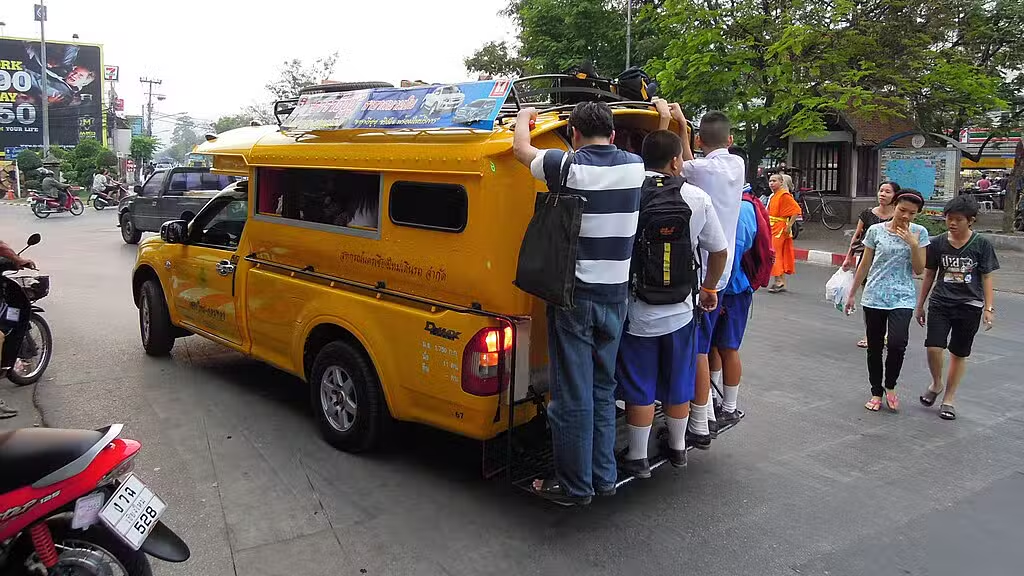
Songthaews are one of Chiang Mai’s most distinctive forms of local transport. The vehicles are converted pickup trucks with two bench seats in the covered rear — the Thai name songthaew literally means “two rows”.
For most visitors, the important ones are the red songthaews, commonly called rot daeng or red trucks.
They operate more like flexible shared taxis than conventional buses. A red songthaew does not usually follow one fixed route through the city. Instead, the driver picks up several passengers travelling in broadly compatible directions and adjusts the journey as people get on and off.
A typical shared journey within central Chiang Mai currently costs around 30 baht per person, although longer journeys and trips requiring the driver to deviate substantially can cost more.
Understanding the shared system is key to using it successfully.
How Red Songthaews Work
Red songthaews circulate constantly through central Chiang Mai.
To use one:
- Stand somewhere the vehicle can stop safely.
- Wave to an approaching red songthaew.
- Tell the driver your destination.
- The driver will either agree or decline depending on where existing passengers are going.
- Confirm the fare if necessary.
- Get into the rear of the truck.
- Press the buzzer when you reach your destination.
- Get out and pay the driver.
A driver saying no does not necessarily mean anything is wrong.
It usually means your destination does not fit the direction of the current shared journey.
Wait for another red truck.
How Much Does a Red Songthaew Cost?
Around 30 baht per person remains the useful baseline for an ordinary shared journey in central Chiang Mai.
Current local tourism information still lists 30 baht for a city trip.
In practice, visitors can also encounter quotes of 40 baht or more depending on:
- destination;
- distance;
- time;
- traffic;
- whether the trip still works as a shared journey.
The key distinction is between shared transport and private hire.
A driver taking several passengers in similar directions can charge a low per-person fare.
A driver being asked to go somewhere specifically for you may quote a much higher amount.
Confirm anything unusual before getting in rather than arguing over the fare at the end.
Shared Ride vs Private Hire
This distinction causes much of the confusion around songthaew prices.
Shared songthaew
The driver can:
- pick up other passengers;
- drop them off before you;
- take a route that is not the shortest possible route to your destination.
You pay the low shared fare.
Private songthaew
You effectively hire the whole vehicle for your group.
The driver travels according to the agreed destination or itinerary rather than collecting ordinary passengers along the way.
The price is negotiated.
Private hire can be useful for:
- groups;
- attractions outside the city;
- several stops;
- day trips.
Do not assume a private charter should cost 30 baht simply because ordinary shared rides do.
Why the Driver May Take a Strange Route
Red songthaews do not operate like point-to-point taxis.
A driver may already have several passengers onboard.
For example, you may ask to travel from Tha Phae Gate to Nimman while another passenger is going somewhere near Chang Phuak.
The driver may make that drop-off first.
The journey can therefore look indirect if you are following it on a map.
That does not necessarily mean the driver is taking you the wrong way.
The trade-off for the low fare is a shared route.
If arrival time matters, use a direct taxi or app-based car instead.
How to Tell the Driver Your Destination
Knowing a nearby landmark is often easier than giving a full street address.
Useful destinations drivers commonly recognise include:
- Tha Phae Gate;
- Chiang Mai Gate;
- Chang Phuak Gate;
- Warorot Market;
- Central Chiangmai;
- MAYA;
- Chiang Mai University;
- Arcade Bus Terminal;
- Chiang Mai Railway Station.
For hotels or smaller businesses, show the driver:
- Thai name;
- map location;
- nearby major landmark.
Do not assume the driver will recognise the English pronunciation of a small hotel name.
A map pin is particularly useful.
How to Stop the Songthaew
Buzzers are fitted inside the covered passenger area.
Press the buzzer when you want to stop.
The driver will pull over somewhere safe.
Get out through the rear of the vehicle and walk to the driver’s window to pay.
Payment is normally made after the ride, not when boarding.
Carry small cash.
Trying to pay a 30-baht fare with a 1,000-baht note creates an unnecessary problem.
Songthaews Around the Old City
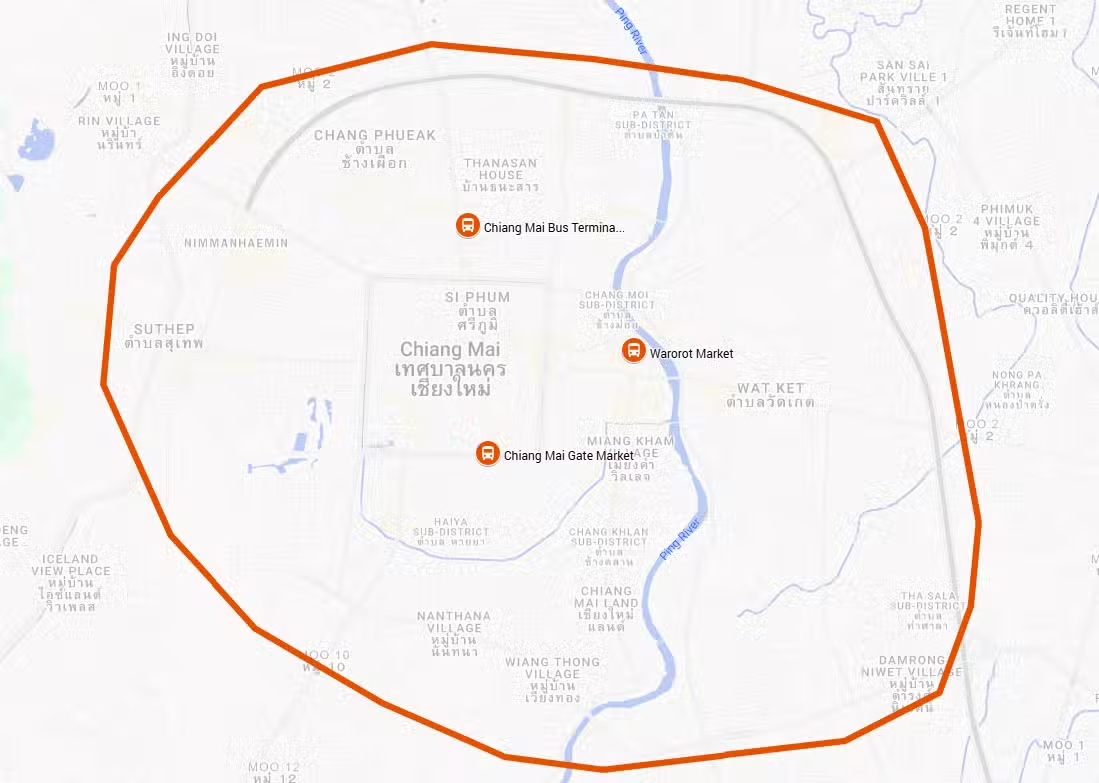
The Old City is one of the easiest areas to use red songthaews.
Vehicles regularly circulate:
- the moat roads;
- Tha Phae Gate;
- Chiang Mai Gate;
- Chang Phuak Gate;
- major markets.
Because the Old City road system includes many one-way sections, a songthaew may travel farther around the moat than the straight-line distance suggests.
For very short journeys, walking can be quicker.
For journeys across the Old City in heat or rain, the songthaew becomes much more useful.
Songthaew to Nimman
Red songthaews regularly travel between the Old City and the Nimmanhaemin / MAYA area.
This is one of the most straightforward visitor journeys.
Tell the driver:
- Nimman;
- MAYA;
- a specific major road or hotel.
The ordinary shared fare may apply where the journey fits the driver’s existing route.
Nimman’s congested streets can slow travel substantially during busy evenings.
For two or more people, it can also be worth comparing the total songthaew cost with Grab, Bolt or another current app-based option.
Songthaew to Chiang Mai University
Chiang Mai University sits west of the city near Huay Kaew Road.
Red songthaews frequently travel towards the university because it is a major transport destination.
Many vehicles can be found around:
- university gates;
- Huay Kaew Road;
- Chiang Mai Zoo.
If travelling to a specific university building, make sure the driver understands which entrance or area you need.
The campus is very large.
Songthaew to Doi Suthep
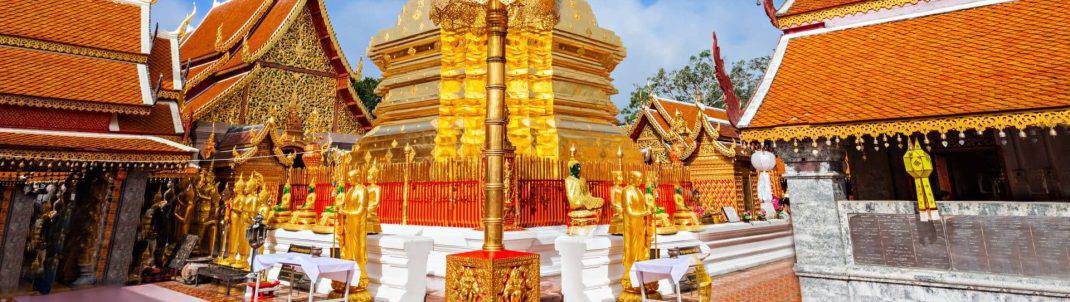
Red songthaews also provide a standard form of transport to Wat Phra That Doi Suthep.
These trips work differently from ordinary 30-baht city rides.
Vehicles commonly wait near Chiang Mai Zoo and other recognised pickup locations for passengers going up the mountain.
The fare depends on:
- pickup point;
- whether enough passengers are sharing;
- return arrangements;
- whether the vehicle is privately chartered.
Do not expect the central-city 30-baht fare to cover a mountain journey.
Confirm both outbound and return arrangements before leaving.
For groups, hiring the entire vehicle can be practical.
Songthaews at Chiang Mai Airport
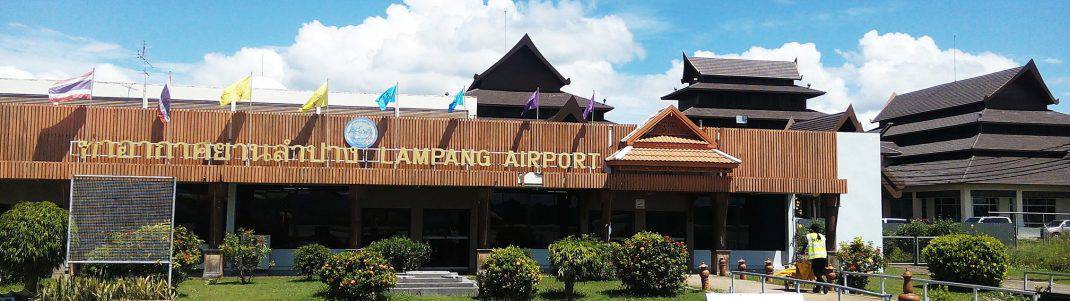
Red songthaews can be used around Chiang Mai Airport, although airport transport arrangements differ from simply waving down a truck on an Old City street.
Availability, pickup arrangements and quoted fares can vary.
For travellers with:
- several suitcases;
- young children;
- more than two passengers,
an authorised airport taxi or app-based car can be more comfortable.
A songthaew can still be an inexpensive option for light travellers when a suitable shared service is available.
Do not assume the standard 30-baht inner-city fare automatically applies to an airport pickup.
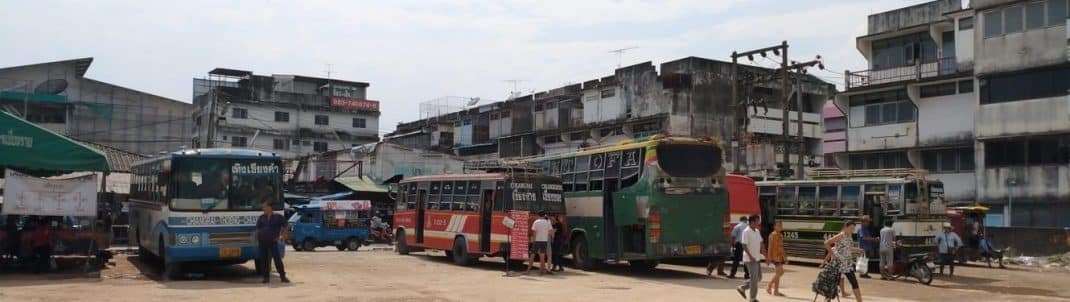
Songthaews at Arcade Bus Terminal
Red songthaews regularly serve the Arcade Bus Terminal area.
This makes them useful for travelling between the long-distance bus terminals and:
- Old City;
- Night Bazaar;
- Tha Phae;
- Nimman.
The terminal is east of the Old City.
A shared red truck can be inexpensive, but drivers waiting specifically for arriving tourists may also quote private-hire prices.
Clarify whether the quoted amount is:
- per person;
- for the entire vehicle.
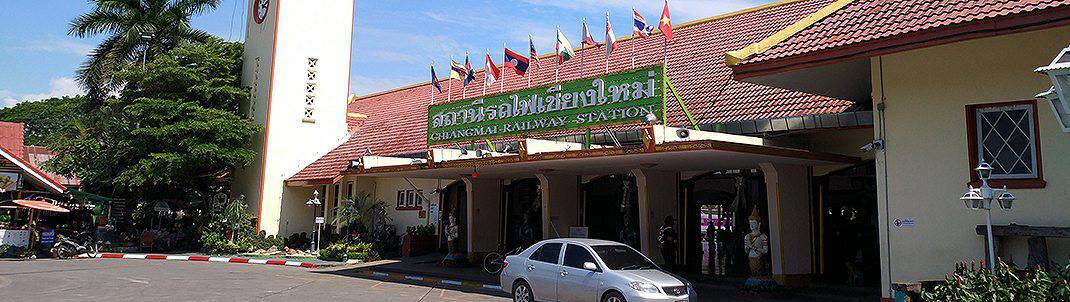
Songthaews at Chiang Mai Railway Station
The railway station is southeast of the Old City across the Ping River.
Songthaews are commonly available around train arrival times.
As with the bus terminal, travellers arriving with substantial luggage may prefer a taxi or app-based car.
If using a red truck, show the hotel destination clearly and confirm the price.
The station is close enough to central Chiang Mai that a shared songthaew can be practical when one is travelling in the right direction.
Different Songthaew Colours
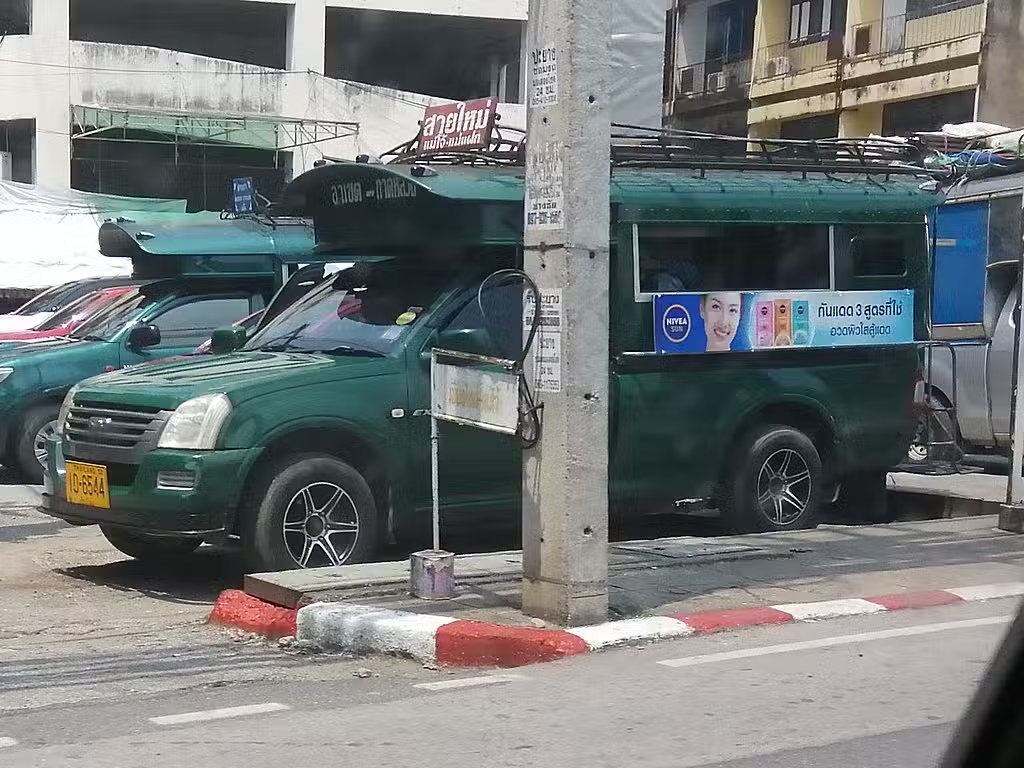
Not all Chiang Mai songthaews are red.
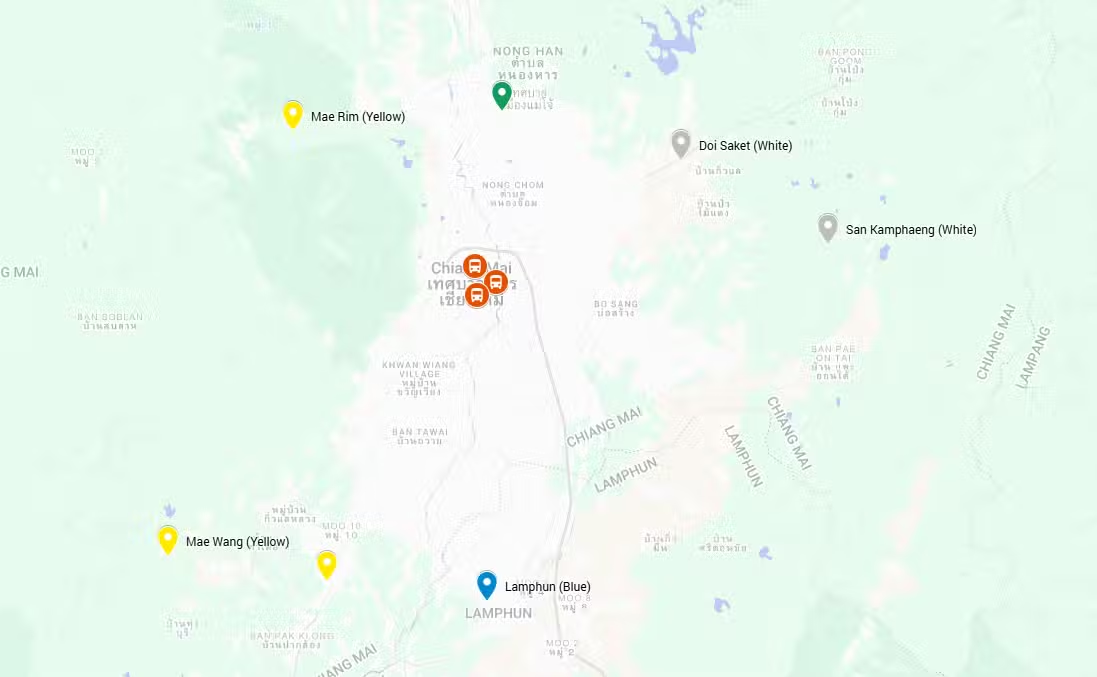
Different-coloured vehicles operate more conventional routes between the city and surrounding districts.
These services can be useful for independent travellers going beyond the centre.
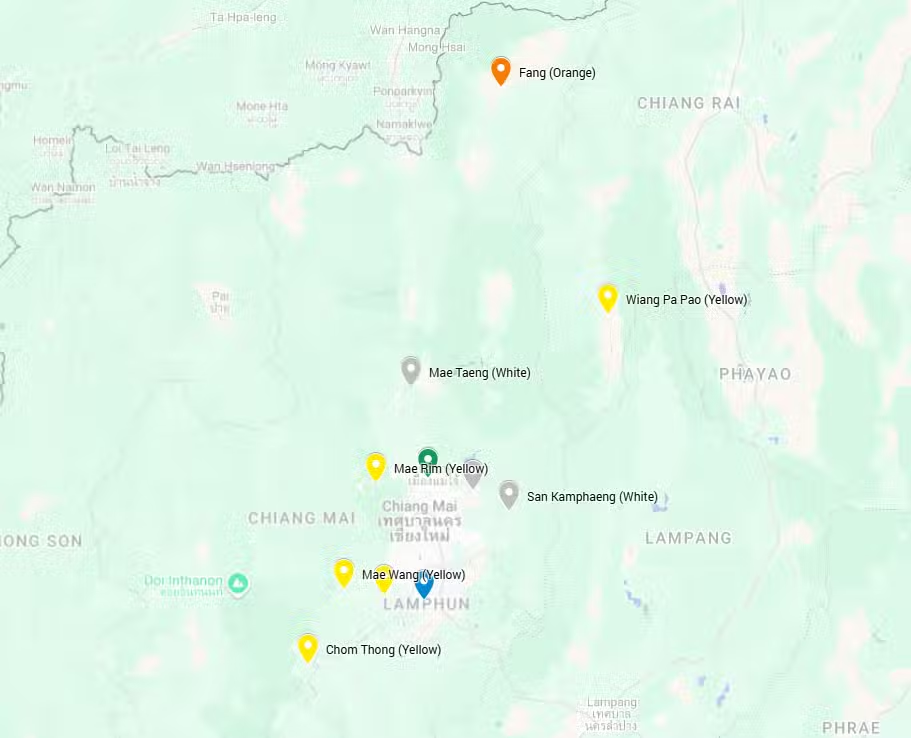
Colours commonly encountered include:
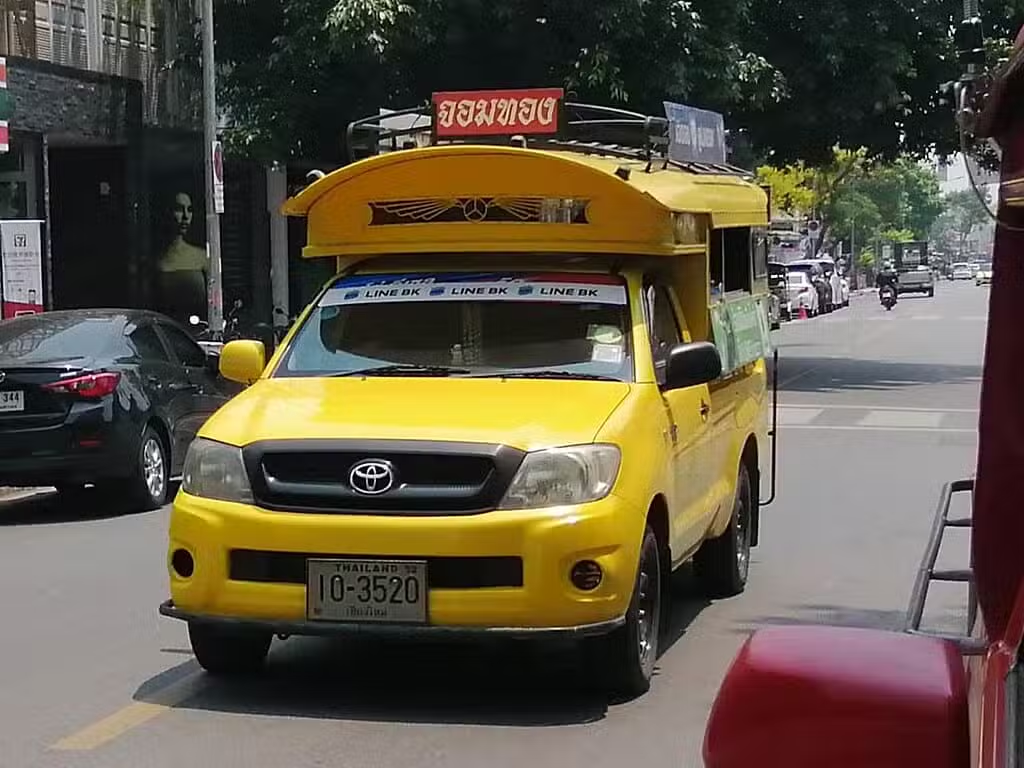
- yellow;
- white;
- blue;
- green;
- orange.
Unlike the roaming red city trucks, these generally serve particular corridors or destinations.
Route information can change, and colour conventions are not always as simple as old travel diagrams suggest.
Ask the driver or terminal staff before boarding.
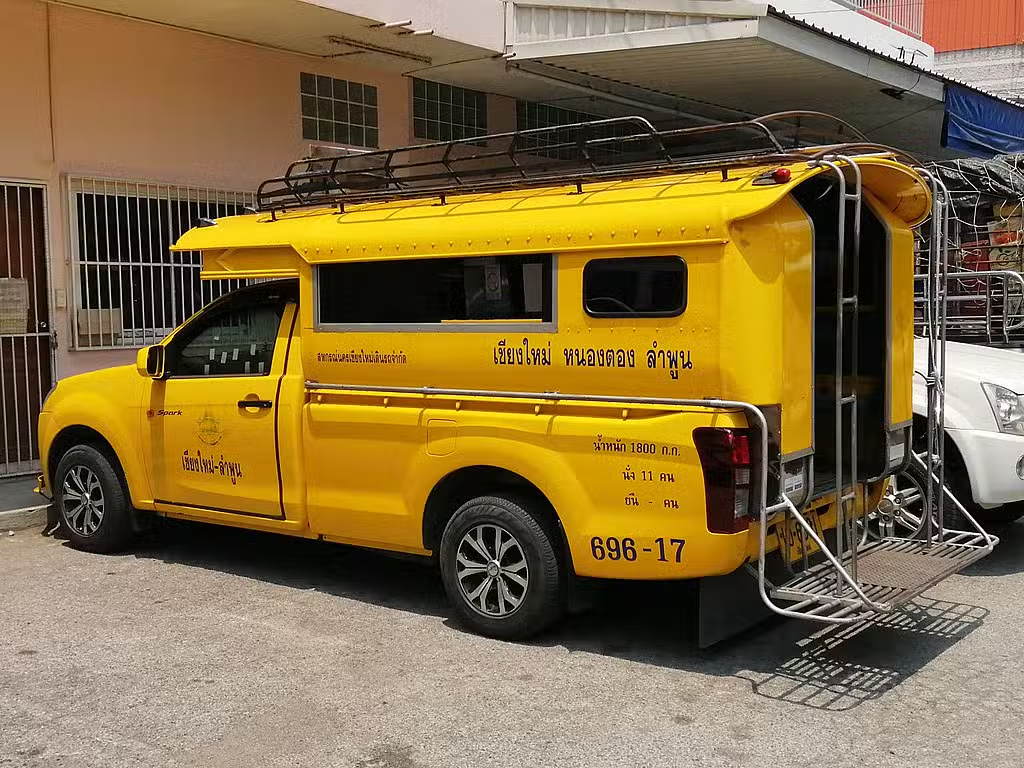
Yellow Songthaews
Yellow songthaews operate several routes from Chiang Mai towards surrounding districts.
Current route information includes services towards destinations such as:
- Mae Rim;
- Chom Thong;
- San Pa Tong;
- Mae Wang;
- Doi Saket.
Departure points can include:
- Chang Phuak Bus Terminal;
- Warorot Market;
- Chiang Mai Gate area.
These services are useful for travellers going beyond the normal central red-songthaew zone.
Fares depend on route and distance.
White, Blue and Green Songthaews
Other colours connect Chiang Mai with additional suburban and provincial destinations.
Depending on route, services include connections towards areas such as:
White songthaews
Mae Taeng, Doi Saket and San Kamphaeng routes have traditionally used white vehicles.
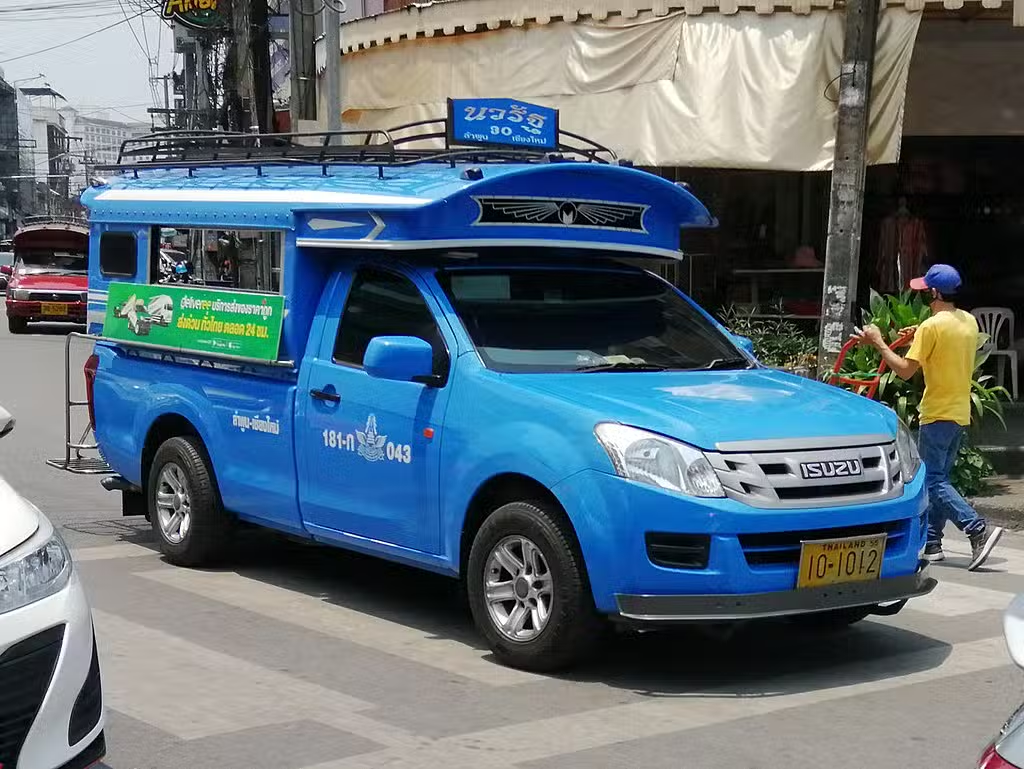
Blue songthaews
Used on the Chiang Mai–Lamphun corridor through Saraphi.
Green songthaews
Associated with routes towards Mae Jo and San Sai.
The exact terminal is as important as the colour.
For a trip outside central Chiang Mai, establish:
- departure point;
- destination;
- fare;
- final return service.
Return frequencies can become sparse later in the day.
Warorot Market as a Transport Hub
Warorot Market, also known as Kad Luang, is an important songthaew departure area.
Various coloured route services operate around the market and nearby streets.
This makes the area useful for independent travellers heading towards some suburban or provincial destinations.
The departure point may not resemble a formal Western bus terminal with numbered platforms.
Ask drivers which truck goes to the required destination.
The vehicle may also wait for more passengers before leaving.
Chang Phuak Bus Terminal
Chang Phuak Bus Terminal, north of the Old City, is another important departure point for local transport.
Songthaews and local buses leave towards destinations north and farther into Chiang Mai Province.
This station should not be confused with Arcade Bus Terminal, which handles many long-distance interprovincial coaches.
If a local route description says “Chang Phuak”, do not automatically go to Arcade.
Advantages of Songthaews
For visitors, songthaews are useful because they are:
- inexpensive;
- common;
- flexible;
- easy to hail in central areas;
- useful for short trips.
They also require no smartphone, account or credit card.
This makes them particularly useful when:
- phone data is unavailable;
- app surge pricing is high;
- travelling spontaneously.
The main drawback is unpredictability.
You don’t know exactly which other passengers will be picked up or how indirect the route may become.
Songthaew vs Tuk-Tuk
Tuk-tuks are generally private rather than shared.
That means they can provide:
- direct travel;
- easier luggage handling;
- no intermediate passenger pickups.
They normally cost considerably more than a shared red songthaew.
For one person making a short flexible journey, the songthaew is usually cheaper.
For several passengers travelling together, the difference can become much smaller.
Always agree on a tuk-tuk fare before departure.
Songthaew vs Grab or Bolt
App-based transport provides clearer point-to-point pricing.
The advantages include:
- destination entered into the app;
- route visible on the phone;
- private vehicle;
- air conditioning;
- easier hotel pickup.
A red songthaew is usually cheaper for an individual traveller taking a simple central-city trip.
For two, three or four people, compare the combined per-person songthaew cost against the current app fare.
An app car can sometimes be competitive while providing a direct journey.
Safety
Passengers sit on bench seats in the rear of a pickup truck.
Seatbelts are generally not provided in the passenger compartment.
Hold onto the available rails when the vehicle is moving.
Do not:
- stand on the rear step while travelling;
- lean outside;
- obstruct the rear entrance;
- allow children to move around unsupervised.
Keep bags secure beside you.
Because the rear is open, do not hold phones, hats, or other loose objects carelessly near the entrance.
Accessibility
Songthaews are not wheelchair-accessible public transport in the conventional sense.
Passengers normally enter through the rear and step up into the pickup bed.
This can be difficult for people with:
- limited mobility;
- balance problems;
- heavy luggage;
- large prams.
A conventional taxi or suitable app-based vehicle is usually easier for travellers needing step-free access or more assistance.
Chiang Mai Songthaew FAQs
How much does a red songthaew cost in Chiang Mai?
Around 30 baht per person remains the standard baseline for a shared central-city trip, although 40 baht or higher may be quoted depending on destination and circumstances.
Do Chiang Mai songthaews follow fixed routes?
Red songthaews usually operate flexibly as shared taxis. Other coloured songthaews generally follow more defined routes to surrounding districts.
How do you hail a songthaew?
Stand somewhere safe and wave to an approaching truck. Tell the driver your destination before boarding.
How do you get off a songthaew?
Press the buzzer inside the passenger compartment. The driver will stop somewhere safe, then you get out and pay at the driver’s window.
Do you pay before or after the ride?
Payment is normally made after getting out.
Can songthaew drivers refuse a trip?
Yes. A red truck may already be carrying passengers travelling in another direction. Flag down another one.
Can you hire an entire songthaew?
Yes. Red songthaews can be privately chartered, with the price agreed before departure.
Can you take a songthaew to Doi Suthep?
Yes. Red songthaews commonly travel to Doi Suthep, particularly from around Chiang Mai Zoo, but mountain fares are higher than ordinary city fares.
What do the different songthaew colours mean?
Different colours generally identify services travelling to particular suburban or provincial areas. Red is the main flexible city service.
Are songthaews cheaper than Grab?
Usually, for one person making a simple shared city trip. For several people travelling together, an app-based private car can sometimes be similarly priced.




.jpg)
.jpg)
.jpg)
.jpg)
.jpg)
It would be helpful if you had included routes for the blue, yellow, white, green and orange ones which have set routes. do you have a source for those?
Hi Todd,
Thanks for the suggestion. While i have only had the experience of riding the red trucks around Chiang Mai (i either used a motorbike, grab car, or a bus to travel further out), i have found this information about other songthaew colours and their associated routes, and have added a new section to this page.
I tried to create a map using various sources, but i was only able to plot the rough destinations.
Hope this helps.
Thanks
Michael