
































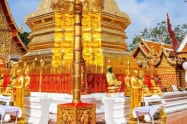









Inthakin Festival brings Chiang Mai residents to Wat Chedi Luang to honour the city pillar through flowers, prayer and merit-making. Within the busy Old City, the gathering reveals a close relationship between the temple, the city’s protective traditions and the people who return to observe them.
The 2027 dates and daily programme are still to be announced. The festival follows a lunar calendar, so its Gregorian dates can vary from year to year. Its established flower-offering tradition remains the centre of what visitors come to understand.
Flowers for the City Pillar
The Inthakin, or city pillar, is associated with Chiang Mai’s stability and wellbeing. Those beliefs give the annual gathering a purpose beyond ordinary sightseeing: residents come to pay respects, seek blessings and renew a connection with the city they share.
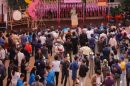
Sai Khan Dok, the flower-offering ritual, is a defining part of the occasion. Worshippers bring flowers, incense and candles to designated offering points, moving through the grounds in a sequence shaped by devotion rather than a stage programme. The accumulation of flowers is one of the festival’s most striking visual features.
Take time to notice how people approach, make their offerings and move on. If you wish to offer flowers yourself, ask an attendant where to begin and what is appropriate. You do not need to imitate every action immediately in order to appreciate its significance.
Finding the Shrine at Wat Chedi Luang
The city-pillar shrine is within the Wat Chedi Luang compound, distinct from the large ruined chedi for which the temple is widely known. Arriving for the festival therefore involves more than walking towards the most conspicuous monument. Follow signs and temple guidance to the appropriate offering areas.
The inner city-pillar shrine traditionally admits men only. Women can make offerings and pay respects in the surrounding areas; the restriction concerns that inner shrine, not the entire festival or temple compound. Read the signs and follow attendants’ directions at the entrance.
A broader temple visit can add architectural and historical context, but keep the purposes distinct. People making offerings need space to worship, while ordinary sightseeing areas may have their own access and admission arrangements.
The Gathering Through the Day
The festival has a different atmosphere at different times. A quieter part of the day can make it easier to understand the offering arrangements, while evenings bring more people and a stronger sense of the city’s shared observance. The next daily schedule will establish the actual access hours.
Chanting and Buddhist ceremonies accompany the pillar traditions. Previous editions have also included a procession of a rain-invoking Buddha image, reflecting the connection between local belief and hopes for the agricultural season. The 2027 route and ceremonial times remain to be announced.
Food stalls and cultural activity have formed part of the wider gathering around the temple. They provide a social setting before or after paying respects, but the temple rituals remain the reason for the event. Choose time for both rather than hurrying through the offering area to reach the stalls.
Joining In as a Visitor
Wear clothing covering shoulders and knees, and follow instructions about removing shoes before entering a shrine or hall. Keep your voice low near prayer and allow people to complete their offerings without stepping into their space.
Ask before photographing individuals at close range, particularly while they are praying. A wider view of the floral arrangements or temple setting can convey the atmosphere without interrupting a personal act of devotion. Respect any area where photography is restricted.
If visiting with children, explain that offerings and ceremonial objects are to be left in place. A shorter visit at a less crowded time may help them follow what is happening more comfortably than a long evening in a queue.
Reaching the Temple and Planning Costs
Wat Chedi Luang is on Phrapokklao Road in Chiang Mai’s Old City. Use the temple name and actual entrance as your destination, allowing for busy streets and pedestrian movement during the festival. If arriving by vehicle, agree on a pickup point that does not depend on waiting directly in a crowded entrance.
Check the 2027 festival’s visitor arrangements before assuming a particular admission policy. Offerings, donations and food purchases are separate decisions, and ordinary temple sightseeing charges should not be confused with a festival ticket or ritual offering.
Visitors who need a step-free approach or somewhere to sit should ask about the actual route and facilities. The compound contains different spaces, and a central-city address alone does not describe access through a busy ceremonial gathering.
Inthakin Festival FAQs
When is Inthakin Festival in 2027?
The dates and daily programme are still to be announced. It follows a lunar calendar, so wait for the temple or official event announcement rather than using last year’s dates for travel bookings.
Where is the city pillar?
It is housed in a shrine within Wat Chedi Luang, separate from the large ruined chedi. Follow the temple’s directions to the offering areas rather than assuming the main monument is the pillar shrine.
Can women attend the festival?
Yes. The traditional restriction applies to entry into the inner city-pillar shrine. Women can make offerings and pray in the surrounding areas, following the signs and guidance provided at the temple.
Can visitors make flower offerings?
Visitors can ask temple attendants about appropriate participation and the designated offering points. Take a little time to understand the process and leave worshippers space, rather than assuming every shrine follows the same sequence.
Is evening the only time to visit?
Evenings have traditionally been busy, but the gathering can also be experienced at quieter times during its published opening arrangements. Check the next daily schedule and choose a time suited to your comfort with crowds.
Do I need a separate festival ticket?
The 2027 access details remain pending. Confirm the distinction between festival access, ordinary temple sightseeing charges, offerings and optional purchases before budgeting for the visit.








Do You Have a Question to Ask?