


















































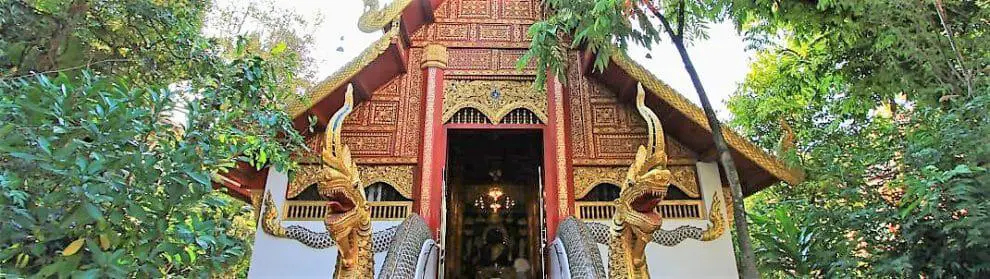
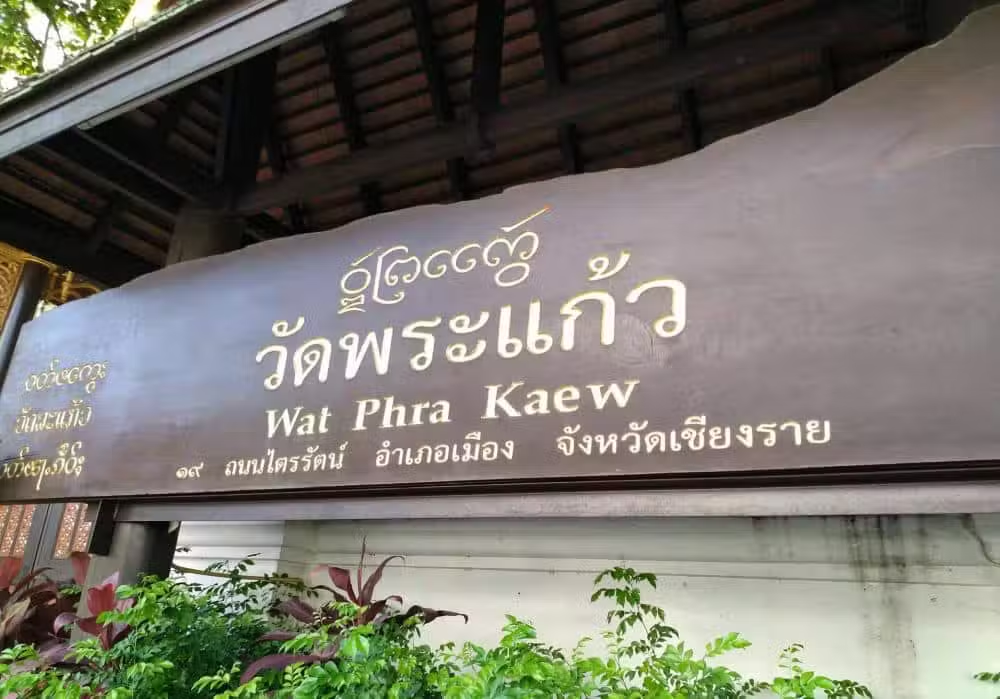
Wat Phra Kaew in Chiang Rai is closely associated with the discovery of the Emerald Buddha, one of Thailand’s most revered religious images. The original is now in Bangkok, but this quieter temple preserves the story through its chedi, a later jade Buddha image and buildings devoted to worship and Buddhist art. It lies on Trairat Road in the western part of central Chiang Rai.
A visit brings together several distinct spaces rather than one hall: the principal ordination hall, Ho Phra Yok or Jade Hall, the chedi and Ho Luang Saeng Kaew Museum. Leave time to move between them and look at their different Buddha images, architecture and displays. The temple remains an active place of worship, with visitor access shaped by ceremonies and the opening of individual buildings.
The Emerald Buddha connection
The temple was originally known as Wat Pa Yia, or Bamboo Forest Temple. Its discovery tradition recounts lightning striking a chedi and revealing a Buddha image whose outer covering later cracked to expose green stone beneath. The image became known as the Emerald Buddha, and the temple took the name Wat Phra Kaew in recognition of it.
The Emerald Buddha subsequently travelled between centres of power in the region before reaching Bangkok, where it is enshrined in the Grand Palace’s temple. Chiang Rai’s Wat Phra Kaew is important as the discovery site; it does not house that original image today. Keeping this distinction in mind makes the later Jade Hall and the temple’s historical role easier to understand.
Exploring the temple buildings
Ho Phra Yok and the jade image
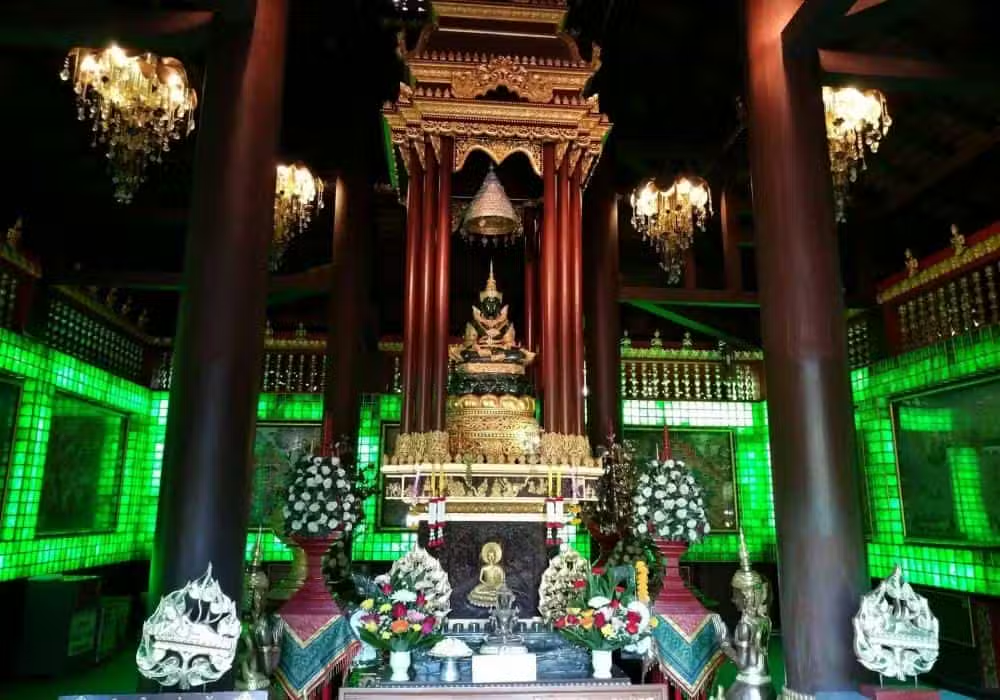
Ho Phra Yok is the hall containing Phra Yok Chiang Rai, a later green jade Buddha image created for the city. Its Lanna-style wooden setting and religious decoration give it a different character from the main ordination hall. Look for the murals that connect the image with the discovery tradition and its arrival at the temple.
The jade image is a devotional object in its own right, not simply a substitute for a missing exhibit. Pause quietly while visitors make offerings, and photograph only where permitted. The hall is one of the main reasons to visit, so check its access if you arrive near closing time.
The ordination hall and chedi
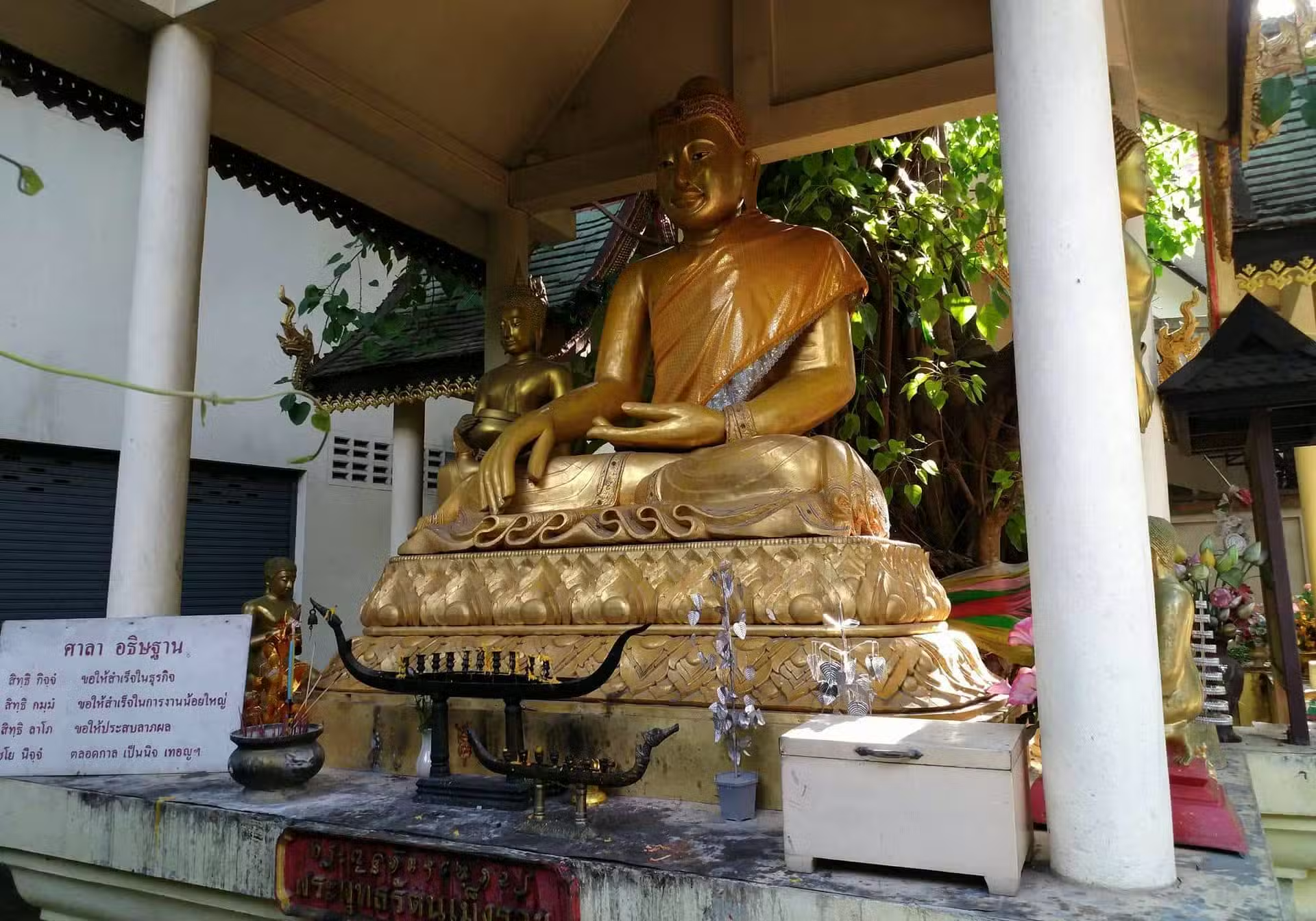
The principal hall has a low, layered roof and contains Phra Chao Lan Thong, a bronze seated Buddha image. The architecture, entrance and interior reward an unhurried look, particularly if you are comparing Chiang Rai’s traditional temples with its newer artist-designed attractions. Remove shoes where indicated and avoid interrupting worship.
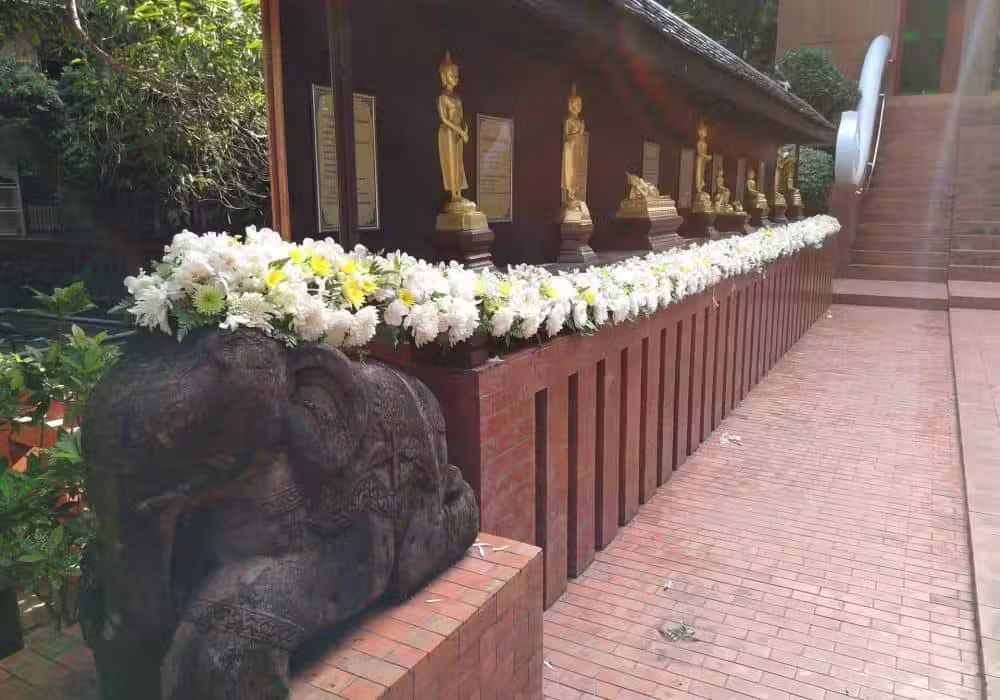
Behind the hall stands the gold-clad chedi associated with the discovery story. Its tiered, octagonal form gives you another point of reference for the temple’s history. Walk around the public areas respectfully rather than treating the grounds only as a route between the jade image and museum.
Ho Luang Saeng Kaew Museum
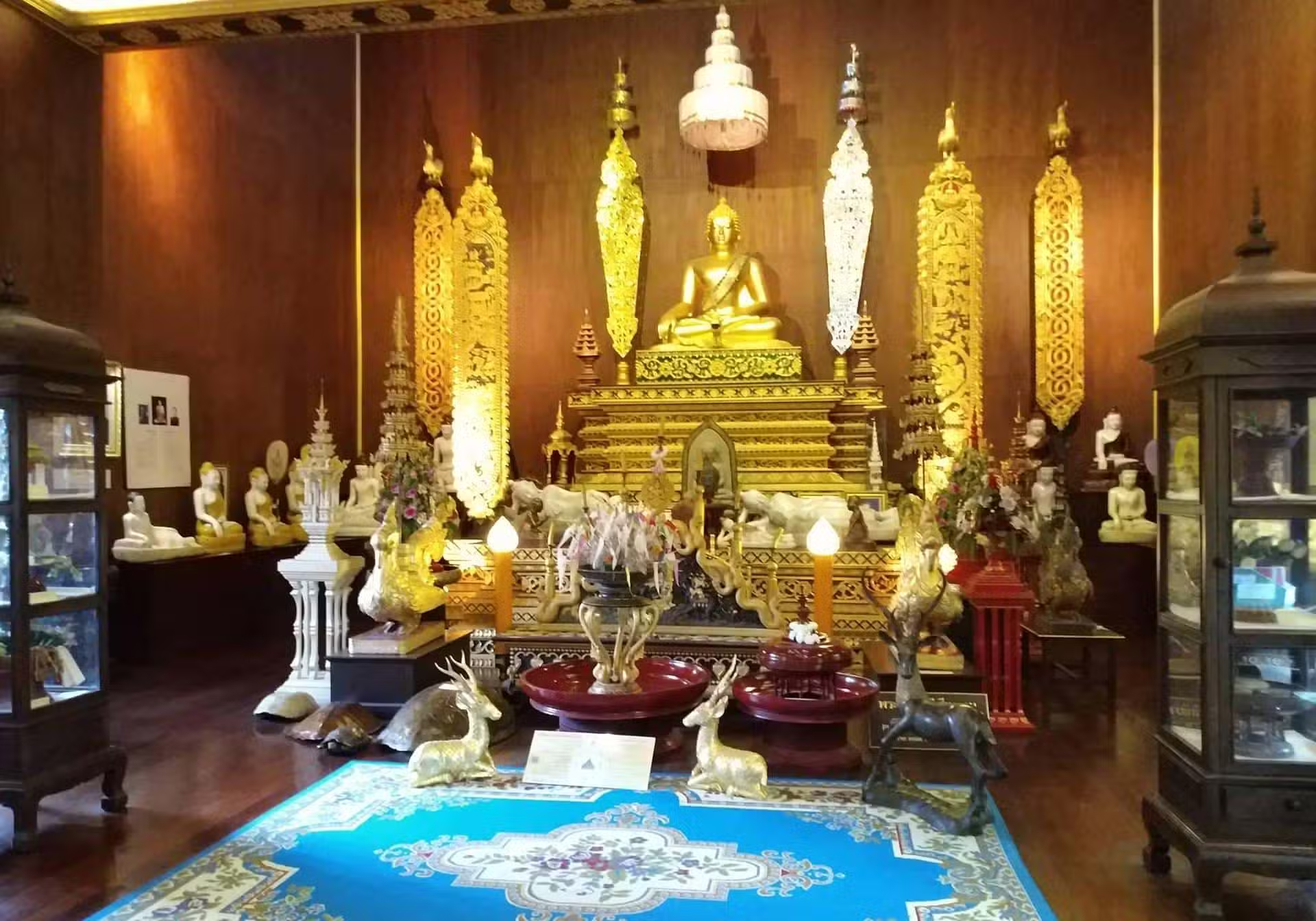
The two-storey museum combines Lanna architectural features with religious and cultural collections. Displays include Buddha images and artefacts connected with the temple and northern Buddhist traditions. It adds context to objects seen in the worship halls, making the visit more substantial than a quick look at the chedi.
Museum access is separate from simply entering the grounds. Ask staff about the open galleries and follow the rules for photography, especially flash. If stairs or movement between levels are a concern, check the available access route before beginning the visit rather than assuming the whole building is equally accessible.
Opening arrangements and admission
General temple admission is free, with donations separate from an entrance charge. Plan a daytime visit; the temple is listed as opening at 7am, while access to the museum and individual halls follows their own arrangements. Confirm these with the temple if a particular building is essential to your visit.
Allow about 45-90 minutes to see the halls, chedi and museum without rushing. A brief visit can focus on the Jade Hall and grounds, while visitors interested in religious art should leave longer for the collection. Arrive well before late afternoon so that closing arrangements do not reduce the experience to the exterior alone.
Dress and temple etiquette
Cover shoulders, knees and midriff when entering religious spaces. Wear shoes that are easy to remove, keep your voice low and leave the main approach clear for people praying. Do not climb structures, touch devotional objects without permission or use Buddha images as backdrops for disrespectful poses.
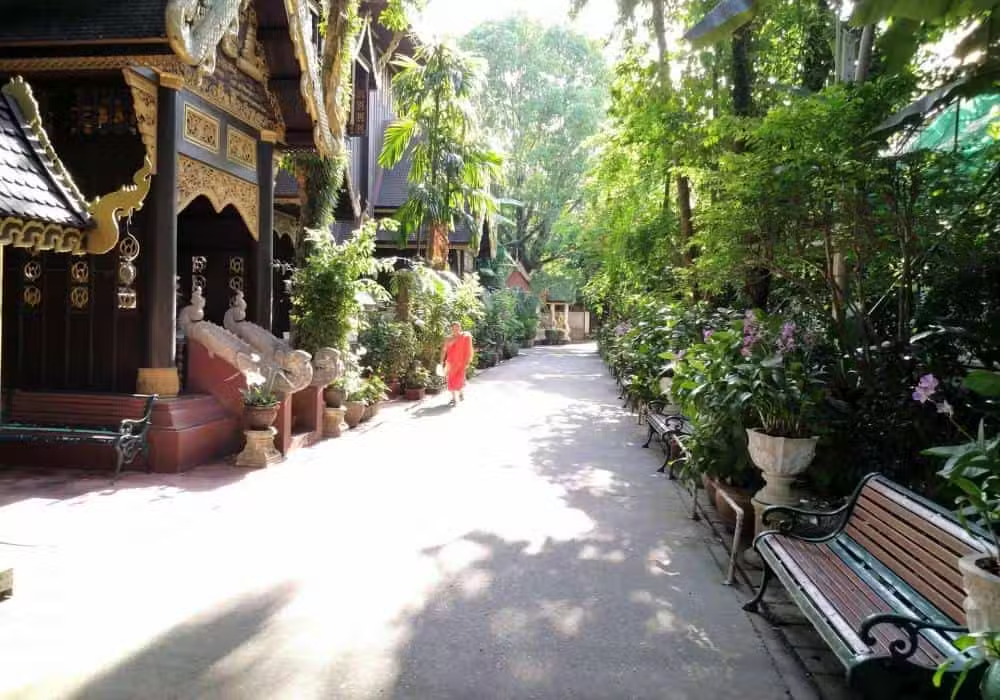
The grounds offer a calmer setting than some of Chiang Rai’s busiest tour stops, but ceremonies can change the atmosphere and access. Give worshippers space and follow staff’s directions if a hall is being used. Families should keep children beside them in the museum and around offerings.
Getting there and combining nearby temples
Wat Phra Kaew is at 19 Moo 1, Trairat Road, Wiang, Chiang Rai 57000. It is in the central city’s western area, around 300 metres from Wat Phra Singh, so the two can be combined on foot. A taxi, tuk-tuk or app-based car is convenient from accommodation farther away; give the driver Chiang Rai as well as the temple name.
The Clock Tower and other central streets can be included in a longer walk, with time allowed for heat and crossings. Use the temple’s designated parking areas if arriving by car and keep access to the halls clear. An onward trip to the Blue Temple, White Temple or Baan Dam Museum requires separate travel rather than a continuation of the same short temple walk.
Wat Phra Kaew FAQs
Is the original Emerald Buddha here?
No. The original is enshrined in Bangkok’s Grand Palace temple. Chiang Rai’s Wat Phra Kaew is associated with its discovery and contains Phra Yok Chiang Rai, a later jade Buddha image in its own hall.
Is this the same temple as Wat Phra Kaew in Bangkok?
They share a name and the Emerald Buddha connection, but they are separate temples in different cities. Use the Chiang Rai location on Trairat Road when arranging transport or choosing a sightseeing itinerary.
What should I prioritise?
Visit the Jade Hall, principal hall and chedi, then spend time in Ho Luang Saeng Kaew Museum if it is open. Each has a different role, so allow more than a quick photo stop to understand the temple’s history and religious art.
How long does a visit take?
Allow about 45-90 minutes for the main spaces and museum. You can make a shorter visit to the grounds, but arriving early enough for the individual halls gives you a fuller experience.
Is admission free?
General entry is free, with donations separate. Check access to the museum and halls when you arrive, particularly during ceremonies or towards the end of the day.
Can I combine it with Wat Phra Singh?
Yes. Wat Phra Singh is around 300 metres away in central Chiang Rai, making the pair convenient for a local temple walk. The White Temple and Blue Temple are farther away and need additional travel time.









Do You Have a Question to Ask?