


















































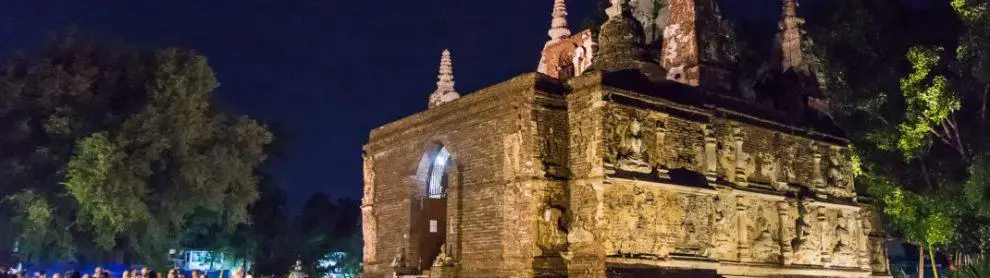
Wat Chet Yot, also written Wat Jed Yod, is a historic Buddhist temple northwest of Chiang Mai’s Old City near the Superhighway. Its seven-spired sanctuary and surviving stucco figures distinguish it from the city’s more familiar gilded temple halls.
The temple is associated with King Tilokarat and the fifteenth-century Lanna kingdom. Its architecture draws on the Mahabodhi Temple at Bodh Gaya in India, the place linked with the Buddha’s enlightenment. A visit rewards close observation of the old structure and its relief work as well as a walk through the wider grounds.
The Seven Spires and Stucco Figures
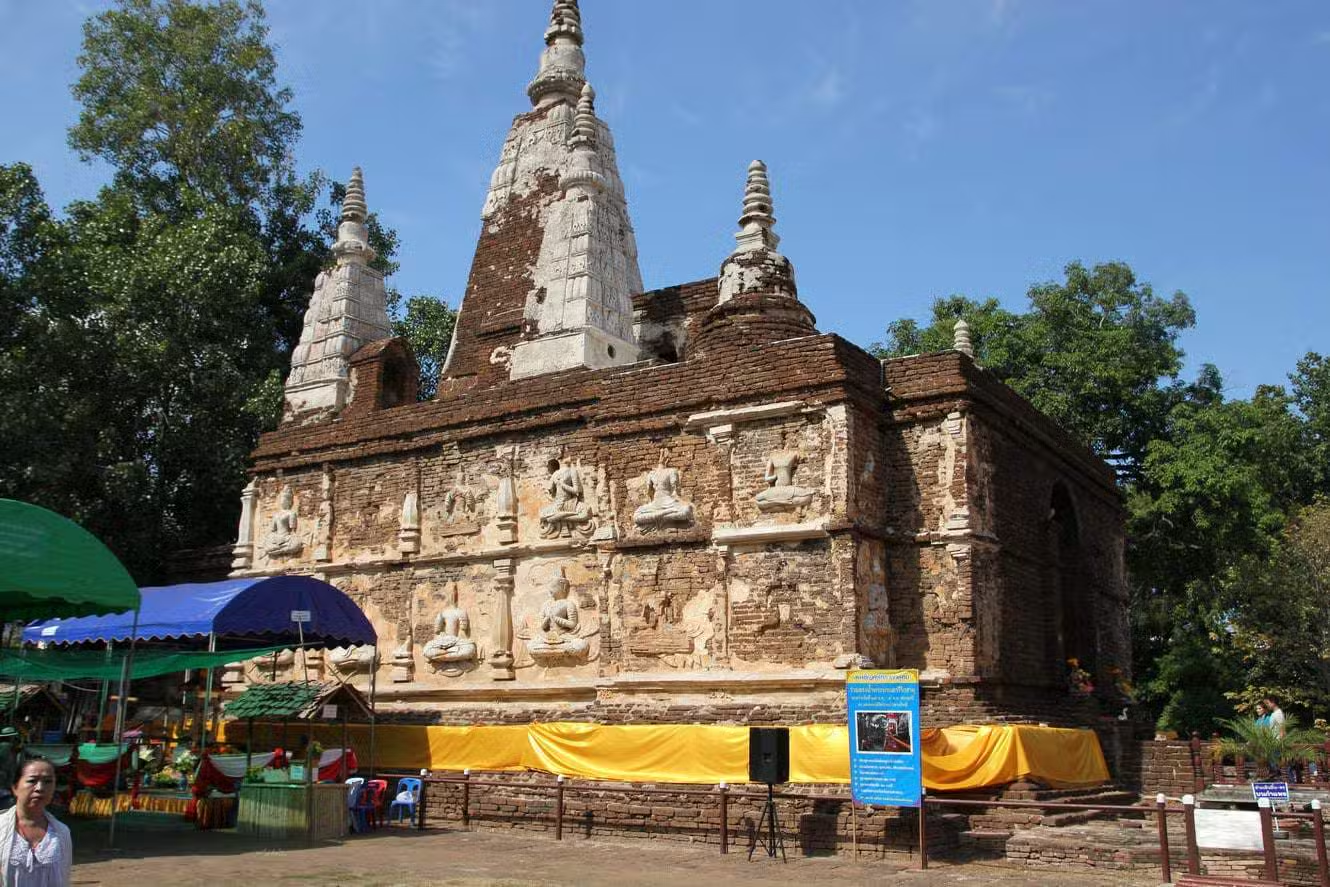
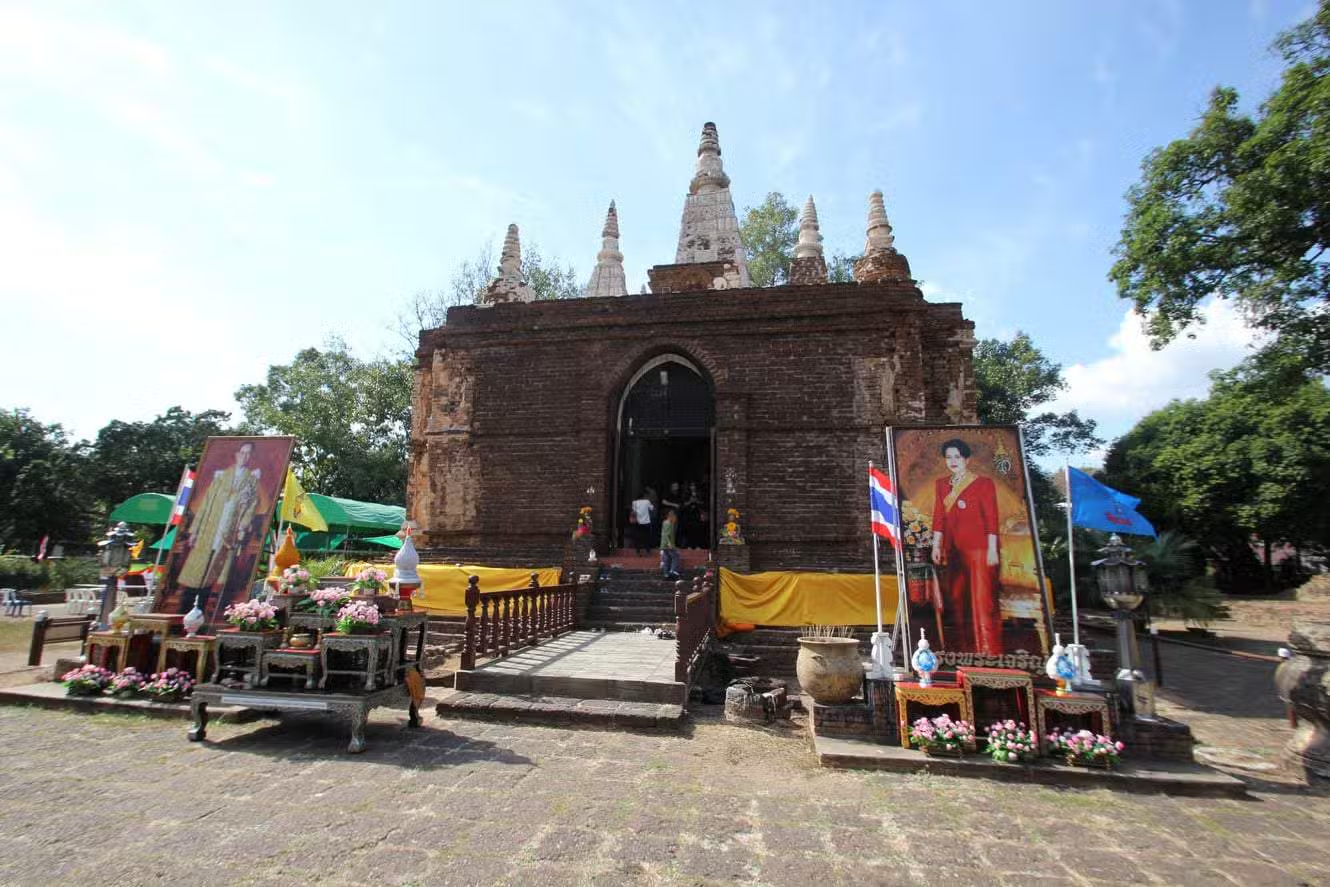
The name Chet Yot refers to the seven pinnacles above the rectangular sanctuary. A taller central form and the smaller surrounding spires create a silhouette unlike the single bell-shaped chedis seen at many Chiang Mai temples. Step back to appreciate the whole composition before looking at the walls.
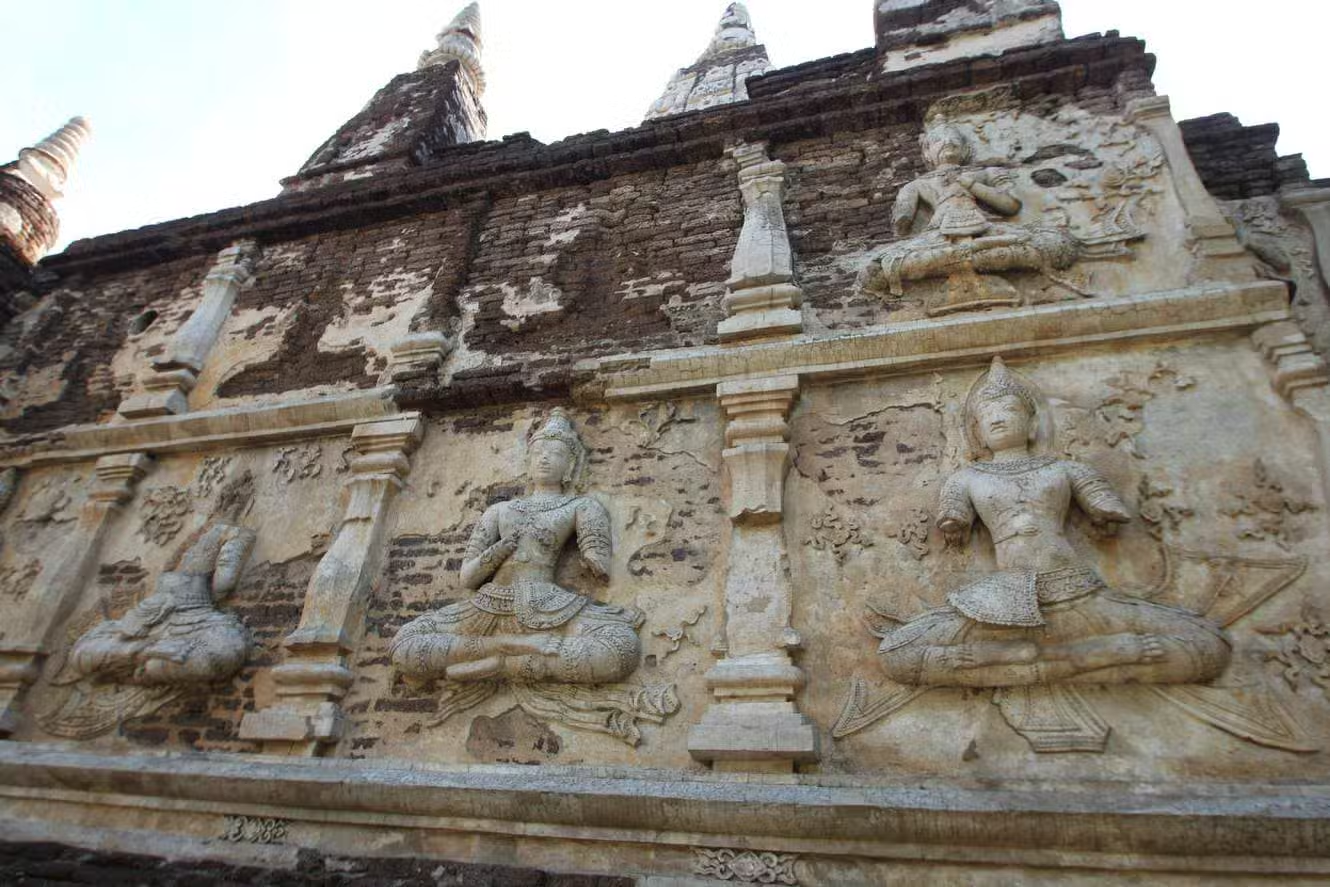
The surviving stucco reliefs are among the most compelling details. Celestial figures, ornament and worn surfaces give the building texture and show the skill of the artisans who decorated it. Some details are clearer than others, so walk around the public approach and take time to compare different sections.
The monument’s appeal comes partly from its age and weathering. It does not need to be viewed only as a brightly restored temple: the remaining fragments and reliefs are central to understanding it. Keep your hands away from the stucco and masonry, and respect barriers around vulnerable areas.
King Tilokarat and Buddhist Scholarship
Wat Chet Yot was founded around 1455 during King Tilokarat’s reign. Its connection with Bodh Gaya reflects the religious exchange linking Lanna with the wider Buddhist world. The seven-spired form also recalls the weeks associated with the Buddha’s period after enlightenment.
The temple later hosted an important assembly of monks to revise the Tripitaka, the Buddhist scriptures, in 1477. This gives the site a significance beyond its architecture: it was also a place of religious learning and royal patronage. A brief understanding of that role makes the sanctuary more meaningful than simply counting its spires.
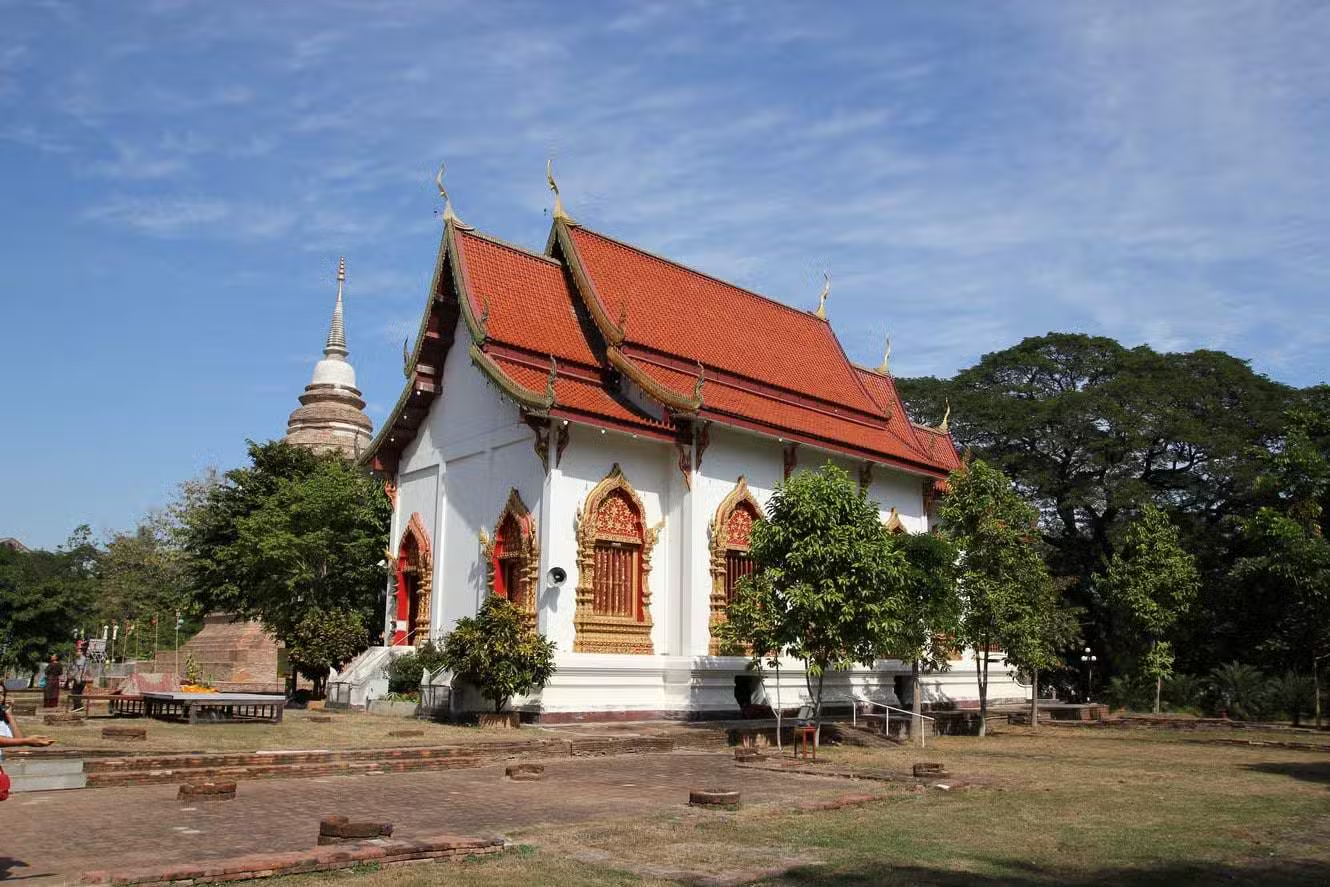
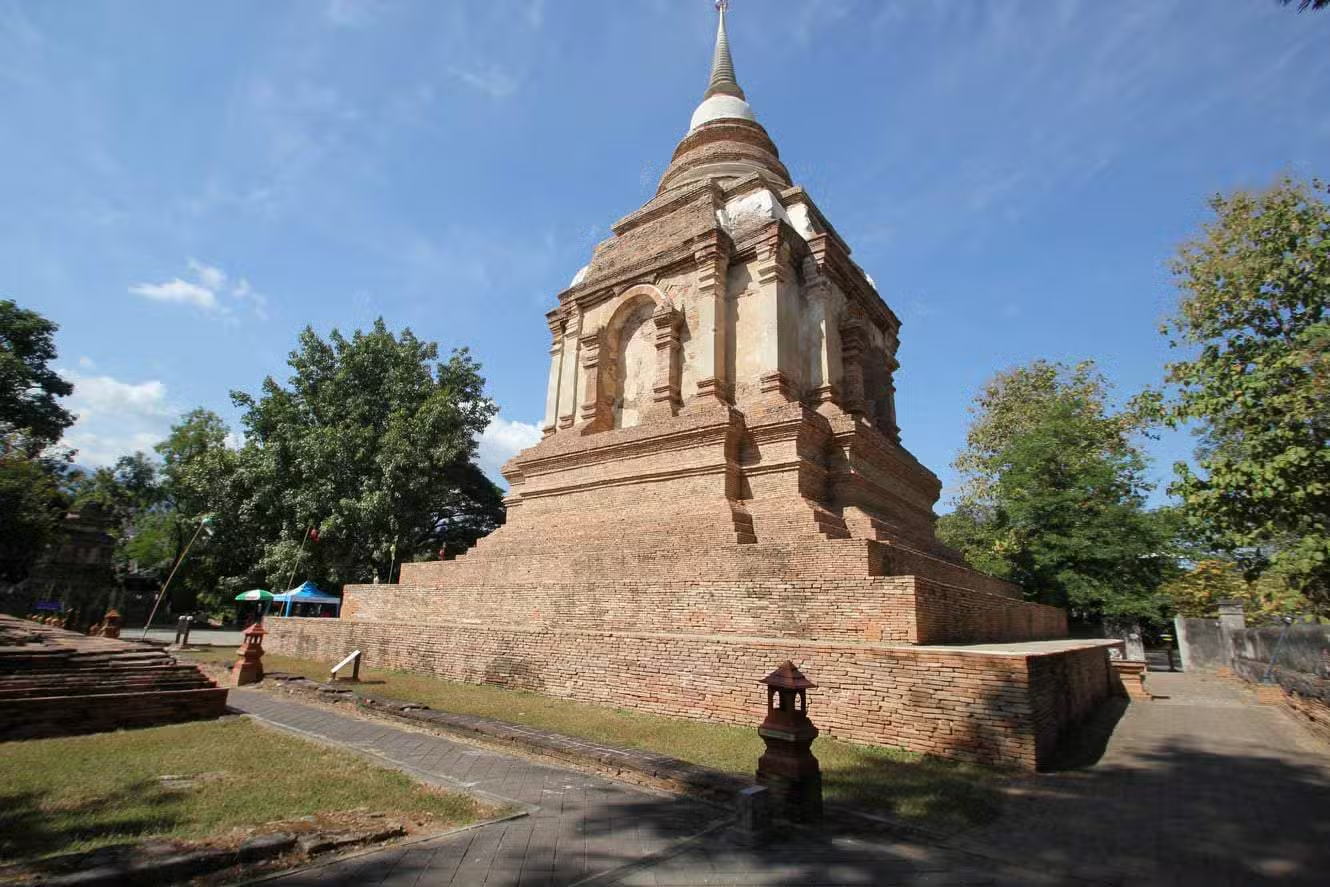
Other monuments in the grounds include a stupa associated with King Tilokarat’s ashes. Look at the relationship between these structures and the older sanctuary, while remembering that not every building dates from the same period. Repairs and later additions form part of the temple’s continuing history.
The Grounds and Living Temple
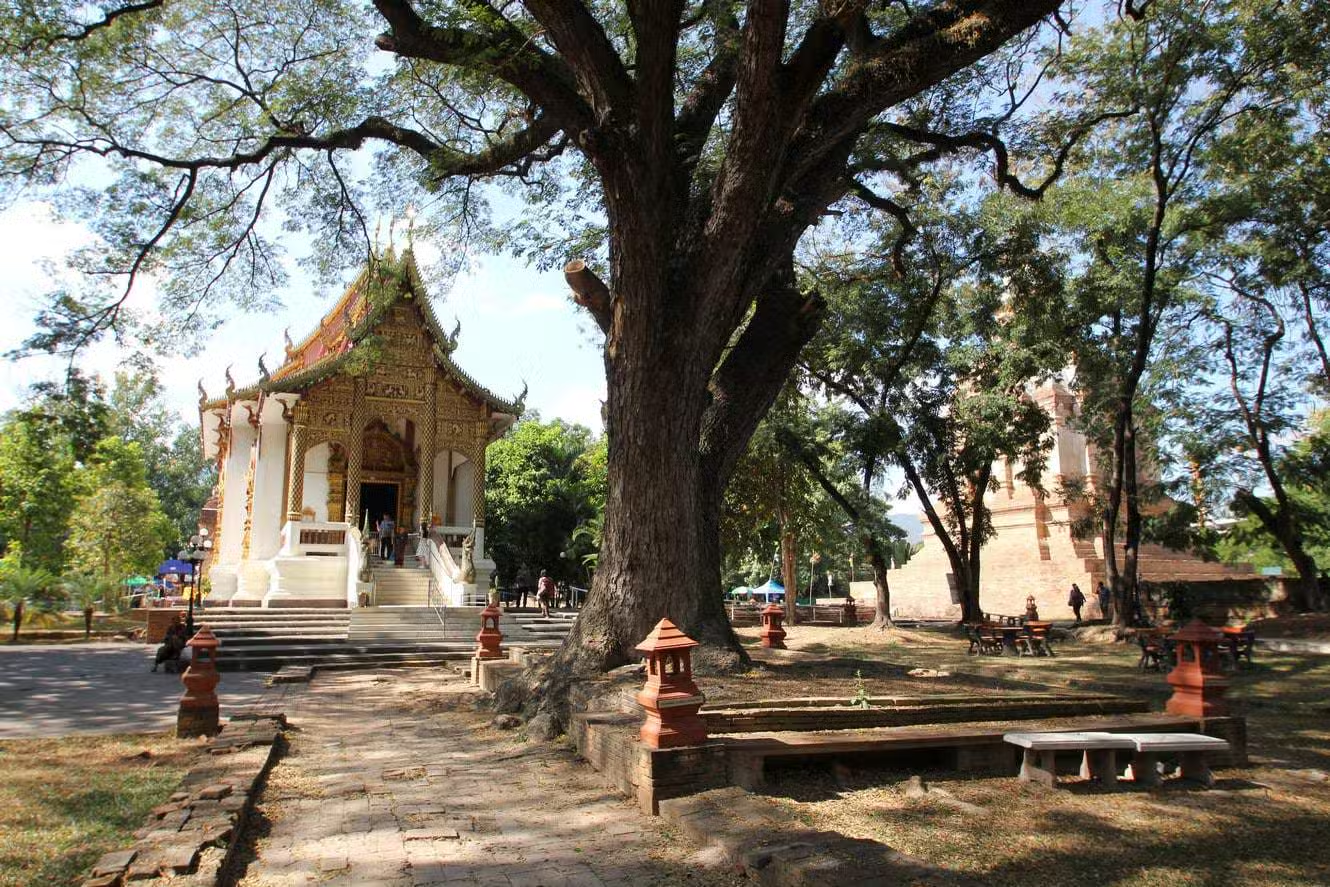
The compound provides space to look beyond the main monument, with trees and other religious buildings around the historic core. The Bodhi-tree connection is reflected in the temple’s formal name, Wat Photharam Maha Wihan. Walk through accessible areas and leave residential sections to the temple community.
Wat Chet Yot is also associated with devotion by people born in the Year of the Snake. Offerings and religious activity can therefore be part of what you see, alongside visitors studying the architecture. Observe respectfully without moving offerings or expecting a ceremony to be available on demand.
If a worship hall is open, remove shoes and enter quietly. The ancient sanctuary and roof areas should be viewed only from permitted spaces; follow current signs and staff instructions rather than assuming visitors are allowed to climb the monument.
Visiting Hours, Admission and Etiquette
Visitor hours are generally listed as 8am to 5pm, with free general entry. Confirm access at the gate if a particular hall or monument is your priority. Allow around 45 minutes to an hour for the seven-spired sanctuary, reliefs and a walk through the grounds.
Wear clothing covering shoulders and knees, and remove shoes at the indicated places. Ask before photographing monks or worshippers, keep voices low and leave space around people praying. Donations are welcome, but an offering does not provide access to a restricted building.
Getting to Wat Chet Yot
The temple is in Chang Phueak near the Chiang Mai-Lampang Superhighway, also known as Highway 11. Its entrance is reached from the local road approach around Jed Yod Road. Give your driver the temple name and marked entrance rather than asking to stop on the highway itself.
A taxi, app-based ride, tuk-tuk or agreed red songthaew trip is practical from the Old City or Nimman area. Agree on the fare and return arrangements for a private hire. The broad roads and junctions around the Superhighway make a vehicle useful even when the temple looks close on a map.
You can combine it with the Chiang Mai National Museum area or a visit to Nimman, allowing travel time between them. Check each stop’s separate opening arrangements and use safe crossings rather than treating the highway frontage as a pedestrian shortcut.
Wat Chet Yot FAQs
What makes Wat Chet Yot distinctive?
Its seven-spired sanctuary draws on the Mahabodhi Temple at Bodh Gaya, with surviving stucco celestial figures on the exterior. Look closely at the reliefs as well as the overall silhouette.
Is Wat Jed Yod the same temple?
Wat Chet Yot and Wat Jed Yod are common spelling variants. Its formal name is Wat Photharam Maha Wihan; use the Chiang Mai location near the Superhighway when arranging transport.
Is there an entrance fee?
General entry is free, with donations welcome. Respect any separate access restrictions around halls and historic structures.
How long should you allow?
Around 45 minutes to an hour gives time for the seven-spired sanctuary, stucco details and grounds. Visit during daylight and check the current access signs at the entrance.
Can you climb onto the sanctuary?
Follow current barriers and instructions, and view roof areas only from places explicitly permitted by the temple. Do not climb the masonry or touch the fragile stucco for a photograph.
How do you get there from central Chiang Mai?
Book a taxi, tuk-tuk, app-based ride or agreed songthaew to the temple entrance near Jed Yod Road and Highway 11. Confirm the fare and return pickup for a private trip.









Do You Have a Question to Ask?