



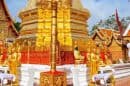
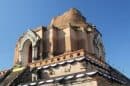
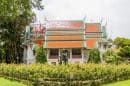

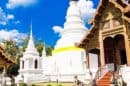














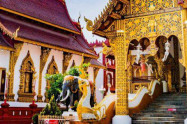

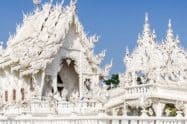





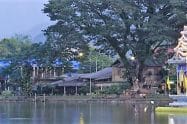
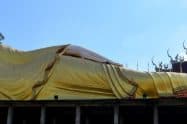






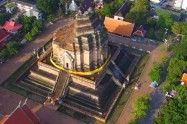




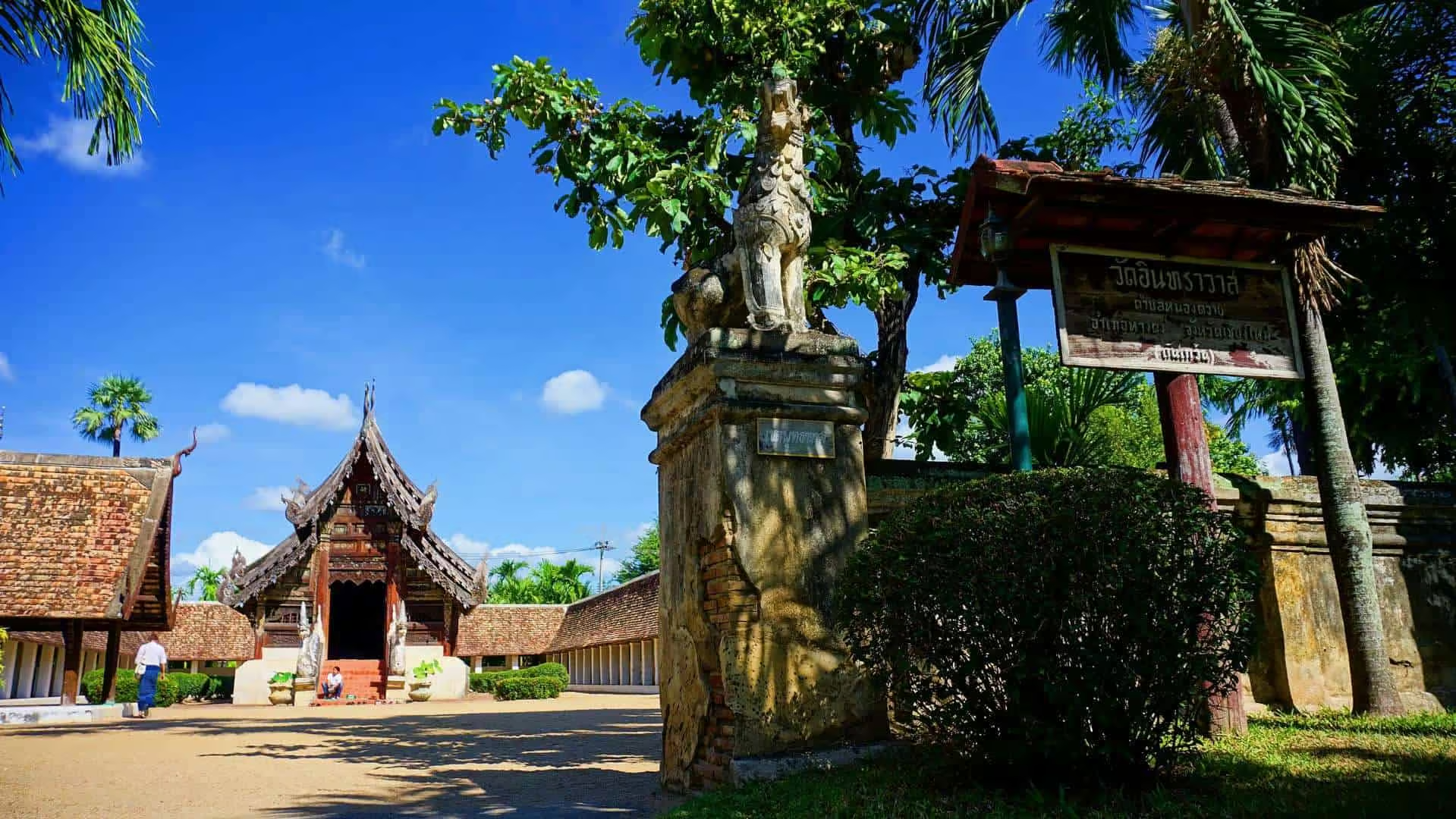
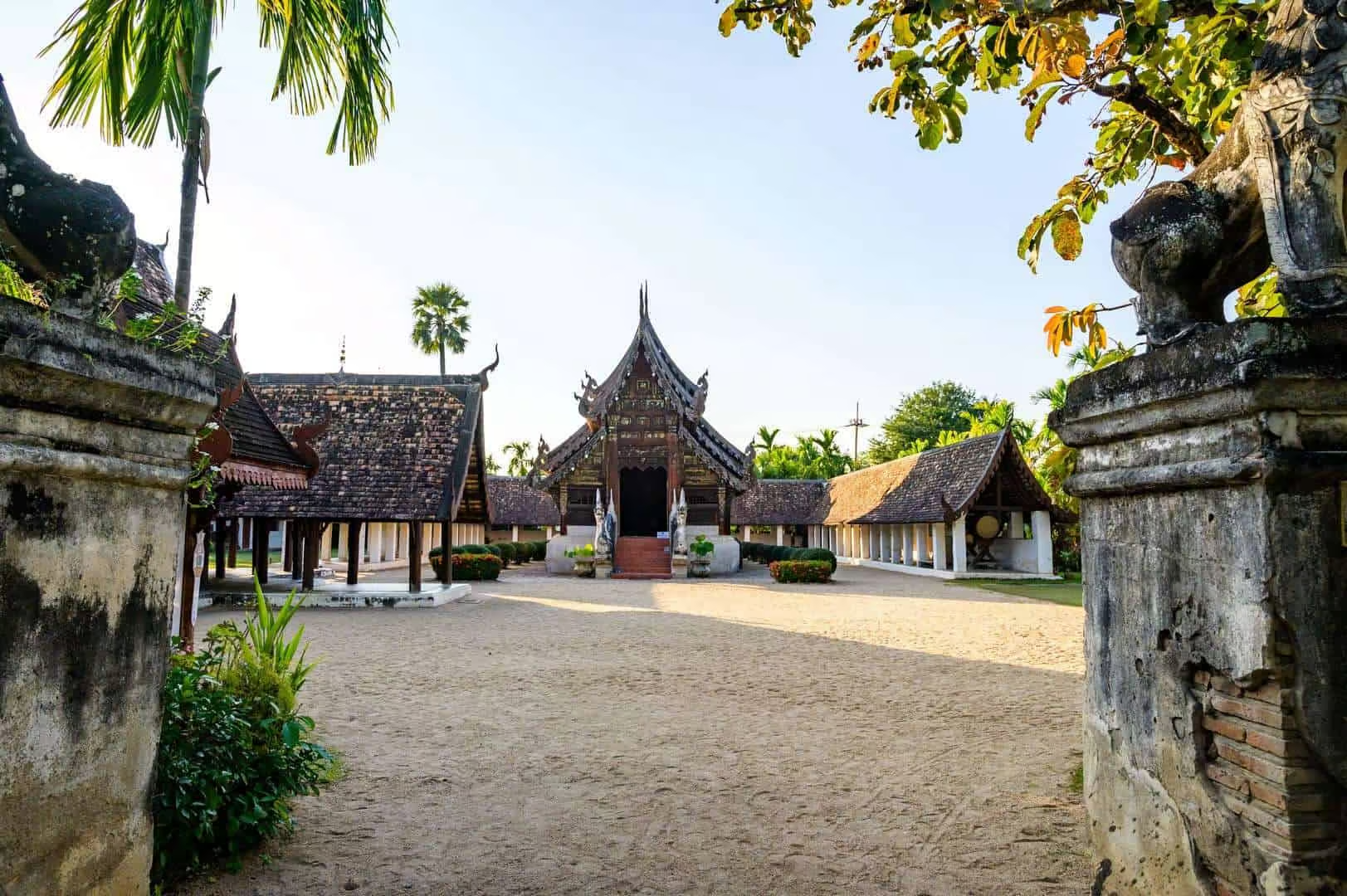
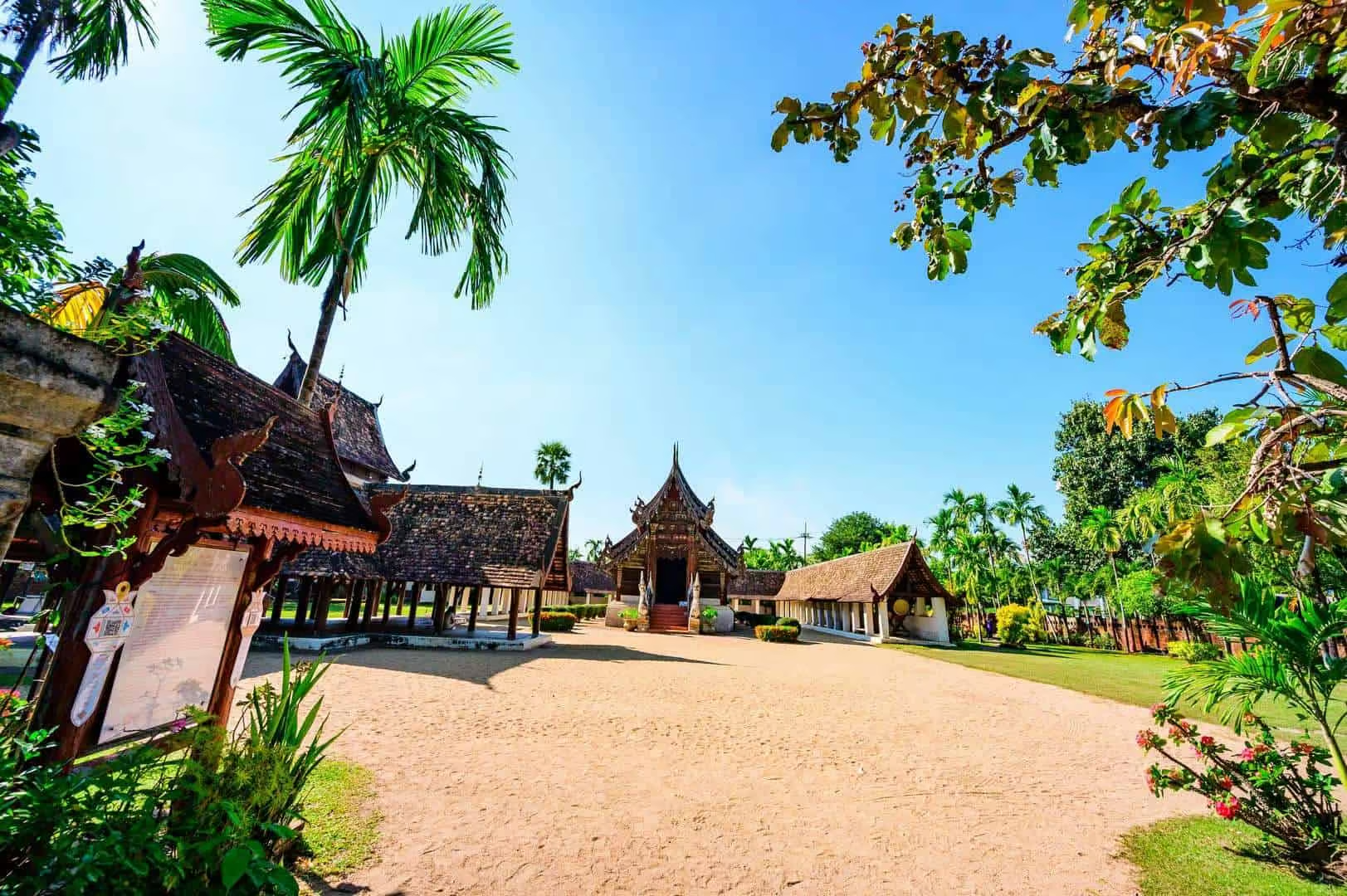
Wat Intharawat, better known locally as Wat Ton Kwen, is a Lanna temple in Nong Kwai, Hang Dong, southwest of central Chiang Mai. Its low timber hall, open galleries and distinctive four-gabled pavilion form a compact courtyard that rewards looking closely at the architecture.
The temple offers a change of scale from the large urban monasteries. Much of its character comes from the relationship between the buildings: shaded edges frame an open court, with rooflines and wooden detailing visible from several angles. It is a worthwhile stop for visitors interested in northern Thai temple design, while remaining a working religious place.
The Timber Hall and Courtyard
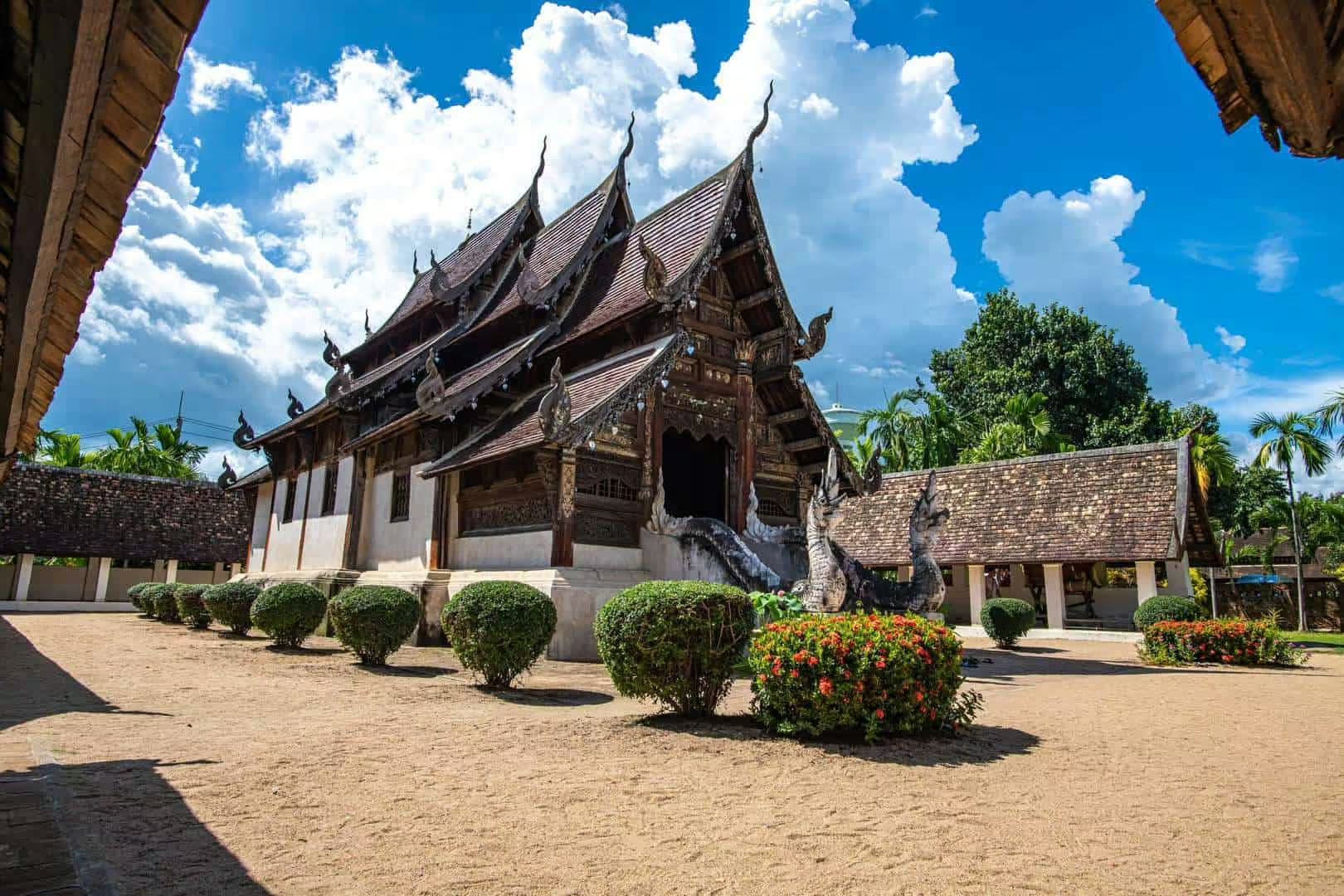
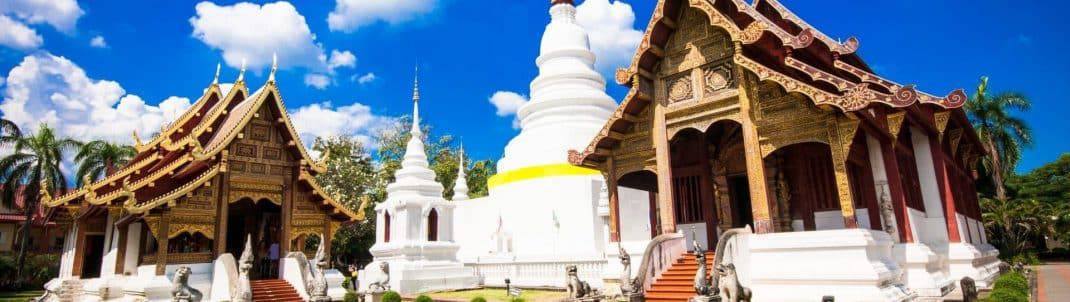
The main viharn, or assembly hall, dates to 1858. Its sweeping roof and timber structure are the visual centre of the temple, with carved and decorative details best appreciated at walking pace. Look at how the roof descends towards the sides of the building, rather than concentrating only on the front entrance.
Naga figures mark the approach to the hall. Inside, the principal Buddha image is shown in the gesture of overcoming Mara, a familiar subject in Thai Buddhist art. When the hall is open, remove your shoes at the indicated point and enter quietly; worshippers may be using the space even when there is no formal ceremony.
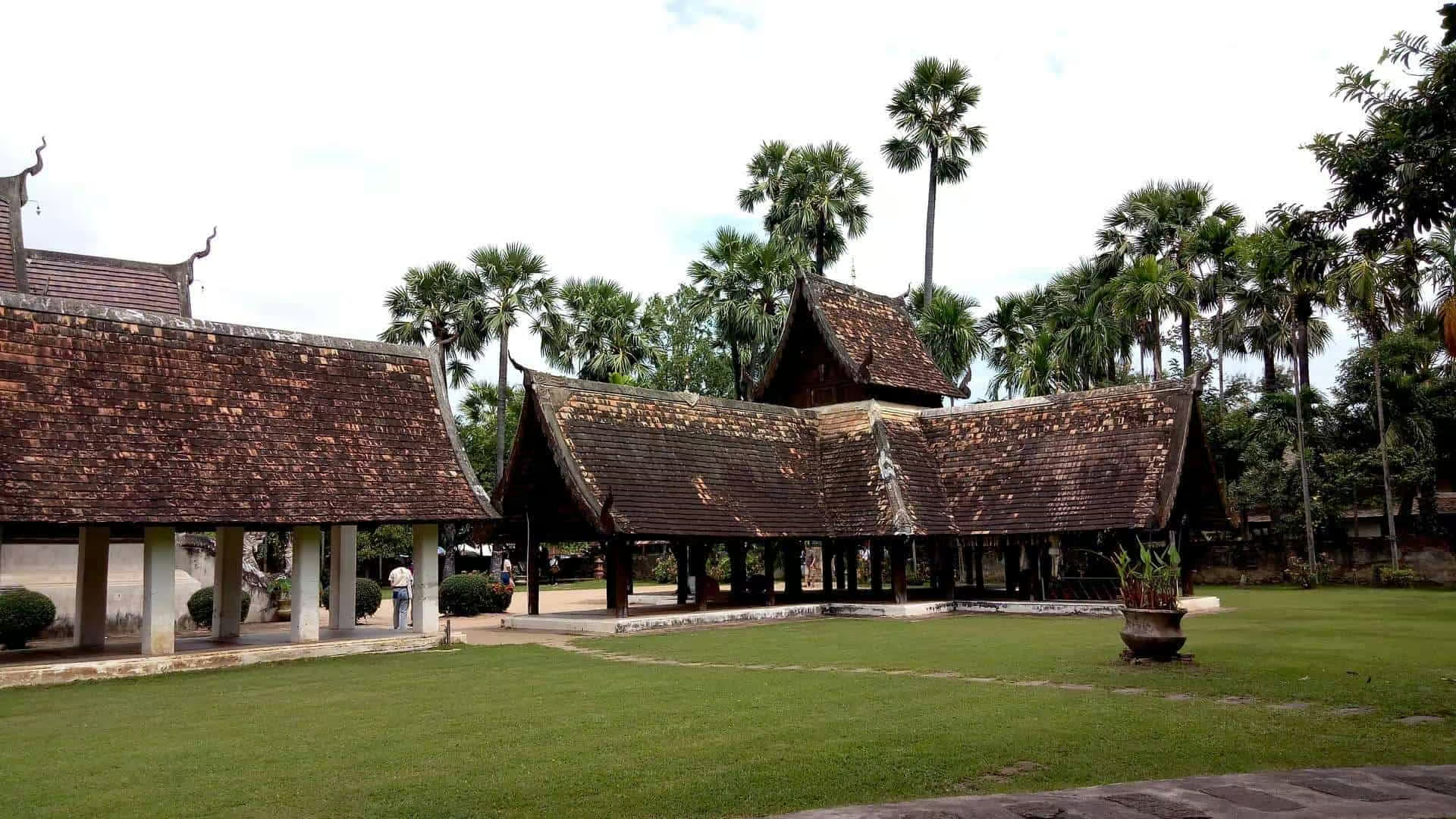
The galleries around the courtyard create sheltered viewpoints back towards the viharn and pavilion. A slow circuit helps reveal the balanced arrangement of the buildings and the contrast between the open ground and darker timber interiors. Conservation and repairs are part of the temple’s continuing life, so its historic appearance should not be taken to mean every element is untouched original material.
The Four-Gabled Pavilion
The open pavilion has a roof extending towards four sides, giving it a different outline from the long assembly hall. This chaturamuk form is an important part of Wat Ton Kwen’s identity. It is especially useful to view it from the courtyard, where the roof structure and its place within the temple ensemble are clear.
The pavilion is associated with the historic procession carrying a revered relic from Wat Phra That Si Chom Thong towards Chiang Mai. Wat Ton Kwen served as a stopping place along that journey, linking this small temple with wider Lanna religious traditions. The building’s ceremonial role adds context to its architecture; it should not be treated simply as a garden shelter.
Planning a Respectful Visit
Allow roughly 30 to 45 minutes for the courtyard and an open hall, or longer if you enjoy architectural photography. A short visit can still cover the main ensemble because the important buildings are close together.
General entry is free, with donations optional. Visit during daylight and check access on arrival, particularly if the hall is occupied by a ceremony. The grounds and individual interiors do not necessarily share an identical opening arrangement, and a quiet appearance is not permission to enter closed spaces.
Wear clothing covering shoulders and knees, remove shoes where required and keep your voice low near prayer areas. Ask before photographing people or religious activities. Do not sit on carved rails, climb architectural features or reposition temple objects for a picture.
Getting to Wat Intharawat
The temple is on Ban Ton Kaen Soi 3 in Nong Kwai, Hang Dong. Use both names, Wat Intharawat and Wat Ton Kwen, when arranging transport, as the shorter local name is widely used. It is outside Chiang Mai’s Old City and is not a practical addition to an itinerary made entirely on foot.
Arrange a return ride before being dropped off. From the city, the Canal Road approach towards Nong Kwai provides access to the local streets around the temple. A driver or self-drive visit works well, especially when combining it with the Royal Park Rajapruek or Wat Phra That Doi Kham area. Each is a separate attraction with its own entry and visiting arrangements.
Wat Intharawat FAQs
Is Wat Intharawat the same place as Wat Ton Kwen?
Yes. Wat Intharawat is the formal name, while Wat Ton Kwen is the commonly used local name. Use either together with Nong Kwai, Hang Dong, to identify this temple when booking a ride.
What makes the temple worth visiting?
Its appeal lies in the Lanna architectural ensemble: the timber assembly hall, courtyard galleries and four-gabled pavilion. Looking at the buildings together gives a stronger impression than a quick photograph of the main facade alone.
Is there an entrance fee?
General entry is free, and donations are optional. Access to the hall depends on local religious activities, so check on arrival and do not treat an open courtyard as permission to enter every building.
How much time should I allow?
Around 30 to 45 minutes suits a relaxed visit to the main courtyard and an open hall. Visitors studying rooflines and timber details may want longer, while transport time is additional because the temple is outside the Old City.
Can I combine it with other southwest Chiang Mai sights?
A vehicle-based outing can include Wat Phra That Doi Kham or Royal Park Rajapruek. Allow separately for their opening hours and any admission charges, and agree the return transport before leaving the city.











Do You Have a Question to Ask?