





























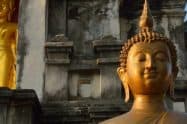
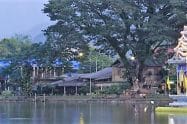















Wat Ku Tao is a Buddhist temple just north of Chiang Mai’s Old City, beside the municipal stadium. Its distinctive chedi, shaped like five rounded sections stacked above one another, makes it a memorable addition to a temple itinerary.
Also known as Wat Welu Wanaram, the temple has close ties to Chiang Mai’s Shan, or Tai Yai, community. The chedi and living religious traditions give the visit interest beyond a quick photograph of an unusual building.
The Rounded Chedi
The name Ku Tao is commonly associated with the chedi’s gourd or watermelon-like shape. Looking from a little distance helps reveal the full stack of rounded forms; closer inspection brings out the smaller decorative details.
Local tradition connects the monument with the ashes of Nawrahta Minsaw, a Burmese ruler of Chiang Mai. The temple’s early history is not completely established, so this association is best understood as part of its historical tradition rather than a precisely documented construction date.
Shan Buddhist Traditions
Wat Ku Tao is associated with Poy Sang Long, the Shan novice-ordination celebration. Elaborate clothing, processions and family participation accompany the transition of boys into Buddhist novice life.
The celebration is a special event rather than a daily performance. Check the temple’s programme if that is the reason for your visit, and remember that the ceremonies belong to the participating families and community. Ask before taking close portraits and keep procession routes clear.
Planning a Temple Visit
The temple is generally open from 6am to 6pm, with no ordinary entrance fee. Allow roughly 30 to 45 minutes for the chedi and accessible public areas, or longer when attending a ceremony with permission.
Wear clothing covering shoulders and knees, remove shoes where required and keep your voice low near worshippers. Buildings may be closed during services or when no attendant is available; an open compound does not guarantee access to every hall.
Getting to Wat Ku Tao
The temple is on Ku Tao Road in Si Phum, immediately north of the municipal stadium. It is around a kilometre north of Chang Phueak Gate, although the actual walking route and starting point will affect the distance.
A taxi, red songthaew or app-based car can be practical in hot weather. Show the temple’s name and map location, agree any songthaew fare before departure and use the temple entrance rather than assuming the stadium grounds provide a shortcut.
Wat Ku Tao FAQs
What is special about Wat Ku Tao?
Its chedi has five rounded sections that resemble stacked gourds or watermelons. The temple is also associated with Chiang Mai’s Shan Buddhist community and the Poy Sang Long novice-ordination tradition.
Where is the temple located?
It is on Ku Tao Road in Si Phum, north of the Old City and beside the Chiang Mai municipal stadium. Chang Phueak Gate is a useful nearby reference point for planning your journey.
Is there an entrance fee?
Ordinary temple entry is free, with donations welcome where indicated. General visiting hours are around 6am to 6pm; access to individual buildings depends on services and temple arrangements.
Can you see Poy Sang Long every day?
No. This is a scheduled religious celebration, usually associated with the late-March or early-April period. Confirm the particular year’s programme instead of expecting a procession during an ordinary visit.
How should visitors dress?
Cover shoulders and knees and wear footwear that is easy to remove before entering halls. Respect worshippers, follow signs and ask before photographing people participating in ceremonies.
How long does a visit take?
Allow about 30 to 45 minutes for a normal visit. A ceremony can take much longer, while restricted access or a brief stop to see the chedi may make the visit shorter.









Do You Have a Question to Ask?