


















































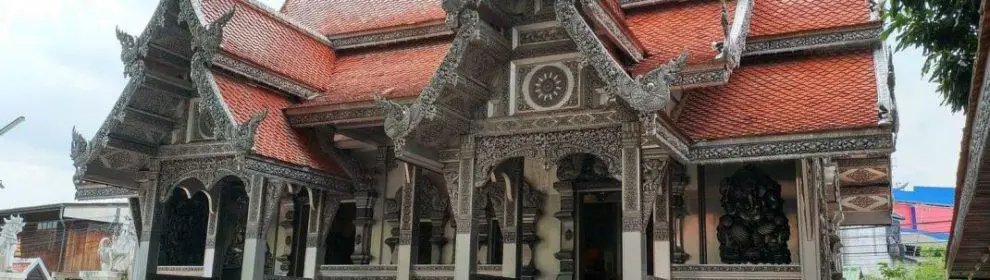
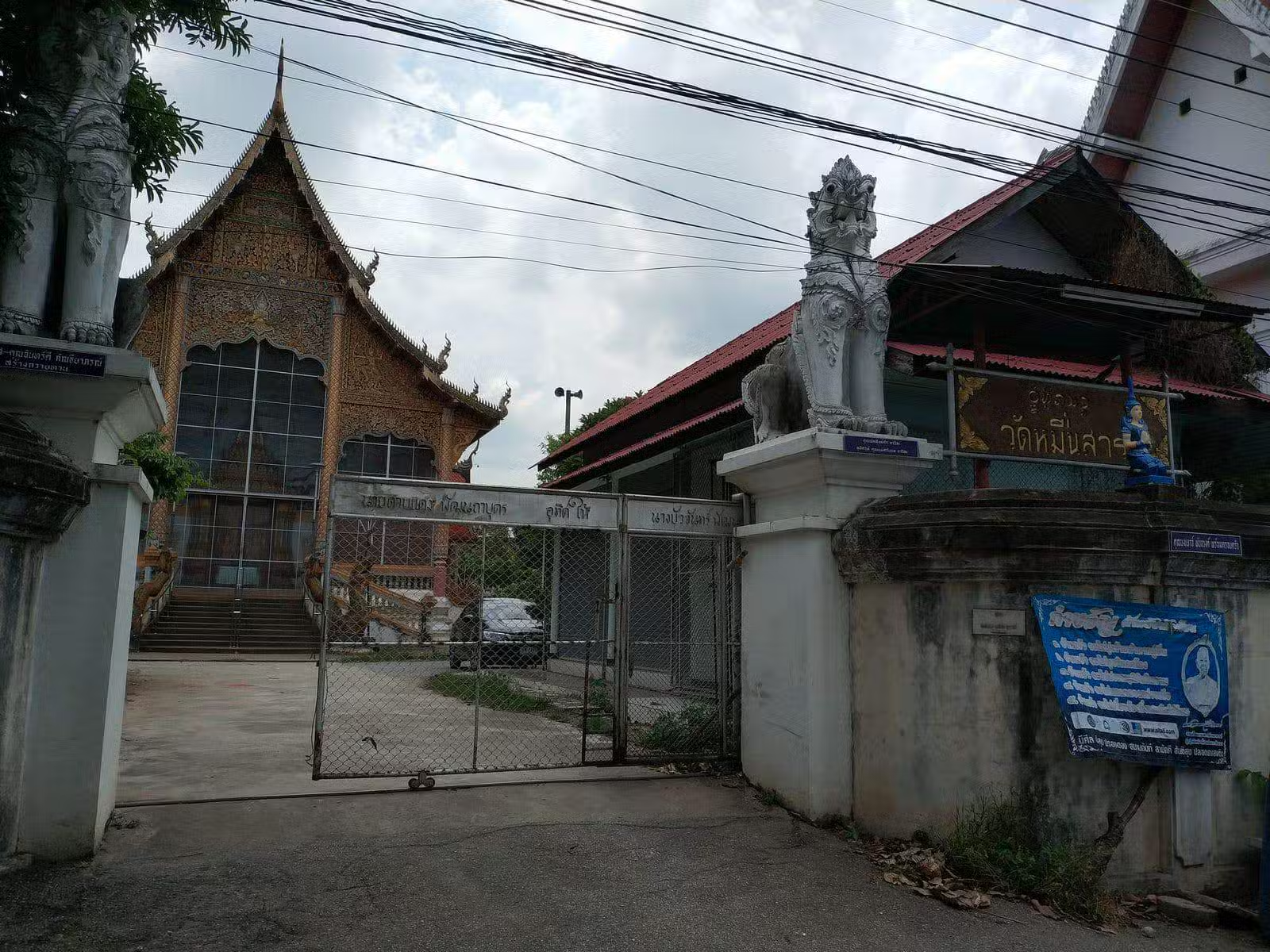
Wat Muen San is a temple in Chiang Mai’s Wua Lai silversmith neighbourhood, south of the Old City. Its embossed metalwork, small museum and wartime memorial bring together three parts of the area’s story: Buddhist devotion, local craftsmanship and the temple’s role during the Second World War.
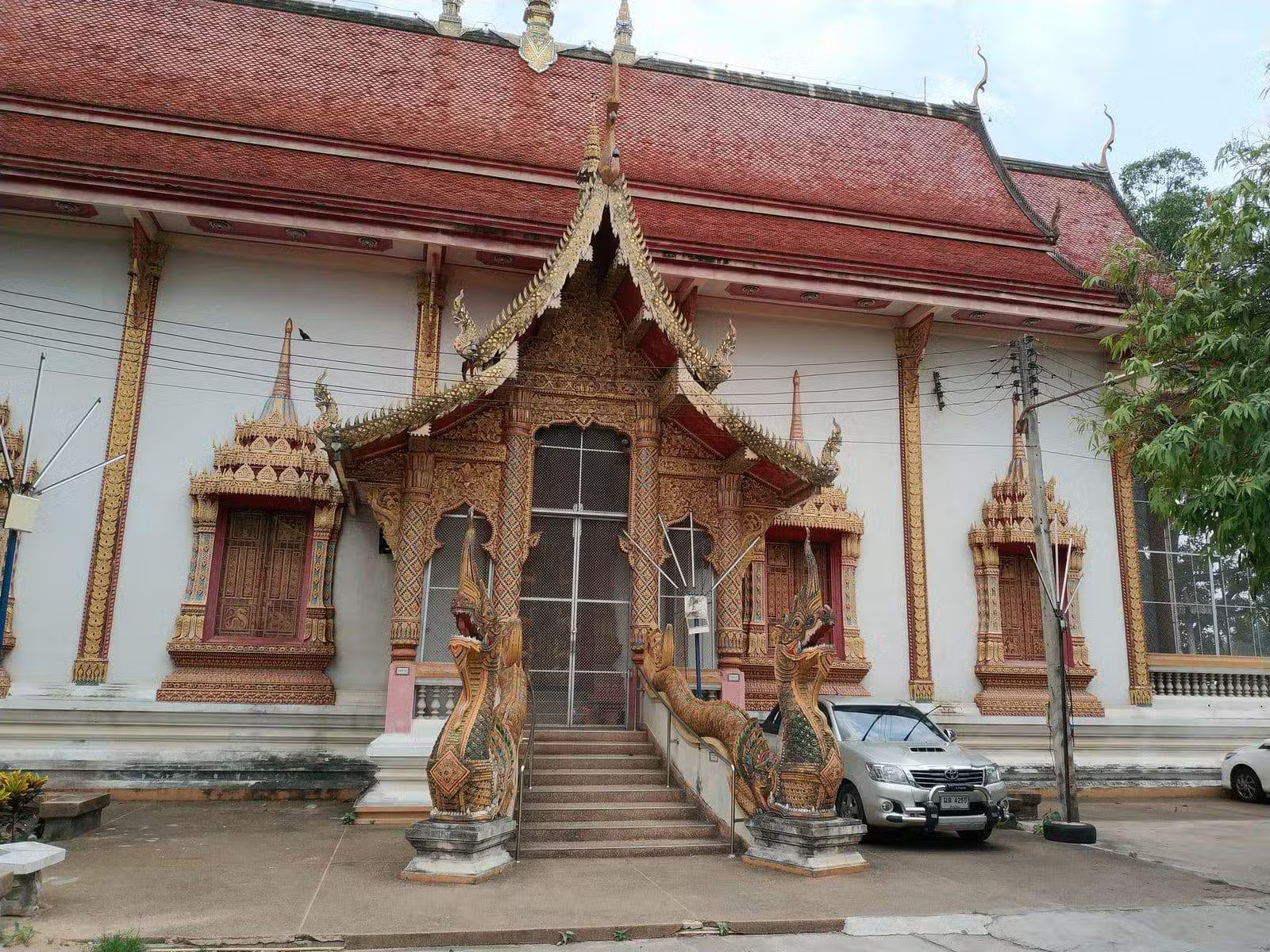
The silver-coloured Suttajitto Gallery is the most distinctive starting point, but the grounds also contain a chedi and worship halls. Visit in daylight and ask about access to the gallery and museum when you arrive; some buildings are kept closed outside particular activities.
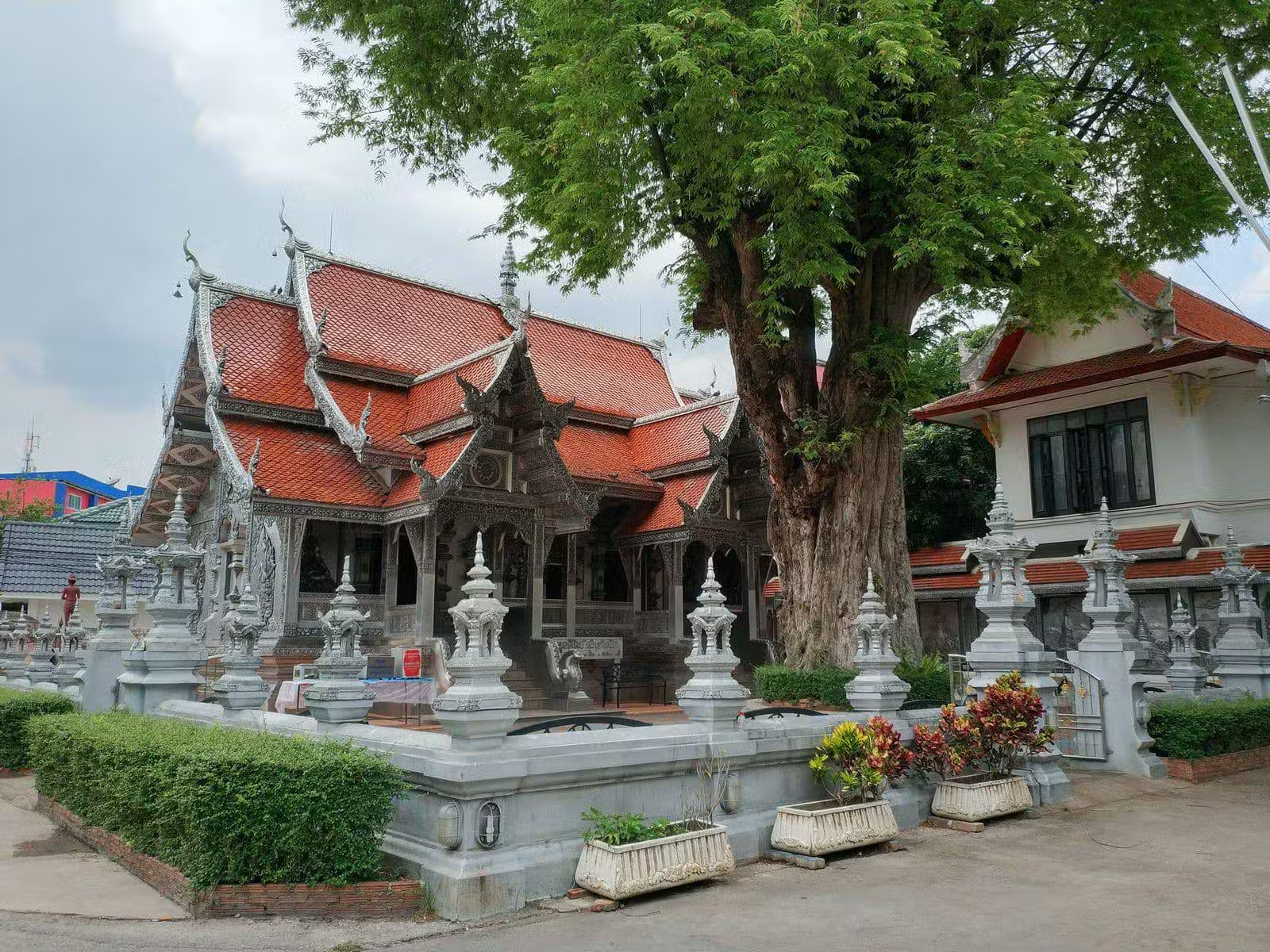
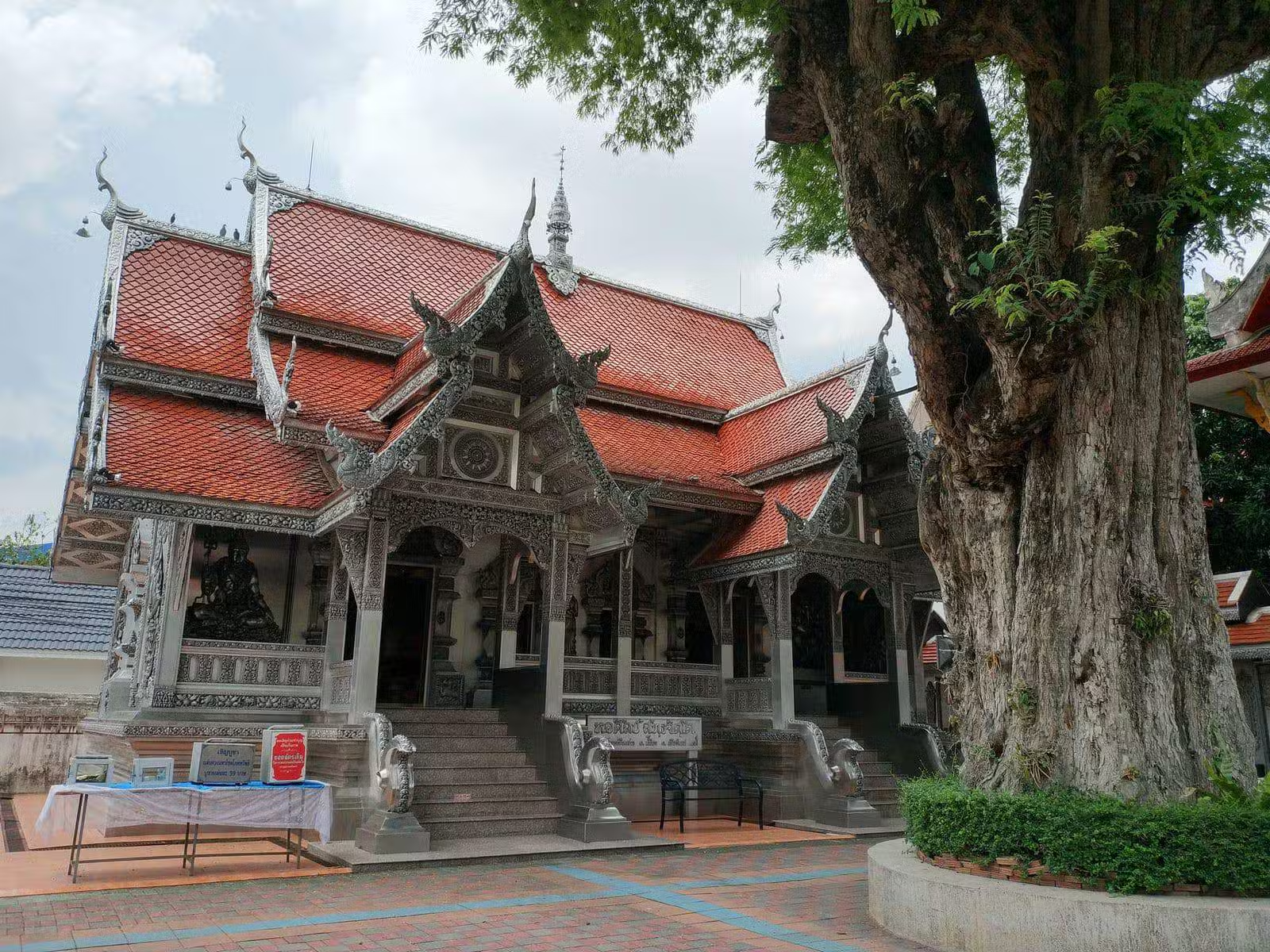
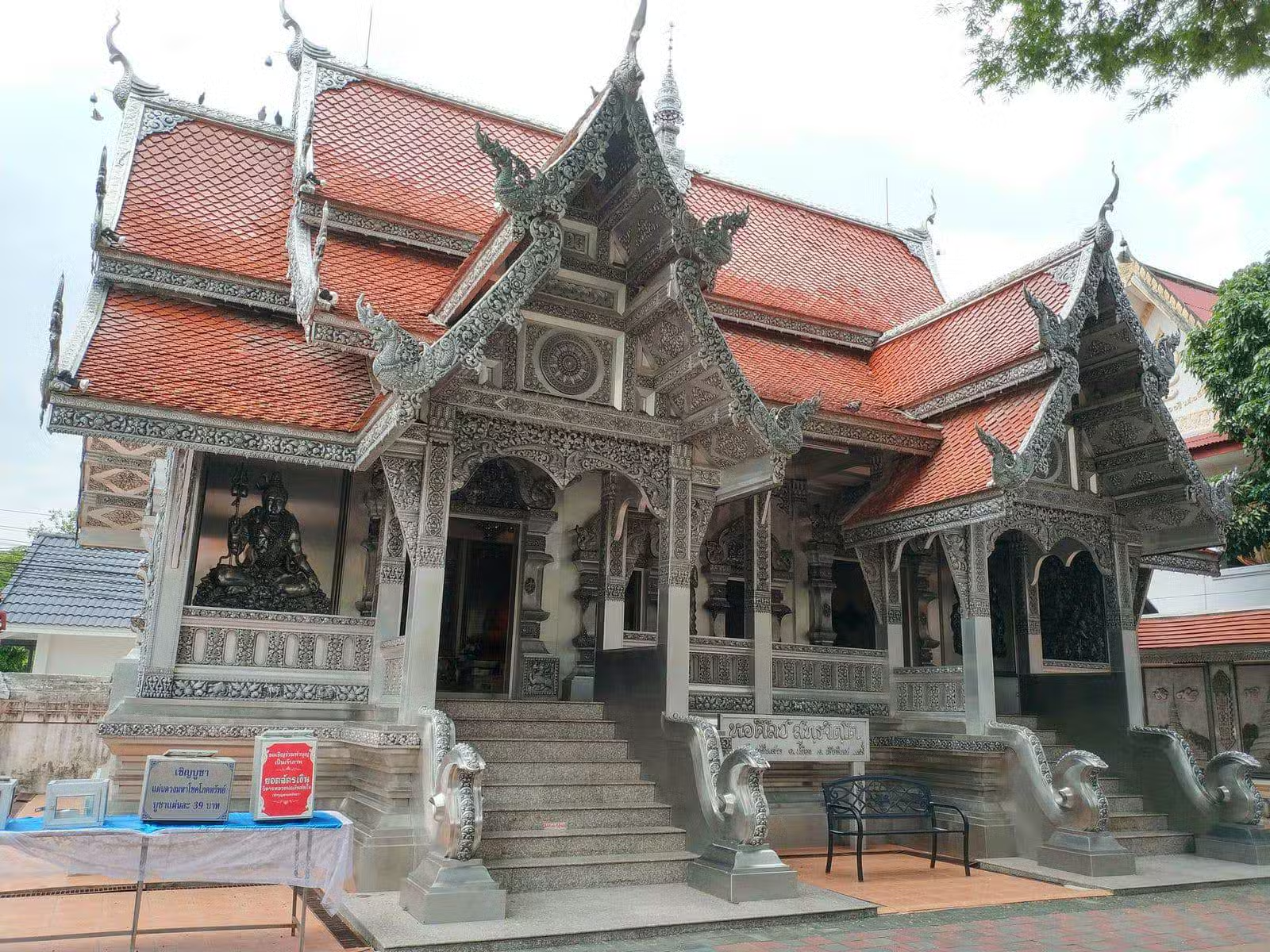
The Suttajitto Gallery and Wua Lai Metalwork
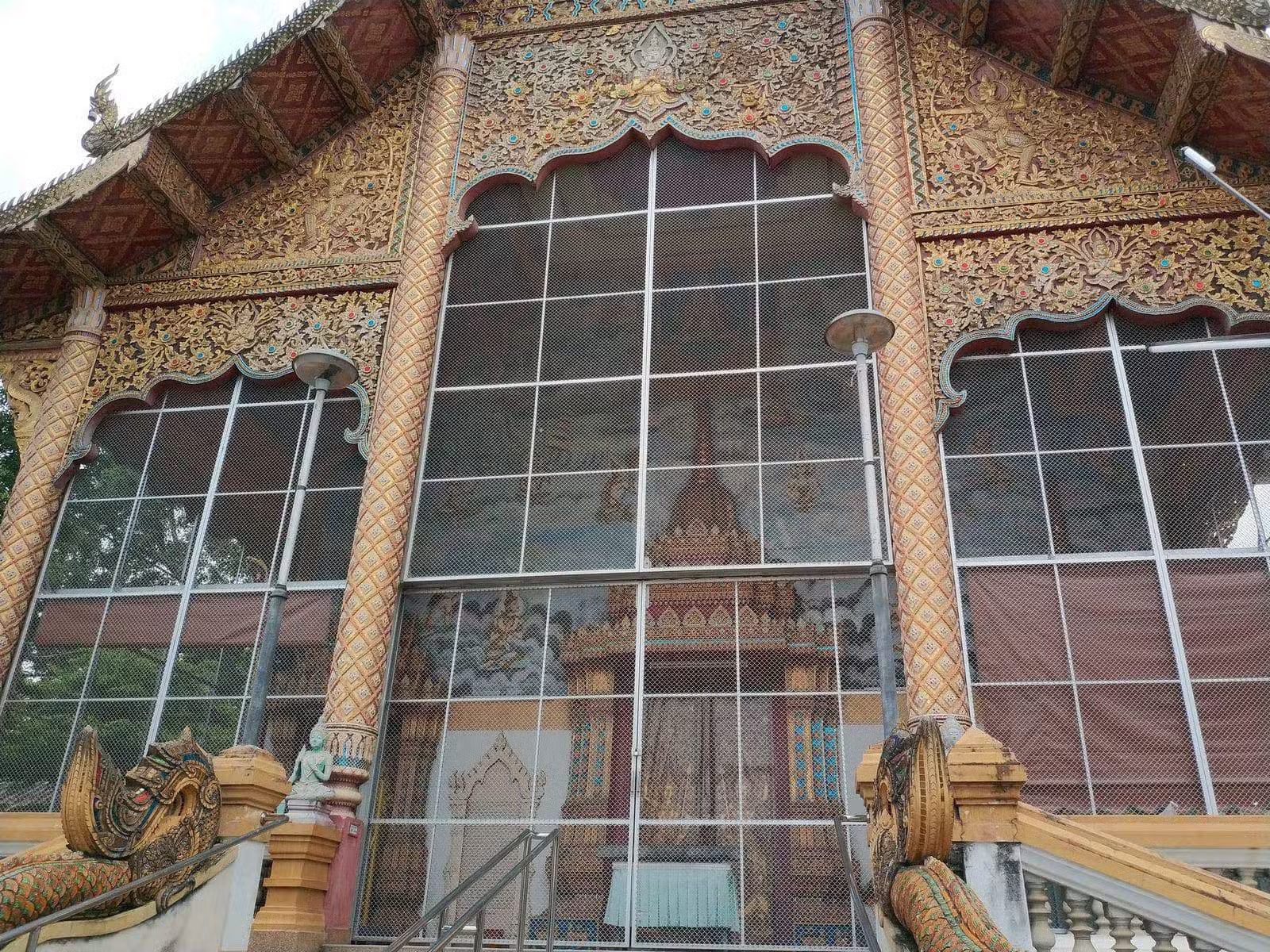
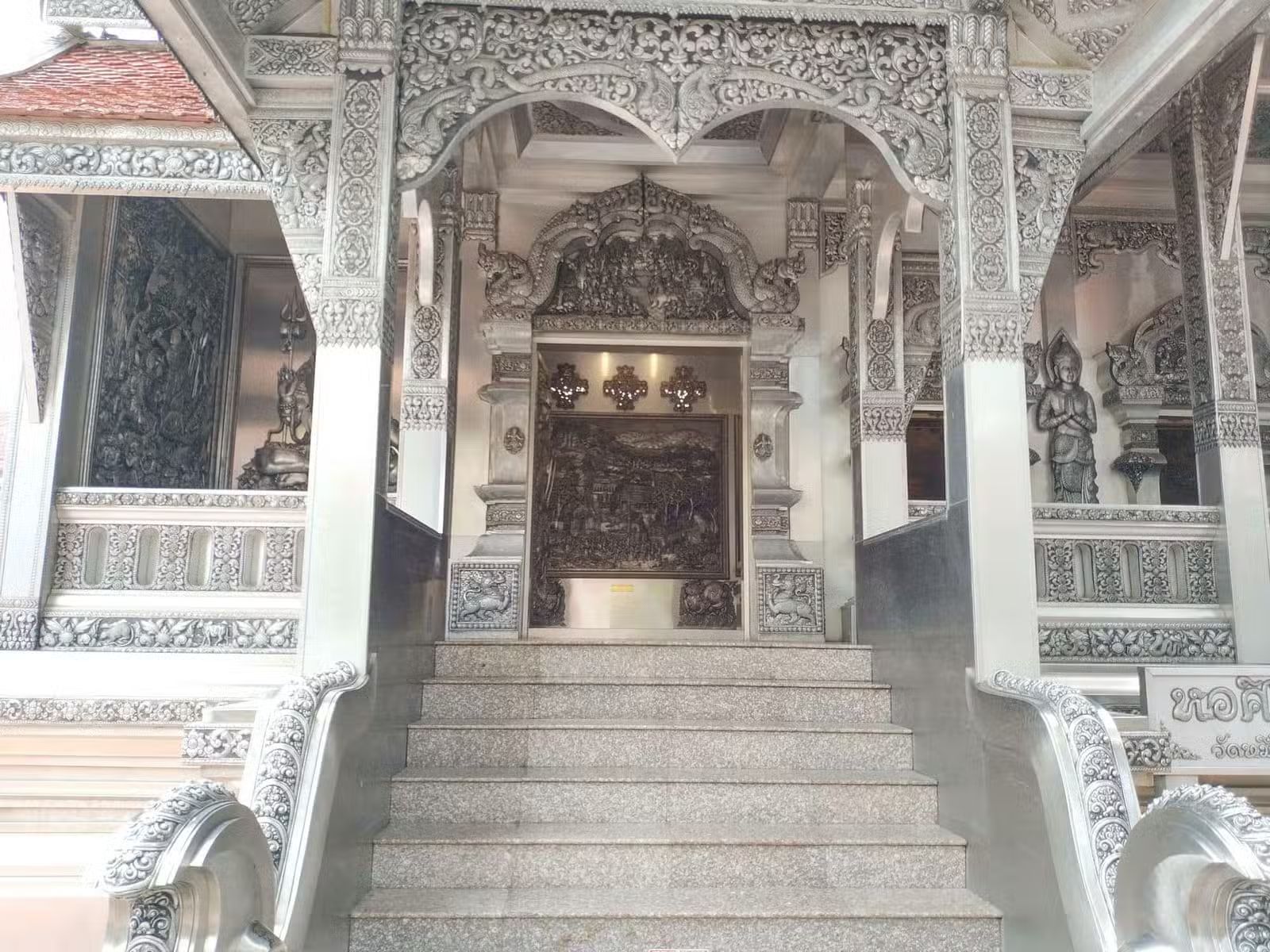
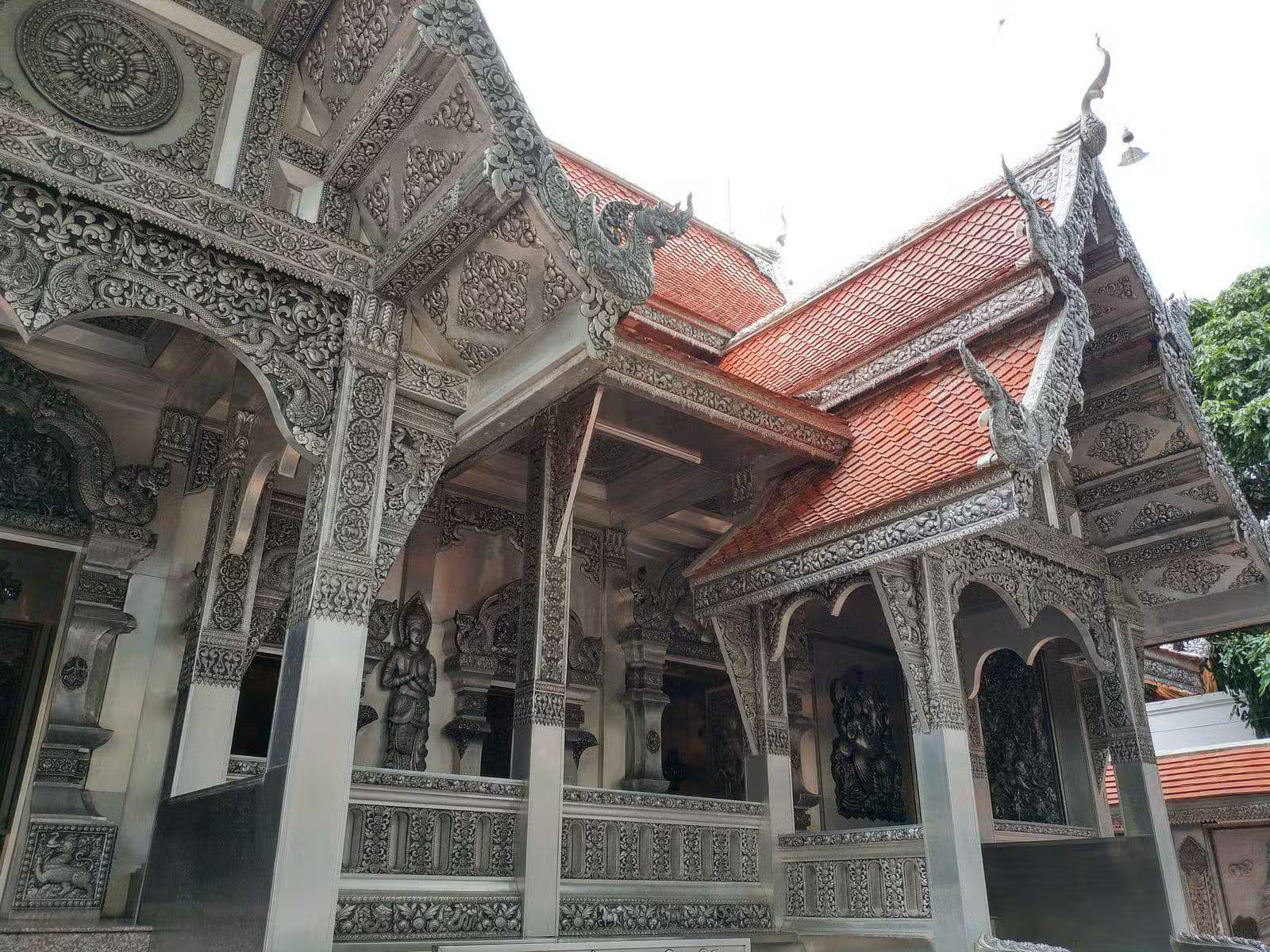
The Suttajitto Gallery is decorated with relief panels made by local artisans. Look closely at the raised figures, floral ornament and scenes rather than simply admiring the building’s shine. The skill lies in turning flat metal sheets into detailed images with depth, texture and movement.
Wua Lai’s silverworking tradition also produces bowls, jewellery and decorative objects. Here, those skills serve a religious purpose. The silver appearance does not mean every panel is solid silver; different metals are used in this work.
Inside the gallery, when it is open, Buddha images and three wax figures of revered monks accompany the relief work. Among the panels is a metal interpretation of the well-known photograph marking the opening of the road to Doi Suthep in 1935, linking the local craft tradition with a wider Chiang Mai story.
Kruba Srivichai and the Temple Grounds
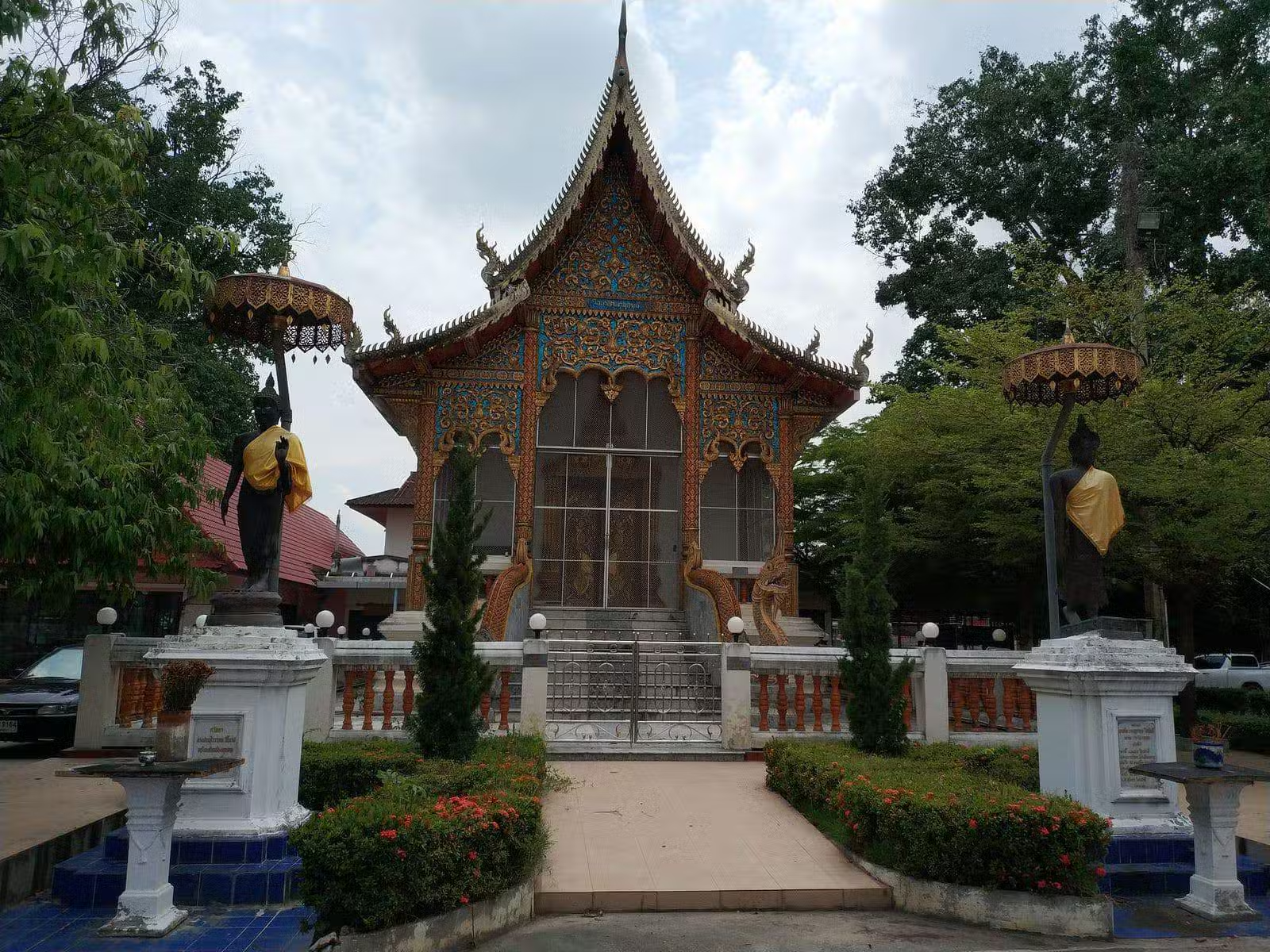
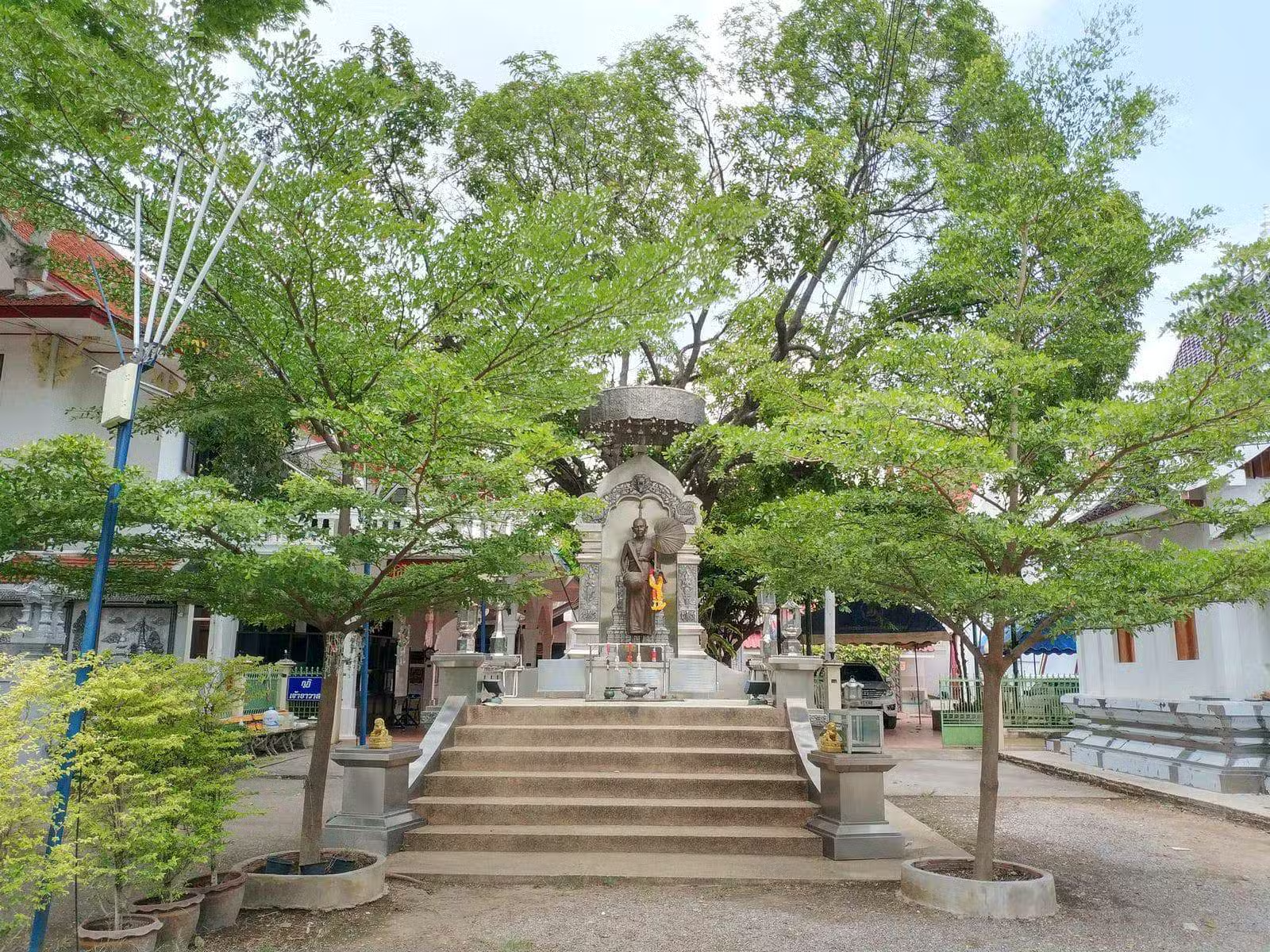
Kruba Srivichai, the revered northern Thai monk associated with temple restoration and the Doi Suthep road, is remembered at Wat Muen San. His statue and a small relic chedi are part of the devotional landscape, so give people making offerings room to approach.
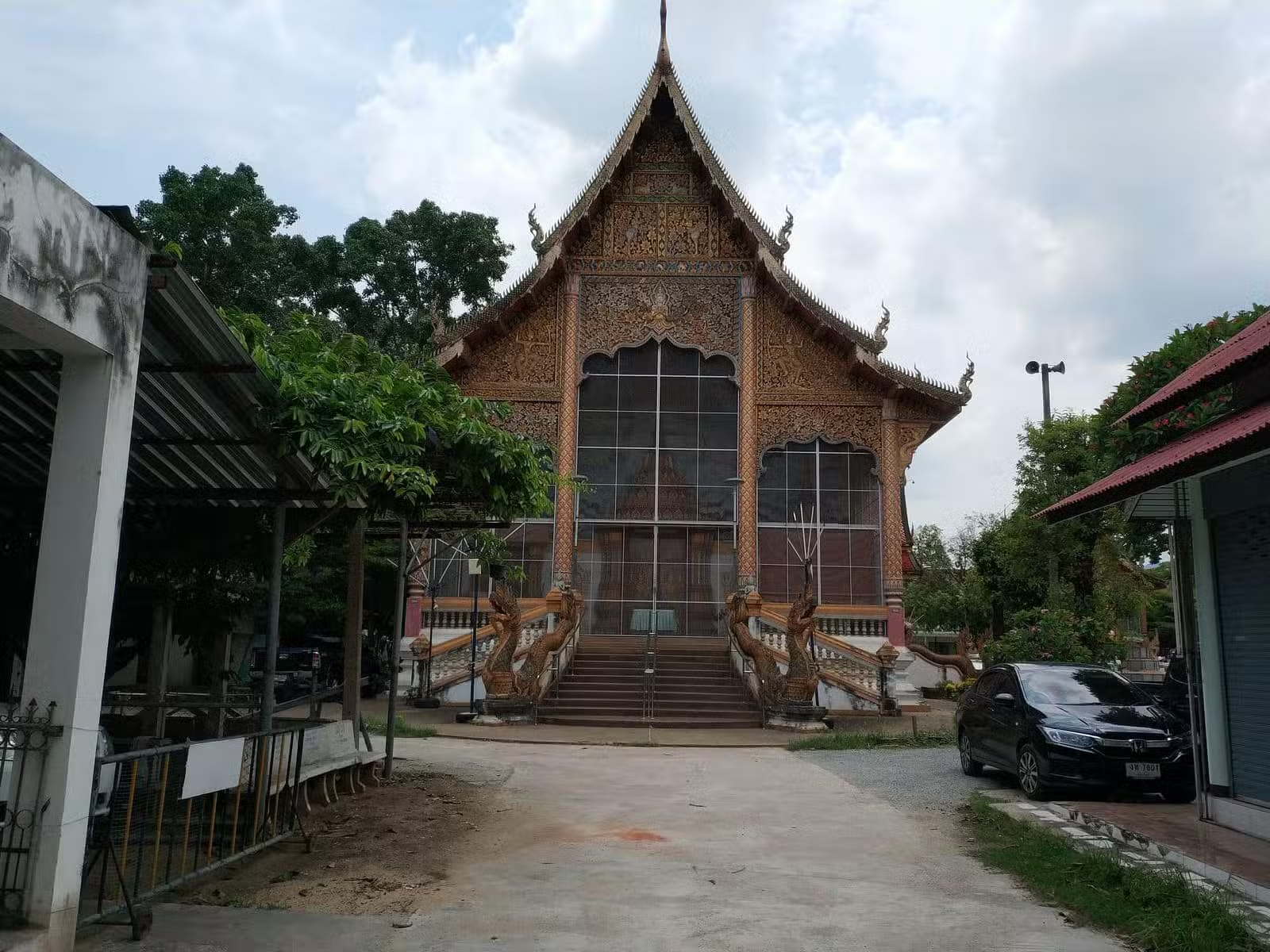
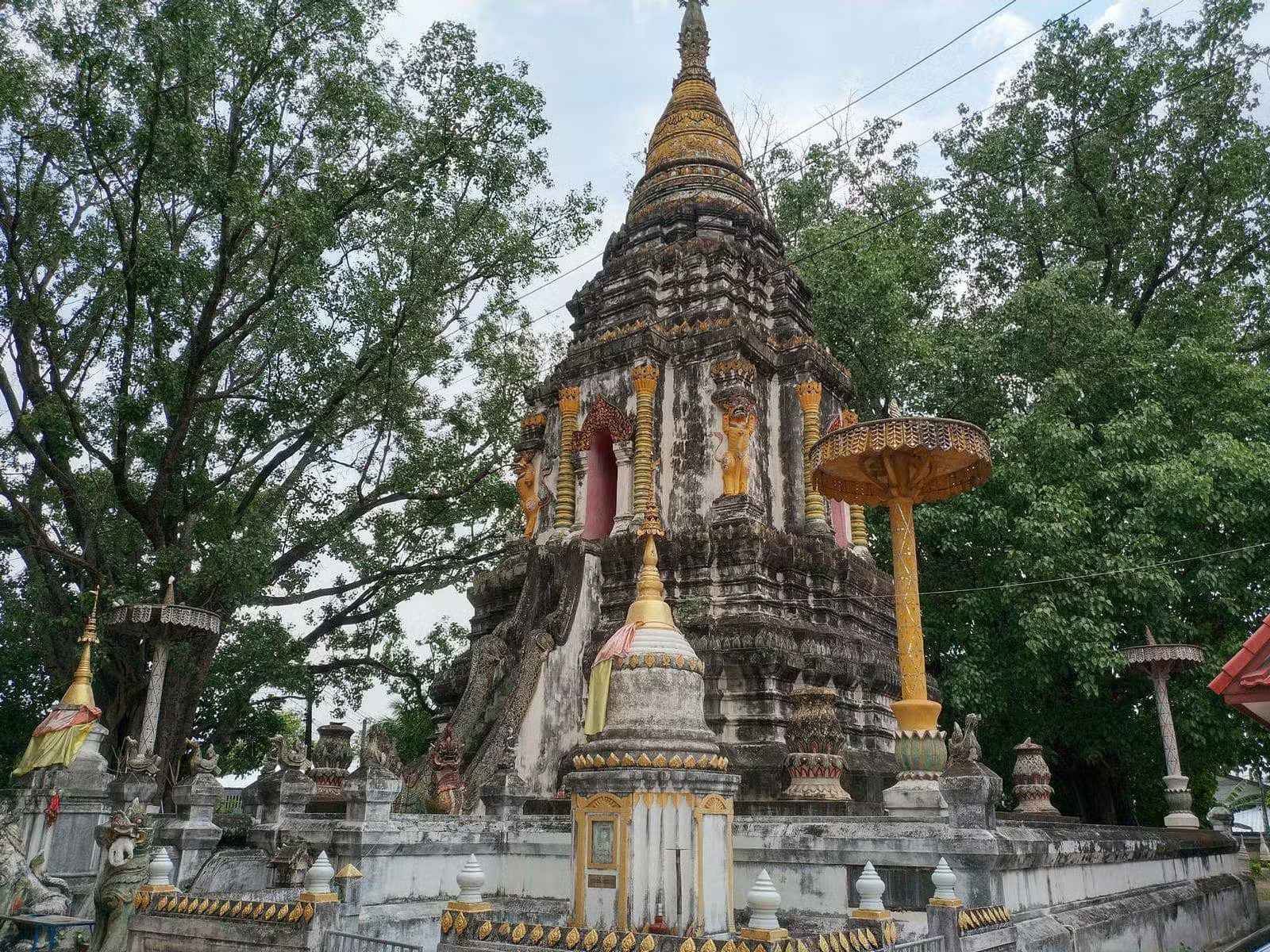
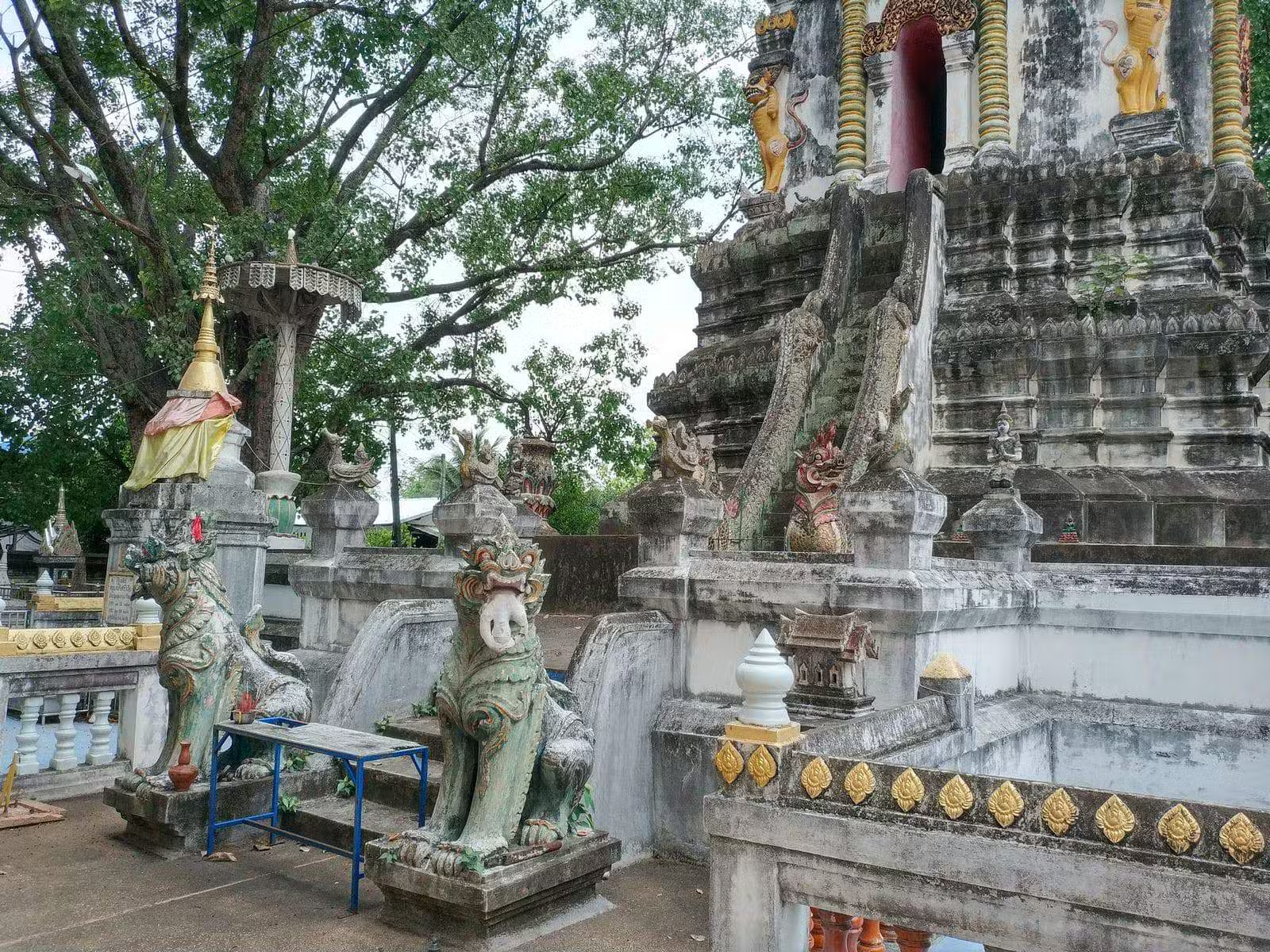
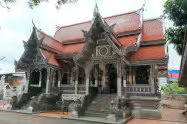
The main chedi brings a different architectural character from the metal-clad gallery. Its Lanna form includes Burmese or Shan influences, reflecting connections between northern Thai communities and the neighbouring Shan region. Look at the monument from the ground-level paths and keep clear of areas reserved for worship.
The Silver Museum and Wartime Memorial
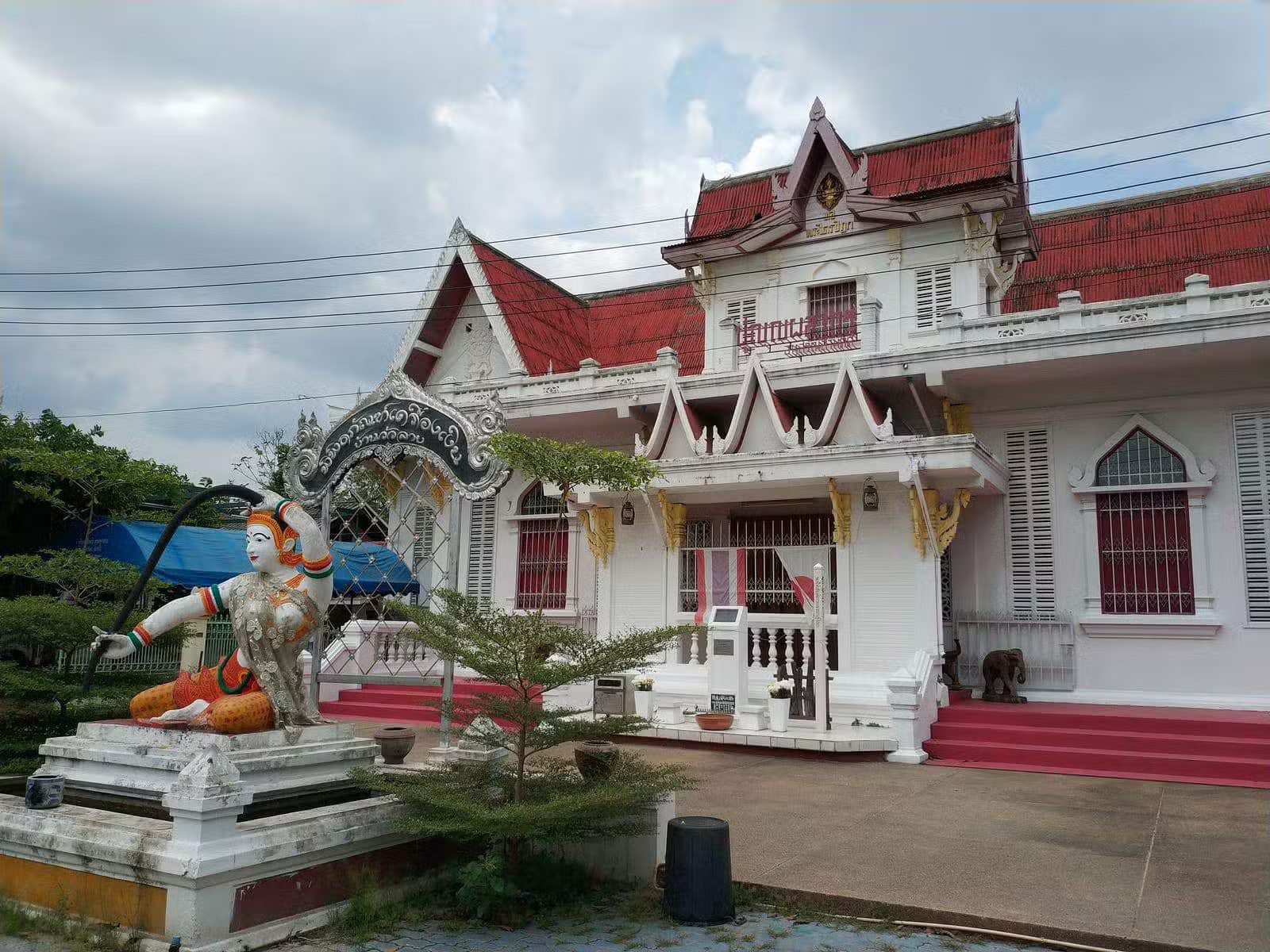
The small museum adds context to the decorative work seen around the temple. Silver and lacquerware objects are part of its collection, showing how the neighbourhood’s craft skills extend beyond religious buildings. Ask whether the museum can be opened before planning your visit around seeing the interior.
A separate strand of the museum concerns Japanese troops in Chiang Mai during the Second World War. Wat Muen San served as a field hospital, and photographs and wartime objects recall that use of the compound. The Japanese-Thai memorial in the grounds is a place for remembrance rather than a conventional tourist display.
Much of the museum’s explanation is in Thai. A knowledgeable local guide can help with historical context; an English tour or museum attendant should not be assumed available on arrival.
Planning a Respectful Visit
General admission to the temple grounds is free. Visit during daylight, with morning or afternoon giving you time to ask about building access. Around 45 minutes to an hour is a useful allowance if the gallery or museum is available; a grounds-only circuit can be shorter.
Wear clothing covering shoulders and knees, and remove shoes where indicated before entering religious buildings. Ask about photography inside and avoid flash, close-up pictures of worshippers or touching the relief panels. The hall entrances and outdoor surfaces may involve steps, so enquire about a suitable route if level access is important.
Wat Muen San and nearby Wat Sri Suphan are separate temples. Both relate to Wua Lai’s metalworking heritage, but their buildings and visitor arrangements differ. Follow the signs at the building you are visiting rather than applying one temple’s entry rules to the other.
Getting to Wat Muen San
The temple is off Wua Lai Road in Hai Ya, with access from the Soi 4 area. From Chiang Mai Gate, head south into the Wua Lai neighbourhood and use the temple location for the turn off the main road. It is outside the Old City moat, not on the Ratchadamnoen Sunday market route.
Walking can suit visitors staying around Chiang Mai Gate or the southern Old City. A taxi, tuk-tuk or red songthaew is useful from farther away; show the temple name and location, and confirm the fare before boarding. Do not ask only for ‘the Silver Temple’, which may take you to Wat Sri Suphan.
On Saturday evenings, Wua Lai Walking Street brings stalls and traffic restrictions to the neighbourhood. See Wat Muen San earlier in the day if the interiors are your priority, then continue to the market. An evening market visit does not guarantee that the temple museum will be open.
Wat Muen San FAQs
What is Wat Muen San known for?
Its Suttajitto Gallery displays intricate metal reliefs linked with Wua Lai’s silversmith tradition. The grounds also have a chedi, a small silver and lacquerware museum, and a Japanese-Thai wartime memorial.
Is Wat Muen San the same as Wat Sri Suphan?
They are different temples in the same neighbourhood. Ask for Wat Muen San by name and follow its own building-access rules rather than assuming that the arrangements at Wat Sri Suphan also apply here.
Can you always enter the museum and gallery?
Interior access varies. Ask at the temple when you arrive, or arrange a guided visit if the collection is your main interest; an open compound does not mean that every building is unlocked.
Why is there a Japanese memorial?
The temple compound served as a field hospital for Japanese troops during the Second World War. The memorial and related museum objects recall this part of the site’s history.
How much is admission?
General entry to the temple grounds is free. Donations are optional, and any separately arranged tour has its own cost.
Can you combine it with the Saturday market?
Wua Lai Walking Street takes place in the surrounding neighbourhood on Saturday evenings. Visit the temple in daylight first if you want to ask about interiors, then walk to the market as it gets underway.











Do You Have a Question to Ask?