








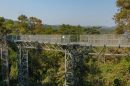

























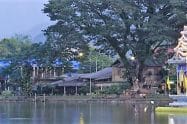











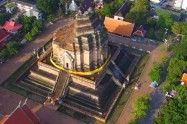




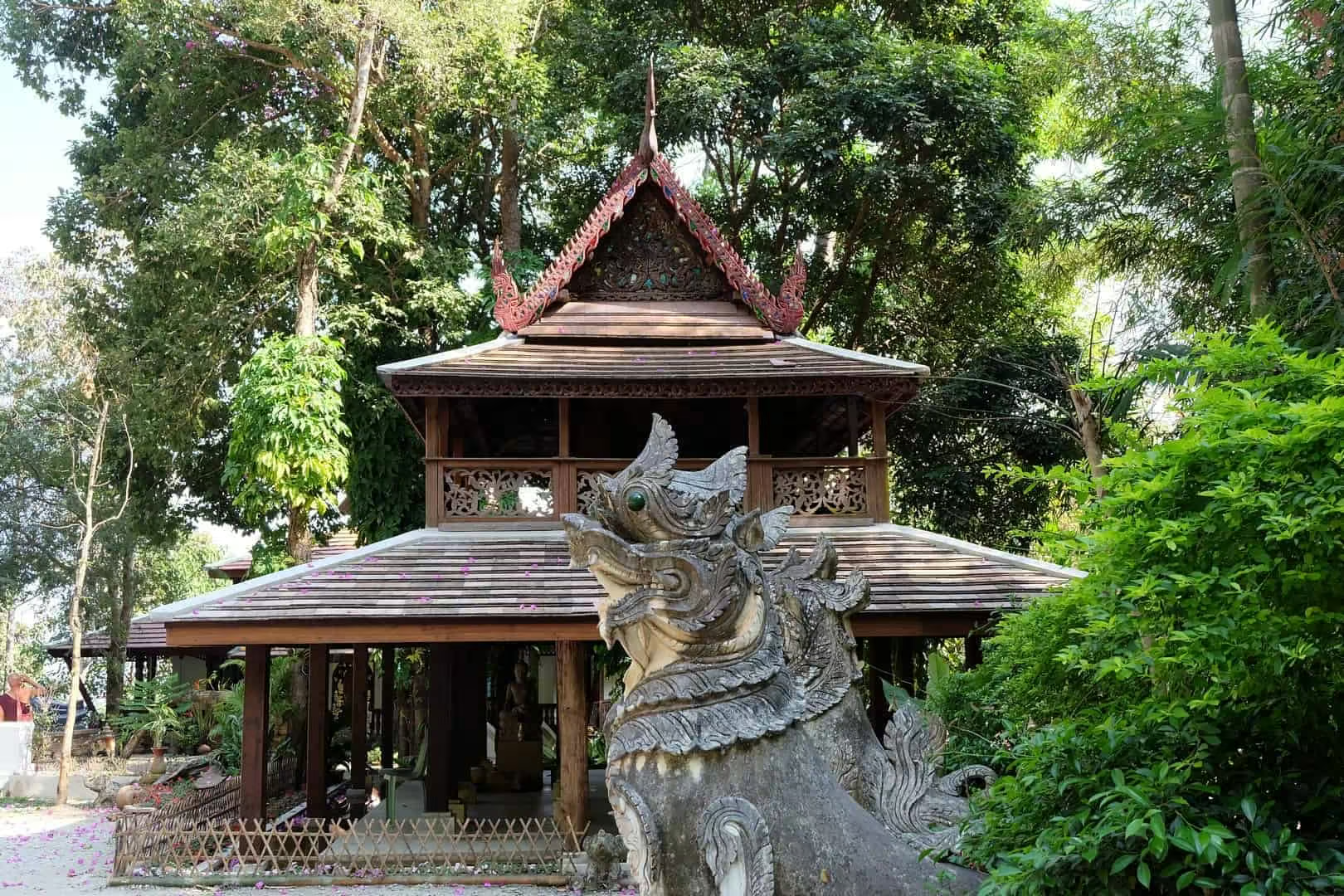
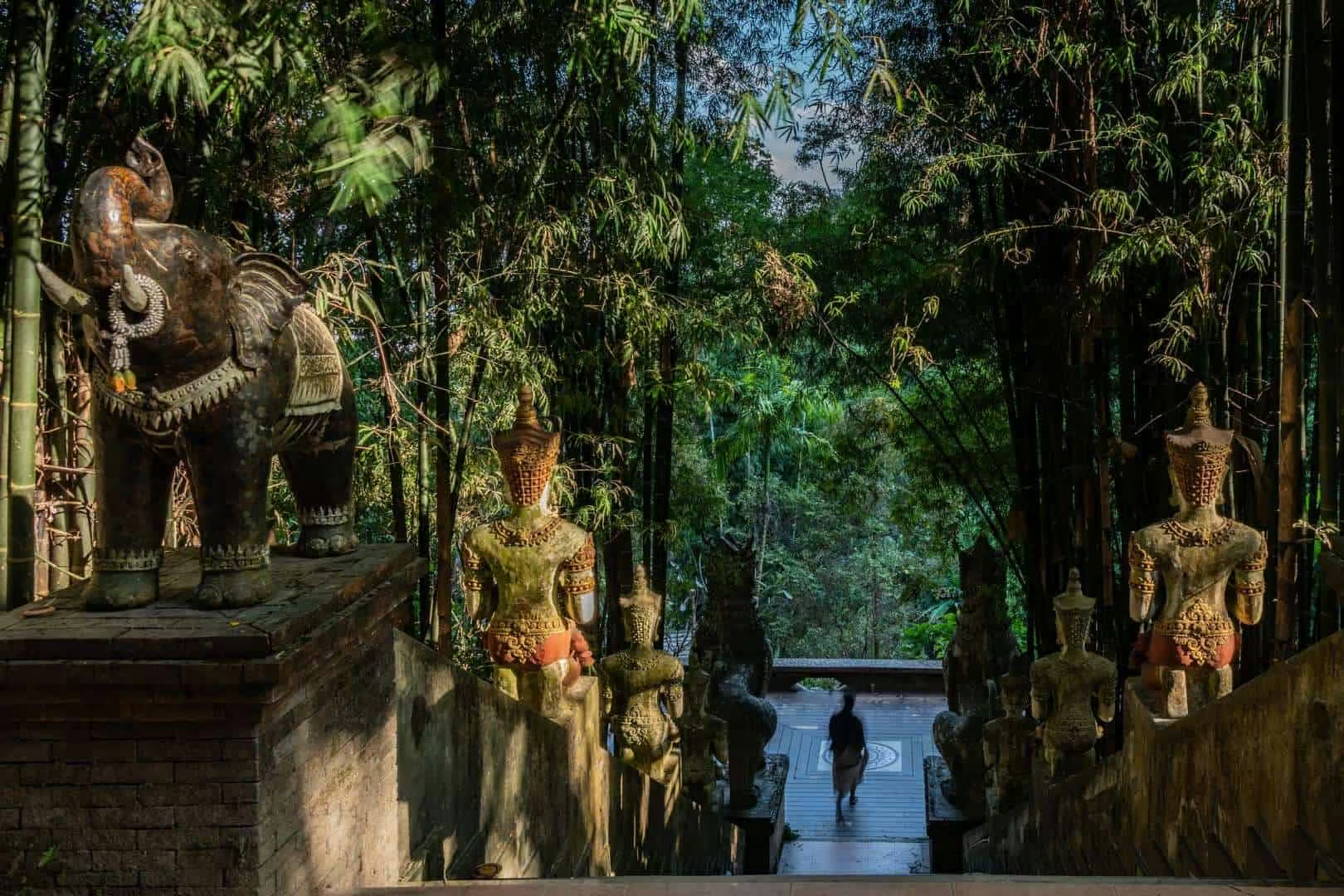
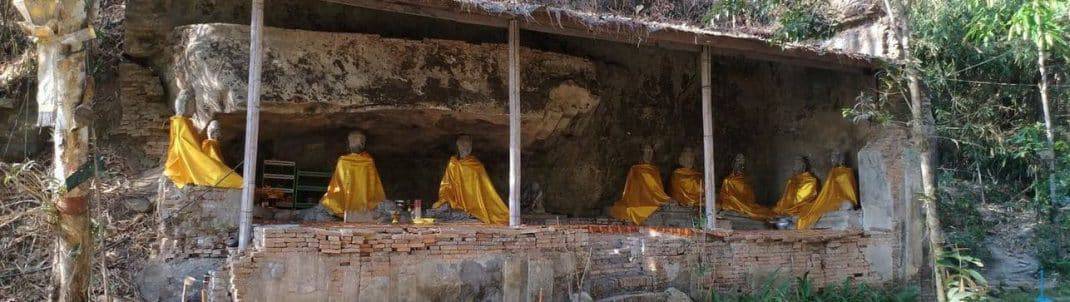
Wat Pha Lat is a forest temple on the slopes of Doi Suthep, below Wat Phra That Doi Suthep. Shrines, a chedi, shaded paths and a small cascade sit among trees and rocks, giving the temple a close connection with the surrounding landscape.
You can arrive by road or walk up the lower section of the Monk’s Trail. These are different visits: road access suits travellers who want to explore the temple without a hike, while the forest approach adds an uphill walk and national park entry arrangements.
Exploring the Forest Temple
The appeal is in moving slowly between the public temple spaces, looking at the old chedi and pausing where paths meet the stream. Forest vegetation surrounds the buildings, and some viewpoints give glimpses towards Chiang Mai when the air is clear.
Wat Pha Lat is an active place of worship and meditation. Keep conversations quiet, leave private monastic areas alone and allow people to pray without turning their surroundings into a photo session. Visitor numbers vary, so do not expect the grounds to be empty.
The stream and cascade change with rainfall. Wet stone and sloping ground can be slippery, and the water features are part of the temple landscape rather than a swimming attraction. Keep to the public paths and follow any temporary barriers.
Choosing Your Route
Arriving by Road
The temple can be reached from the main road climbing Doi Suthep, with access into the temple area along the signed approach. A taxi, private driver or songthaew can make this a stop on a mountain outing; confirm that the driver will call at Wat Pha Lat rather than taking you directly to Doi Suthep temple.
Arrange the return or onward journey before being dropped off. Passing mountain-road transport may not be convenient when you finish, particularly if you are travelling with children or have limited mobility.
Walking the Lower Monk’s Trail
The lower trail approaches from the foothills behind Chiang Mai University, near the end of the road commonly marked as the Monk’s Trail trailhead. Use that specific trailhead location for your ride, rather than the temple itself or Huay Kaew Waterfall, which is a different starting area.
Allow around 40 to 60 minutes uphill, plus time at the temple and for your return. Fitness, heat, rainfall and stops can change that estimate. The path includes roots, uneven stone and sloping sections, so treat it as a forest walk requiring suitable footwear rather than a paved city stroll.
Take drinking water, insect repellent and a charged phone, and start with enough daylight to finish comfortably. Follow the established route and ranger instructions. In wet conditions or during a trail closure, choose road access instead of trying to bypass restrictions.
Temple Entry, Trail Fees and Visiting Hours
The temple itself has free admission and is generally open from 6am to 6pm. The Pha Lat nature trail falls under Doi Suthep-Pui National Park’s entry arrangements: allow for a foreign-adult trail charge of 100 baht or a Thai-adult charge of 20 baht, and carry cash. Check the ranger counter for current child rates and any access restrictions.
A park trail charge is separate from visiting the temple by road. If you continue to Wat Phra That Doi Suthep, that temple has its own admission arrangements; do not assume one payment covers every attraction on the mountain.
What to Wear and How Long to Allow
Clothing should cover shoulders and knees when entering temple spaces. Light layers are useful for hikers who need to adjust clothing before visiting shrines, and shoes with grip help on both the forest path and damp temple steps.
Allow roughly 45 minutes to an hour at the temple when arriving by road. For a return lower-trail hike and a relaxed visit, leave about two to three hours. Visitors who need a route without steps should discuss the actual drop-off point and accessible areas with their driver or the temple beforehand.
Continuing to Doi Suthep
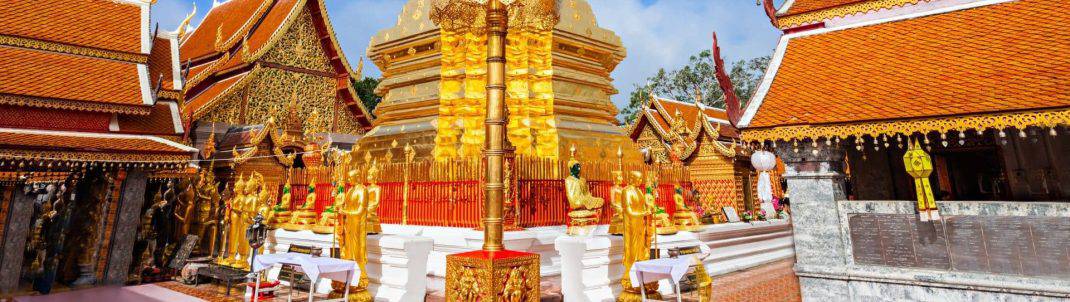
Wat Phra That Doi Suthep is farther up the mountain and offers a different experience centred on its prominent golden chedi. Combining both temples works well with a driver and enough time for each stop.
The upper walking route is longer and more demanding than the lower walk to Wat Pha Lat. Reaching the forest temple does not mean the main Doi Suthep temple is just a short extension away. Plan the upper hike separately, or continue by road.
Wat Pha Lat FAQs
Do you have to hike to Wat Pha Lat?
No. You can reach the temple by road from the Doi Suthep mountain route. A driver can include it as a stop, but arrange your return or onward transport before getting out.
How long does the Monk’s Trail take?
Allow around 40 to 60 minutes uphill on the lower trail, depending on your pace and conditions. A return walk with time at the temple usually needs about two to three hours rather than just the uphill walking time.
Is the visit free?
Temple admission is free. Walking the national park’s Pha Lat nature trail involves a separate park charge; budget 100 baht for a foreign adult or 20 baht for a Thai adult and check current conditions at the ranger counter.
Is the trail suitable for everyone?
It has roots, uneven ground and uphill sections, and can become slippery after rain. Choose road access if these conditions do not suit your mobility or fitness, and follow ranger directions if weather affects the trail.
Can you swim in the waterfall?
Treat the cascade and stream as part of the temple setting, not a swimming stop. Stay on permitted paths, avoid slippery rocks and give worship and meditation areas space.
Can you combine it with Doi Suthep temple?
Yes, particularly with a driver who can stop at both. The upper hike is substantially more demanding than the lower Monk’s Trail, and Doi Suthep temple’s admission is separate from any park trail fee.









Do You Have a Question to Ask?