






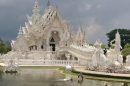













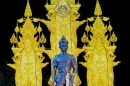

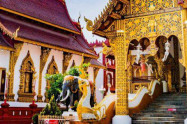

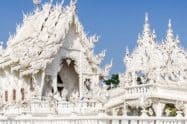



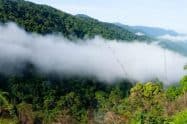



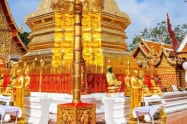









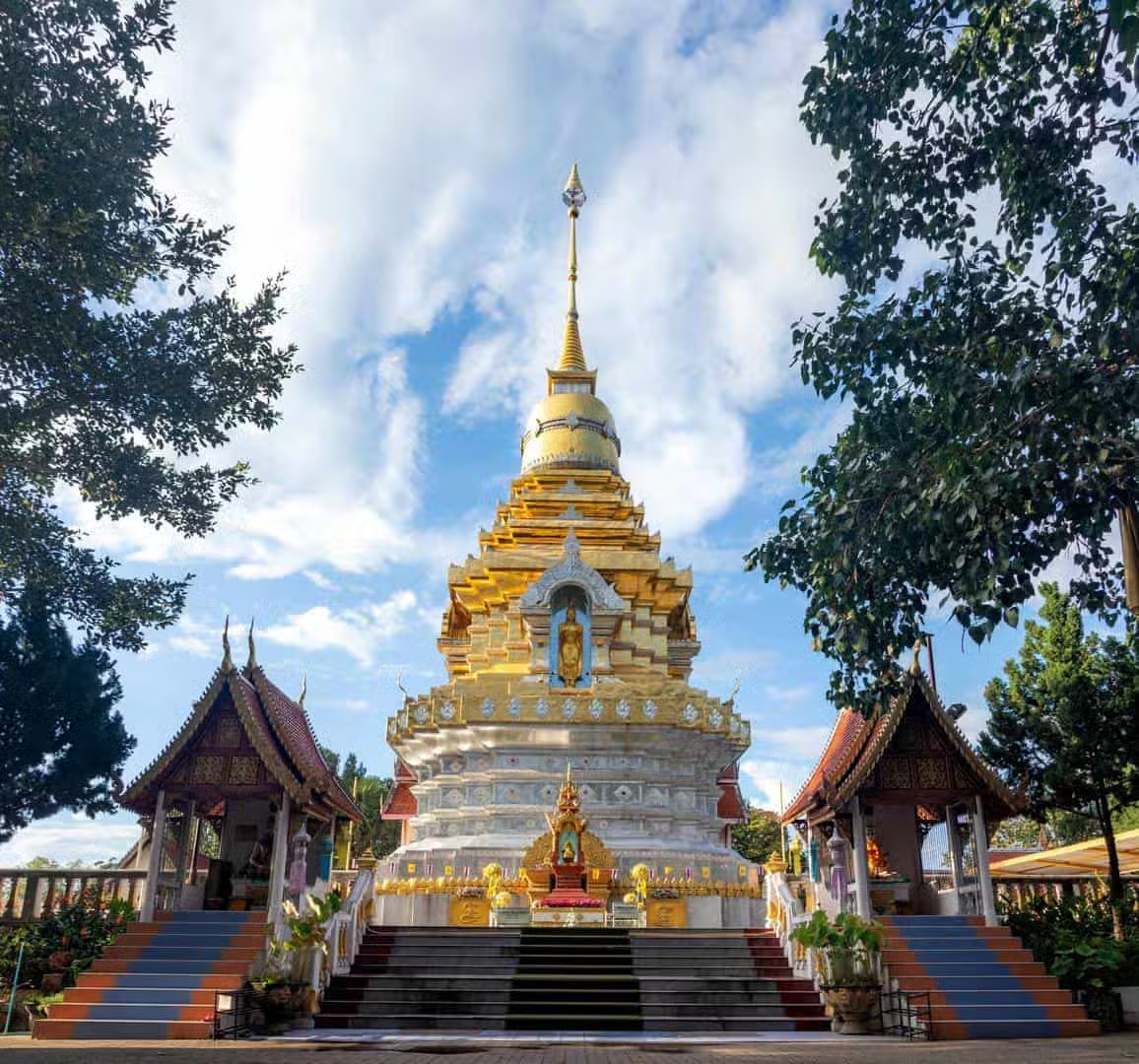
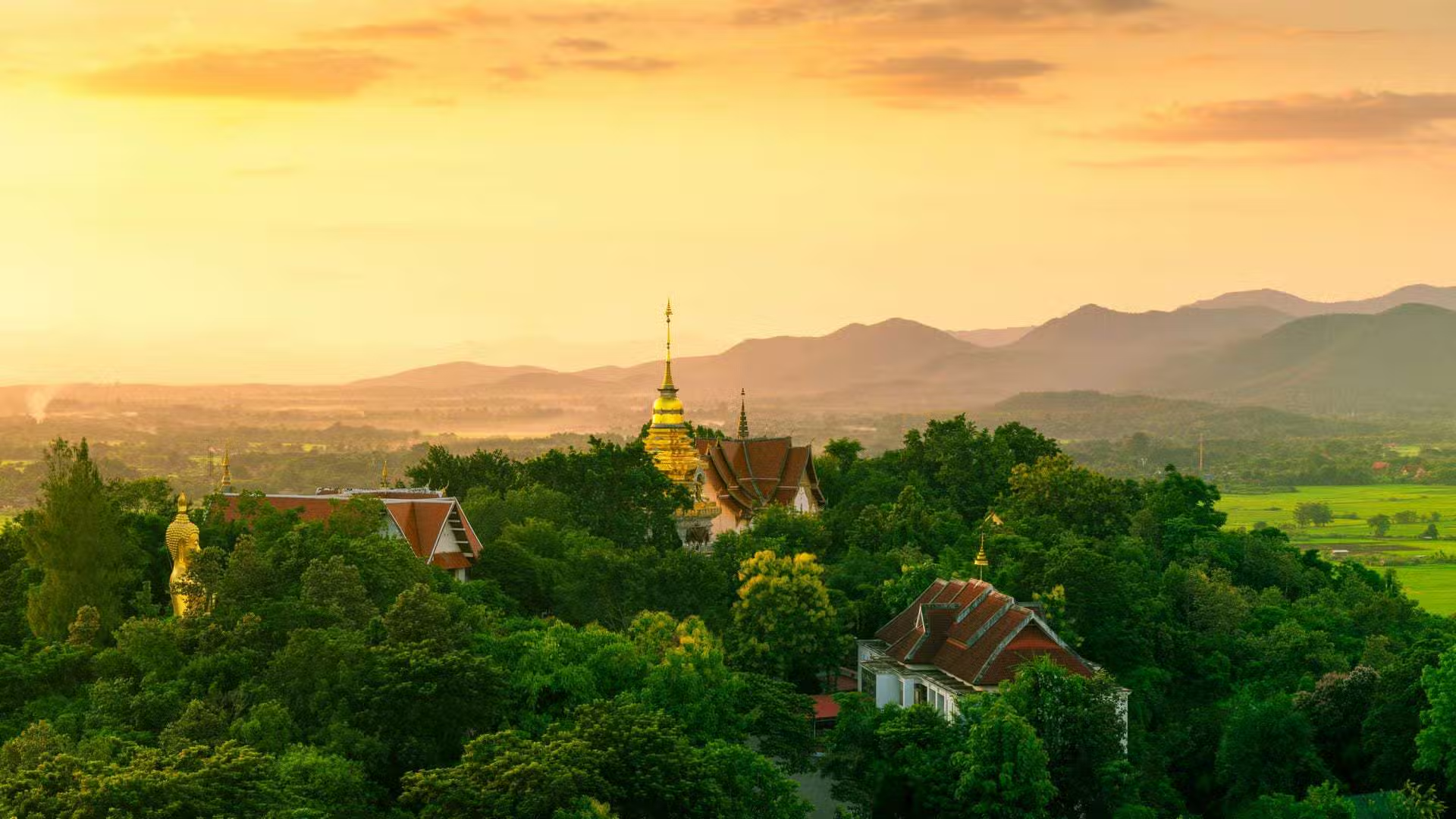
Wat Phra That Doi Saket is a hilltop Buddhist temple northeast of Chiang Mai, overlooking Doi Saket town and the surrounding countryside. Its large Buddha image, sacred chedi and unusually modern murals give visitors several reasons to linger beyond the view from the hill.
The temple remains a place of worship and monastic life, with older religious buildings and newer visitor features spread across the summit area. Plan time for the main hall and chedi first, then explore the additional viewpoints if they are open and you are comfortable with the terrain.
The Hilltop Temple and Its Sacred Chedi
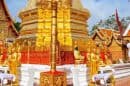
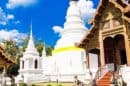
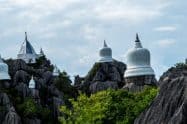
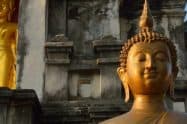
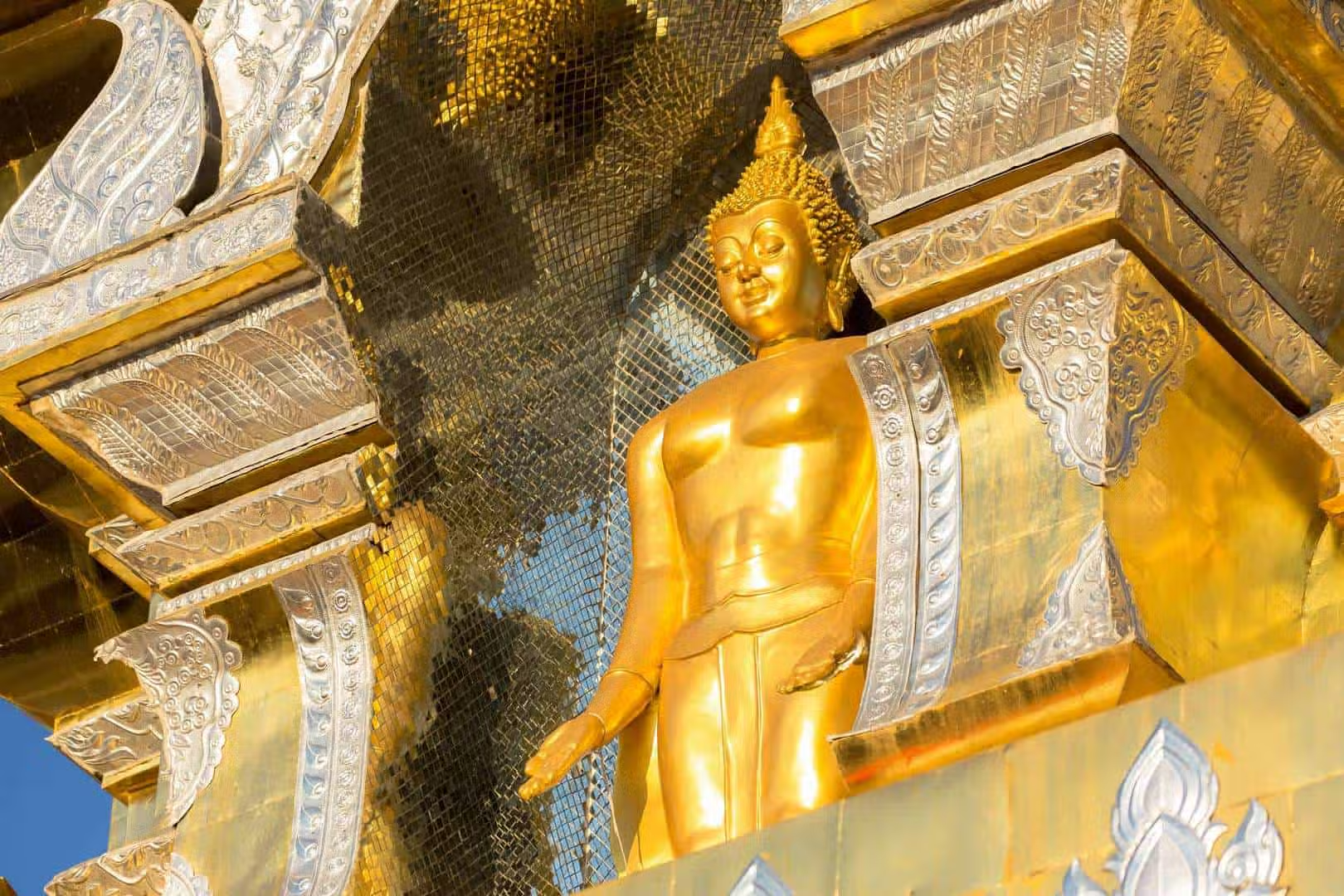
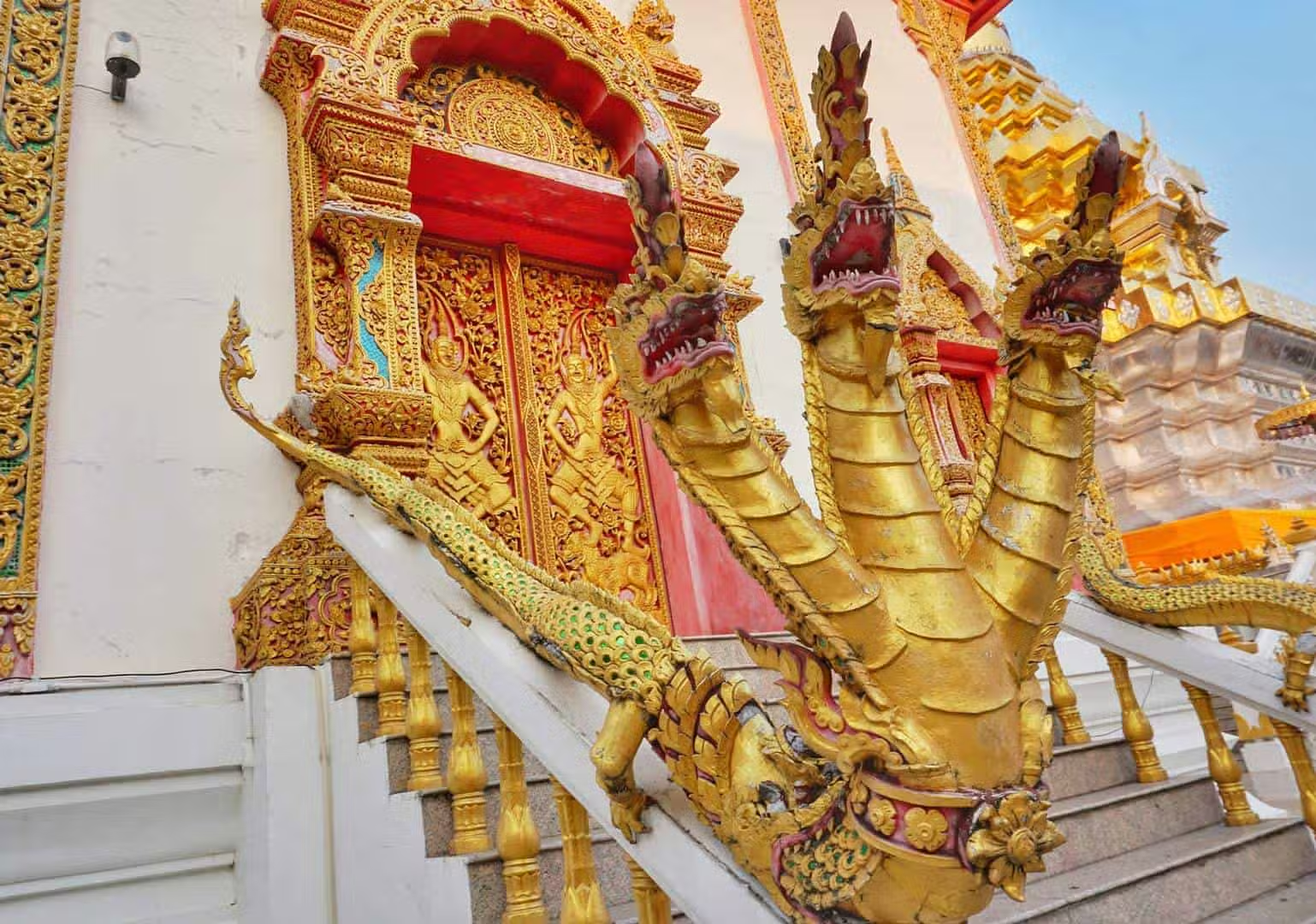
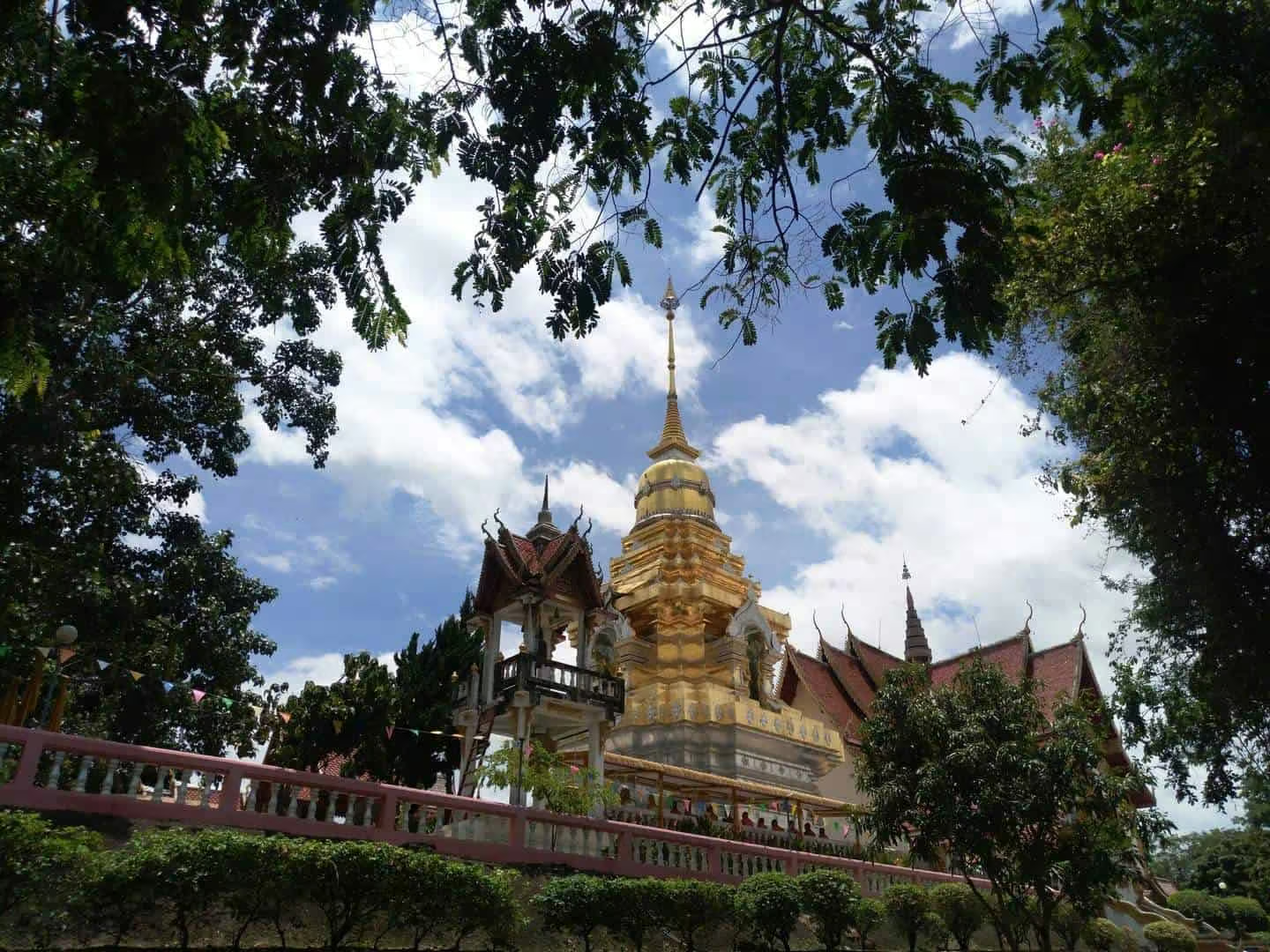
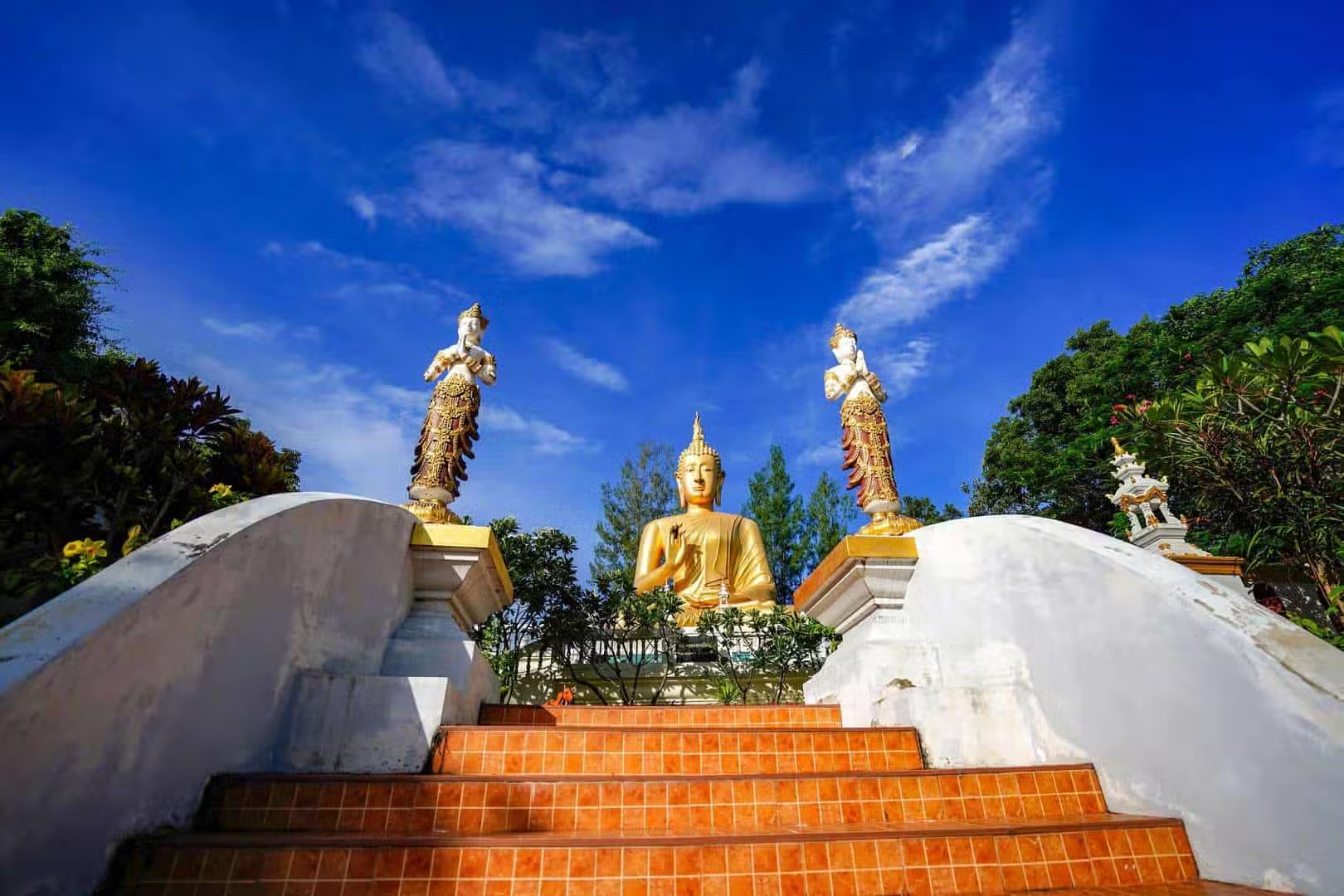
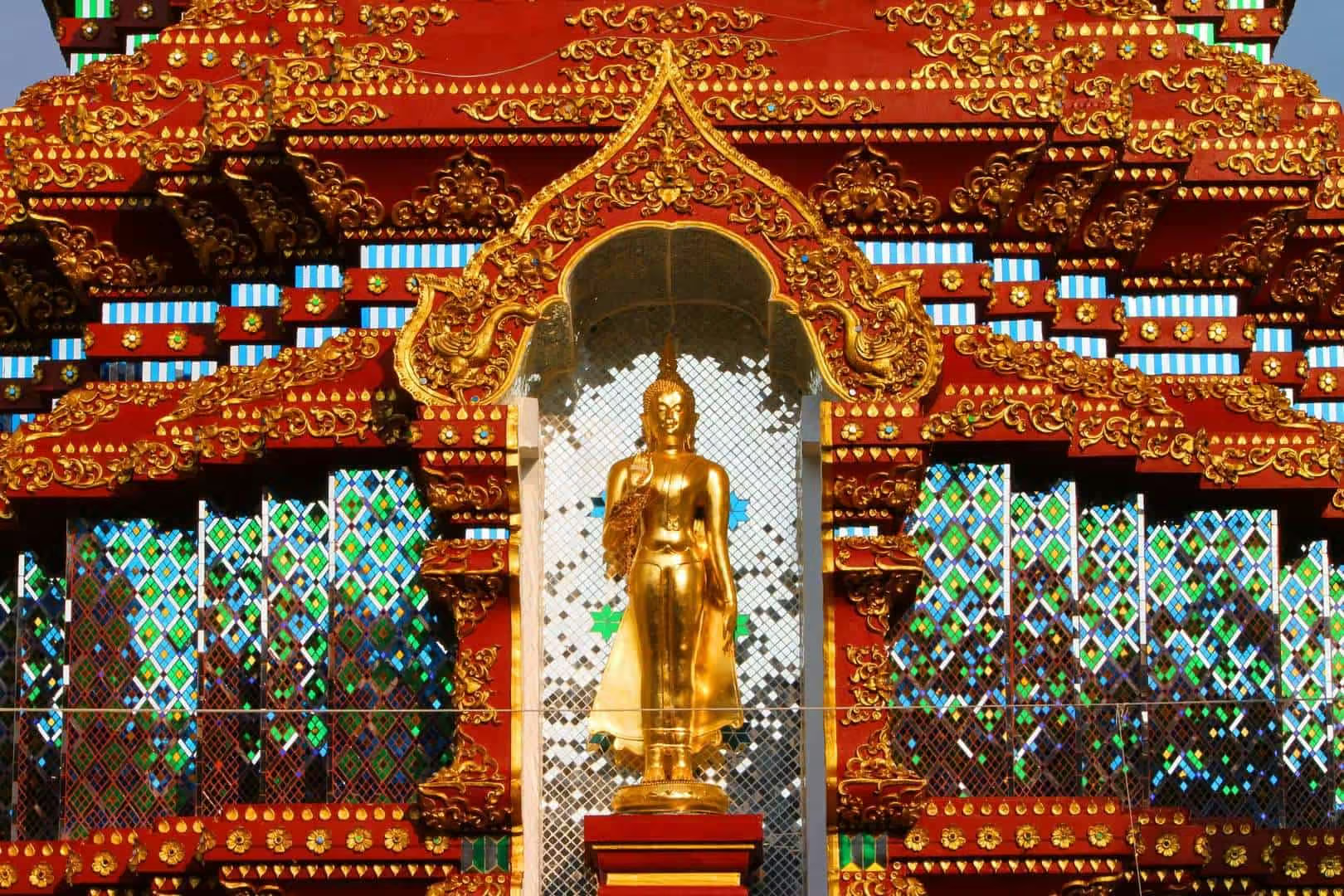
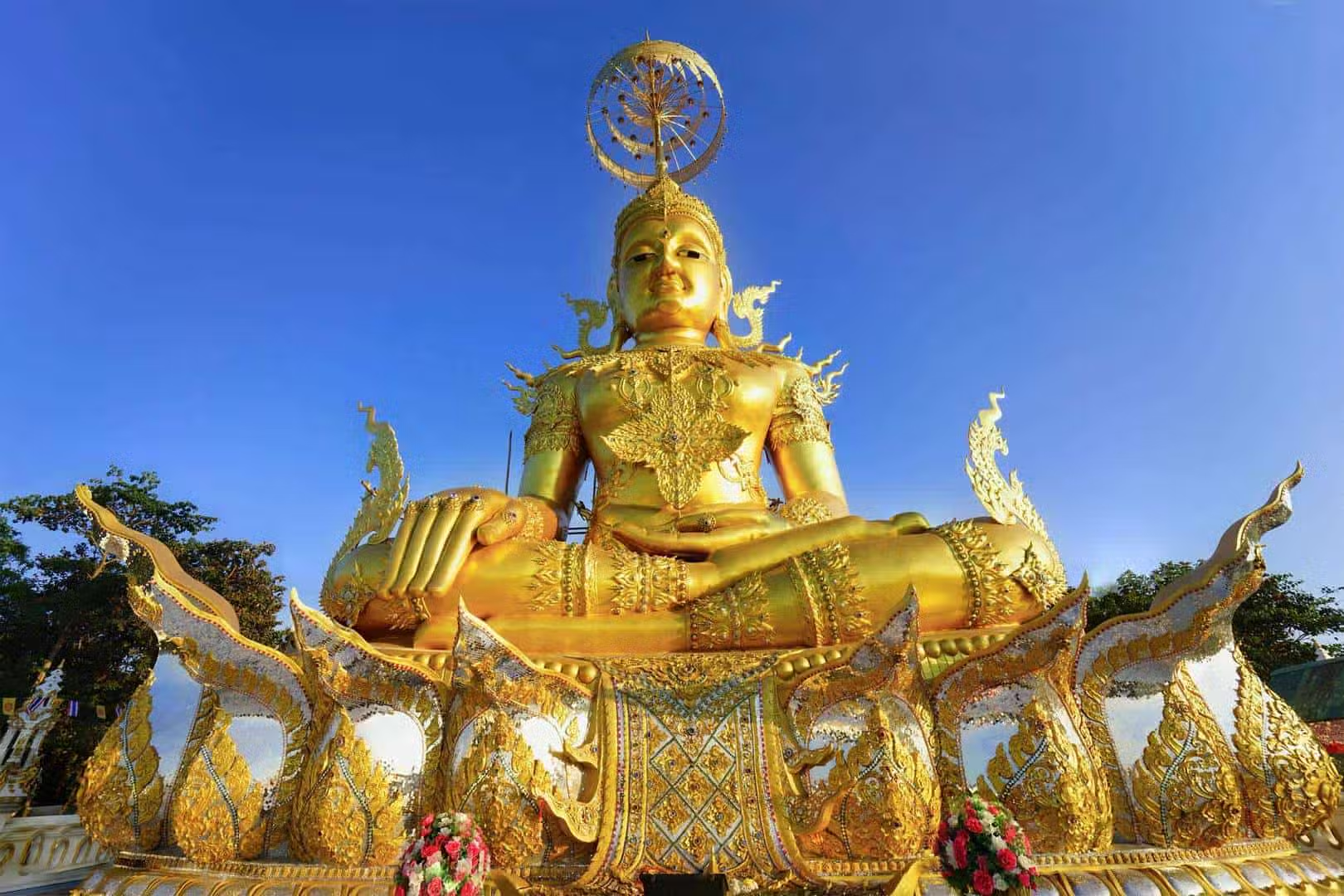
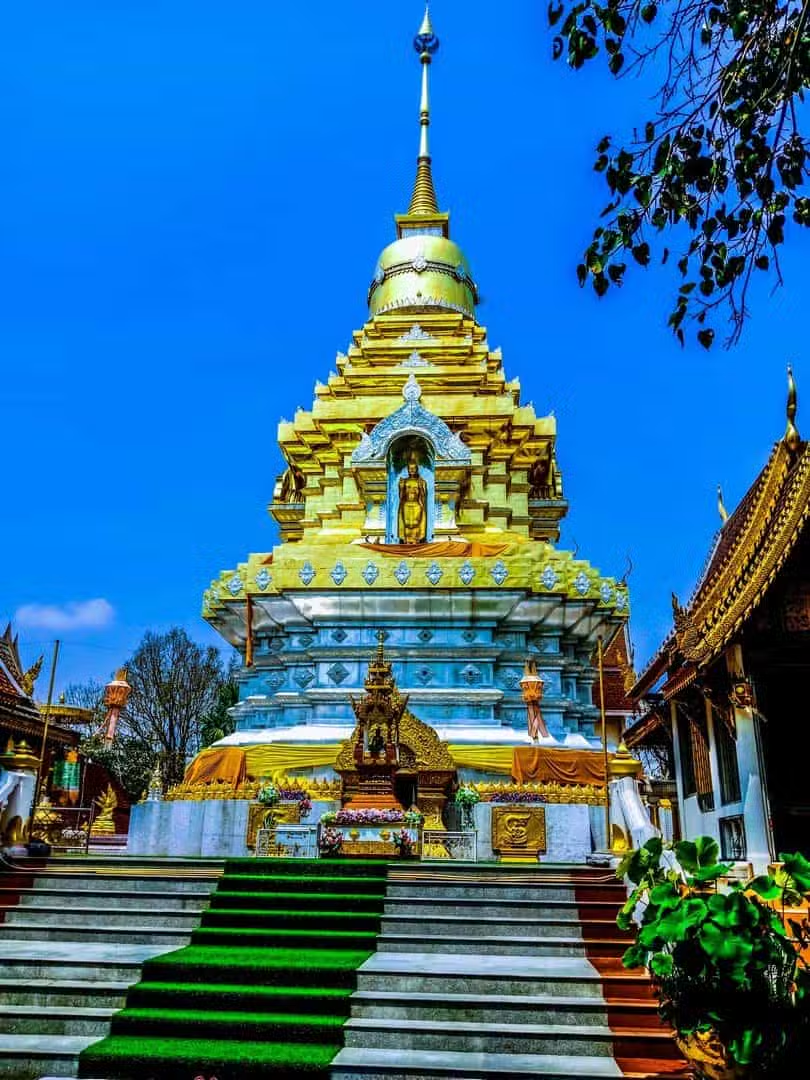
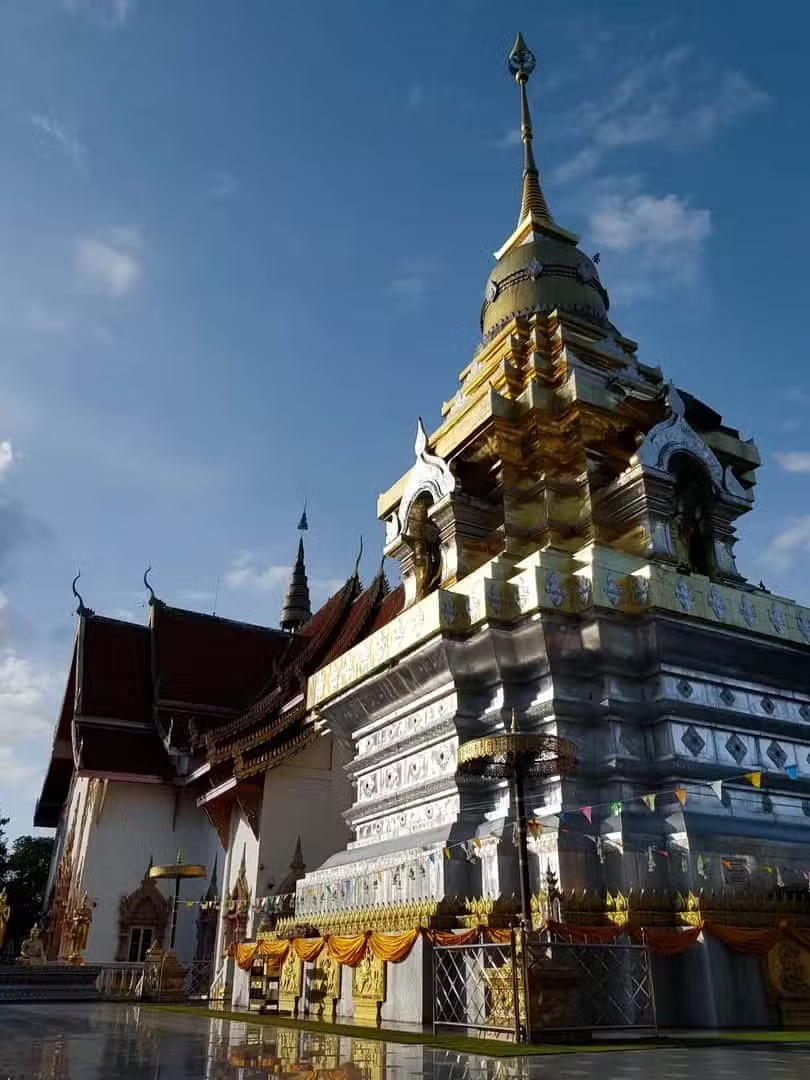
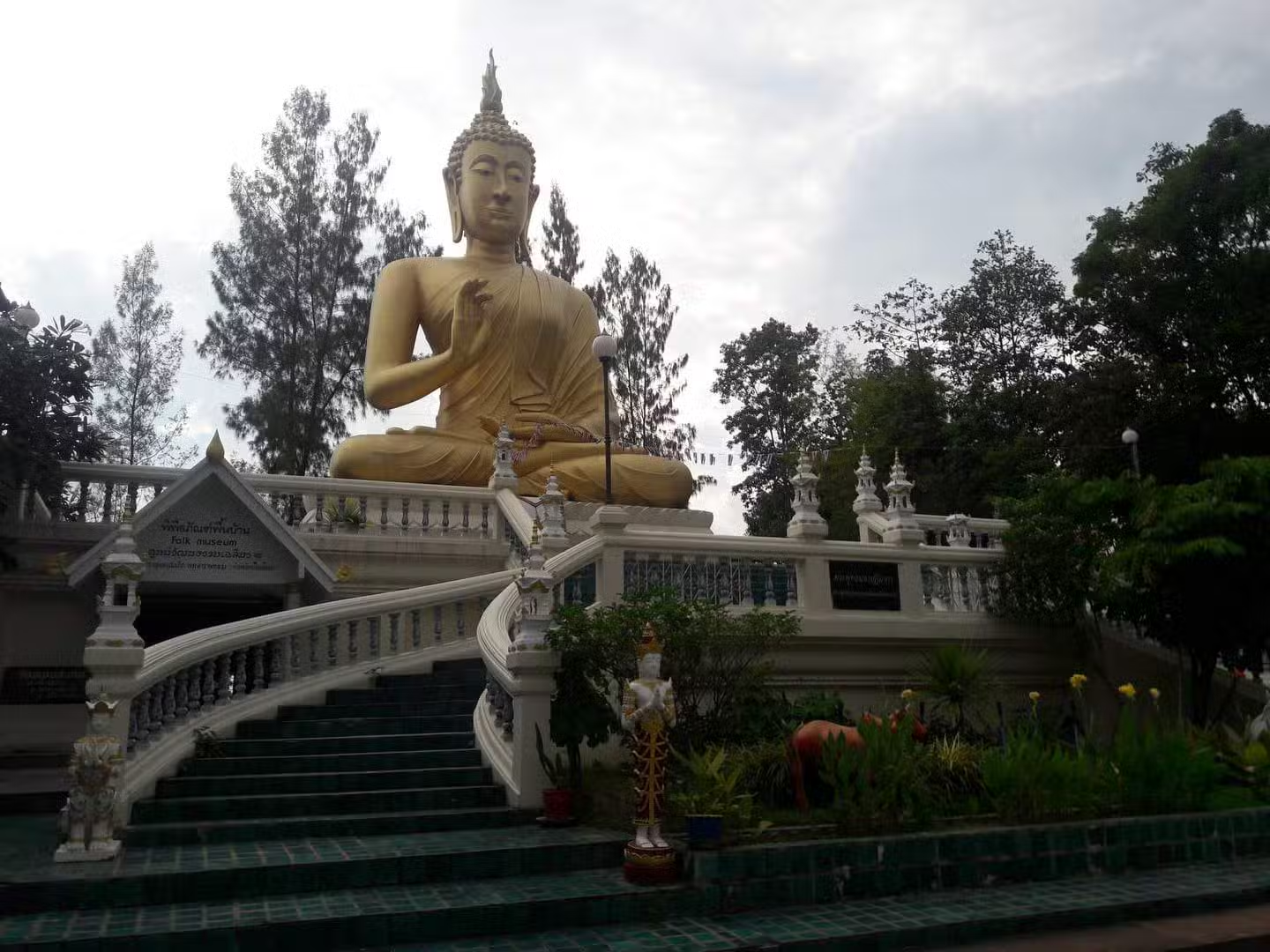
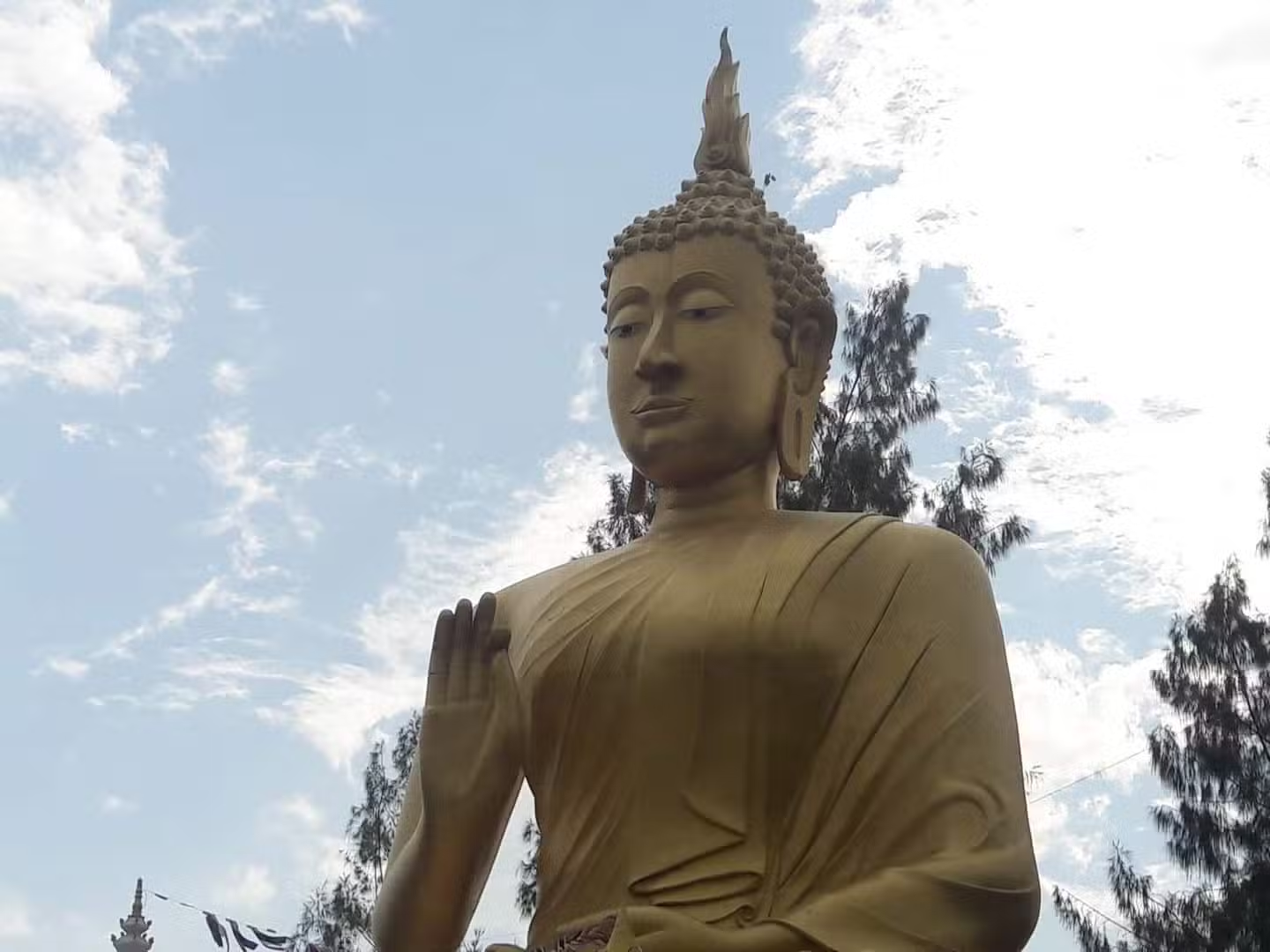
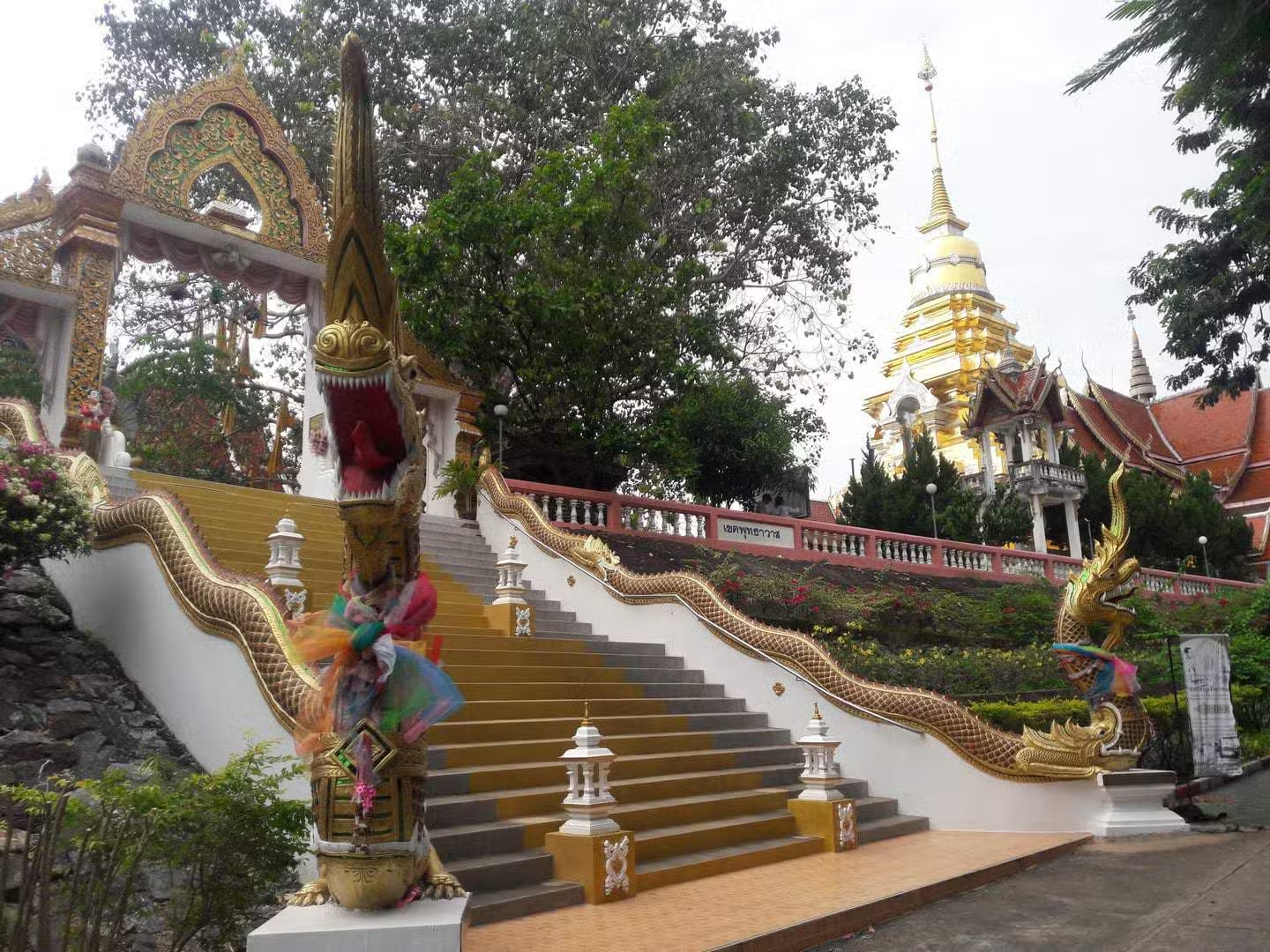
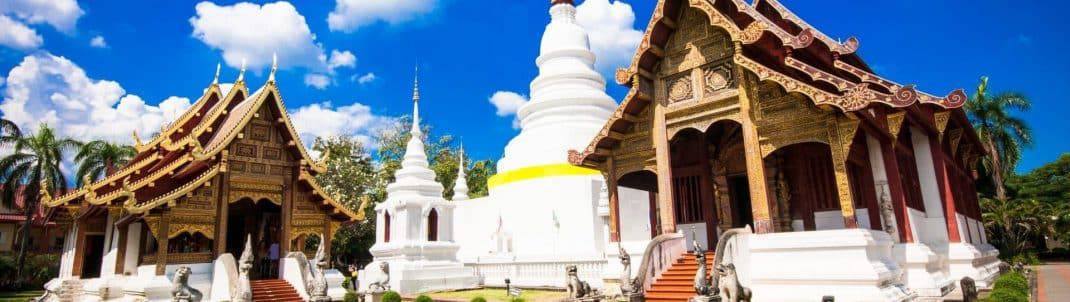
The approach rises above the town, with a substantial staircase offering a direct climb to the temple. The large golden Buddha is a prominent landmark, while the chedi forms an important focus of devotion. Look around the open spaces as well as towards the countryside: the temple is a collection of shrines, halls and working religious areas, not simply a single viewpoint.
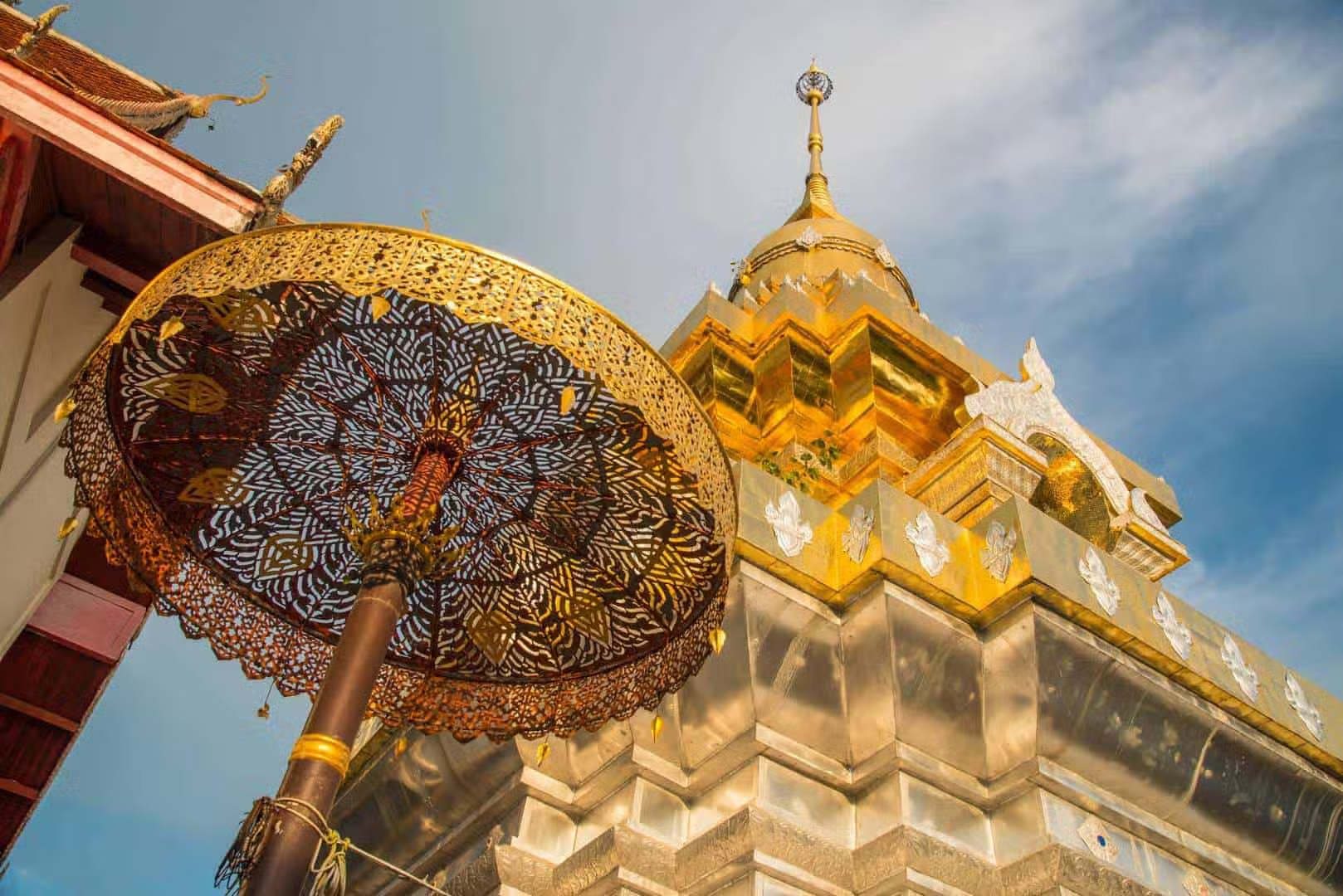
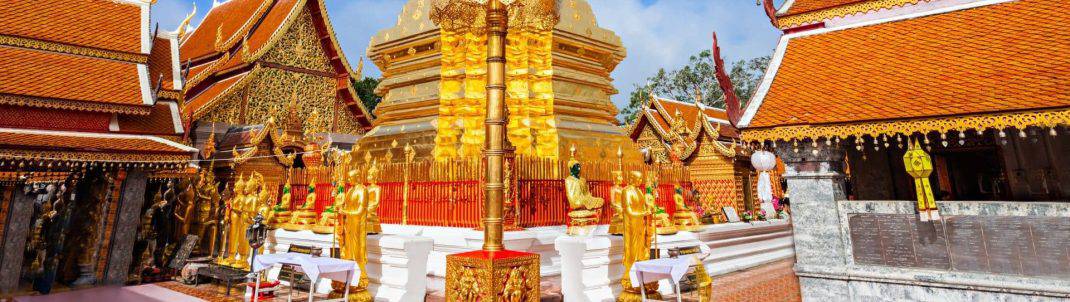
Local tradition associates the hill with a visit by the Buddha and the offering of a hair relic to a naga. The chedi is revered as the place where the relic is enshrined. The tradition gives the chedi its religious significance, while the buildings visible today reflect many periods of renovation and expansion.
The temple’s history is often traced to 1112, with later establishment and rebuilding shaping the complex. Successive renovations connect the older sacred site with the halls and shrines used by the community today.
Modern Murals in the Main Hall
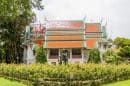
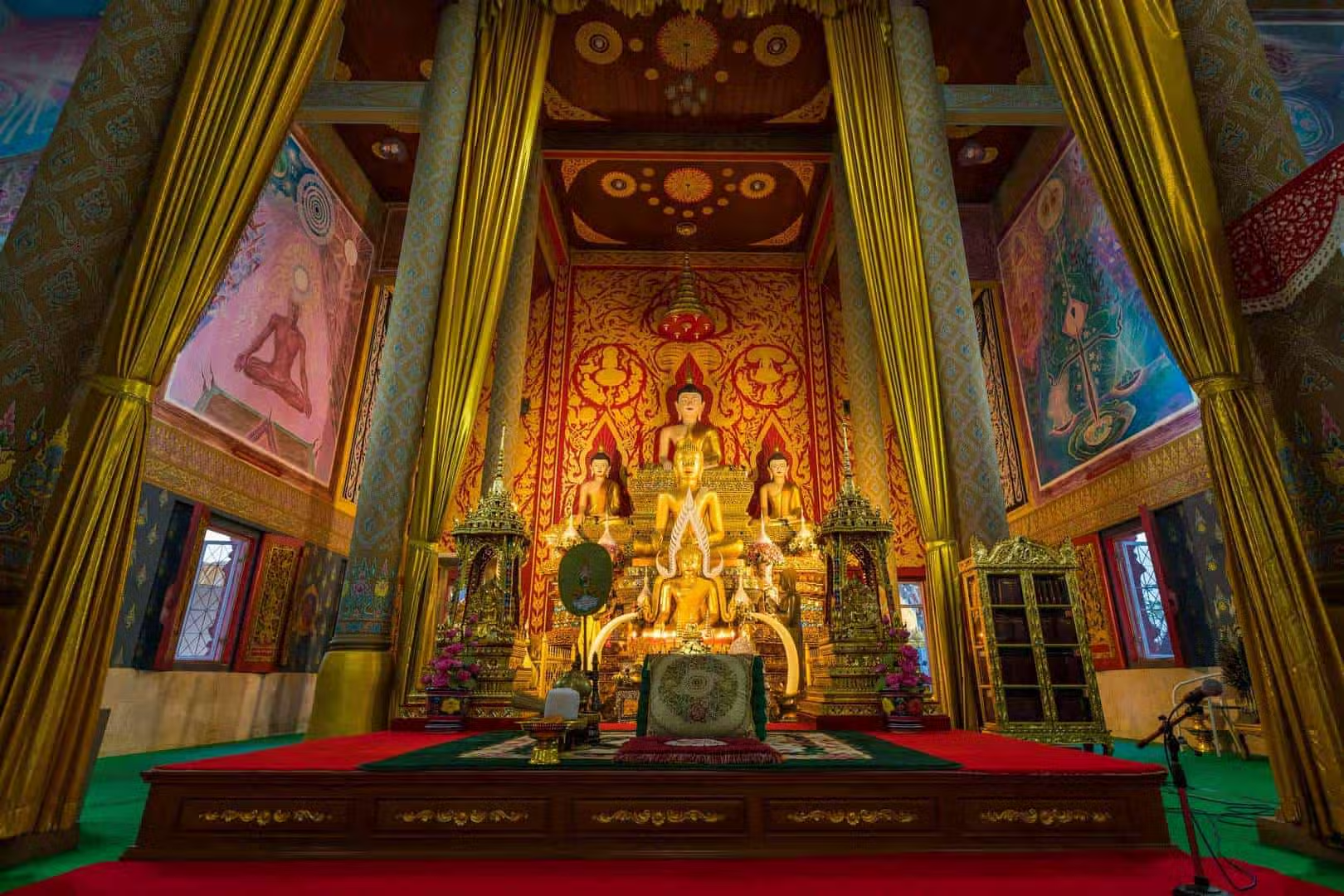
Make time to enter the main hall when it is open. Artist Chaiwat Wannanon began its Buddhist murals in the early 1990s, adding a modern visual interpretation to a traditional religious setting. Their imagery is a distinctive part of this temple and rewards looking closely rather than rushing through after photographing the exterior.
Stand back to see how the painted scenes work across the walls, then look at their individual details. Remove your shoes as directed and keep the worship area clear. If people are praying or a ceremony is underway, wait quietly or return later rather than moving through the congregation to inspect the paintings.
Additional Shrines and the Skywalk
Other devotional stops include the Buddha footprint shrine, where the footprint is revered by worshippers. The presence of these smaller shrines makes an exploratory walk worthwhile, provided you remain in areas open to visitors and respect any religious activity.
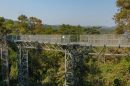
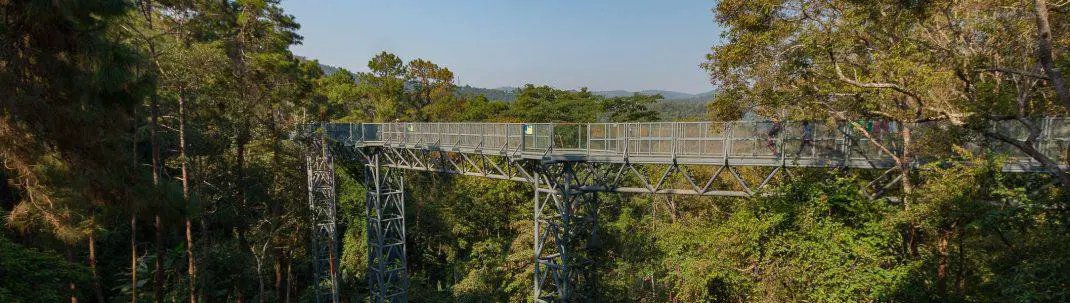
The Doi Saket Skywalk adds a glass-floor viewing experience in the newer hilltop area. It is separate from simply visiting the main temple and may require its own ticket. Check the entrance arrangements, operating conditions and any footwear instructions before deciding to include it.
The skywalk suits visitors comfortable with heights and looking down through glass. You can still enjoy the temple and ordinary viewpoints if you prefer to skip it. Leave extra time to move between the older temple area and newer attractions, rather than assuming everything sits immediately beside the main staircase.
Planning Your Temple Visit
Around one to two hours is a useful allowance for the main buildings, views and a measured walk, with additional time if you include the skywalk. A morning visit avoids some of the afternoon heat, while clear weather improves the outlook across the countryside. Haze or rain can limit distant views without removing the interest of the temple itself.
The main temple is generally free to enter, with donations welcome. Optional attractions, offerings and purchases are separate expenses. The grounds are commonly visited between about 6am and 6pm, but hall access and the skywalk have their own arrangements; confirm locally if a particular part is essential.
Wear clothing that covers shoulders and knees, remove shoes where indicated and speak quietly near prayer. Monastic school and residential areas are working spaces, so stay within public visitor areas. Ask before photographing monks or ceremonies and observe signs about photography inside.
Stairs and Access
The staircase can be demanding in hot weather, especially if you are combining it with further walking at the summit. A road also reaches the upper temple area, so ask your driver about an upper drop-off if the climb would be difficult.
Road access does not make every shrine step-free. Visitors needing wheelchair access or assistance should confirm the suitable entrance, surfaces and facilities before travelling, and choose the parts of the complex that meet their needs.
Getting to Wat Phra That Doi Saket
The temple is in Choeng Doi, Doi Saket district, reached from Chiang Mai via Route 118 towards Chiang Rai and the turn into Doi Saket town. Follow signs for Wat Phra That Doi Saket and the hilltop approach. It is northeast of the city, distinct from Wat Phra That Doi Suthep on the mountain to the west.
A car and driver, taxi or privately arranged songthaew gives you control over arrival, the hill ascent and the return. Allow roughly 30 to 45 minutes from central Chiang Mai in ordinary traffic, with extra time at busy periods. Agree on waiting time and whether your ride will take you to the upper area.
When driving, follow the temple’s parking and one-way directions where posted. If continuing into the district, allow time for the rural roads and the next destination rather than treating Doi Saket as a brief roadside stop on a fast journey to Chiang Rai.
Wat Phra That Doi Saket FAQs
Is this the same temple as Doi Suthep?
Wat Phra That Doi Saket is northeast of Chiang Mai in Doi Saket district. Wat Phra That Doi Suthep is a different temple on the mountain west of the city, so use the full name when arranging a ride.
What should you look for at the temple?
Prioritise the sacred chedi, large golden Buddha, main hall’s modern murals and countryside views. Additional shrines and the glass skywalk can extend the visit if they are open.
Is admission free?
The main temple is generally free to visit, with donations welcome. The skywalk is an optional attraction with separate arrangements, so check its ticket price at the entrance.
Do you have to climb the staircase?
A road reaches the upper temple area as an alternative to the main stair climb. Arrange the upper drop-off with your driver, while remembering that individual buildings and shrines can still have steps.
How long should you allow?
One to two hours suits the main temple and views at a measured pace. Add time for the skywalk, further walking or religious activity that limits access to a hall.
What should you wear?
Cover shoulders and knees and bring footwear that is comfortable for walking and easy to remove. Follow shoe and photography instructions at each building, and give worshippers space.





Do You Have a Question to Ask?