



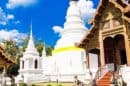










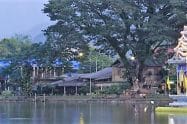
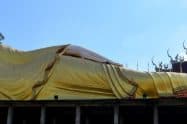








Wat Phra That Lampang Luang is one of northern Thailand’s most rewarding places to look closely at Lanna temple architecture. Its walled compound sits on a raised mound in Ko Kha district, outside Lampang, with open-sided prayer halls, carved timber and a tall, weathered chedi creating a different atmosphere from the bright modern halls found at many temples.
The temple is an active place of worship as well as a historic site. Give yourself time to look at the buildings from several sides, step into halls that are open and pause over the painted and carved details rather than treating the chedi as the only attraction.
Entering the fortified temple compound
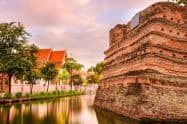
Walls and the elevated setting give the approach a fortified appearance. The entrance leads into a group of buildings whose roofs, gateways and decorative details reflect the temple’s long history. Local tradition connects the place with a visit by the Buddha and a sacred relic; these accounts explain its religious importance rather than serving as a dated record of construction.
The site also has associations with Lampang’s resistance to Burmese rule and the local figure Thippachak. That history adds another layer to the walls and defensive appearance, although the present visit centres on the temple buildings and worship spaces.
Once inside, look across the courtyard before choosing a route. The relationship between the halls and the chedi is easier to appreciate from a little distance, while the finer decoration rewards a closer approach. Keep routes clear for worshippers and avoid walking through a ceremony for a photograph.
Looking inside the Lanna halls
Viharn Luang
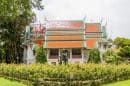
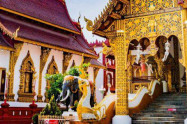
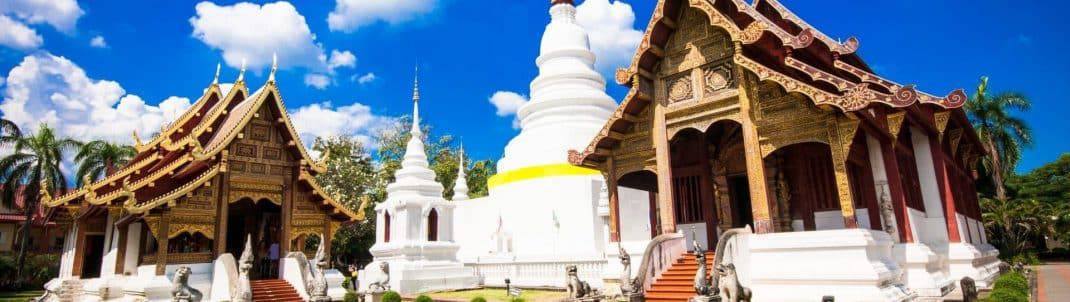
Viharn Luang is the principal prayer hall, with a tiered roof and an open-sided form that lets you see the structure instead of encountering a fully enclosed room. The contrast between roof, pillars and the light from the courtyard is part of its appeal. Gold-on-dark decoration and painted details invite a slower look.
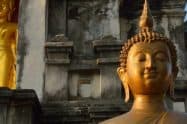
Inside, an elaborate shrine structure, known as a ku, surrounds the principal Buddha image. Murals depict Buddhist stories, including Jataka narratives about the Buddha’s previous lives. Look at the way small figures and patterned surfaces sit within the wider architecture; these details are easily missed when concentrating only on the central image.
Smaller halls and carved decoration
Viharn Phra Put offers another view of the temple’s timber work, with carved decoration, glass mosaic and a prominent Buddha image. The smaller scale makes it useful to compare with the main hall rather than seeing every building as a repetition of the same design.
Other historic halls include Viharn Nam Tam and Viharn Phra Sao Sila. Access may vary, but their presence gives the compound much of its architectural variety. Walk around the exterior of any closed hall without assuming that a shut door is an invitation to find another way inside.
The chedi and inverted shadow effect
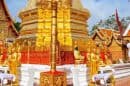
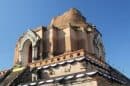
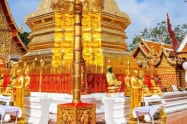
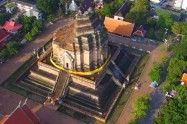
The tall chedi is a central sacred feature, traditionally associated with a Buddha relic. Its metal-covered surface has a subdued, aged appearance rather than the uniformly bright finish visitors may expect from a famous golden stupa. Look at the shape and texture from the courtyard; the chedi itself is not a structure to climb.
The temple is also known for an inverted image of the chedi formed by light passing into a darkened space. This camera-obscura-like effect adds an unusual visual detail to the visit. Ask where it can currently be seen, as the effect depends on access and lighting and should not be treated as guaranteed from every room.
The Buddha-footprint chapel has a local restriction on entry by women. This applies to that particular sacred space, rather than excluding women from the whole temple. Follow the signs and staff guidance, and enjoy the other halls and courtyard if the restricted chapel is not available to you.
Planning a visit from Lampang
The temple is in Lampang Luang, Ko Kha district, roughly 15 kilometres from Lampang city. A car or arranged local transport is a practical way to reach it. Give the driver the full temple name, arrange the return trip and agree the fare before setting out instead of assuming a fixed city-wide taxi price.
Listed visiting hours are 7:30am-5pm and general entry is free, with voluntary donations welcome. Confirm holiday or ceremony access if your visit depends on entering a specific hall. An early visit can give you more time before continuing to Lampang’s other temples or riverside streets.
Wear clothing that covers shoulders and knees and remove shoes before entering halls where required. Keep your voice low, do not touch murals or fragile timber, and check photography signs indoors. Allow around an hour or longer if you enjoy architecture; the site rewards unhurried comparisons between its buildings.
Wat Phra That Lampang Luang FAQs
Is the temple in Chiang Mai?
No. It is in Ko Kha district, outside Lampang city. Include the road journey when planning it from Chiang Mai, and consider combining it with time in Lampang rather than fitting it between central Chiang Mai stops.
What should I look for inside the compound?
Start with Viharn Luang, its decorated pillars and shrine, then compare the smaller halls and the weathered chedi. The carved and painted details are as much a reason to visit as the overall temple silhouette.
What are the opening hours and admission fee?
Listed hours are 7:30am-5pm, with free general entry and optional donations. Ceremonies, holidays and individual hall arrangements can affect what is accessible, so confirm if a particular interior is essential to your visit.
Can women visit Wat Phra That Lampang Luang?
Yes. A restriction applies to the Buddha-footprint chapel, rather than the whole temple. Follow the signs at that sacred space; the wider compound and other accessible buildings remain the main focus of the visit.
Can I see an upside-down image of the chedi?
The temple is known for an inverted shadow or light image of the chedi inside a darkened space. Ask for the current viewing location and follow its entry rules, since lighting and room access affect the experience.




Do You Have a Question to Ask?