



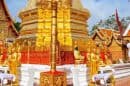
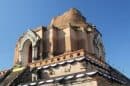
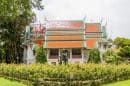
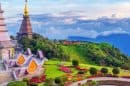
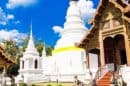
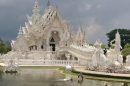












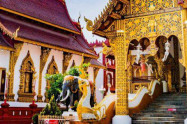

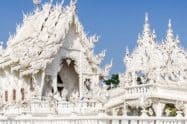


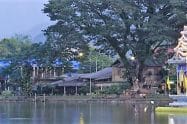
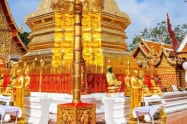









Wat Pong Sanuk is a historic temple in Lampang whose raised sanctuary and carefully restored timber pavilion reward a close look. The best-known section is Wat Pong Sanuk Nuea, or the northern temple, where the chedi and Viharn Phra Chao Pun Ong stand on a mound above the lower grounds.
The pavilion’s restoration received a UNESCO Asia-Pacific heritage conservation Award of Merit in 2008. That recognition celebrates the work of the monks, local community and specialists who conserved the building, giving visitors a reason to notice the craftsmanship rather than simply photograph the skyline.
The pavilion on the raised mound
Viharn Phra Chao Pun Ong
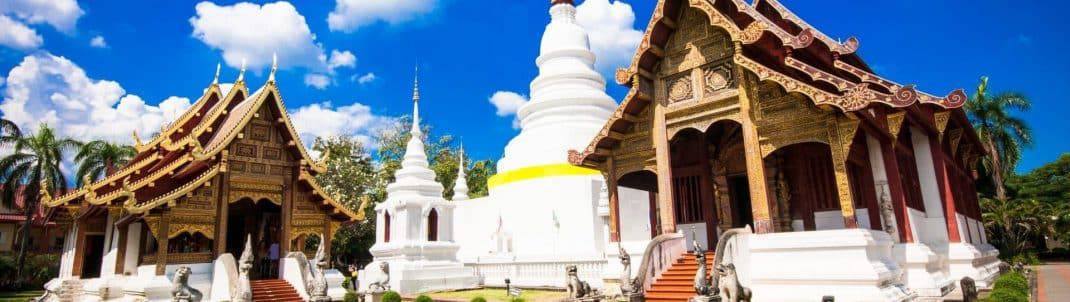
The Viharn Phra Chao Pun Ong is commonly translated as the Pavilion or Hall of a Thousand Buddhas. Its open form and projecting arms create a distinctive cross-shaped plan, with the roof and timber work as important to the view as the images within. Walk around the permitted perimeter to see how the different sides fit together.
The pavilion reflects connections between northern Thai, Shan and other regional building traditions. Look for the relationship between the roof, supporting structure and decorative detail, rather than expecting the appearance of a standard enclosed prayer hall. Take care around raised edges and steps and follow any signs restricting access.
The chedi and other temple buildings
The neighbouring chedi, Phra That Chom Krai, is a stupa, distinct from the Buddha images inside the halls. Together, the pavilion and chedi form the principal group on the raised sanctuary, a setting associated with the Buddhist idea of Mount Meru.
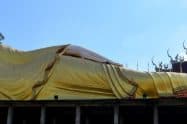
The wider grounds contain other halls, Buddha images and heritage displays, with the reclining Buddha among the features to look for. Rooms may be closed even when the courtyard is accessible. Spend time with the open exhibits and architectural details instead of assuming every museum space has a fixed daily programme.
Conservation and Lampang’s history
The 2008 award recognised community-led conservation, including the use and revival of traditional building and decorative techniques. It is an award for a restoration project, rather than World Heritage inscription of the temple. This distinction helps explain why the building and the people who cared for it are central to the visit.
The temple has a longer history than a single nineteenth-century construction date suggests. The year 1886 is associated with a recorded restoration of the pavilion, while the wider site connects with Lampang’s older settlement and city-pillar traditions. For a visit, the most useful approach is to read the on-site history alongside the structures rather than treat every building as the same age.
Planning a respectful visit
Admission is generally free, with donations welcomed. Daylight is the best time for the timber details and grounds; the temple is commonly listed as open from 6am to 6pm, although individual halls can have more limited access. Allow about 45 to 60 minutes as a planning estimate, or longer if the heritage rooms are open and you enjoy studying their contents.
Wear clothing that covers shoulders and knees and remove shoes where indicated. Keep clear of religious activities and ask before photographing people. The raised sanctuary involves steps, so visitors with mobility needs should check the particular approach rather than assume the whole site has level access.
Finding the northern temple in Lampang
The address is 60 Pong Sanuk Road, Wiang Nuea, Mueang Lampang, Lampang 52000. Tell your driver you want Wat Pong Sanuk Nuea and its raised pavilion; the northern and southern temple sections should not be treated as interchangeable destinations.
It is a central Lampang visit that can be combined with exploring the older streets near the Wang River. Travelling from Chiang Mai means allowing for the intercity journey as well as your time at the temple. Wat Phra That Lampang Luang is a separate destination outside central Lampang, requiring its own transfer.
Wat Pong Sanuk FAQs
What is the main highlight?
The restored Viharn Phra Chao Pun Ong and neighbouring chedi on the raised mound are the key architectural group. Walk around the permitted areas to appreciate the pavilion’s projecting plan and timber roof.
Is Wat Pong Sanuk a UNESCO World Heritage Site?
Its restoration received a UNESCO Asia-Pacific heritage conservation Award of Merit in 2008. That is recognition of a conservation project and does not mean the temple has World Heritage inscription.
Which temple section should you visit?
The raised pavilion and chedi are in Wat Pong Sanuk Nuea, the northern section. Use that name when arranging a drop-off so your visit begins at the section associated with the conservation award.
Is admission free?
General admission is usually free, with donations welcomed. Access to individual halls and heritage rooms can be more limited than access to the grounds, so follow the arrangements when you arrive.
How much time do you need?
Around 45 to 60 minutes allows for a selective look at the pavilion, chedi and grounds. Add time if the heritage displays are open or if you want to continue into Lampang’s older riverside streets.
Is this the same as Wat Phra That Lampang Luang?
They are separate temples. Wat Pong Sanuk is in central Lampang, while Lampang Luang is outside the city and needs its own travel plan.





Do You Have a Question to Ask?