


















































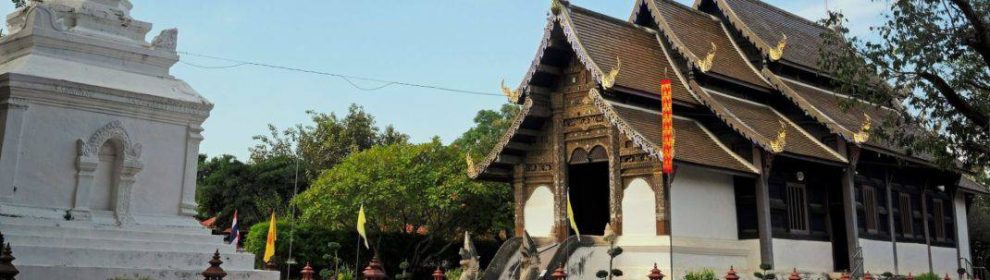
Wat Prasat is a small historic temple in Chiang Mai’s Old City, just north of Wat Phra Singh. Its timber worship hall, carved decoration and unusual relationship between the main hall and chedi make it a rewarding stop for visitors interested in Lanna architecture.
The experience is quieter and more compact than at some of the city’s larger temple complexes. Allow time to look at the hall’s entrance and roof details, then explore the areas open to visitors without assuming every building is a public gallery.
The timber viharn and its decoration
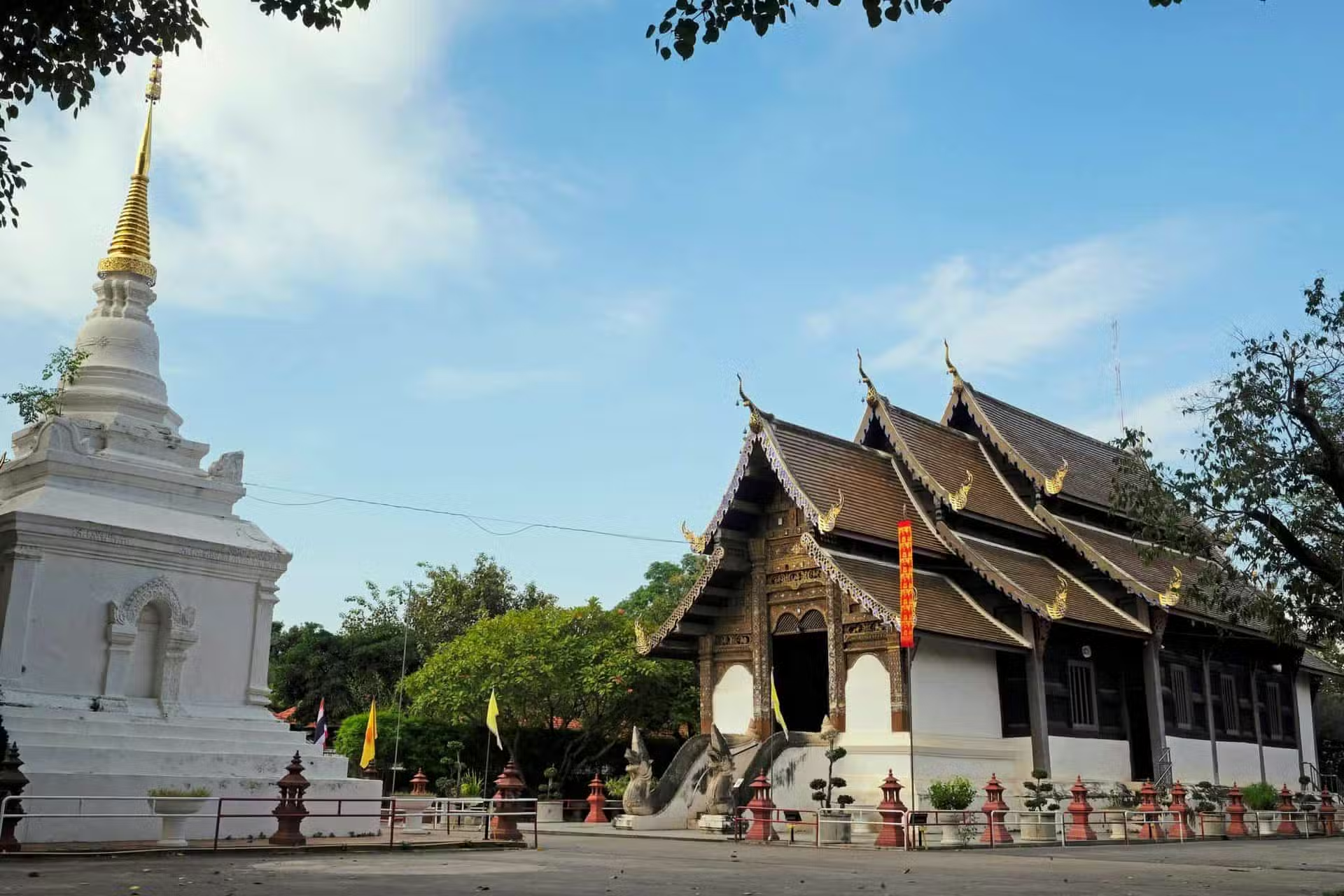
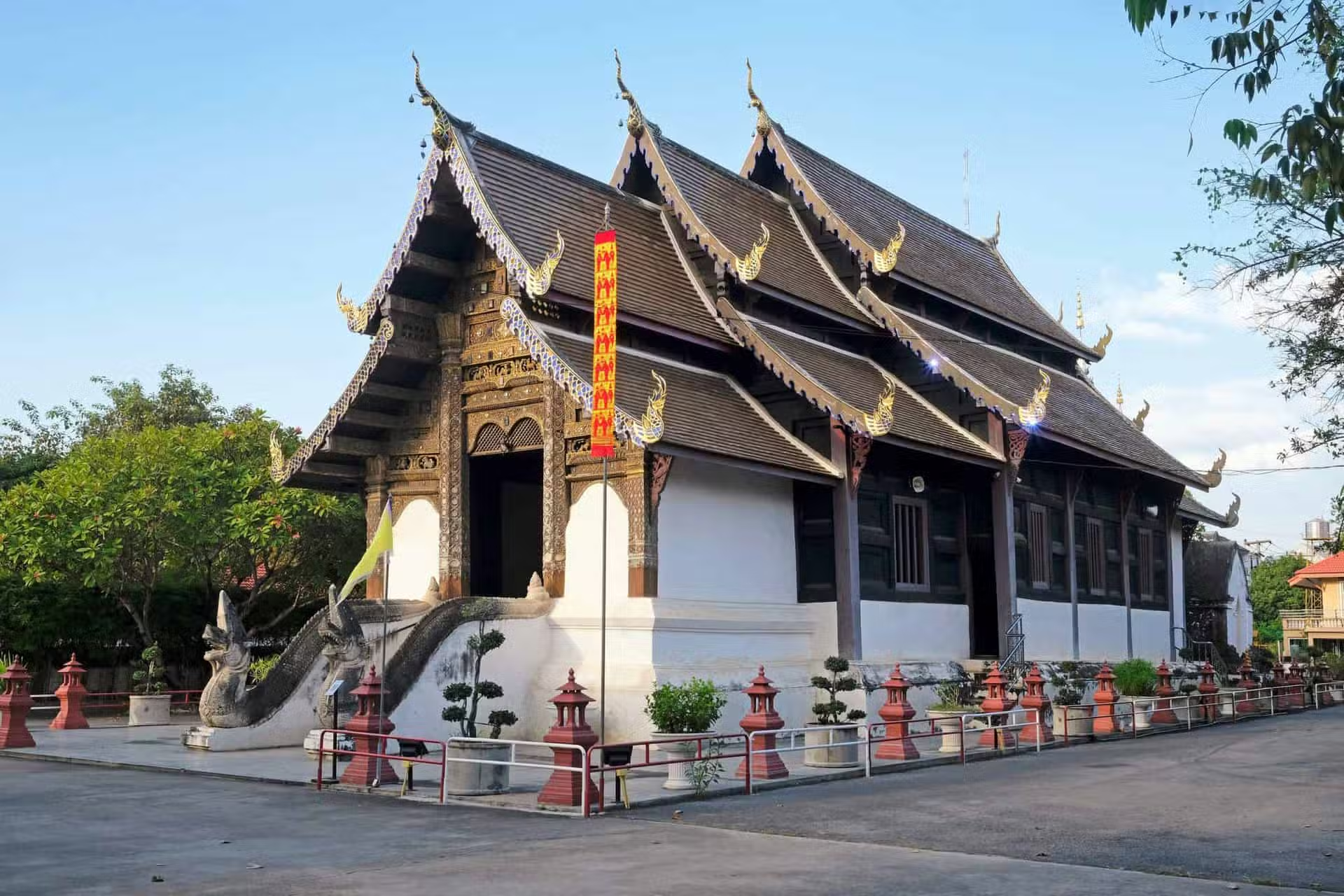
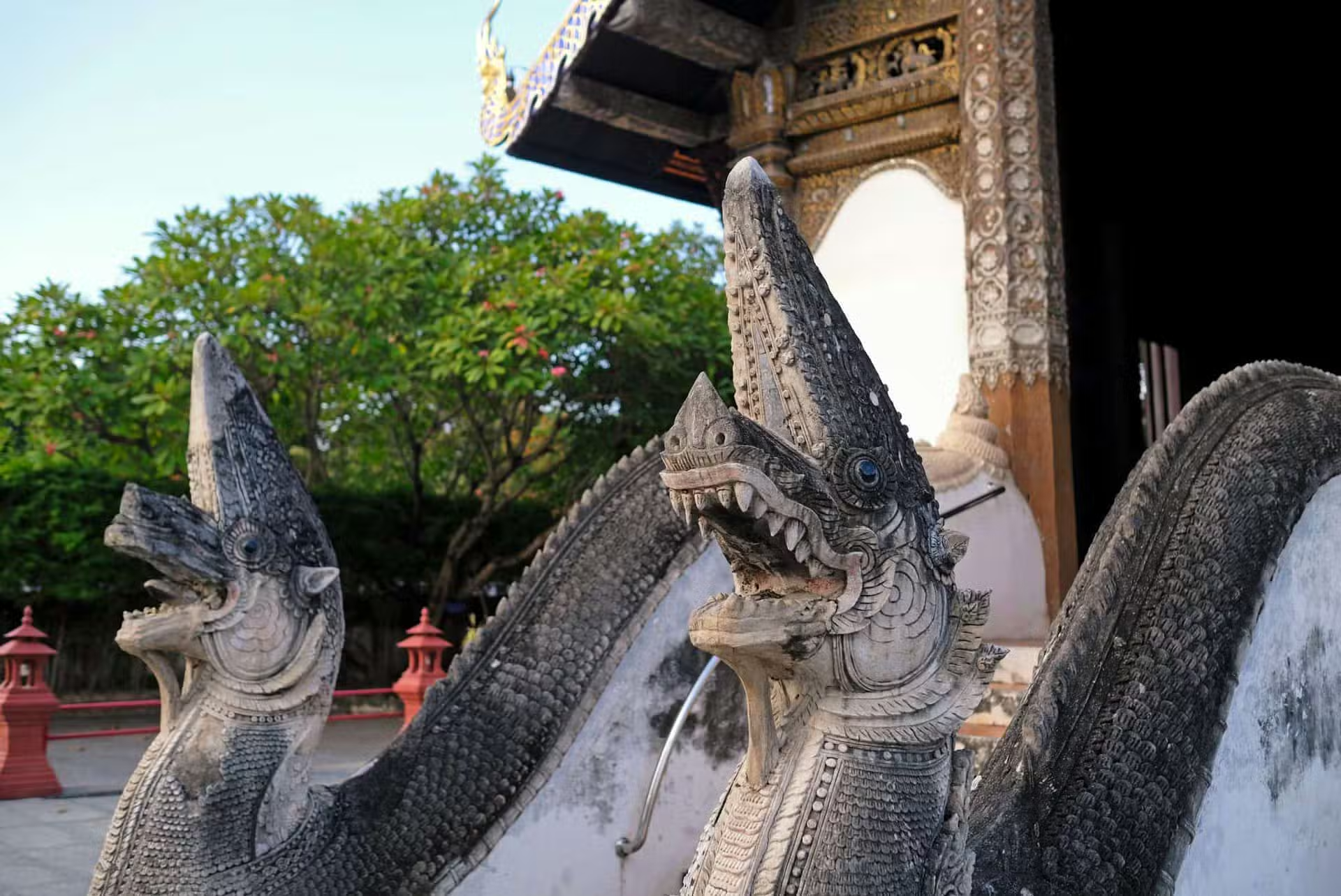
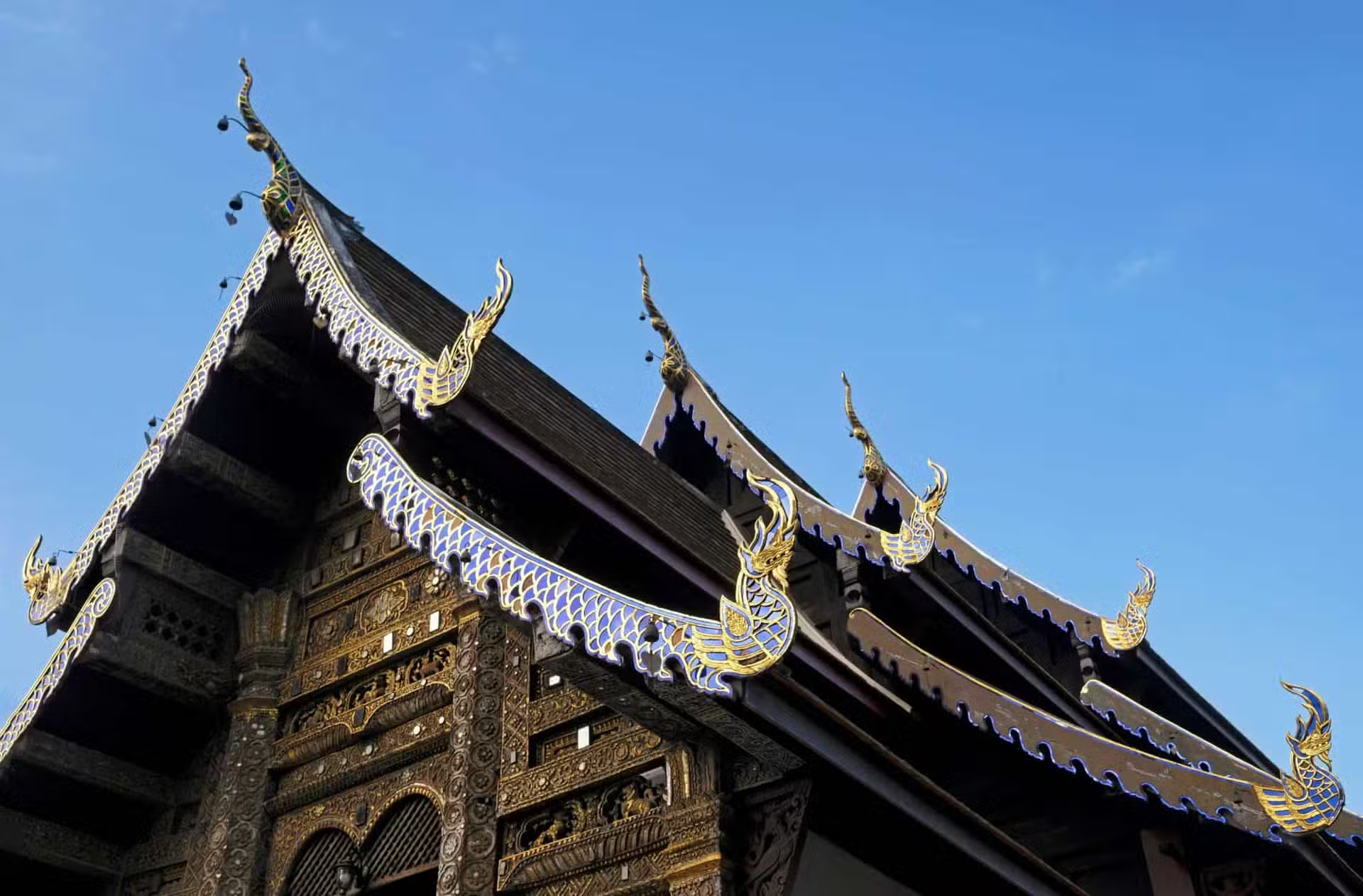
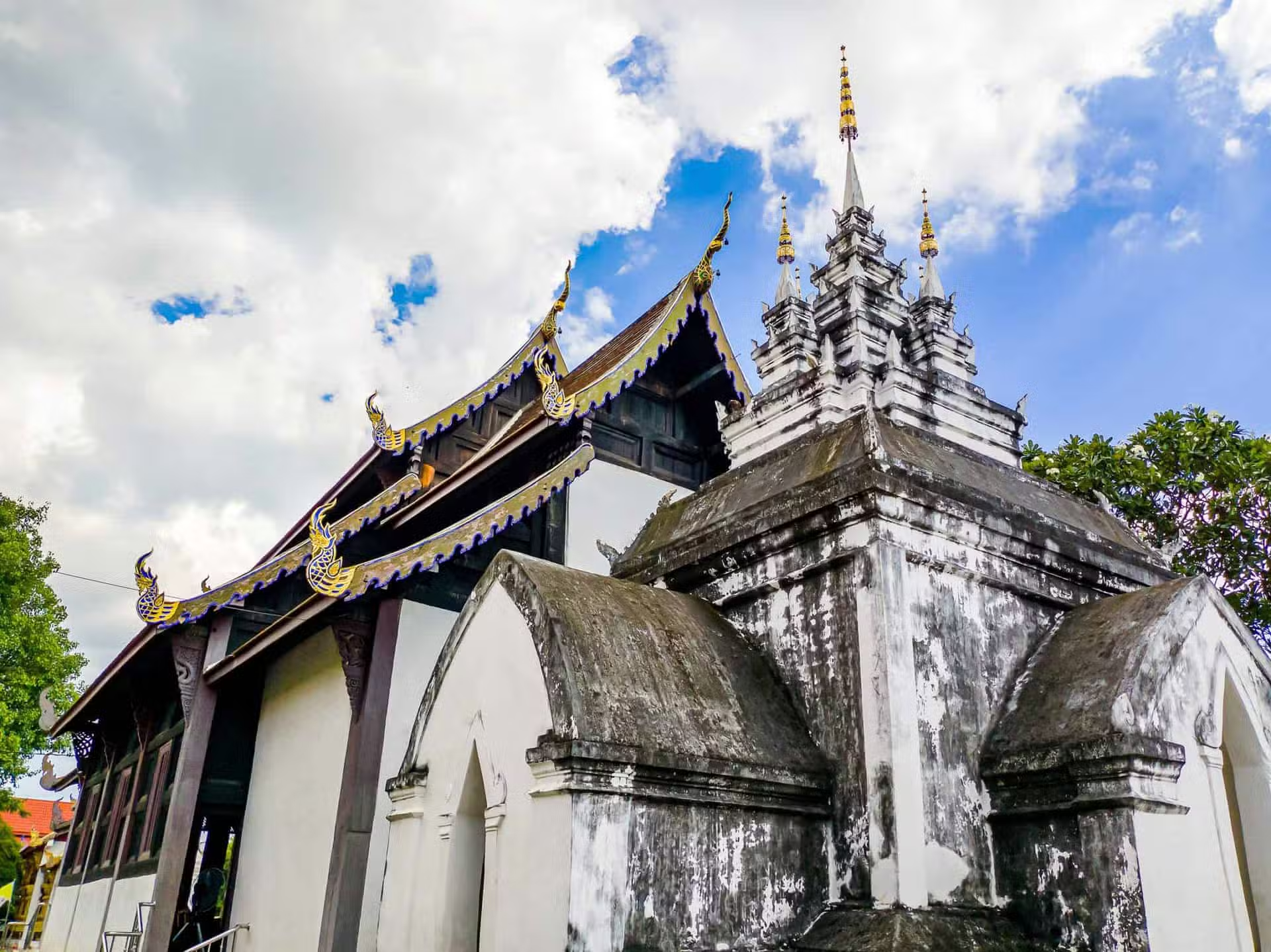
The viharn, or assembly hall, dates to 1823 and stands on a raised base. Its timber construction and layered roof give it a distinct character, while carved floral decoration and naga figures draw attention to the approach. Look from the courtyard before stepping closer; the building’s proportions are as important as individual ornaments.
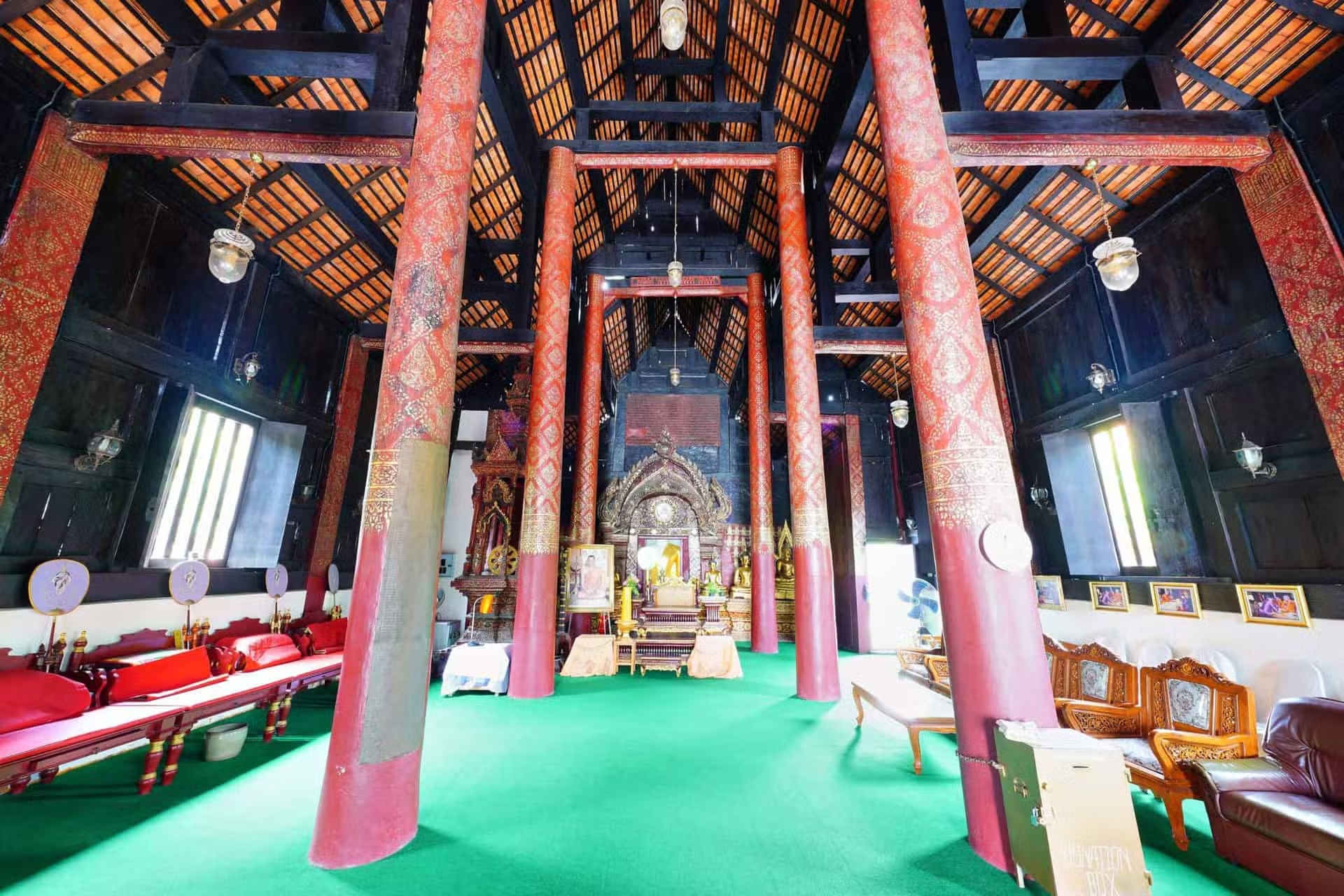
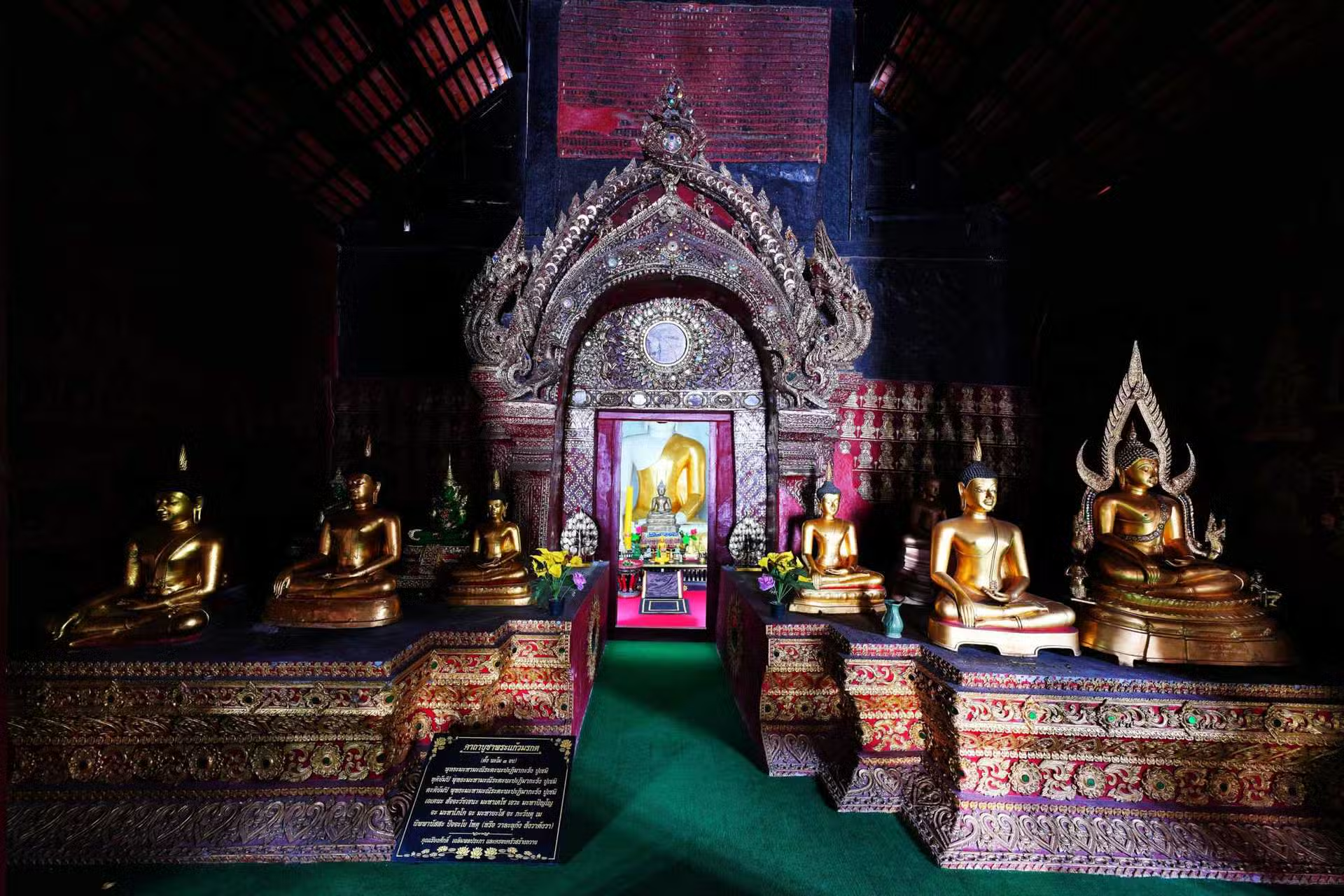
Inside the accessible worship space, Buddha images and 19th-century mural decoration add to the architectural visit. A bronze Buddha image is associated with a 1590 date. Observe signs about entry and photography, and leave room for worshippers using the hall.
The connection between hall and chedi
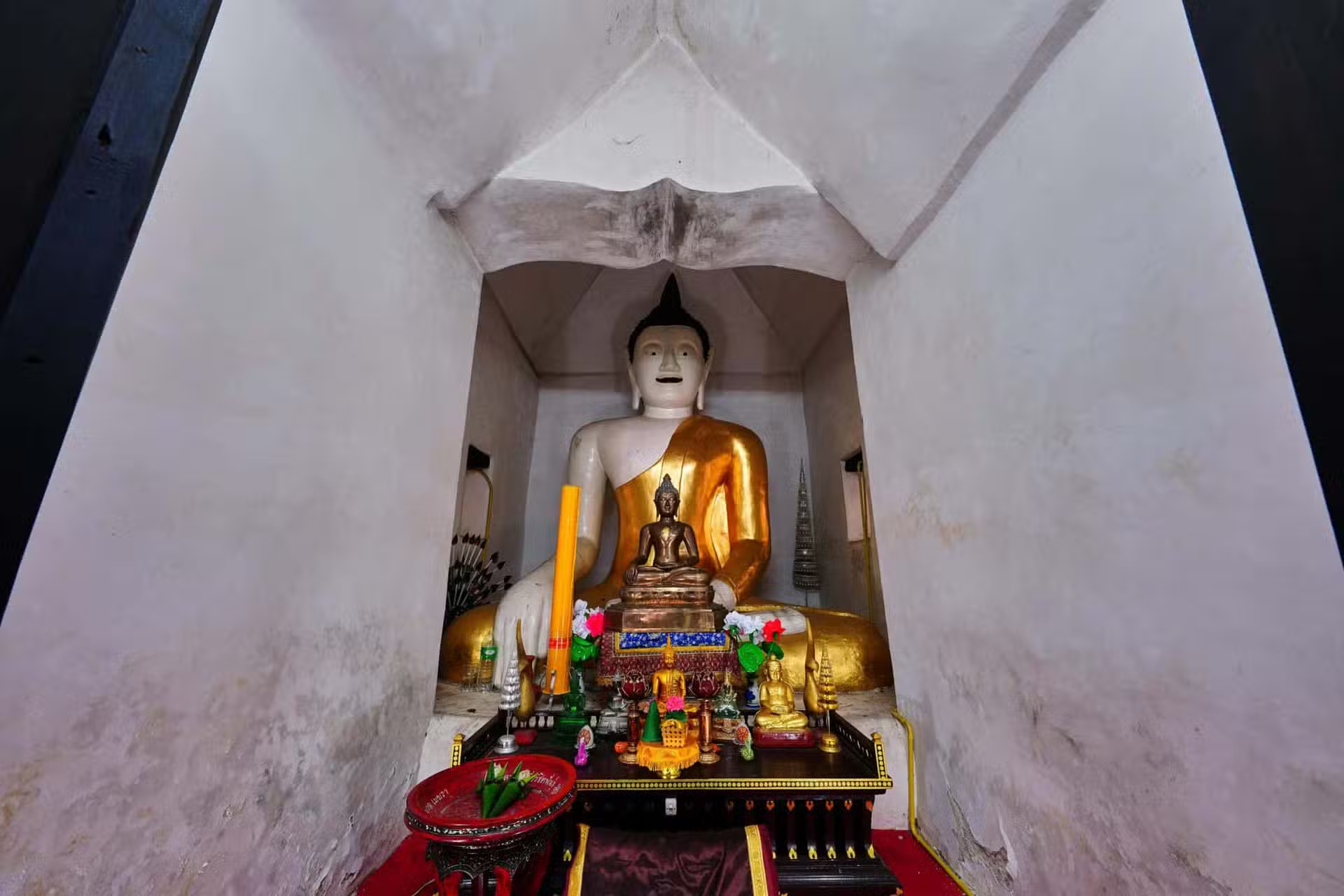
An unusual feature is the short connecting passage between the viharn and the chedi behind it. The Buddha image within the chedi can be viewed through this alignment from the hall. View it from the open worship space and follow the temple’s access directions; do not assume the passage is a visitor walking route.
Exploring the small compound
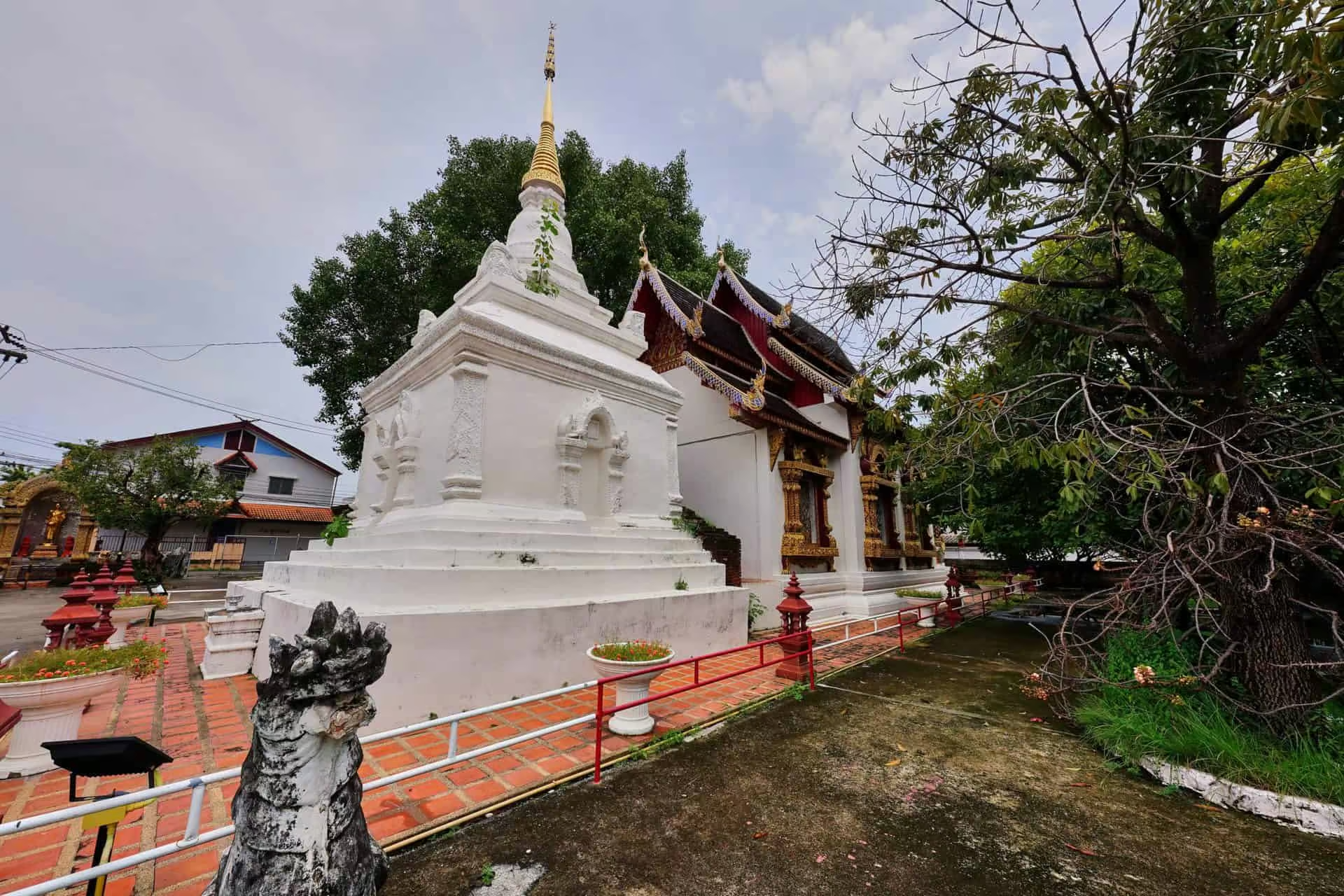
The grounds also include an ordination hall, a white chedi with a gold spire, a small spirit house and a bell tower. A short circuit lets you appreciate how these buildings sit together. Keep to the public approaches and leave closed worship buildings undisturbed.
General visiting is free, with donations optional. Plan to come during daylight and check the hall’s access when you arrive. Opening of individual interiors may depend on worship and local arrangements, so an open gate does not establish access to every building.
Finding Wat Prasat in the Old City
The temple is in the Inthawarorot Road area, north of Wat Phra Singh, making the two a natural pairing on an Old City walk. Use the Wat Prasat temple name and the local lane address when arranging a drop-off; it is a separate compound from its larger neighbour.
Dress with shoulders and knees covered and wear shoes that are easy to remove at the hall. The raised entrance and steps deserve care, especially after rain. Ask about the usable route if steps affect your visit rather than assuming the whole compound has level access.
Wat Prasat FAQs
What makes Wat Prasat different from other Old City temples?
Its timber viharn and the alignment connecting the hall with a Buddha image inside the chedi are distinctive. The compact setting also gives you time to study the carved entrance and roof details without planning a large complex visit.
Can I walk through the connecting passage?
The passage explains the relationship between the hall and chedi and the view of the image within. Do not assume it is a visitor tunnel; use only the areas open to the public and follow the temple’s directions.
Is there an admission charge?
General access is free, with optional donations. Plan for daylight visiting and check which worship buildings are open when you arrive.
Can I combine it with Wat Phra Singh?
The temples are close to one another in the Old City, with Wat Prasat to the north. They are separate compounds, so leave time to find the correct entrance rather than expecting an internal connection.
How much time should I allow?
A short stop can cover the courtyard and open hall, while visitors interested in architecture may want longer for the carving and building layout. Interior access and worship activity will shape what you can see on the day.









Do You Have a Question to Ask?