









































Wat Si Rong Muang is a teak temple in western Lampang, south of the Wang River. Its richly decorated wooden worship hall, layered roof and coloured glass ornament show the influence of the Burmese and Shan communities connected with the city’s teak industry.
The hall is the centrepiece of a compact visit, with a chedi and other religious structures completing the grounds. Allow time to appreciate the roof from outside before entering an open worship space, since the building’s broad form is as distinctive as its interior decoration.
A teak hall with a broad, layered roof
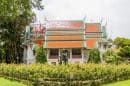
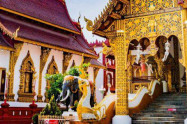
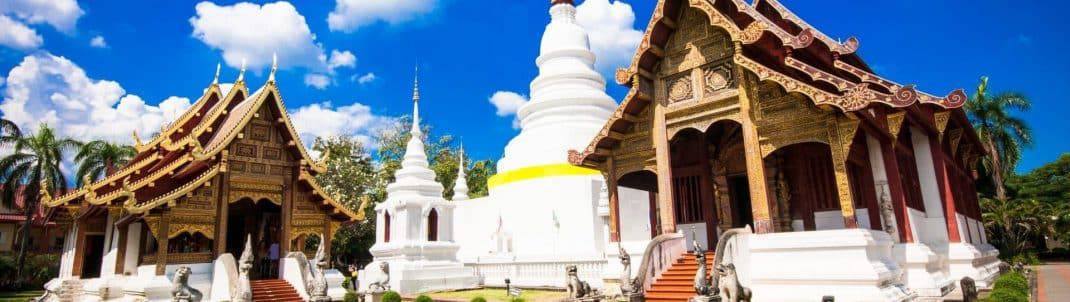
The viharn presents a wide facade, differing from the long, front-facing form familiar at many Lanna temples. Its grouped roof tiers and red-and-gold ornament create a layered silhouette, with delicate metal decoration along the gables adding finer detail.
Stand back in the permitted courtyard area to see how the roof sections relate to one another. A photograph taken too close to the entrance can miss the building’s overall shape, while a slower circuit reveals the relationship between the timber structure and its ornament.
Glass mosaics and Buddha images
Inside the hall, decorated wooden columns support a richly worked ceiling. Coloured glass mosaics catch the light, while carved panels and gold details create a much more elaborate interior than the timber exterior alone might suggest.
The raised altar area holds Buddha images in Burmese and Lanna styles. Look from the visitor floor rather than stepping onto an altar platform for a closer view, and let people praying have space before approaching the front of the hall.
Burmese and Shan heritage in Lampang
The temple dates from the early 20th century, when Burmese workers and patrons connected with teak logging helped shape Lampang’s religious architecture. Their influence explains the contrast with the northern Thai forms seen elsewhere in the region.
The building’s craft details make this history visible without requiring a long museum visit. Compare its broad roof, decorative metal edges and mosaic columns with another Lampang temple if you are interested in how different communities contributed to the city’s architecture.
The chedi and surrounding grounds
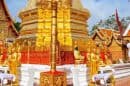
Near the hall is a slender white-and-gold chedi with a decorative umbrella finial. Its Shan character provides a second architectural focus, and the open areas around it give you a chance to see the main hall from a different angle.
The compound also serves the resident religious community. Follow visitor signs, stay out of monks’ residential areas and approach a closed building as a place reserved for its own use rather than an exhibit awaiting entry.
Planning a respectful visit
Around 30 to 45 minutes is a useful allowance for the hall exterior, an open interior and a look around the chedi. Visitors especially interested in timber architecture may want longer, while a general Lampang sightseeing route can include the temple as a focused stop.
Normal listed hours are 8am to 5pm daily, with general admission free. Worship, ceremonies and maintenance may affect access to particular buildings, so daytime arrival gives the best opportunity to see the compound without expecting every door to be open.
Cover shoulders and knees, remove shoes before entering where required, and keep your voice low inside. Ask about photography around the altar and avoid touching the mosaic surfaces or leaning against carved decoration while framing a picture.
The hall’s raised entrances and the grounds’ changes in level matter if steps are difficult. Ask about a suitable entrance before travelling if you need step-free access, and allow time to choose a comfortable route rather than assuming a small temple has level access throughout.
Finding the temple in western Lampang
Wat Si Rong Muang is on Takrao Noi Road in Sop Tui, on the southern side of the Wang River. It is a Lampang attraction, so plan a separate journey from Chiang Mai rather than treating it as another stop within Chiang Mai’s Old City.
Within Lampang, an arranged songthaew, taxi or driver can take you to the temple. A horse-drawn carriage outing can also be arranged locally, but agree on the specific route, stop time and total fare before setting off; not every standard sightseeing circuit necessarily includes this temple.
Wat Si Rong Muang FAQs
What makes this temple distinctive?
Its broad teak worship hall has a richly layered Burmese-style roof and elaborate mosaic decoration. Viewing the roof from outside and the columns inside gives two different impressions of the same building.
Is it in Chiang Mai?
It is in Lampang, south of the Wang River in the western part of town. Include travel to Lampang when planning a visit from Chiang Mai rather than treating it as a local city temple.
Is admission free?
General admission is listed as free. Donations are welcome, while a driver, guided visit or carriage outing is arranged and paid for separately.
How long should you allow?
Around 30 to 45 minutes suits a visit to the accessible hall and grounds. Leave longer if you want to study the timber, mosaic and roof details carefully.
Can you go inside the teak hall?
Enter when it is open to visitors and follow the temple’s shoe and dress requirements. Ceremonies or maintenance can limit access, so the normal grounds timetable does not guarantee an open interior at every moment.







Do You Have a Question to Ask?