













































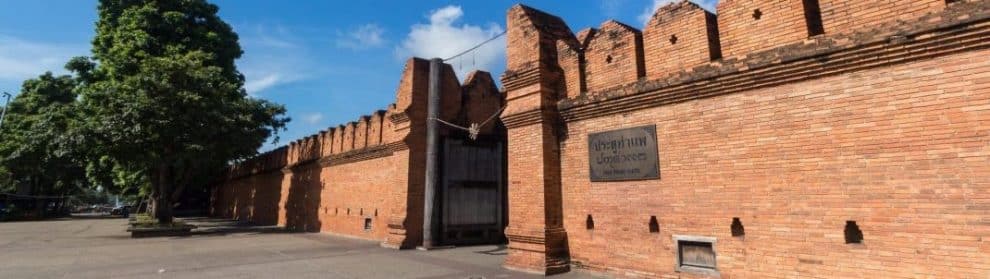
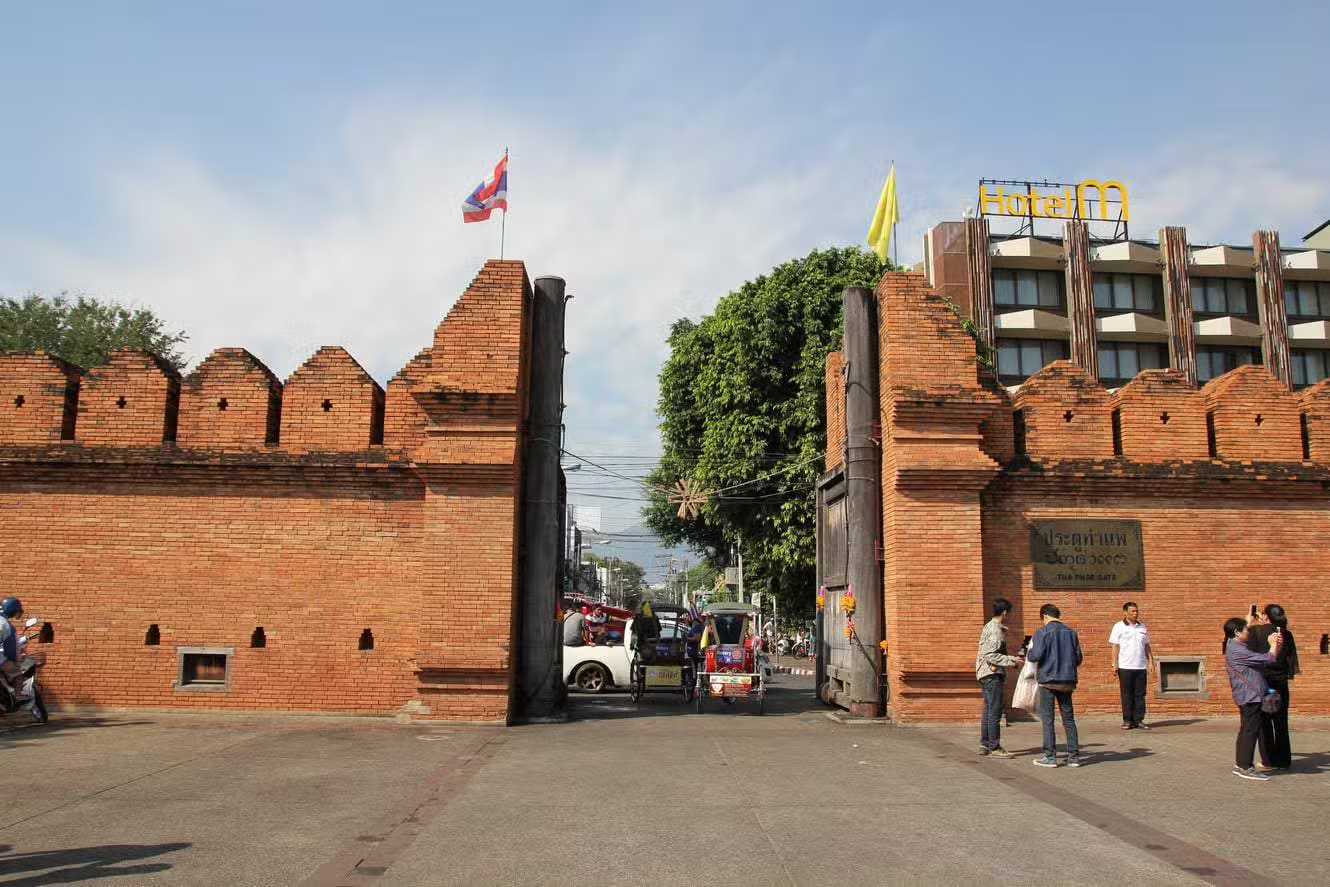
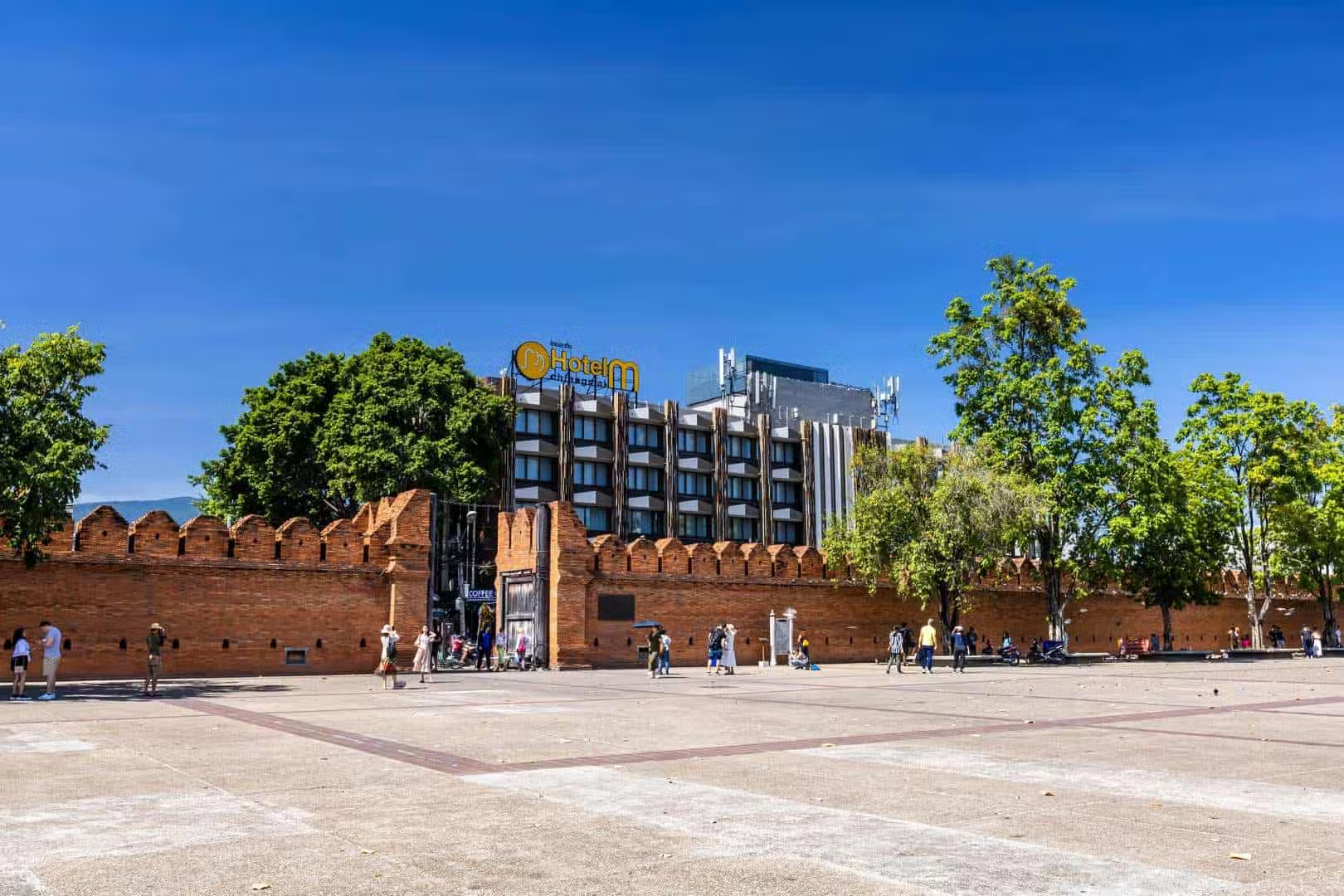
Tha Phae Gate is Chiang Mai’s best-known city gate and one of the main landmarks marking the boundary of the historic Old City. Its red-brick walls, broad pedestrian square, and central location make it a popular meeting point, photo spot, and starting point for exploring Chiang Mai on foot.
The gate stands at the eastern end of Ratchadamnoen Road, where the Old City meets the commercial districts leading towards the Ping River and Night Bazaar. Visitors can pass through the gateway at any time, with no admission fee or formal entrance procedure.
History of Tha Phae Gate
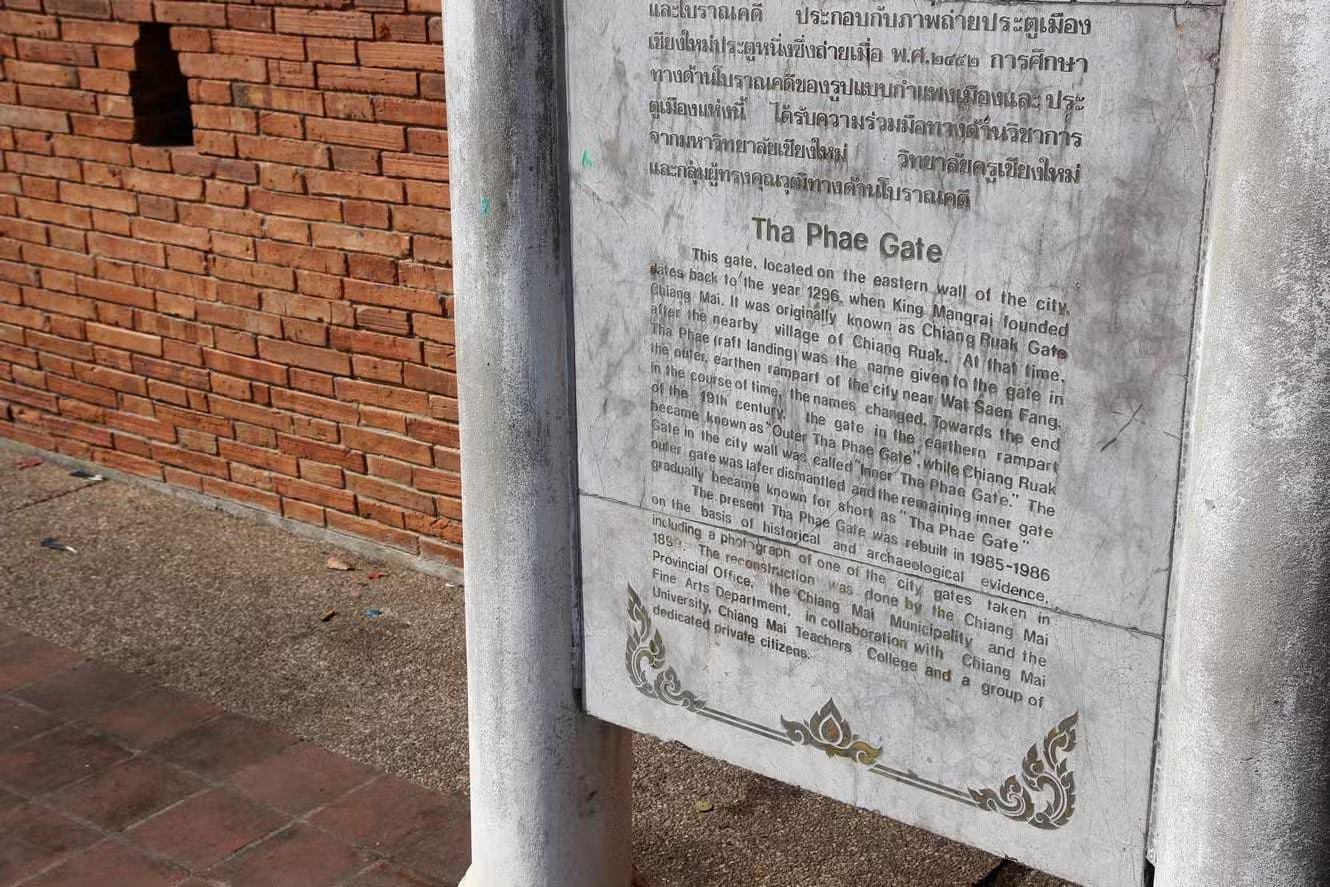
King Mangrai founded Chiang Mai in 1296 as the capital of the Lanna Kingdom. The city was surrounded by defensive walls and a moat, with gates providing controlled access from different directions.
The eastern entrance was originally known as Chiang Rueak Gate, after a nearby community. It later became associated with Tha Phae, a name connected with the area’s historic trade routes and river landing places east of the Old City.
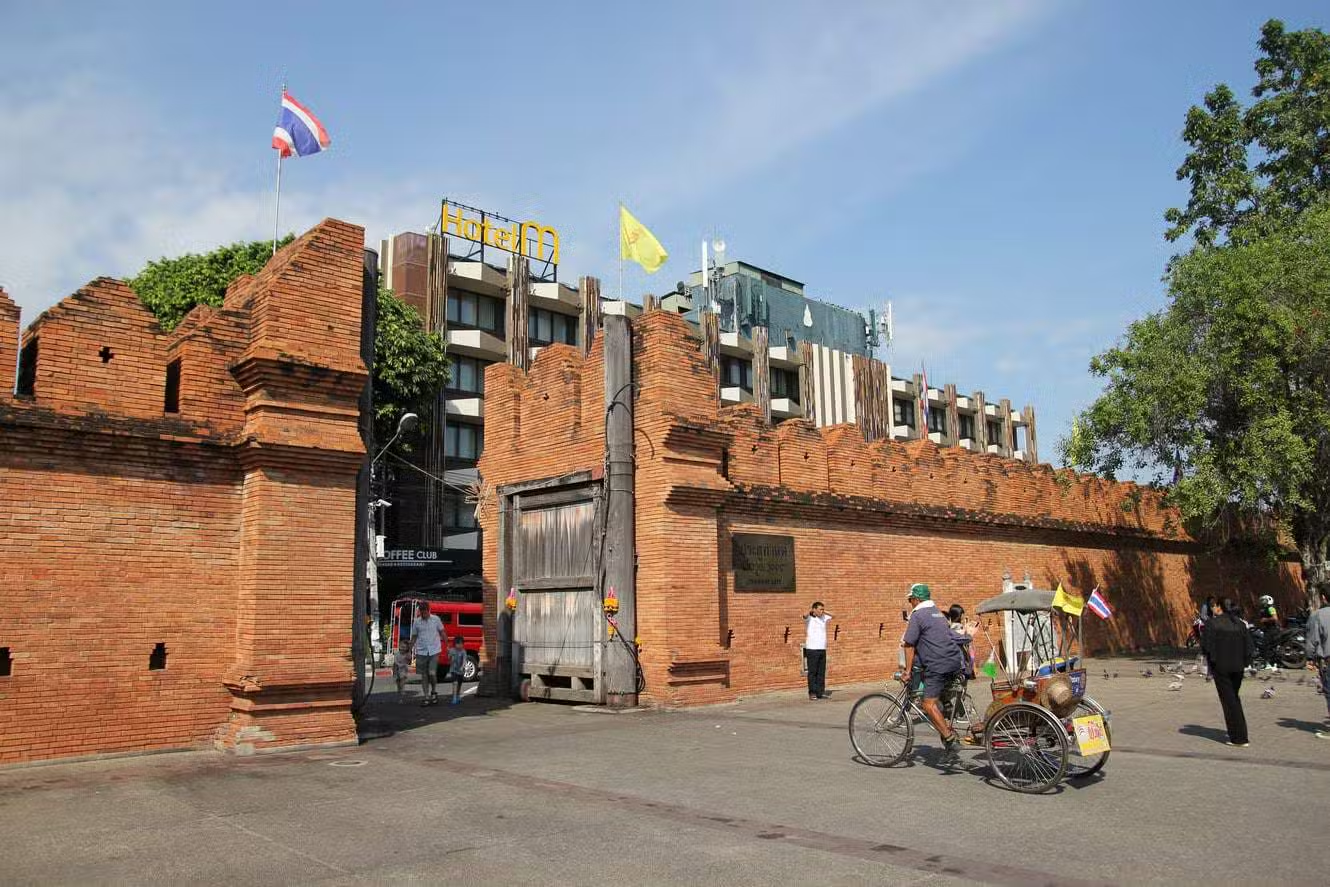
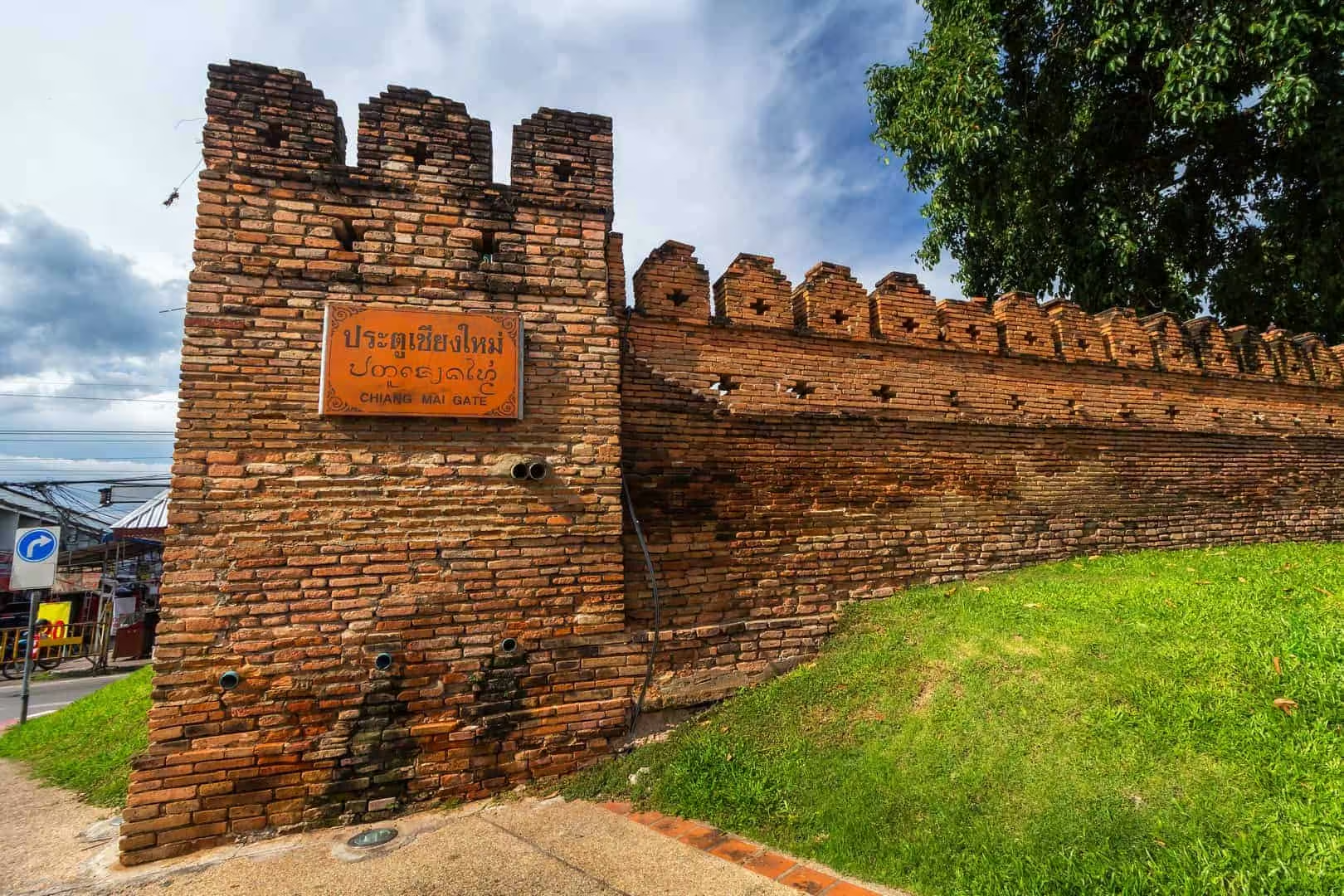
Visitors should be aware that the structure seen today is not an untouched medieval gate. Chiang Mai’s walls and gateways were altered, dismantled and rebuilt over several centuries. The present Tha Phae Gate was reconstructed by Chiang Mai Municipality and Thailand’s Fine Arts Department during the mid-1980s, using historical evidence and photographs to recreate a traditional Lanna-style gateway.
Although the visible brickwork is comparatively modern, the location remains historically important. It still marks the eastern entrance to the Old City and forms part of Chiang Mai’s surviving wall and moat system.
What to See at Tha Phae Gate
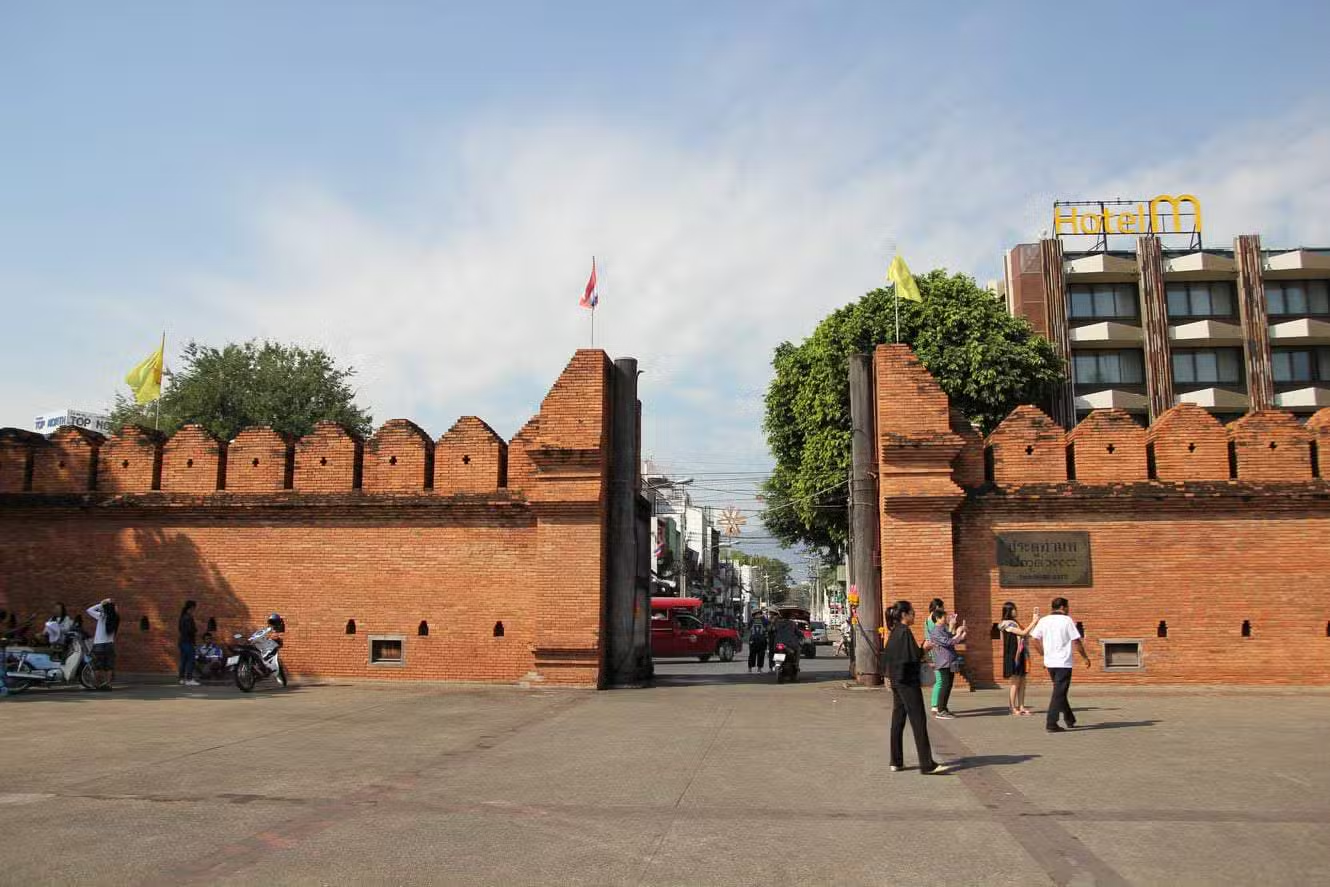
The gate has a central opening, wooden doors, and adjoining red-brick walls. There is no interior museum, observation platform or section that visitors can climb. The main experience is walking through the gateway, viewing the walls and spending time in the open square immediately outside.
The square offers one of Chiang Mai’s most recognisable photo spots. Its large paved area gives visitors a clear view of the brick walls, although it can become crowded with tour groups, local gatherings and people taking photographs.
Pigeons are often present around the square, and visitors may encounter people offering staged pigeon photographs. Agree on the price before accepting any photography service and follow any local instructions concerning bird feeding.
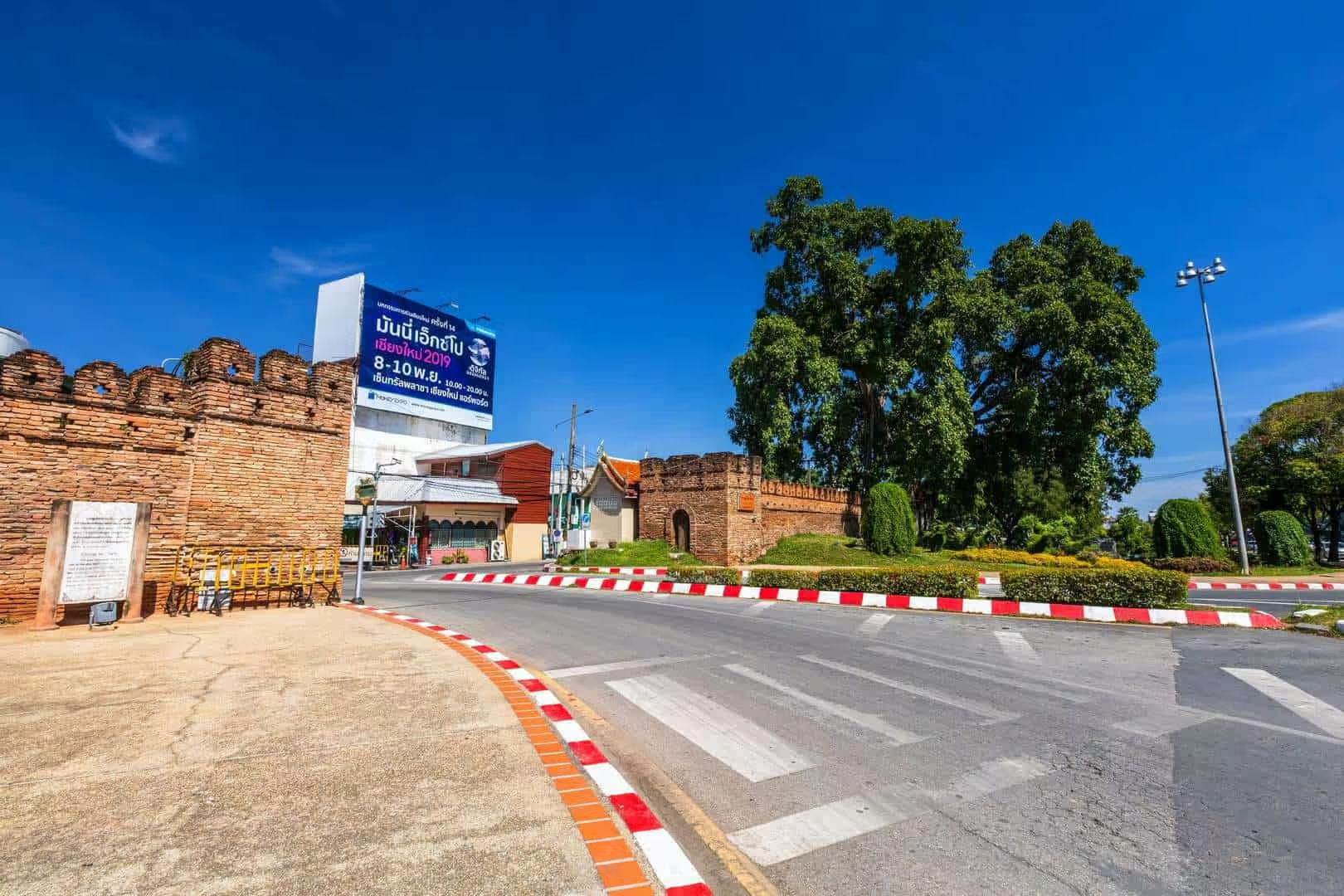
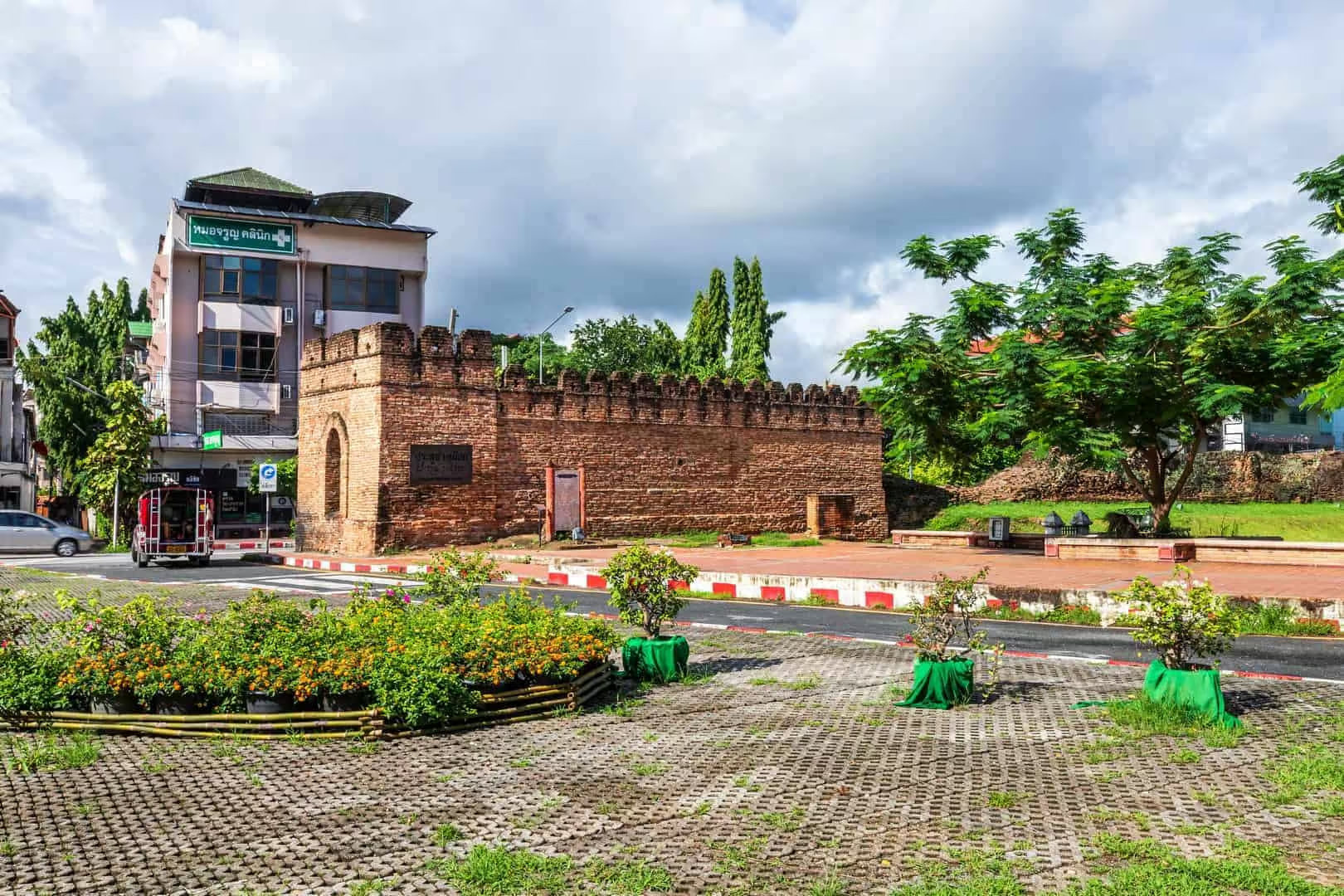
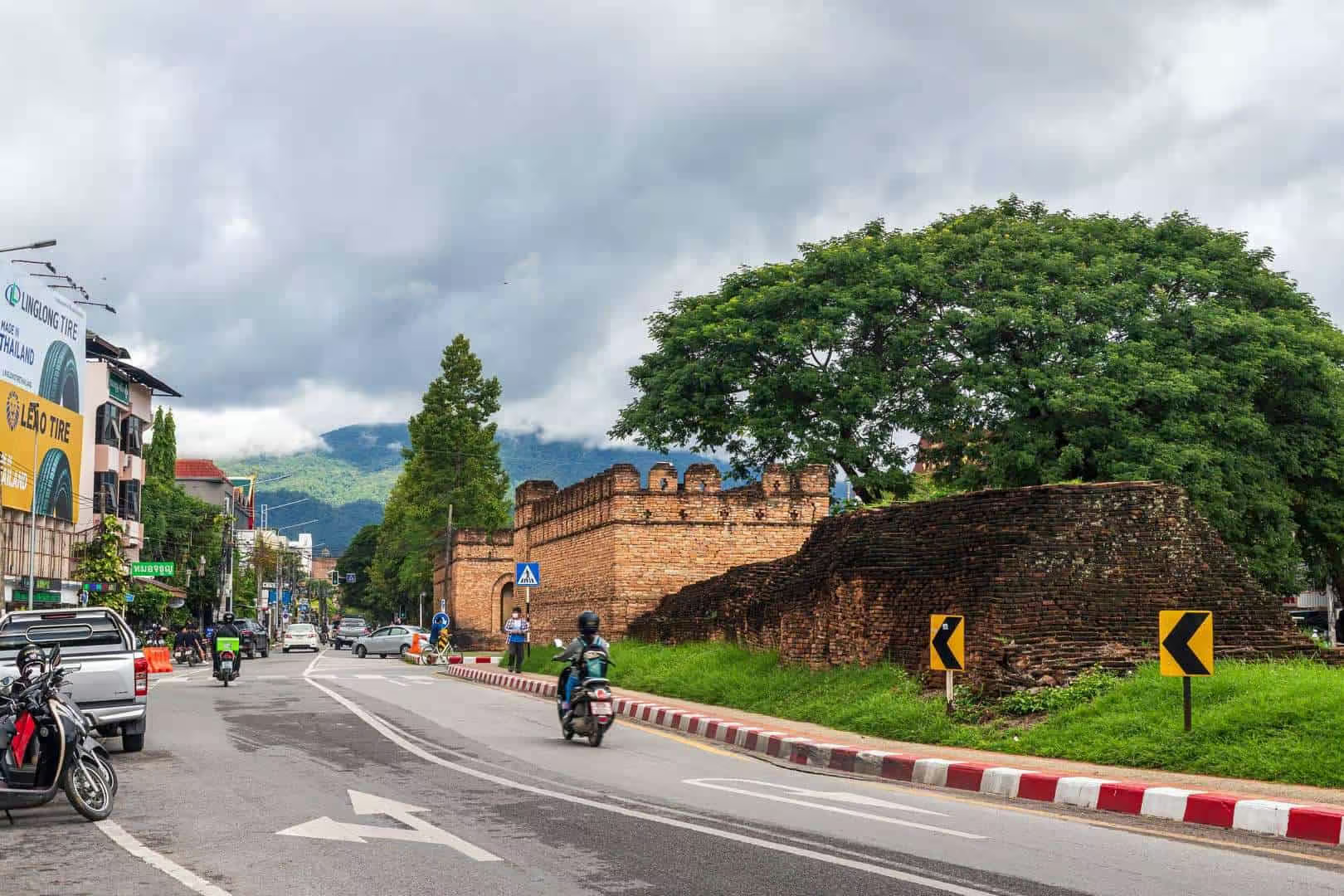
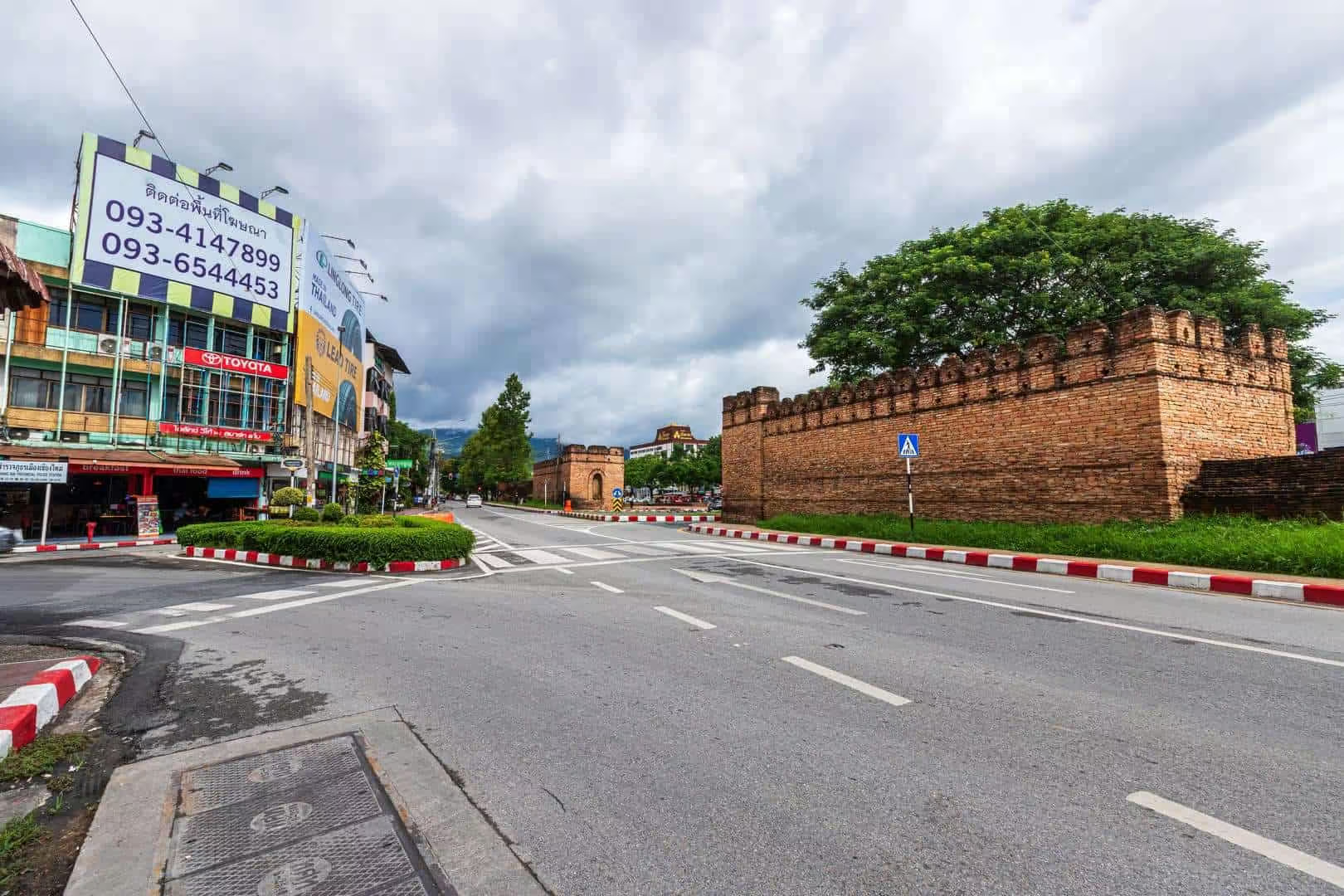
You can also follow the remaining walls and moat north or south from the gate. Walking around these areas provides a clearer impression of the Old City’s original fortified layout, although modern roads now run beside much of the moat.
Best Time to Visit
Early morning is the best time for unobstructed photographs and cooler temperatures. The square is generally quieter before tour groups arrive, and the lower morning light brings out the colour and texture of the brickwork.
Late afternoon and early evening create a livelier atmosphere as nearby restaurants, cafes and market areas become busier. After dark, the walls are illuminated, but traffic and pedestrian activity also increase.
Shade within the main square is limited. Visitors arriving during the middle of the day should bring drinking water and sun protection, particularly during Chiang Mai’s hot season.
Air quality can affect visibility and outdoor comfort during northern Thailand’s seasonal burning period, usually around the later dry-season months. Travellers visiting then should check current air-quality conditions before planning an extended walking tour.
Sunday Walking Street Market
Tha Phae Gate is the eastern starting point for Chiang Mai’s Sunday Walking Street Market. On Sunday afternoons, Ratchadamnoen Road through the Old City closes to regular traffic and gradually fills with stalls selling handicrafts, artwork, clothing, souvenirs, and local food.
The market extends west from the gate through the Old City and into nearby temple grounds and side streets. It becomes very crowded in the evening, so visitors who prefer easier movement should arrive near the beginning of trading.
Anyone who wants clear photographs of the gate should visit earlier in the day. Those more interested in the atmosphere can arrive in the late afternoon, watch the square come alive, and then continue directly into the market.
Market operating arrangements can change for major events, public holidays and local restrictions. The market differs from Chiang Mai’s nightly Night Bazaar, which is located farther east around Chang Khlan Road.
Festivals and Public Events
Tha Phae Gate is one of Chiang Mai’s principal civic gathering places. The square is regularly used for cultural performances, ceremonies, public displays and festival activities.
During Songkran, the roads and moat around the gate become part of one of Chiang Mai’s busiest water-festival areas. Visitors should expect road closures, large crowds and continuous water throwing during the main celebrations.
The gate is also decorated during Yi Peng and Loy Krathong, when lantern displays and cultural activities take place around the city. Sky-lantern releases are regulated and may be prohibited within central Chiang Mai, so visitors should not assume that lanterns can be released from Tha Phae Gate.
Festival programs, parade routes and traffic controls change from year to year. Visitors travelling for a particular celebration should check the confirmed event arrangements rather than relying on previous schedules.
Exploring the Area
Ratchadamnoen Road leads west from Tha Phae Gate into the Old City. Temples, massage shops, restaurants, cafes and smaller lanes can be found throughout the surrounding area.
Walking west provides access to Wat Chedi Luang, the Three Kings Monument and Wat Phra Singh. Heading east along Tha Phae Road leads towards Warorot Market, the Ping River and Chiang Mai Night Bazaar.
The gate is therefore more useful as the beginning of an Old City walk than as a long standalone attraction. A brief visit may take 15 to 30 minutes, while a longer walk through the historic centre can take several hours.
Getting to Tha Phae Gate
Local drivers widely recognise Tha Phae Gate, and it’s easy to reach by red songthaew, tuk-tuk, taxi, or app-based transport. Fares vary by starting point, traffic, and whether the vehicle is shared or hired privately, so the old page’s fixed 20-baht fare should not be retained.
Travellers staying within the Old City or around the Night Bazaar can often reach the gate on foot. Take care when crossing Moon Muang Road, as traffic runs around the moat and can remain busy throughout the day.
There is no dedicated visitor car park at the gate. Street parking is limited, and road closures are common during the Sunday market and major festivals. Walking or using local transport is usually more convenient.
The square is largely flat and paved, but surrounding kerbs, uneven surfaces, traffic crossings and festival crowds may create difficulties for visitors with limited mobility.
Tha Phae Gate FAQs
Is Tha Phae Gate free to visit?
Yes. You can visit Tha Phae Gate and the surrounding public square without an admission ticket.
What are the opening hours for Tha Phae Gate?
The gateway and public square are normally accessible 24 hours a day. Temporary restrictions may apply during events, ceremonies or maintenance.
Is Tha Phae Gate an original medieval structure?
The site was part of Chiang Mai’s historic fortifications, but the gate you see today is a reconstruction completed in the mid-1980s.
Can visitors climb Tha Phae Gate?
No. Visitors view the walls and gateway from ground level, and there is no public observation platform or interior tour.
When is the best time to photograph Tha Phae Gate?
Early morning generally provides cooler weather, softer light and fewer people. Sunset and evening visits are livelier but usually more crowded.
Does the Sunday Walking Street Market start at Tha Phae Gate?
Yes. The market begins around Tha Phae Gate and continues west along Ratchadamnoen Road through the Old City every Sunday afternoon and evening.
How long should I spend at Tha Phae Gate?
Allow approximately 15 to 30 minutes for the gate and square. Allow several hours if combining the visit with the Sunday market or a longer Old City walking route.
Is there parking at Tha Phae Gate?
There is no dedicated attraction car park. Nearby street parking is limited, especially during the Sunday market, festivals and public events.





Do You Have a Question to Ask?