













































Bo Sang Umbrella Village is a handicraft stop east of Chiang Mai, known for bamboo-framed umbrellas and brightly painted parasols. The Umbrella Making Centre gives visitors an accessible introduction to the work, with craftspeople demonstrating stages of production and a shop displaying finished designs.
The interest goes beyond the colourful photographs. Watching ribs, frames and covers take shape shows the skill behind an object that may otherwise look like a simple souvenir. The wider village also has craft shops, cafés and everyday local life, so independent visitors can spend longer than a quick tour-bus stop.
Watching an Umbrella Take Shape
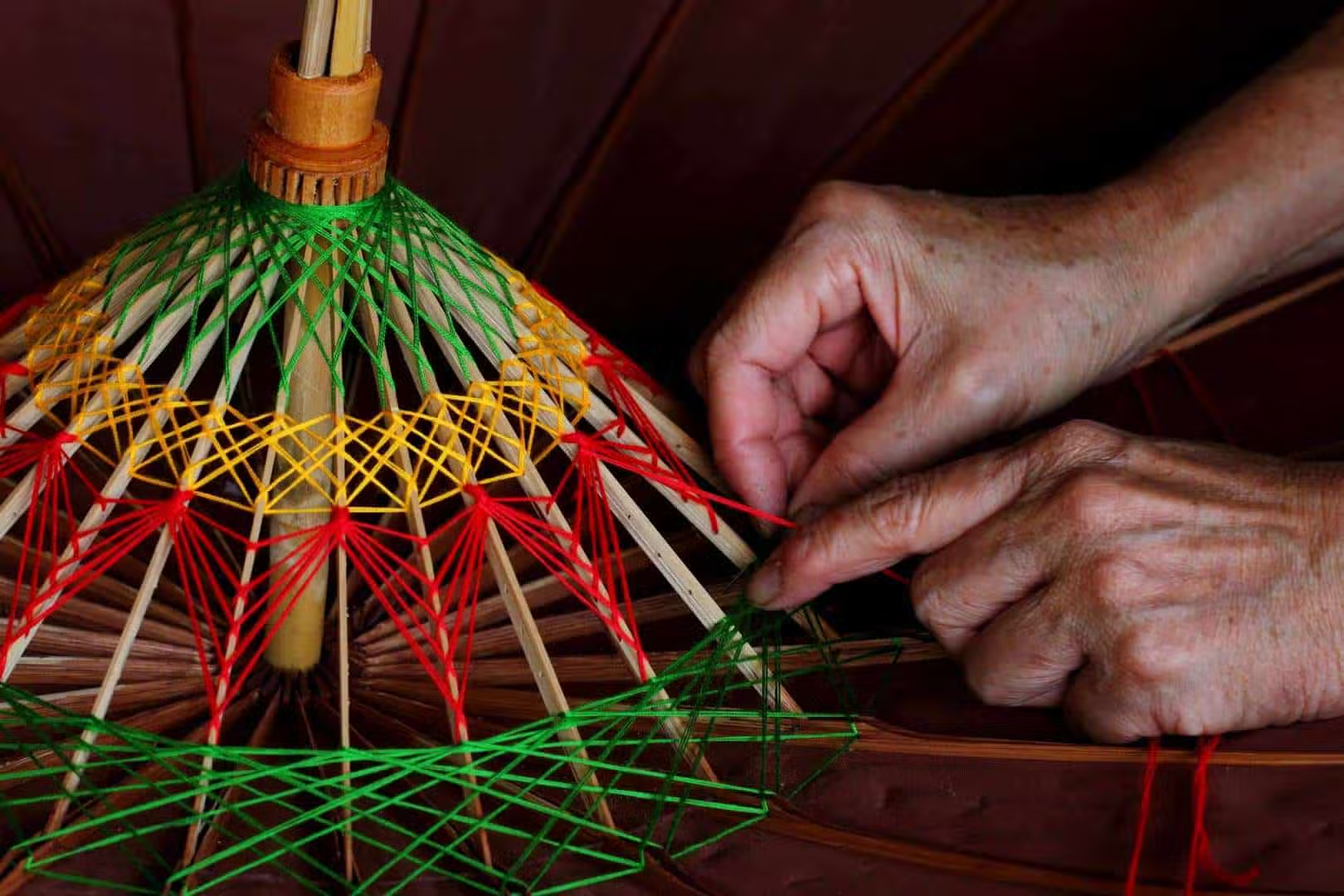
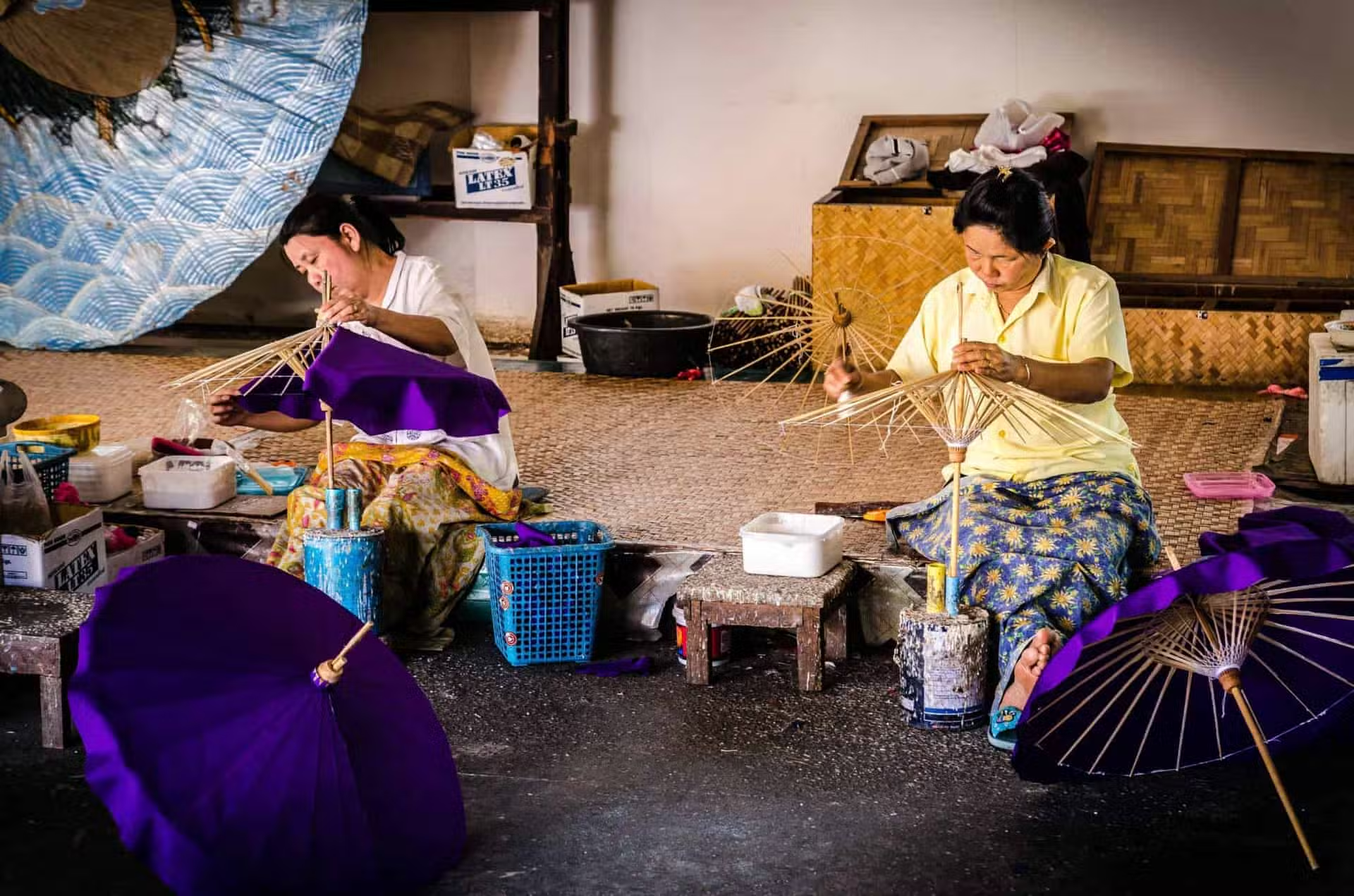
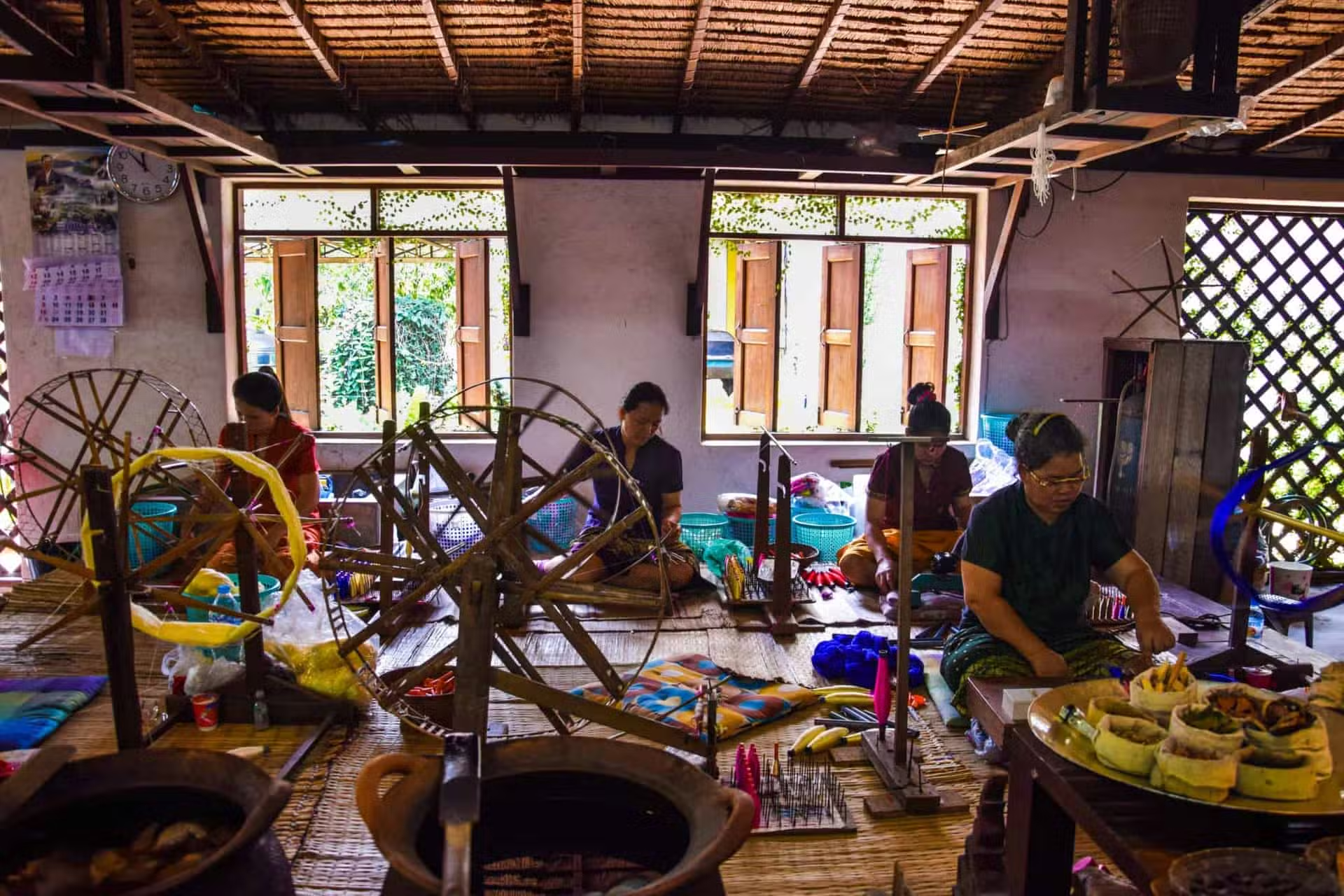
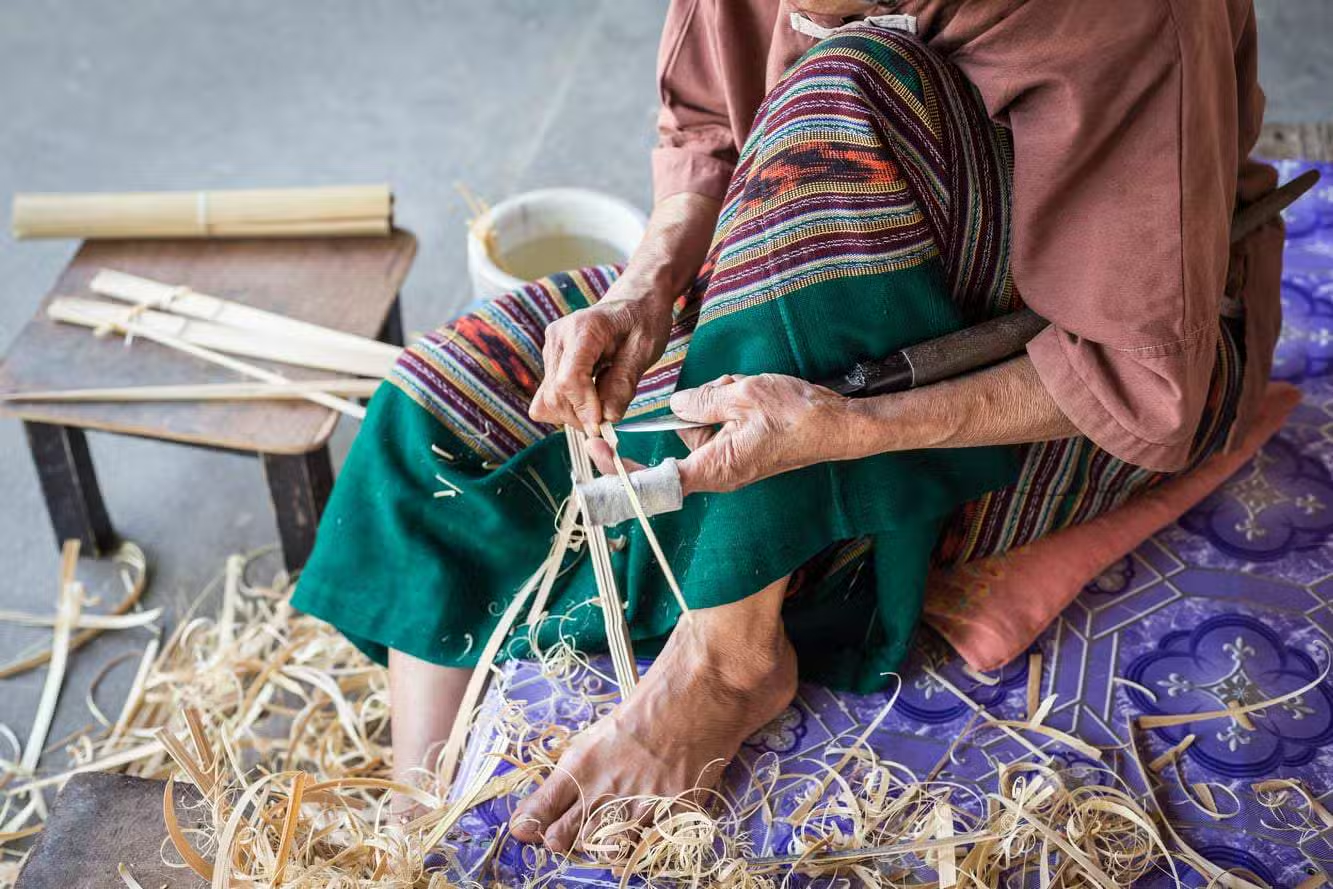
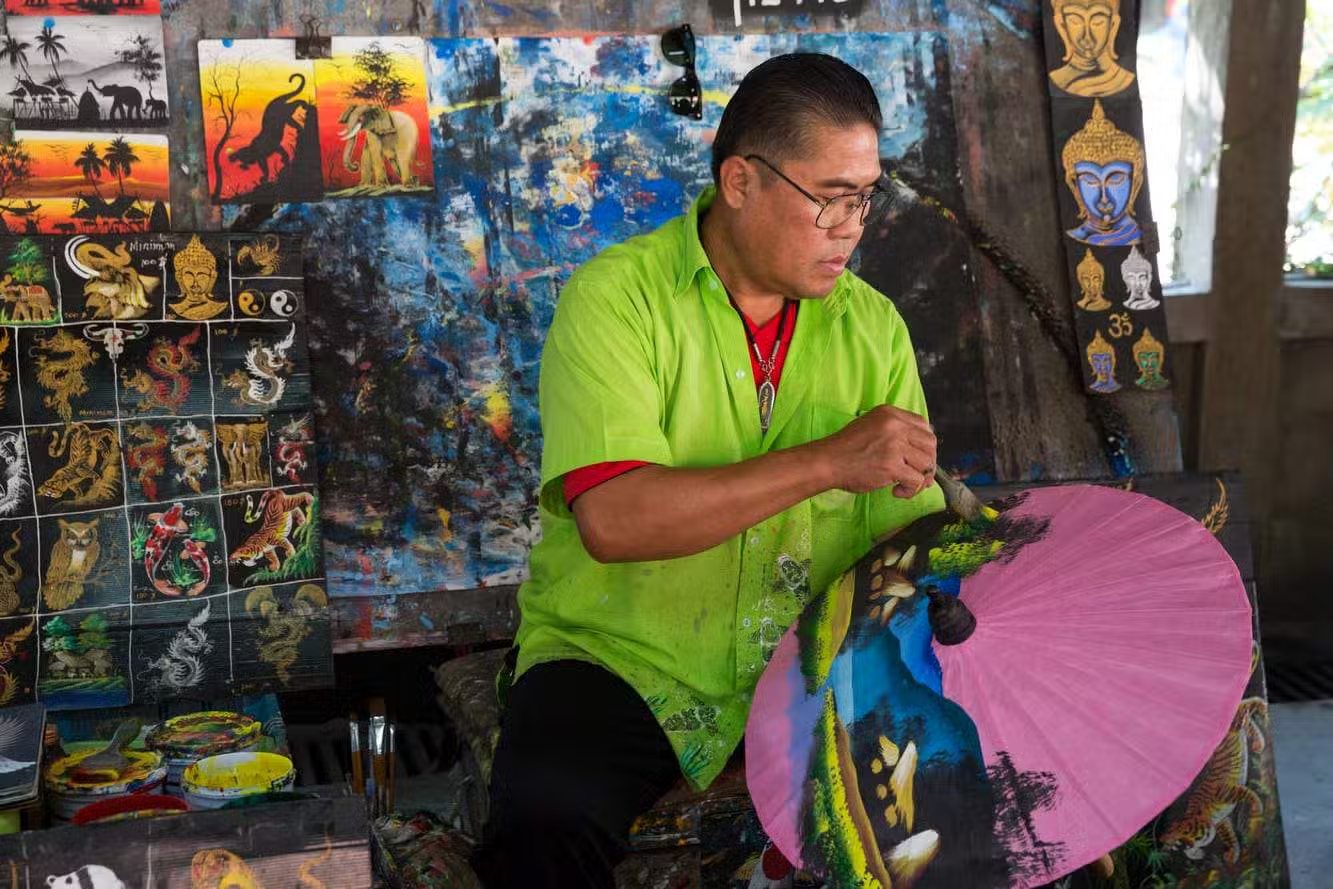
At the Umbrella Making Centre, start with the working area rather than heading directly to the shop. The process is divided into specialised tasks: preparing the bamboo components, assembling the framework, attaching a cover and finishing the surface. Which tasks you see depends on the work underway during your visit. Give craftspeople room to work and ask before photographing or handling unfinished pieces.
The bamboo frame is worth a close look. Its repeating ribs must support the cover while allowing the umbrella to open and close, and the small components need to fit together consistently. Watching an artisan handle those parts makes the finished mechanism easier to understand.
Bamboo, Mulberry Paper and Fabric
Traditional parasols use bamboo and sa paper made from the bark of the paper mulberry tree. Paper, cotton, canvas and silk-style covers give finished products different textures and uses. The craft involves both a supporting frame and a surface that can be coloured or decorated.
Do not assume every umbrella has the same weather resistance. A decorative paper parasol, a fabric sun umbrella and a larger outdoor umbrella can require different care. Ask how a particular piece has been finished and whether it is suitable for rain before buying it for regular use.
Hand-Painted Designs and Personalised Souvenirs
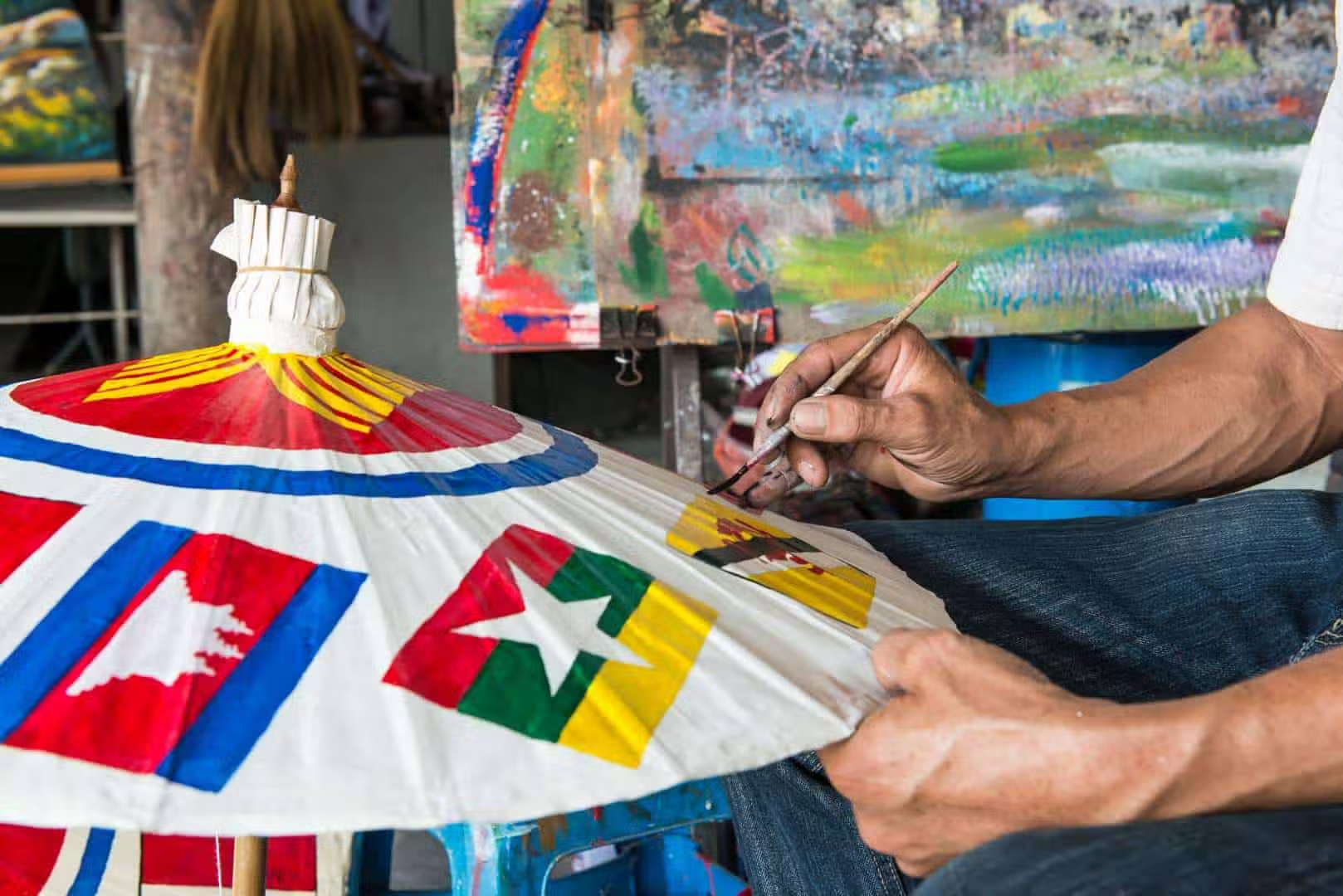
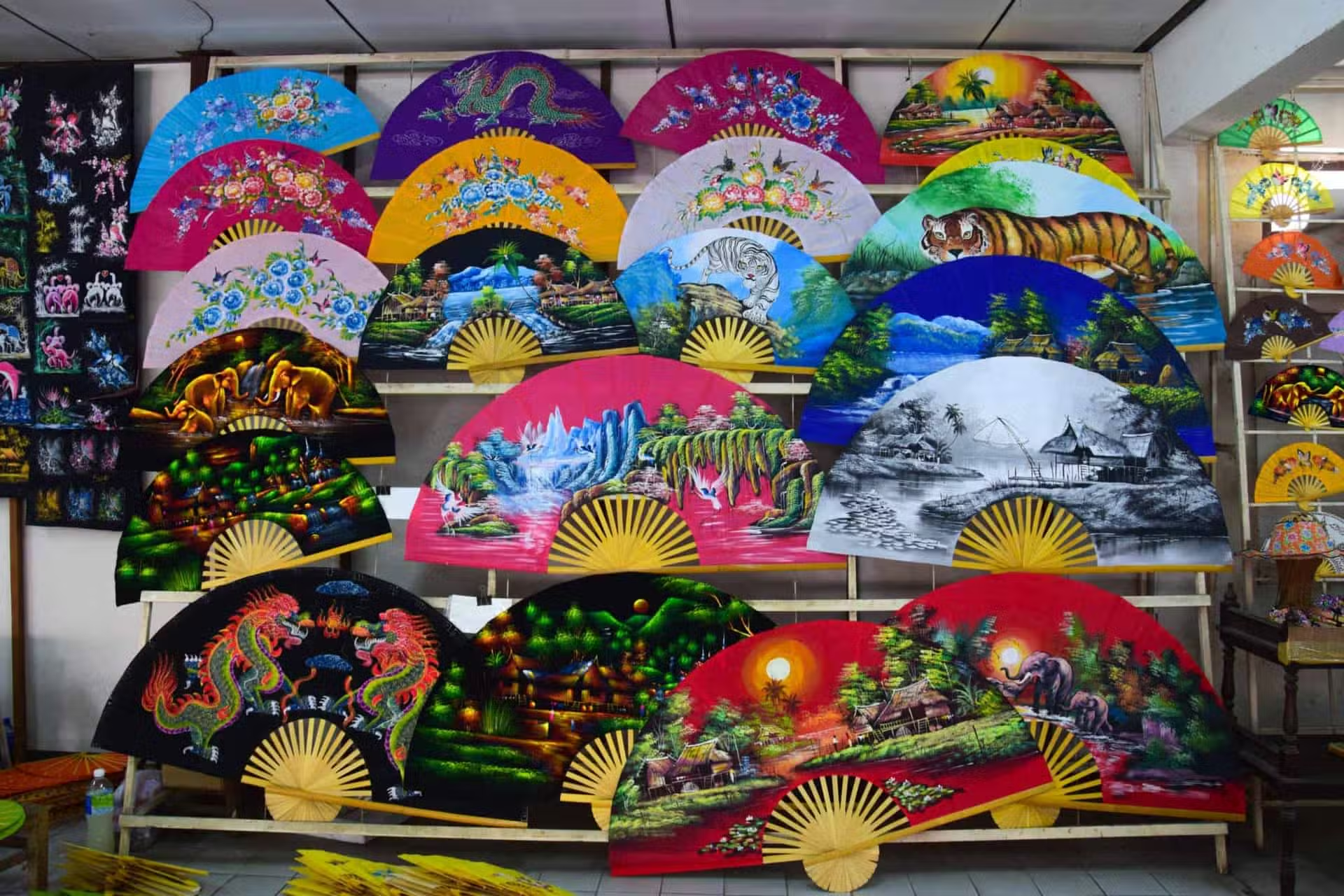
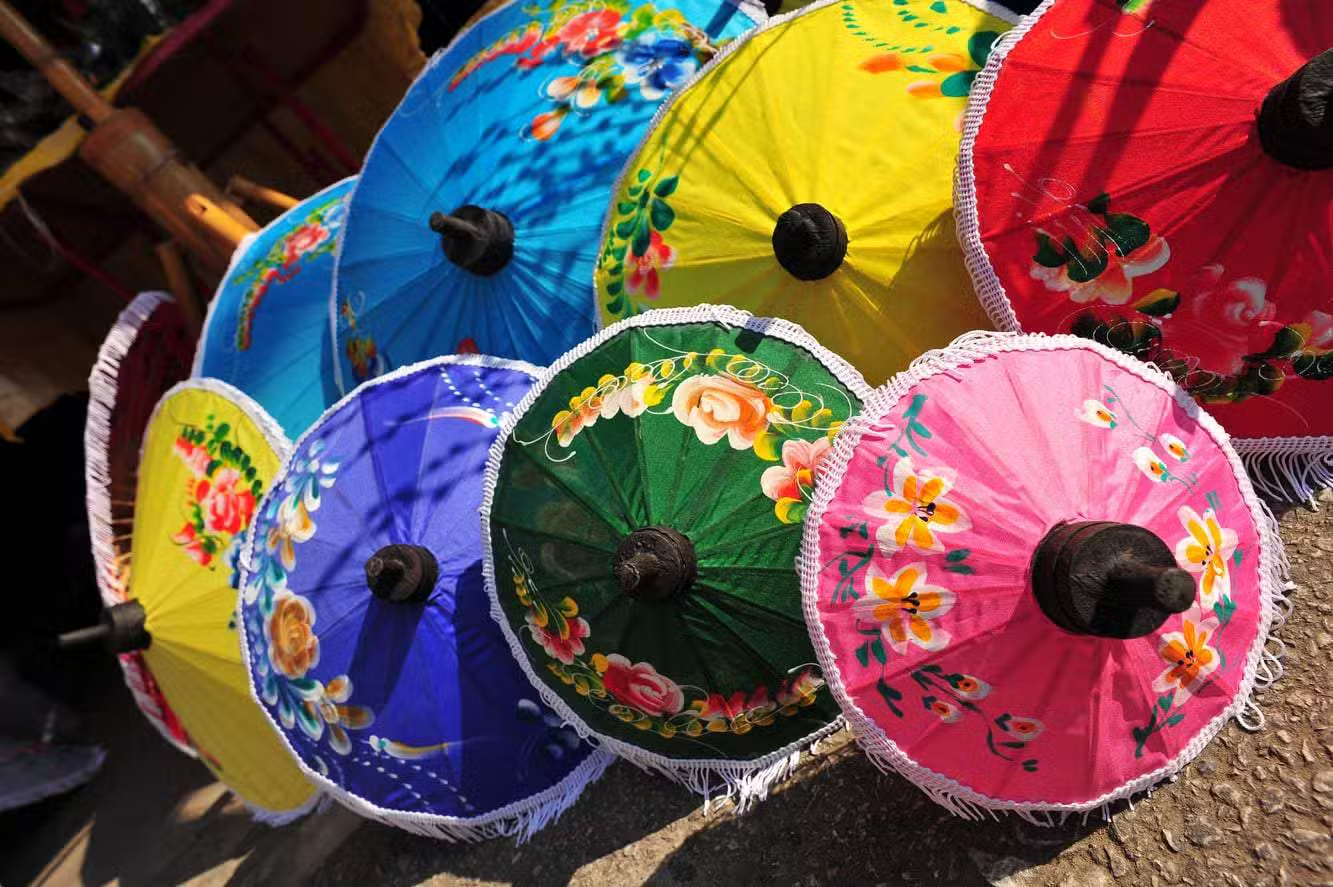
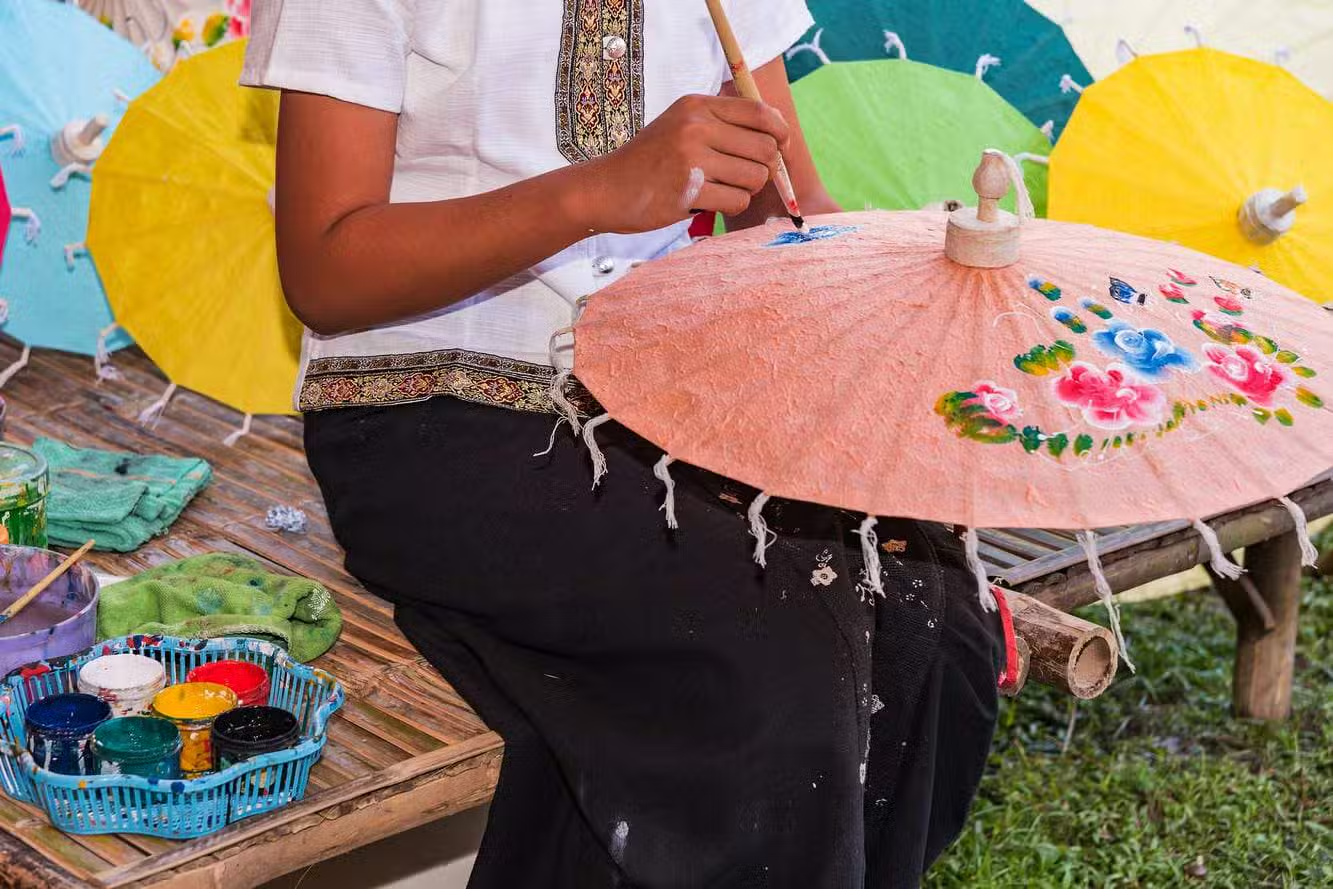
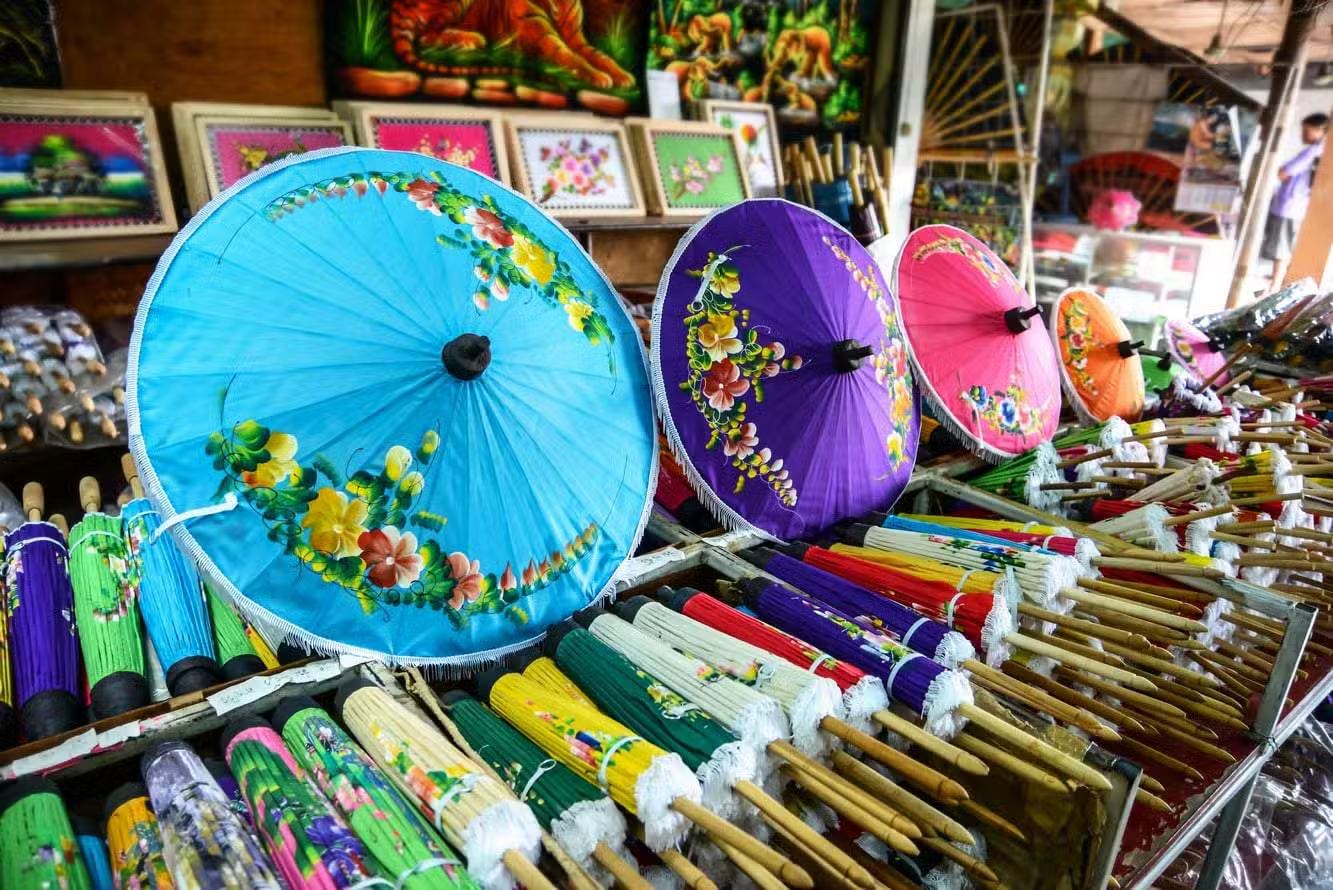
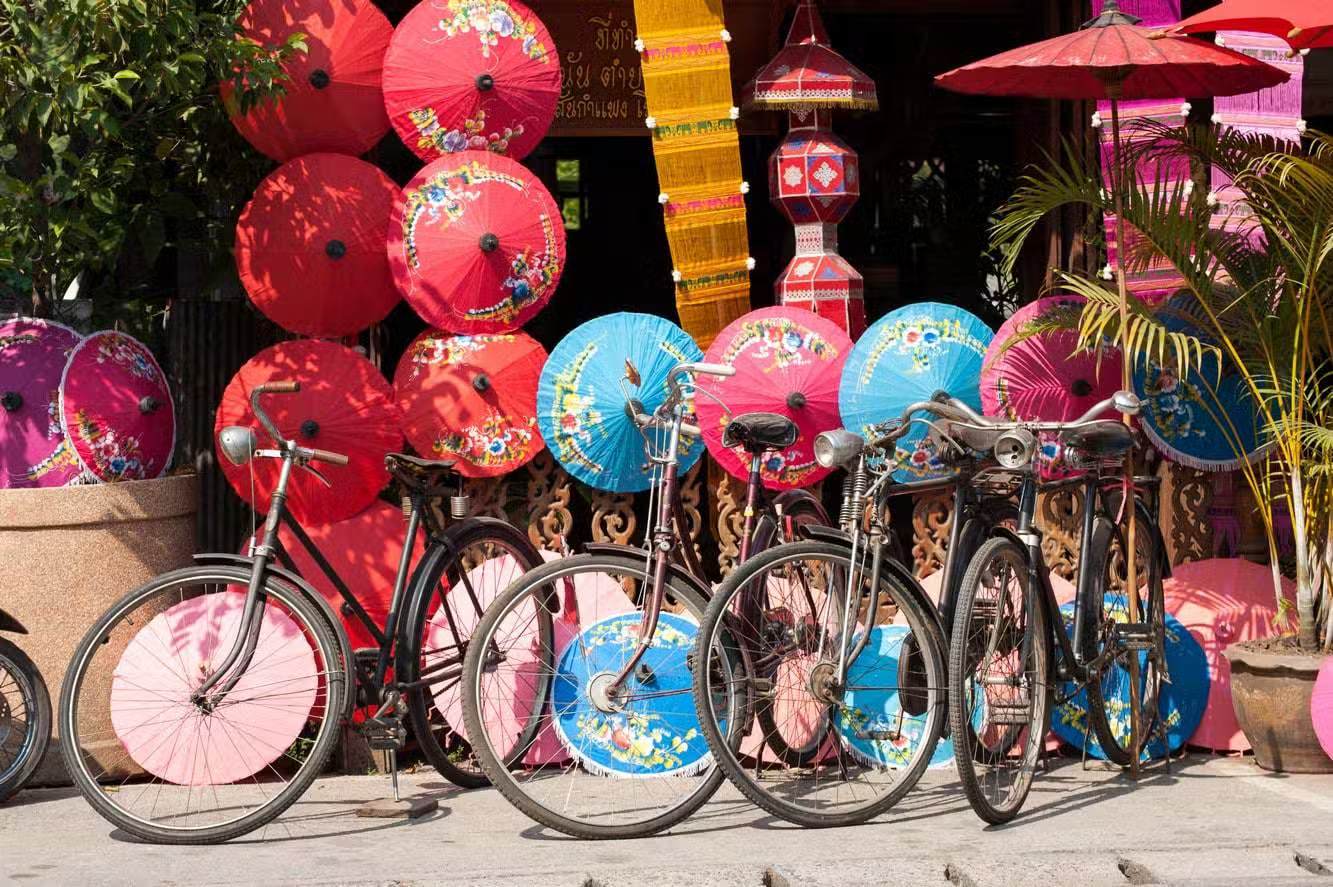
The painting stage is often the most immediately appealing part of the visit. Flowers, birds and other decorative designs turn the canopy into a broad curved canvas, with colours that are especially striking when several finished umbrellas are displayed together. Look at the brushwork as well as the overall pattern.
Some artists also paint designs onto customers’ belongings, such as bags or phone covers. Ask whether the service is available, what surfaces are suitable, the price and how long the paint needs to dry. Choose an item you are comfortable altering and agree on the design before work begins.
A personalised piece can be a more practical souvenir than a full-size umbrella when luggage space is limited. For a parasol purchase, consider its length when folded, its fragility and how you will protect it during travel.
Browsing the Finished Work
Compare materials, frame quality and folded size in the shop. Ask about packing or delivery options before choosing something bulky, and keep any care instructions. Purchases and custom painting are separate expenses from looking around the craft area; being interested in the process does not oblige you to buy.
Exploring Beyond the Making Centre
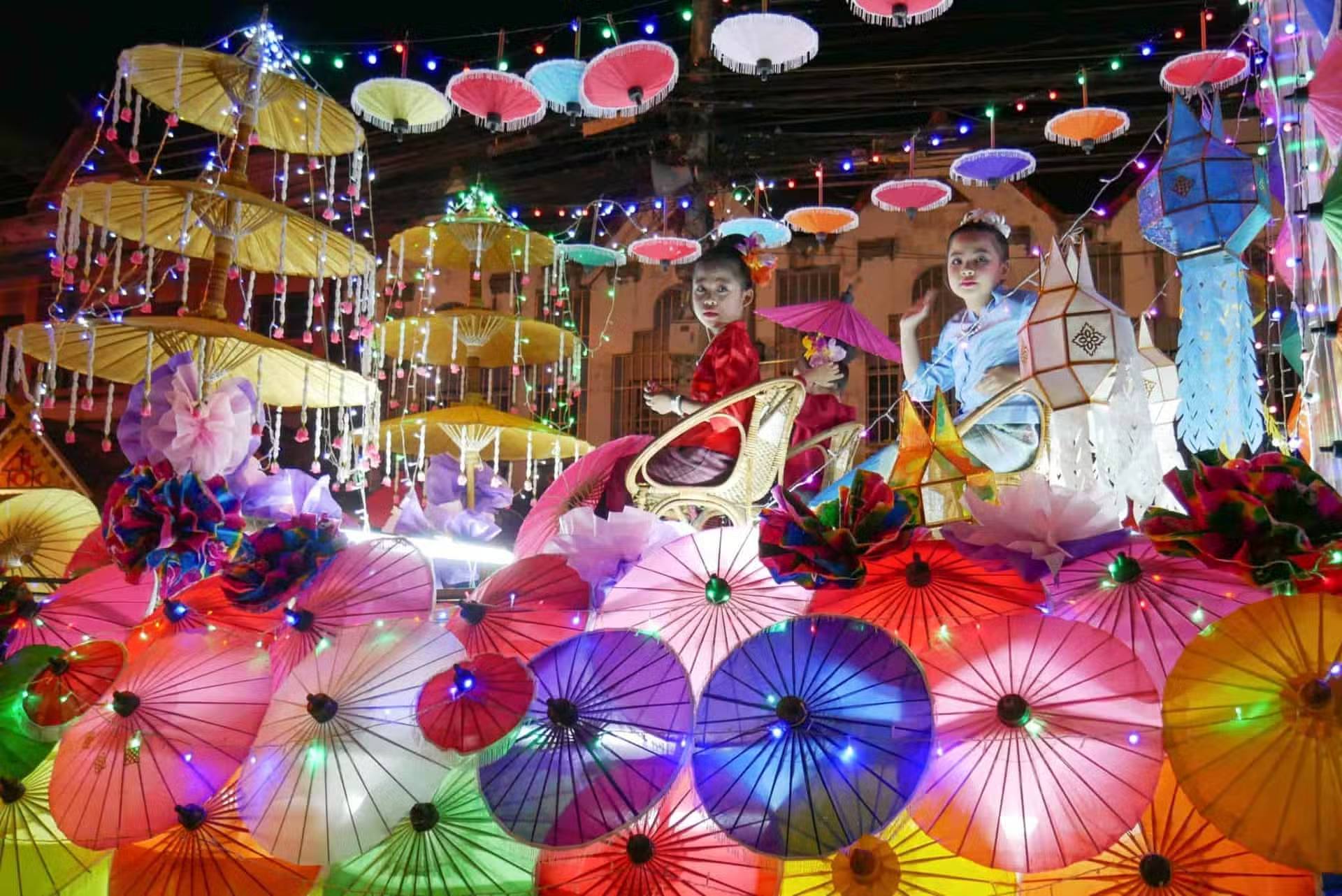
Bo Sang is the visitor-facing centre of a wider craft-making area, with additional shops, cafés and restaurants around the village. The annual umbrella festival is usually associated with January and brings decorations, performances and additional activity to the village. Check the announced dates for the year you intend to visit; the ordinary workshop visit is worthwhile outside the festival, and festival crowds create a different atmosphere.
Allow around an hour for the making centre and shop, or two to three hours for a slower visit with village browsing and a meal. Add waiting time if you commission a painted item. Children who enjoy watching things being made can find the working stages more engaging than a long shopping circuit.
Opening Arrangements and Costs
Visit during the working day, ideally in the morning or early afternoon when there is time to see demonstrations and browse. The making centre generally operates from about 8:30am until late afternoon, while individual village businesses keep their own hours. Arriving just before closing may leave little opportunity to see craftspeople at work.
General entry and browsing are normally free, with purchases, personalised painting and any organised activity charged separately. Confirm the total for a custom item before paying, including any packing or delivery. Bring drinking water and allow for time outdoors in the heat.
Getting to Bo Sang Umbrella Village
Bo Sang is approximately 10 kilometres east of Chiang Mai, around the junction of Routes 1006 and 1014 in Ton Pao, San Kamphaeng district. From the city, Route 1006 is the main approach towards the village. Ask for the Bo Sang Umbrella Making Centre if that is your first stop, rather than an unspecified umbrella workshop elsewhere in the craft area.
A taxi, arranged driver or craft tour is convenient for a direct visit or a day with several stops. Agree on waiting time and the return journey, particularly if you expect to commission painting or buy something large. Drivers should use the signed visitor parking and drop-off arrangements at the centre.
White route songthaews towards San Kamphaeng have traditionally served Bo Sang from the Warorot Market area. Confirm the current boarding point, route and fare locally before relying on one: the market’s roadside loading areas can change. Tell the driver you want the Bo Sang junction and ask where to board for the return.
Bo Sang Umbrella Village FAQs
What can you see at Bo Sang?
The Umbrella Making Centre introduces the craft through working stages such as bamboo-frame assembly, covering and painting. The shop and wider village add finished umbrellas, other handicrafts and places to eat.
Is there an entry fee?
General browsing and entry to the making centre are normally free. Umbrella purchases, custom painting and organised activities have separate prices, which should be agreed before work starts.
Can artists paint a design on your own belongings?
Some artists offer painting on suitable items such as bags or phone covers. Ask about availability, surface suitability, the design, price and drying time before handing over your item.
When should you visit?
Morning or early afternoon gives you time to see work underway and browse before the centre’s late-afternoon closing. Individual shops and the availability of demonstrations can vary.
When is the umbrella festival?
It is usually held in January, but use the announced dates for the particular year. A normal visit outside the festival is focused more on workshops and shopping than parades or performances.
How much time do you need?
Around an hour suits the making centre and shop. Allow two to three hours for village browsing, refreshments or personalised painting, and check any waiting time before commissioning work.
Can you take an umbrella home on a flight?
Check its folded size against your airline’s baggage rules and ask the seller about protective packing. Large or fragile pieces may need checked baggage or separate delivery, so decide before buying.








Do You Have a Question to Ask?