




















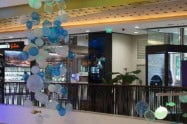

Lanna Folklife Centre, also widely known as Lanna Folklife Museum, explores the beliefs, craftsmanship and everyday traditions of northern Thailand. Its displays give meaning to details you may already have seen around Chiang Mai: the decoration of a Buddha hall, woven textiles, ritual offerings and objects used in local homes.
The centre occupies the former district court building opposite the Three Kings Monument in the Old City. Its relatively compact galleries work well alongside a temple walk, offering a closer look at Lanna culture before you return to the surrounding streets.
Understanding ritual and temple art
Courtyards, Buddha halls and offerings
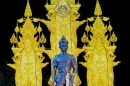
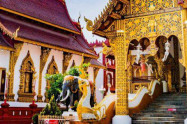
Start with the displays explaining temple courtyards and Buddha image halls. These show how architecture and decoration relate to religious practice, rather than existing purely as ornament. They provide a useful foundation for recognising the role of different spaces when visiting Chiang Mai’s living temples.
Ritual tools and worship offerings illustrate the care put into objects made for ceremonies. Look at their materials and patterns, then consider how they are used rather than judging them only as attractive craft pieces. The centre connects belief with workmanship, helping explain why religious art is so prominent in Lanna life.
Sculpture and painted traditions
Sculpture and mural displays introduce another side of temple decoration. Wood, metal, stone and other materials produce different effects, from architectural details to devotional images. Painted works and written traditions broaden the view beyond large monuments to the ways knowledge and belief were recorded.
The galleries are best approached at a measured pace. Compare a few objects closely instead of trying to absorb every label at once, and follow display instructions about photography or touching. Not every scene or object is an interactive exhibit.
Textiles and everyday craftsmanship
The textile displays are a particular reason to visit, presenting weaving as both practical work and an expression of regional identity. Clothing and fabric patterns offer a different way to understand northern culture from the chronology of kings and wars. Look at how colour, texture and design distinguish the pieces on show.
Ceramics and lacquerware connect craftsmanship with daily use. Their shapes and decoration reflect local making traditions, while household and agricultural themes show how culture also develops through work and ordinary routines. The contrast between ceremonial objects and useful possessions makes the centre more than a collection of temple art.
Figures and arranged scenes help visitors picture traditional activities. They can be useful for children who respond more readily to a visible setting than a long historical text. Discuss a few details together, such as a tool, costume or offering, rather than attempting to read the entire museum to them.
The building and a wider museum visit
A display about the former court building explains the setting itself. The white facade and institutional rooms are part of the experience, with a civic building adapted to present regional heritage. Take a moment to look at the building after the galleries, when its change of purpose has more context.
The nearby Chiang Mai City Arts & Cultural Centre offers a broader account of how the city developed, while Lanna Folklife Centre concentrates on traditions and material culture. Seeing both can be rewarding, but they are separate venues with their own admission. Confirm any combination product at the ticket counter rather than assuming that one ticket opens every museum nearby.
Tickets, opening and a comfortable visit
The centre is open Wednesday-Sunday, including public holidays, from 8.30am to 4.30pm. It is closed on Monday and Tuesday. Listed admission is 90 THB for adults and 40 THB for children; ask about any applicable local or concession category when buying your ticket.
Allow about an hour for a focused visit, or longer if textiles, religious art or detailed labels particularly interest you. Arrive with sufficient time to explore before closing. Ask staff about the current gallery route and access between levels if steps are a concern.
Finding the entrance in the Old City
The centre is on Prapokklao Road in Si Phum, opposite the Three Kings Monument. It is convenient to reach on foot from accommodation in the central Old City. Cross the road carefully when moving between the museum and monument square rather than treating them as a single pedestrian space.
For a taxi, tuk-tuk or songthaew, use the centre’s name and the Three Kings Monument location. Agree any quoted fare before travelling. A regional bus or railway arrival requires a separate city transfer, while parking arrangements should be checked locally rather than assuming the building’s forecourt is available for visitors.
Lanna Folklife Centre FAQs
What does the centre focus on?
It presents Lanna traditions through religious art, ritual objects, textiles and everyday craftsmanship. The displays help explain details you may notice in Chiang Mai temples and local cultural activities.
Is this the Lanna Folklife Museum?
Yes. Lanna Folklife Museum is a widely used name for the centre in the former district court building opposite the Three Kings Monument. Use that location when arranging transport.
When is it open?
Opening is Wednesday-Sunday, including public holidays, from 8.30am to 4.30pm. Monday and Tuesday are closed, so plan other Old City stops on those days.
How much are tickets?
Listed adult admission is 90 THB and child admission is 40 THB. Confirm any applicable concession or local category, and ask separately about combination tickets for nearby venues.
How long should I spend inside?
About an hour allows a focused look at the galleries. Leave longer if you want to study textiles, ritual objects and labels in detail, and allow time before closing.
Can I combine it with the City Arts & Cultural Centre?
Yes. The other centre is nearby and covers the city’s wider development, making it a useful companion visit. Admission and any combination arrangements should be confirmed at the counter.






Do You Have a Question to Ask?