






























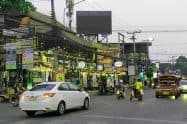



















Muang Mai Market is a working wholesale food market north of Warorot in Chiang Mai’s Chang Moi district. Fruit, vegetables and other fresh ingredients move through its streets and trading areas in quantities suited to restaurants, shops and local buyers, giving visitors a different experience from the city’s souvenir markets.
The attraction is the food trade itself: piles of seasonal produce, loaded delivery vehicles and sellers preparing orders. You can buy a smaller quantity where a trader offers it, but the market is organised around business rather than a visitor itinerary. A morning walk is a useful way to see how everyday food shopping fits into the city.
Fruit, Vegetables and the Wholesale Trade
Fresh produce is the main reason to come. Look across several stalls to see how a familiar fruit or vegetable is sorted, packed and sold, then ask about a manageable quantity if you want to buy some. A displayed price may apply to a kilogram, bag, crate or bulk order rather than a single item.
The selection changes with supply and season. Familiar tropical fruit can sit alongside ingredients intended for Thai kitchens, and comparing their sizes and forms is part of the interest. Avoid buying a large bag solely because the unit price looks low; transport, storage and how much you will actually eat matter just as much.
Muang Mai is particularly useful if you have a kitchen and want ingredients for several meals. Tell the trader the amount you need and check the total before paying. Small notes and a strong reusable bag help, especially if you are moving between stalls rather than making one large wholesale purchase.
Fresh-Food Areas and Shopping Carefully
The wider market includes fresh meat, fish and other ingredients as well as produce. These sections show the full working character of the place, but are better treated as food-shopping areas than as ready-to-eat tasting stops. Warorot is the easier nearby addition if your main aim is prepared northern Thai snacks.
Buy refrigerated or perishable goods only when you can take them promptly to suitable storage. In Chiang Mai’s heat, adding a long sightseeing walk after purchasing meat or seafood is a poor plan. If you are simply browsing, stay out of preparation spaces and avoid handling a product unless the seller invites you to inspect it.
Conditions can include wet ground, packaging and vehicles sharing the same narrow routes as shoppers. Closed footwear with a secure sole is more practical than slippery sandals. Step clear of loading activity and do not block a working aisle while taking photographs, particularly where people are carrying heavy goods.
When to Go and How Long to Spend
An early-morning visit is the most useful choice for seeing the produce trade and avoiding the hottest part of the day. Different sellers and wholesale operations keep different hours, with some activity outside an ordinary retail timetable. That does not mean every stall is open continuously or that a late visit offers the same range as the morning.
Allow roughly 45 minutes to an hour for a browse, with more time if you are buying ingredients or comparing prices. A longer stay makes sense for somebody interested in markets, but there is no need to stretch a short walk into a half-day attraction visit.
General entry is free. There is no single market-wide tariff for fruit or vegetables, and bulk pricing is not a guarantee that every small purchase will be cheaper than elsewhere. Check quality, quantity and the amount you need rather than expecting a tourist discount or bargaining aggressively over an inexpensive bag.
Reaching Muang Mai from the Market District
Muang Mai spreads around the Wichayanon and Mueang Samut road area, north of Warorot and Ton Lam Yai on the western side of the Ping River. Use the market name as well as the surrounding streets for navigation because a single street number does not describe all of its trading areas.
From Warorot, allow around 10 to 15 minutes to walk north through the district, depending on your starting point and route. Take care at junctions and where deliveries narrow the available walking space. This combination is useful if you want to compare a general retail food market with the larger-volume produce trade.
From farther away, a taxi, tuk-tuk or agreed songthaew trip is convenient. Arrange a safe drop-off away from loading entrances and consider the return journey before buying more than you can comfortably carry. For a short morning, browse Muang Mai first and finish with a prepared-food stop at Warorot.
Muang Mai Market FAQs
What is Muang Mai Market known for?
Its main role is wholesale food trading, especially fruit and vegetables. Visitors see a working market supplying local buyers rather than an evening craft or souvenir market.
Can visitors buy small quantities?
Often, if the individual trader offers them. Ask about the minimum quantity and whether the price is per kilogram, bag or crate before selecting produce; not every wholesale offer suits a short hotel stay.
When should I visit?
Early morning is a practical choice for produce shopping and seeing deliveries. Traders have individual schedules, so descriptions of overnight activity should not be taken as a promise that all stalls trade around the clock.
Is there an entrance fee?
General entry is free. Pay each seller separately for purchases and carry small cash, since payment options can vary between stalls.
Is this a good place for a cooked breakfast?
Fresh ingredients are its main focus. You may find food nearby, but Warorot is the more straightforward adjoining-district stop when your purpose is prepared northern Thai dishes and snacks.
How far is it from Warorot Market?
Allow roughly 10 to 15 minutes on foot north through the market district. The exact time depends on the entrance and stops, and you should allow extra care around traffic and delivery areas.










Do You Have a Question to Ask?