










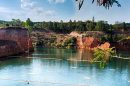



























Op Luang National Park, also spelt Ob Luang, protects a rugged landscape south-west of Chiang Mai where the Mae Chaem River squeezes through a narrow rocky gorge. The main visitor area offers a close encounter with that landscape: steep rock walls, rushing water and a bridge that lets you look down into the channel.
The gorge is the natural starting point, but the park also has walking routes, archaeological sites and waterfall areas beyond the main roadside stop. Decide whether you want a short visit to the gorge or a longer outing before setting off; a national park covers much more ground than its entrance photographs suggest.
Exploring the river gorge
From the main visitor area, follow the marked approach towards the bridge and gorge viewpoints. The sound of the river and the closely spaced rock faces are central to the experience, especially when the water is running strongly. Spend time at the designated viewing points rather than trying to reach the water from an informal path.
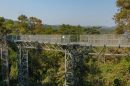
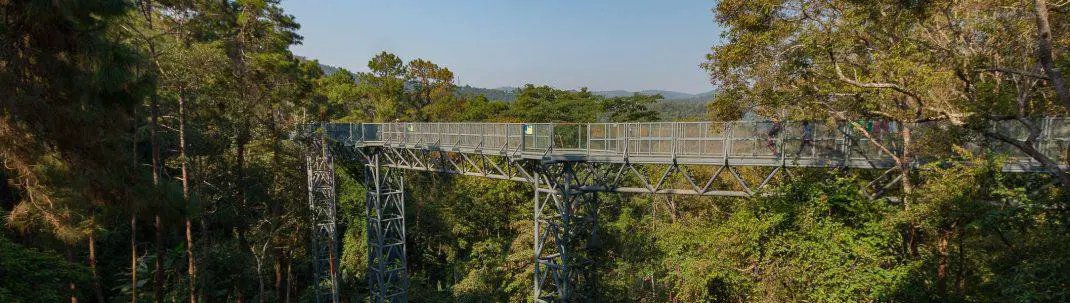
The bridge offers a different perspective from the riverbank, with the channel below and forested slopes around it. Keep children close on the approach and crossing, and use the barriers as boundaries. A view of the river does not mean the adjacent rocks are suitable for scrambling or that swimming is permitted.
Walking beyond the first viewpoint
Marked trails extend the visit into the wooded surroundings and connect with interpretive points. Ask at the visitor area which circuit is open, how long it takes and whether the route returns to your starting point. A short walk here can still involve uneven surfaces, steps and slopes; wear shoes with grip rather than relying on sandals intended for city sightseeing.
Allow extra time after rain, when surfaces can be slippery and staff may restrict sections of the route. If mobility is a concern, describe your needs to the park before travelling and ask about the specific viewpoint approach. Do not assume that the gorge bridge or an entire trail circuit is accessible simply because the entrance is beside a main road.
Archaeology and the wider park
The park’s interpretation includes evidence of prehistoric occupation, with rock art associated with the Doi Pha Chang area and archaeological remains in the landscape. These add a human story to a visit otherwise dominated by geology and river scenery. Use the signed interpretation to understand the sites, and leave markings and archaeological material untouched.
Mae Bua Kham Waterfall is another named attraction associated with the park, but it should not be treated as a guaranteed extension of every gorge walk. Ask staff about the relevant access route, current conditions and the time needed. For a brief roadside visit, prioritise the gorge and one open walking route instead of trying to cover distant park sites.
River activities and overnight stays
River tubing is offered in announced seasons, with operation depending on water conditions and organised departures. It is a separate activity from viewing the gorge. Check whether a programme is operating on your intended date, what equipment and transfers it includes, and the participation requirements before building your day around it.
Camping or park accommodation can turn a stop into a longer stay, but availability and facilities need to be arranged with the park. Confirm the actual campsite or accommodation area, booking process and equipment arrangements. Do not arrive expecting an available bungalow or an unrestricted place to pitch a tent beside the gorge.
Opening arrangements and park charges
Plan the main gorge visit in daylight; tourism information lists a normal visiting window of about 8am to 4:30pm. Check the park’s current announcements before travelling, especially for trail closures, weather restrictions, camping and river activities. A visitor-area timetable does not establish that every waterfall or trail is open.
National park entry is charged, with rates varying by visitor category. Confirm the current nationality and child categories with the park, along with vehicle charges where applicable. River activities, equipment, accommodation and other services have their own costs and should be budgeted separately from entrance admission.
Reaching the gorge from Chiang Mai
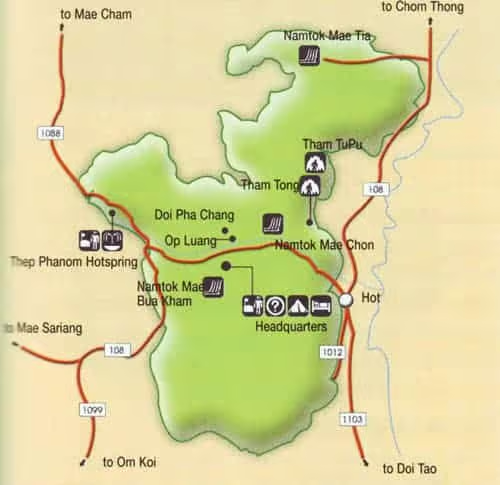
The main visitor area lies beside Route 108 beyond Hot, roughly 17 kilometres west of the town on the approach towards Mae Sariang. From Chiang Mai, the route heads south-west through the Hot area before continuing to the park. Allow for a substantial road journey and arrange your return transport before starting a walk.
The park’s address includes Hang Dong subdistrict in Hot district; this is distinct from Hang Dong district nearer Chiang Mai city. Use the Op Luang gorge or national park visitor area as your destination when arranging a driver, rather than the subdistrict name alone. For a longer itinerary, check the distances between planned attractions rather than assuming the park’s proximity to other mountain destinations makes them quick additions.
Op Luang National Park FAQs
What is the main attraction at Op Luang?
The Mae Chaem River gorge and its bridge are the main introduction to the park. They combine close views of steep rock walls with the sound and movement of the river, without needing to plan a distant waterfall excursion.
How much time should I allow?
A gorge stop and an open short trail can fit into a shorter visit, while additional archaeological or waterfall areas need a more deliberate plan. Ask staff about the route and walking time before leaving the visitor area, and include the road journey from Chiang Mai in your day.
Can I go tubing whenever I visit?
Tubing operates under seasonal arrangements and water-condition controls. Confirm a current departure, equipment and participation rules with the park; ordinary admission does not include or guarantee a river activity.
Is the gorge walk suitable for children?
Families can explore the designated viewpoints, but the route includes a river gorge, bridge and potentially slippery or uneven ground. Keep children close, follow barriers and choose a walking circuit that suits your group.
Is entry free?
National park admission is charged. Check the applicable visitor category and any vehicle fee, and allow separately for accommodation, equipment or organised activities you choose to book.
Can I stay overnight in the park?
Ask the park about current camping and accommodation arrangements before arriving. Availability, permitted areas and required equipment can differ from a daytime gorge visit.
Is this park in Hang Dong near Chiang Mai city?
The gorge visitor area is in Hot district, farther south-west along Route 108. The Hang Dong appearing in the park’s address is a subdistrict in Hot, so use the full park destination when arranging transport.




Do You Have a Question to Ask?