













































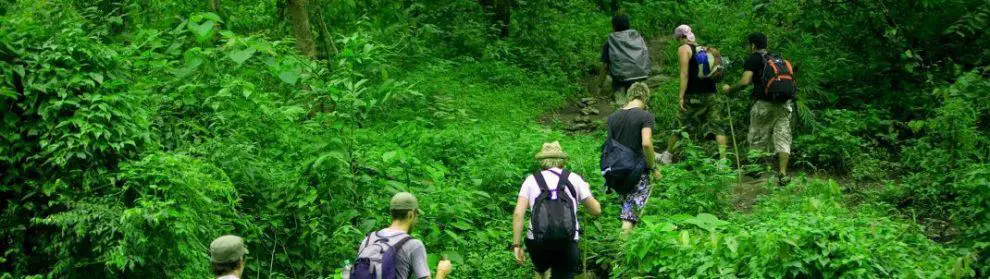
Trekking around Chiang Mai ranges from a short forest climb to a temple to several days walking between mountain villages. The experience depends on the route: shaded woodland, streams, rice terraces, ridge views and conversations with local guides each offer a different reason to leave the city on foot.
Choose the amount of walking before choosing a tour’s extra activities. A day advertised as trekking may also include substantial driving, rafting or an elephant visit, while a dedicated hike can keep most of the attention on the landscape and trail.
Choosing the kind of walk you want
A short forest-and-temple outing
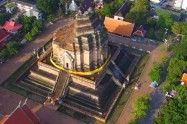
The lower Monk’s Trail climbs through forest to Wat Pha Lat on the Doi Suthep side of Chiang Mai. Allow around 30-45 minutes uphill at an ordinary pace, with extra time for stops and the temple. Roots, rocks and wet ground make footwear important even though it is a comparatively short route.
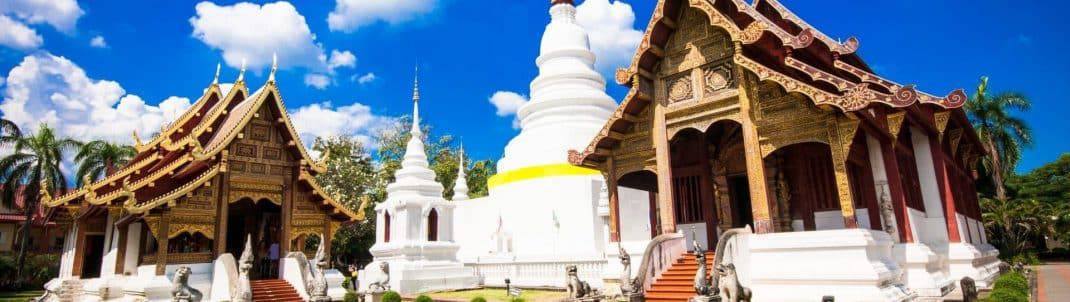
Wat Pha Lat adds a quiet temple setting with stone details and a stream among the trees. Cover shoulders and knees for the sacred areas and keep voices low around people worshipping. You can make the lower walk the main outing rather than treating it as only the first stage of a summit climb.
Continuing towards Wat Phra That Doi Suthep is a longer, steeper undertaking involving road crossings. It is not the same walk as reaching Wat Pha Lat, and the temple is not the mountain summit. A vehicle for the upper journey can be useful if you want to combine the two temples without committing to the extended hike.
Mountain nature trails on Doi Inthanon
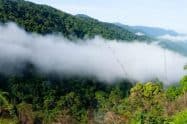
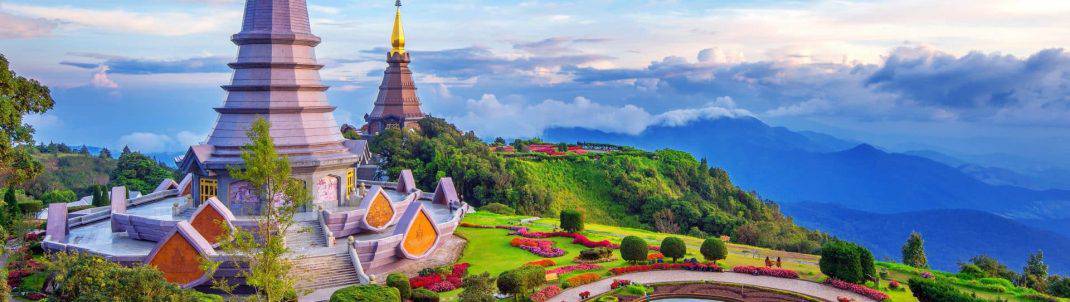
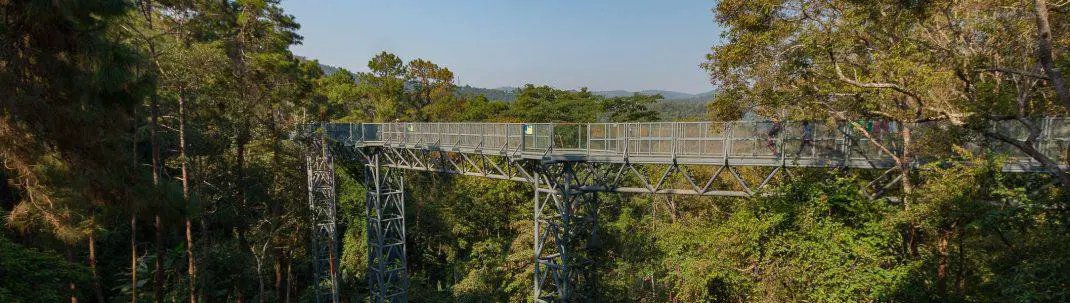
Doi Inthanon has several different walking experiences, reached after a substantial drive southwest of Chiang Mai. Ang Ka Luang is a short boardwalk through dense, mossy forest near the summit, useful when you want to appreciate the high-altitude setting without a long trek. Wet boards and steps still need care.
Kew Mae Pan combines forest with an exposed ridge and wider mountain views. It requires a local guide and normally operates from November to May, closing during June to October for forest recovery. Check the actual reopening and weather before planning around it; being able to drive into the park does not establish that this trail is open.
Pha Dok Siew offers a different combination of forest, waterfall scenery and the farming landscape near Mae Klang Luang. Guided walks can include rice terraces and local coffee, but crops and views change with the season. Ask for the route’s actual walking time, guide arrangements and steps before booking, and follow restrictions around waterfalls.
A longer countryside trek
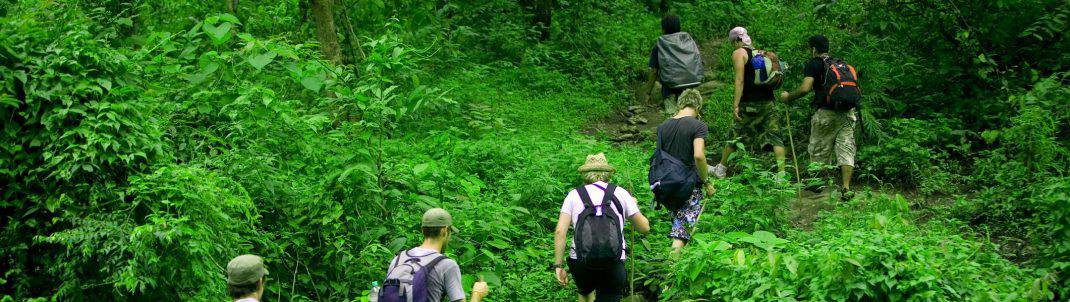
Mae Wang, Chiang Dao and Huai Nam Dang are among the areas used for guided rural walks and multi-day treks. Different routes pass through woodland and agricultural land or link villages and overnight stops. A guide adds local knowledge and helps organise access rather than merely showing the way along a line on a map.
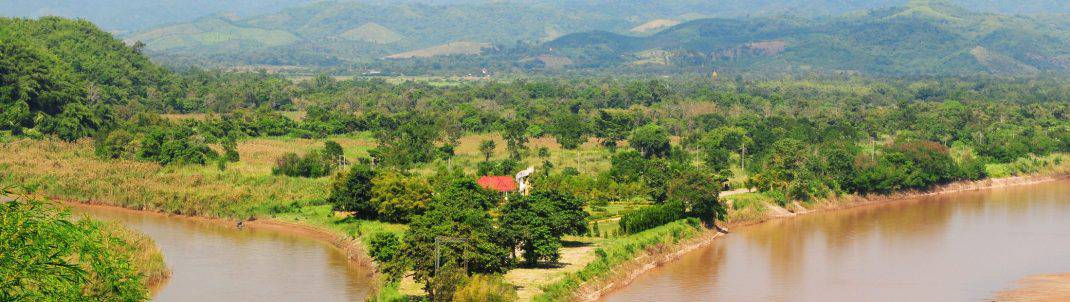
Huai Nam Dang itineraries can combine mountainous walking with a village homestay and bamboo rafting on the Taeng River. Those activities have separate demands and depend on the route and river conditions. Ask what happens if weather changes the walking or rafting instead of assuming every advertised element will run.
Day trip or overnight journey?
A day hike keeps the packing and accommodation decisions simpler, but the transfer can account for a large part of the outing. Ask how many hours are spent walking and how much is driving. A shorter nearby trail may offer more time outdoors than a distant package with several brief stops.
An overnight trek gives more time between villages and a different view of the countryside after the day visitors leave. Accommodation may be a local homestay with shared or basic facilities, rather than a hotel room. Confirm bedding, bathrooms, meals, luggage arrangements and whether you need to carry everything yourself.
Choose the daily distance and elevation change according to the slowest person in your group. Descending rough paths can be demanding on knees, while hot conditions make even a modest climb tiring. A tour labelled easy should be discussed in terms of the actual terrain and walking time.
Visiting villages respectfully
Villages on a trekking route are people’s homes and workplaces. Let the guide introduce the visit, ask before taking close photographs and follow local guidance about entering houses or sacred spaces. A quieter conversation about farming, cooking or textiles can be more rewarding than expecting a staged display.
Use the community’s preferred names and avoid treating every northern village as the same cultural experience. Ask how the visit and accommodation are arranged and whether local guides or hosts are involved. Purchases and meals can support local businesses, but you should not feel obliged to photograph or buy from everyone you meet.
Keep to agreed paths around fields and gardens. Rice terraces and other crops are working land, not unrestricted photo platforms. Take your rubbish away and avoid handing out sweets or money to children during an organised visit.
Weather, equipment and route conditions
The cooler months are often comfortable for walking, although exposed high ground can be cold and windy. Rainy periods bring green scenery and stronger streams but also mud, slippery crossings and possible closures. In the hotter season, choose a realistic pace and check local air quality as well as the temperature.
Carry water, sun protection, insect repellent and a rain layer, with shoes that grip on the route’s surface. A light warm layer is useful on higher mountains. Ask whether meals and drinking water are supplied and what you need for an overnight stay, instead of packing only for the city weather.
Follow current park and guide instructions about access, river crossings and swimming. A waterfall stop does not automatically include safe or permitted bathing. Stay with the agreed route and turn back or change the plan when conditions require it.
Booking, fees and getting to the trail
There is no single admission price or opening schedule for trekking around Chiang Mai. Costs can include a guided tour, local trail guide, national-park admission, transfers, meals and accommodation. Ask for the total and what is excluded; extra rafting or elephant activities should be identified separately.
For the Monk’s Trail, obtain the lower trailhead on the Suthep side of the city near Chiang Mai University and the zoo area, rather than navigating to the temple’s road entrance. Arrange the return or an upper-road pick-up if you are walking one way. Carry cash and check any current park charge at the trailhead.
Doi Inthanon is approached from Chiang Mai via Highway 108 towards Chom Thong and Route 1009 into the park. The named trailhead determines the final drive, and a summit destination does not put you at every walking route. An arranged vehicle or guided day tour is practical when combining separate trails and viewpoints.
Mae Taeng and Huai Nam Dang journeys generally head north on Highway 107, with Route 1095 serving the Pai direction and park approaches. Chiang Dao is farther north on Highway 107, while Mae Wang routes use the southwest countryside. Get the exact meeting point and transport plan from the operator; a district name alone is not enough to identify a trail entrance.
If a package includes an elephant visit, check its specific interaction policy and venue independently of the trekking. A walk through forest and an elephant-care session are different activities, and choosing one does not require adding the other.
Trekking FAQs
What is a good short walk near Chiang Mai?
The lower Monk’s Trail to Wat Pha Lat offers a forest climb followed by a temple visit. Allow roughly 30-45 minutes uphill plus time at the temple, wear shoes with grip and arrange your return before setting out.
Can I walk all the way to Doi Suthep?
The lower trail to Wat Pha Lat is separate from the longer, steeper continuation towards Wat Phra That Doi Suthep. Assess that upper section and its road crossings separately, or arrange a vehicle between the temples.
Is Kew Mae Pan open throughout the year?
It normally opens November to May and closes June to October, with a local guide required. Confirm the current opening and weather before travelling, since other parts of Doi Inthanon can operate while the trail is closed.
How do I judge a tour’s difficulty?
Ask about hours on foot, elevation change, steps, surface, stream crossings and the pace. A short distance or an easy label does not explain the demands of a hot climb or a slippery descent.
What is an overnight homestay like?
Facilities vary and may be basic or shared. Confirm bedding, bathrooms, meals, luggage transport and the walking distance between stops before choosing a multi-day route.
Are national-park fees included?
That depends on the product. Ask whether the price covers park admission, compulsory local guides, meals and transfers, and carry cash for any separately payable entry or trail charge.
Do trekking tours always include elephants or rafting?
No. Some combine those activities with walking, while others focus on the trail. Compare the actual walking time and check separate activity policies and conditions before booking a mixed itinerary.




Do You Have a Question to Ask?