



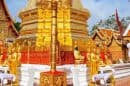
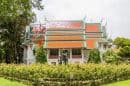
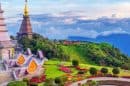






















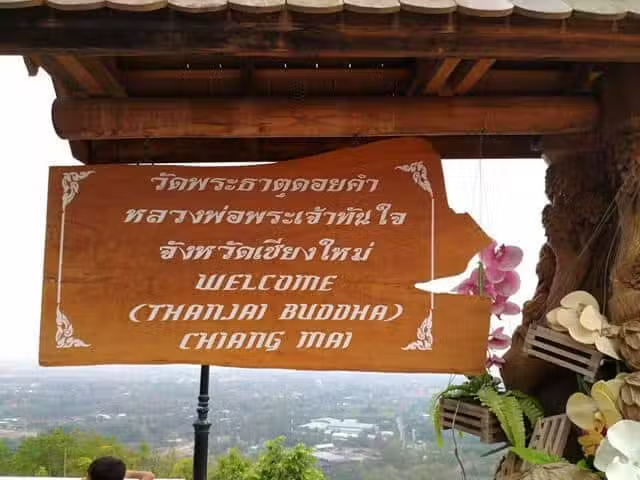
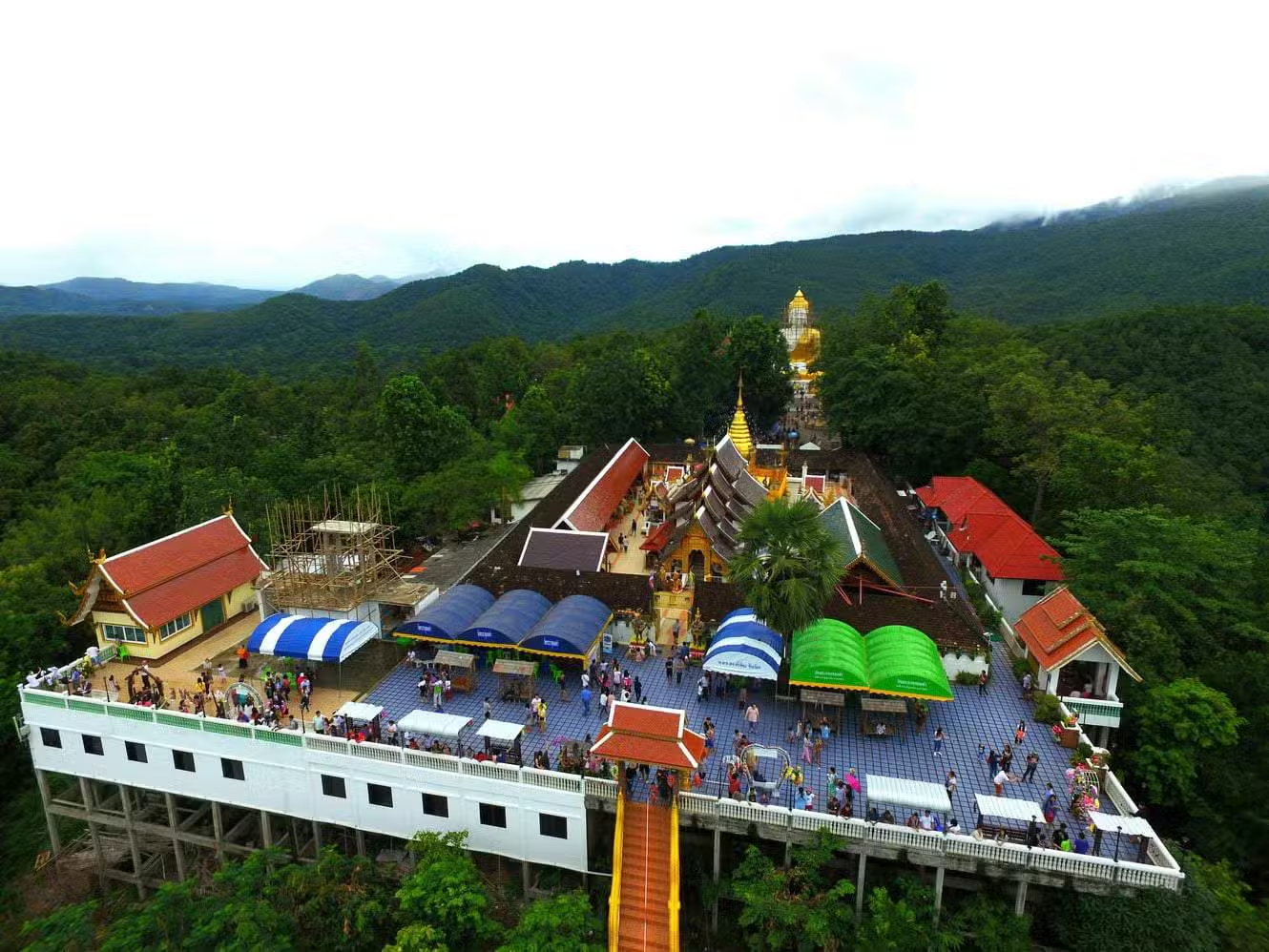
Wat Phra That Doi Kham is a hilltop Buddhist temple in Mae Hia, southwest of central Chiang Mai. A large seated Buddha, a golden chedi and an outlook across the city make it a rewarding visit, while the Luang Pho Than Chai shrine gives it particular importance for worshippers seeking blessings.
The temple stands above the Royal Park Rajapruek area and is a separate destination from Wat Phra That Doi Suthep. Its hilltop setting combines city views with an active place of devotion, where offerings and prayer are as much a part of the experience as the architecture.
The Buddha, Chedi and Temple Courtyard
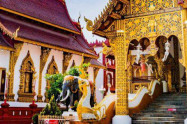
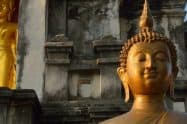
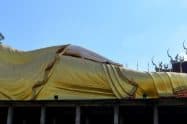
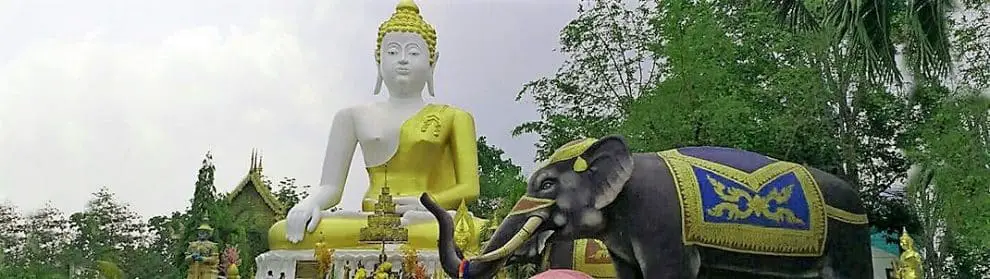
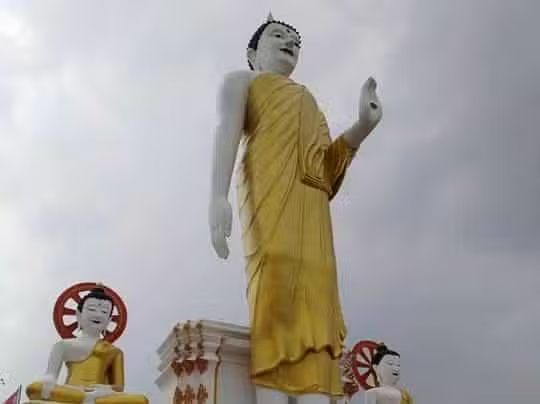
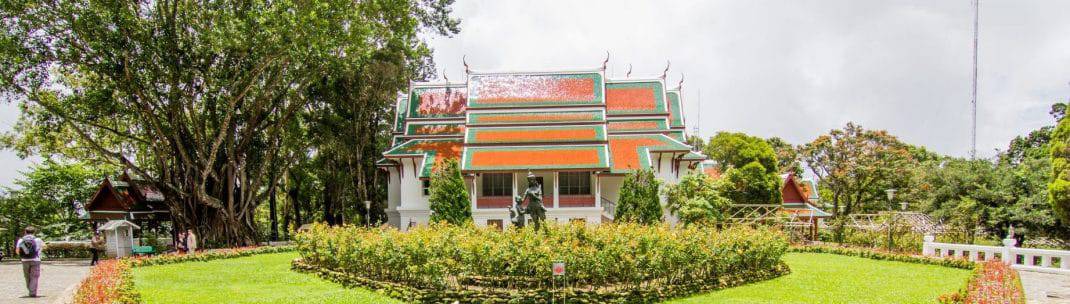
The large seated Buddha is a prominent landmark on arrival. Its scale is easier to appreciate from the courtyard than from the approach road, and it provides a natural starting point for looking around the temple. Give people making offerings space rather than treating the area only as a photograph backdrop.
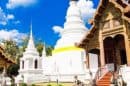
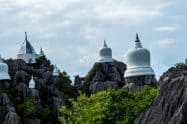
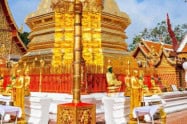
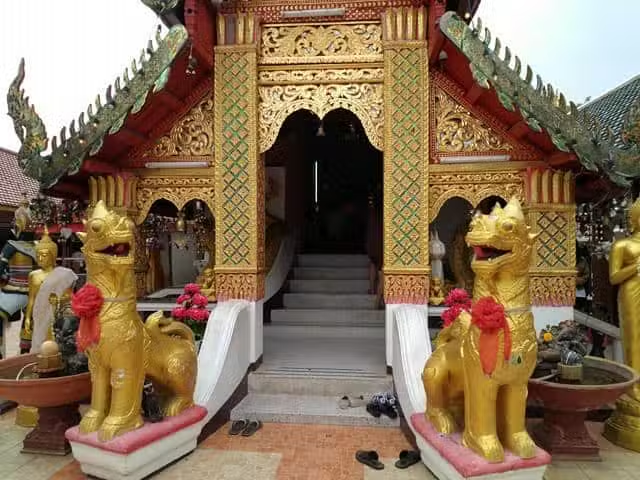
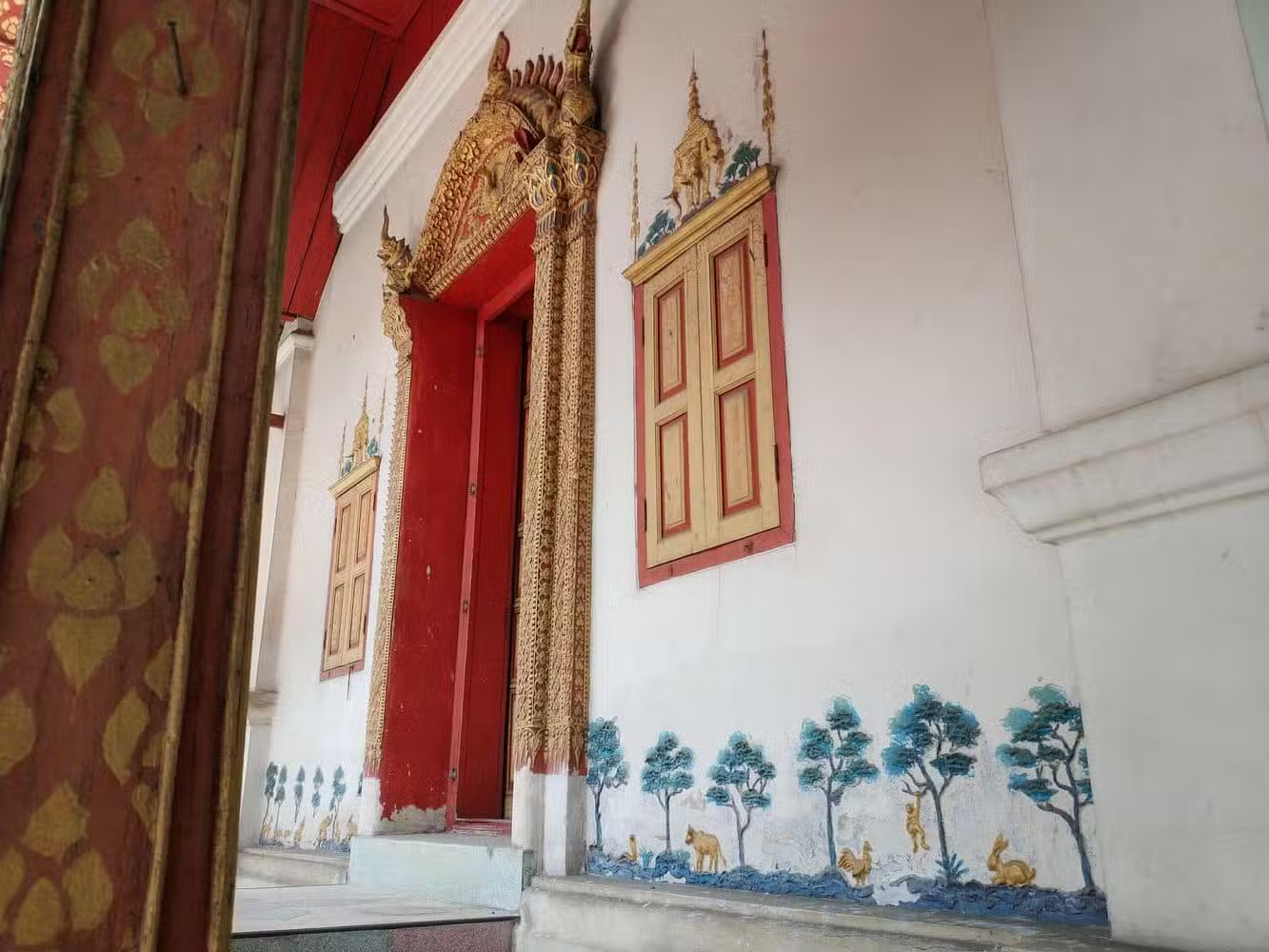
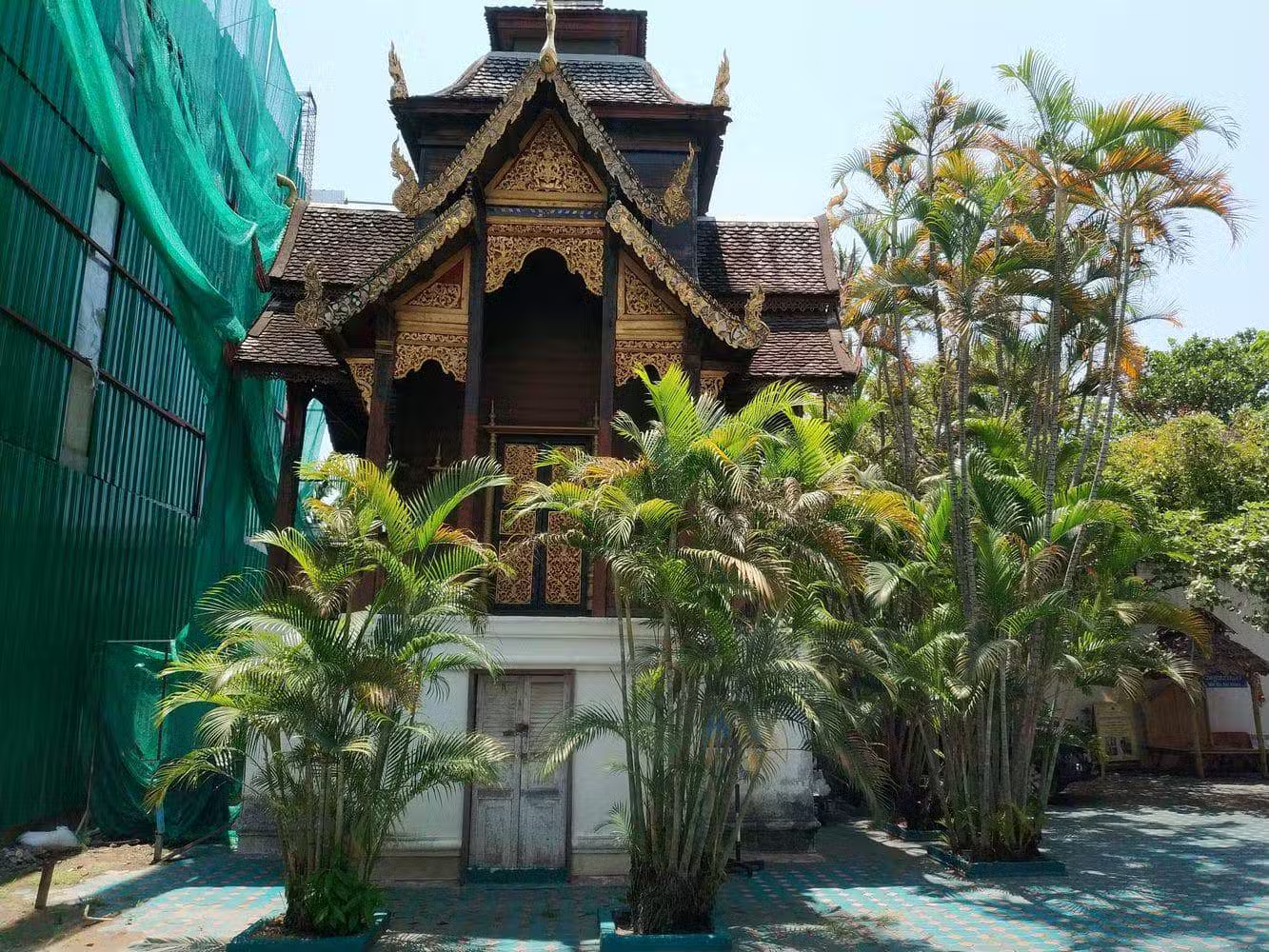
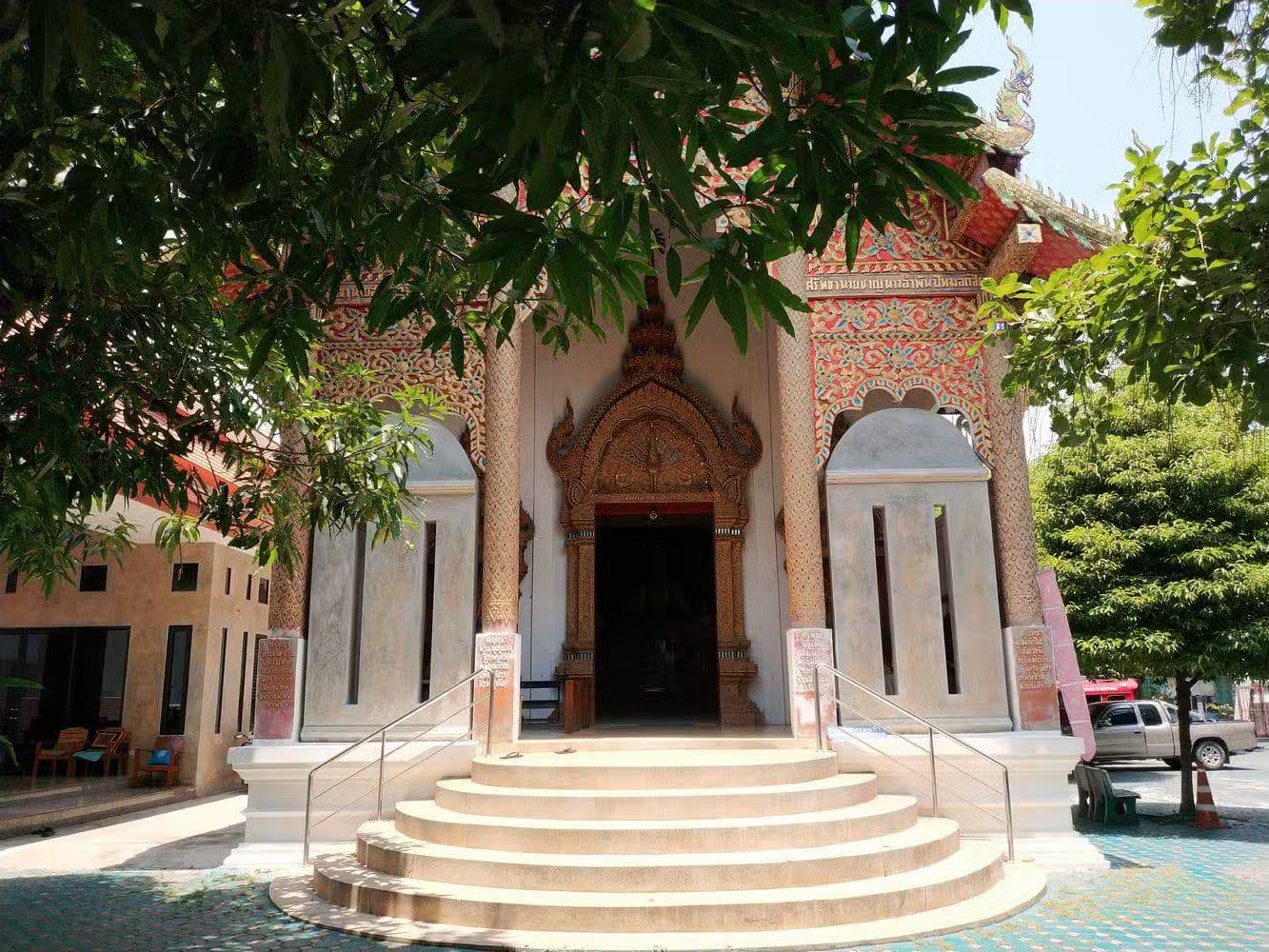
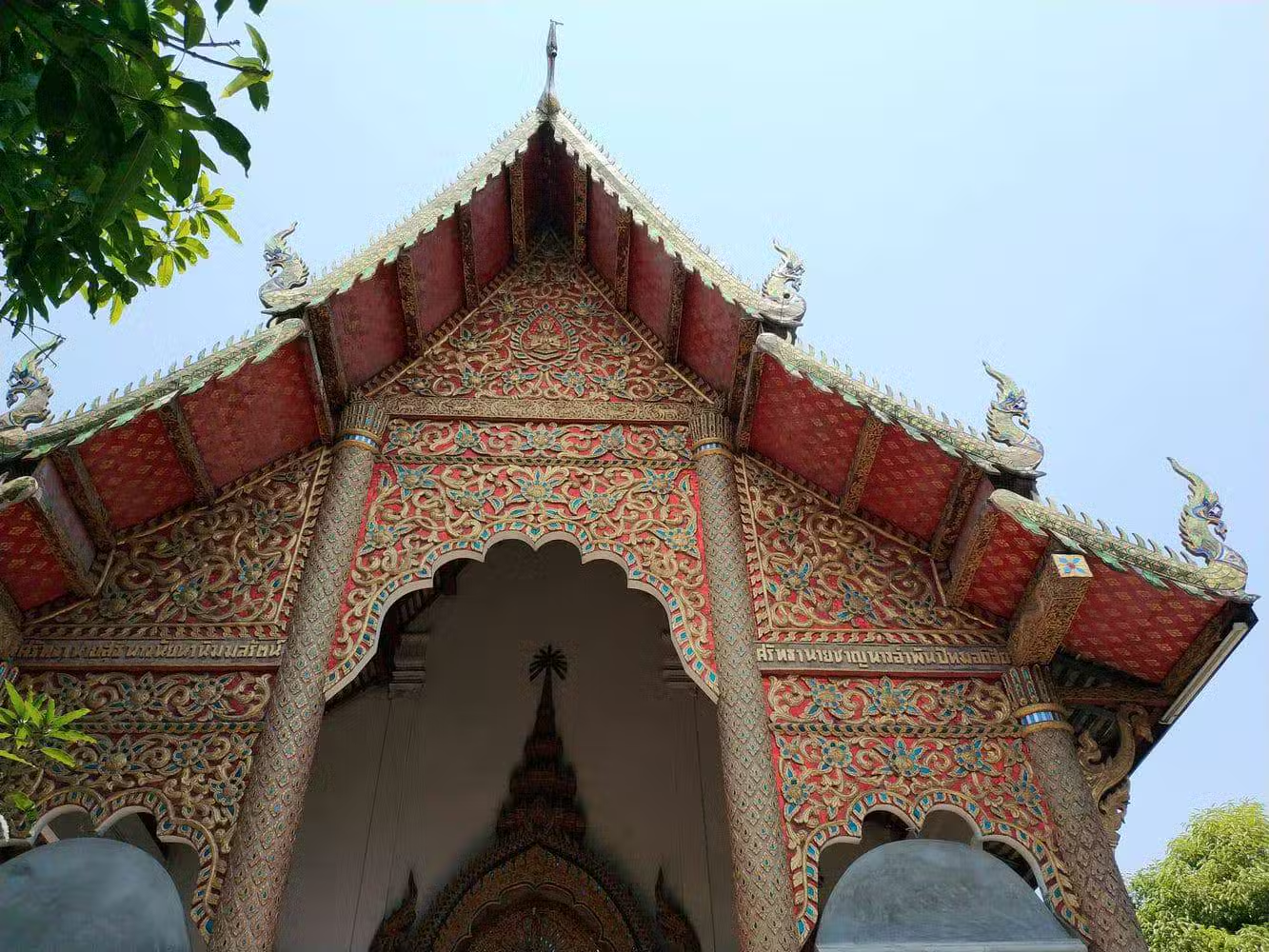
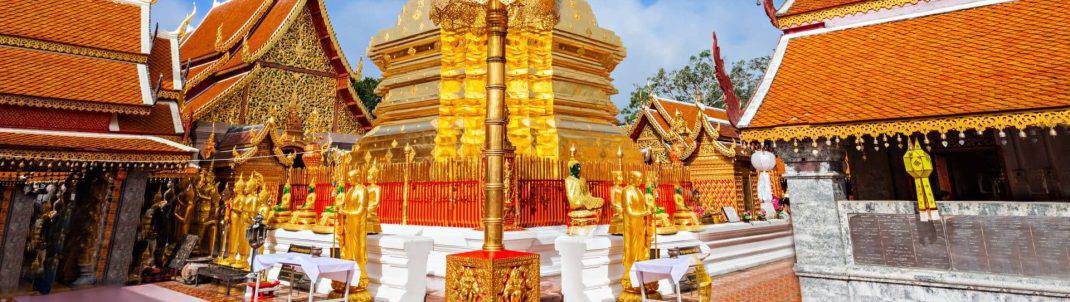
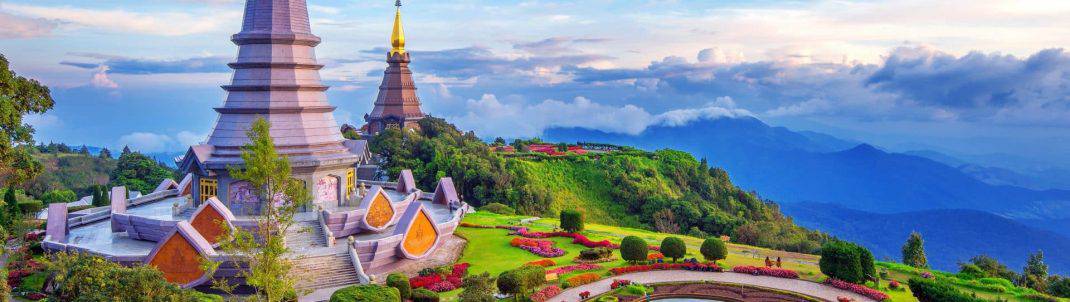
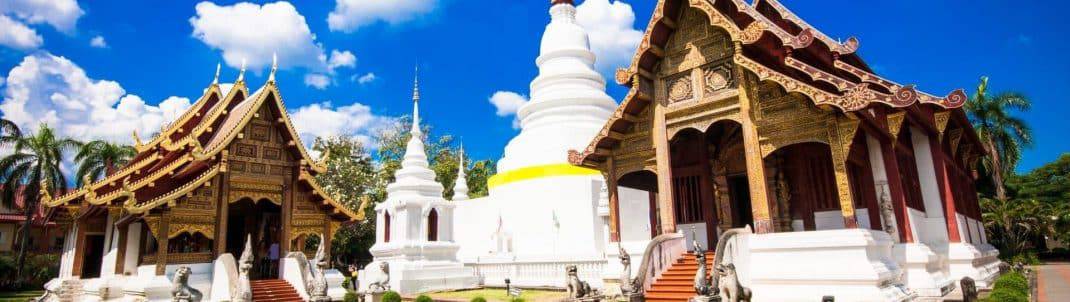
The golden chedi and surrounding shrine details introduce the temple’s older religious significance. ‘Phra That’ refers to its association with sacred relics, understood within Buddhist tradition. Look at the naga forms and decorative details around the buildings, moving into halls only where access is permitted.
Doi Kham’s history is linked in local tradition with Queen Chamadevi and the early northern kingdoms. The temple was restored after a period of decline, with the rediscovery of Buddhist images in 1966 helping renew attention to it. Visitors need not know every date to appreciate the combination of a historic sacred site and present-day worship.
Luang Pho Than Chai and Jasmine Offerings
Luang Pho Than Chai is the temple’s well-known Buddha image associated with prayers for wishes and blessings. Jasmine garlands are a distinctive offering, and the quantities brought by devotees can make the shrine visually striking. The flowers express faith and gratitude; they do not guarantee a particular outcome.
If you wish to make an offering, watch the local arrangement and ask where flowers should be placed. There is no need to copy another visitor’s large purchase or assume an expensive offering is required for entry. Visitors interested mainly in the culture can observe quietly without joining a ritual.
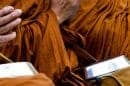
Keep the shrine approach clear for worshippers, particularly when groups arrive together. Ask before taking close photographs of people praying and avoid reaching over offerings to obtain a better angle. A little patience gives a more respectful and informative view of the temple’s daily life.
City Views from the Hilltop
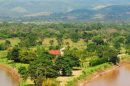
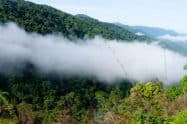
The terrace overlooks Chiang Mai and the surrounding plain, with the Royal Park Rajapruek area below. It helps put the city’s relationship with the western hills into perspective: the built-up streets give way to greener slopes on this side of the city.
Visibility depends on haze, cloud and the season. A clear morning can be a good time to combine the outlook with a quieter temple visit, but do not plan around a guaranteed panoramic photograph. Stay within the terrace boundaries and give other visitors room along the viewing edge.
The outlook is part of the temple grounds, so the usual standards of respectful dress and conduct still apply. Allow time for both the shrines and the view rather than going directly to the terrace and overlooking the place’s religious purpose.
Stairs, Road Access and Visiting Etiquette
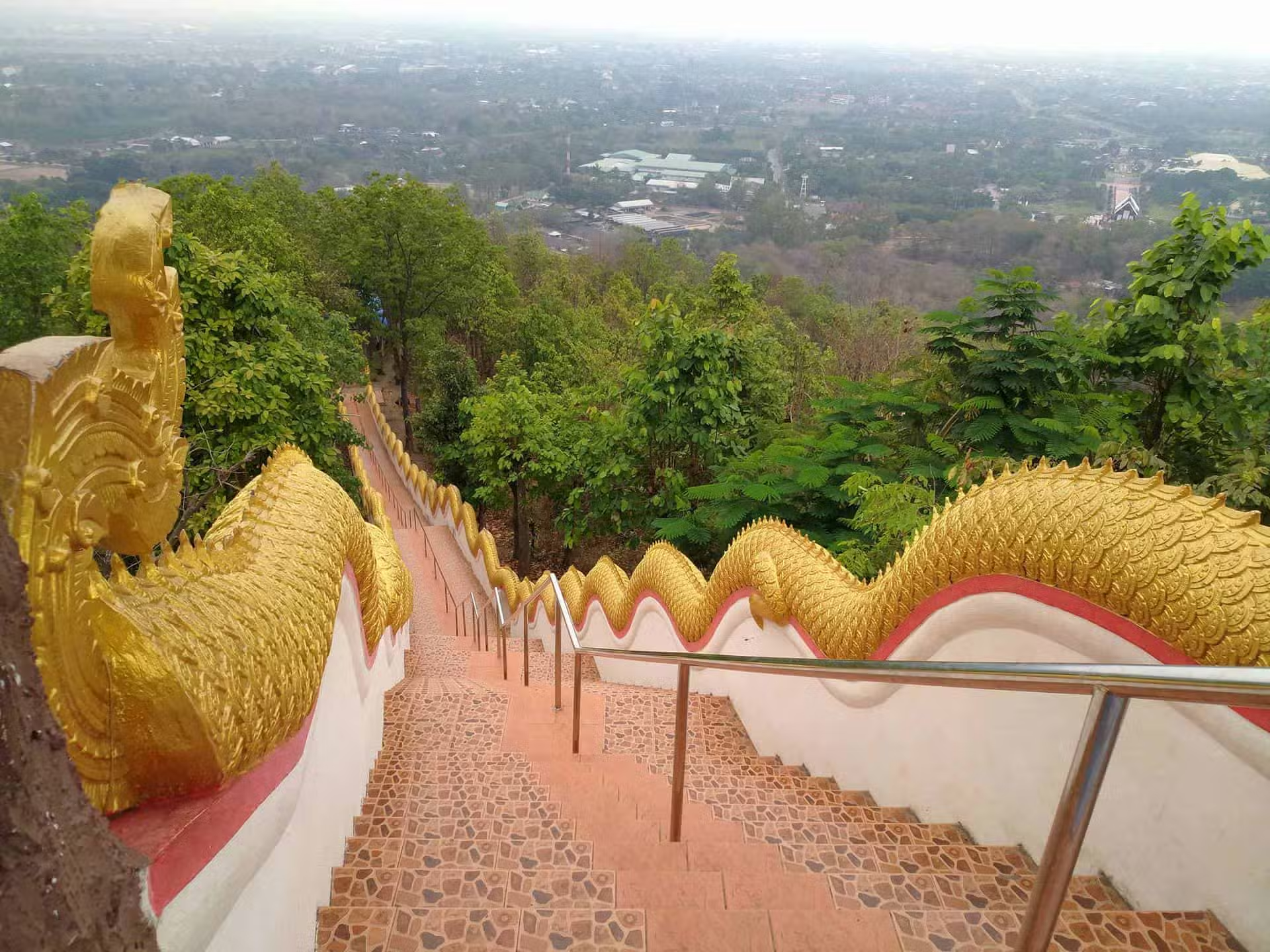
A long naga-lined stair approach provides one way to reach the temple, while the road allows vehicles to climb to the upper visitor area. If you want to walk the stairs, ask your driver to use the appropriate lower drop-off and arrange where you will meet afterwards.
The stair climb is an optional physical part of the outing, not something to add accidentally by choosing the wrong arrival pin. Visitors with reduced stamina can use the upper road approach, although the grounds and building thresholds still need individual assessment. Contact the temple about particular mobility requirements rather than assuming an elevator is available.
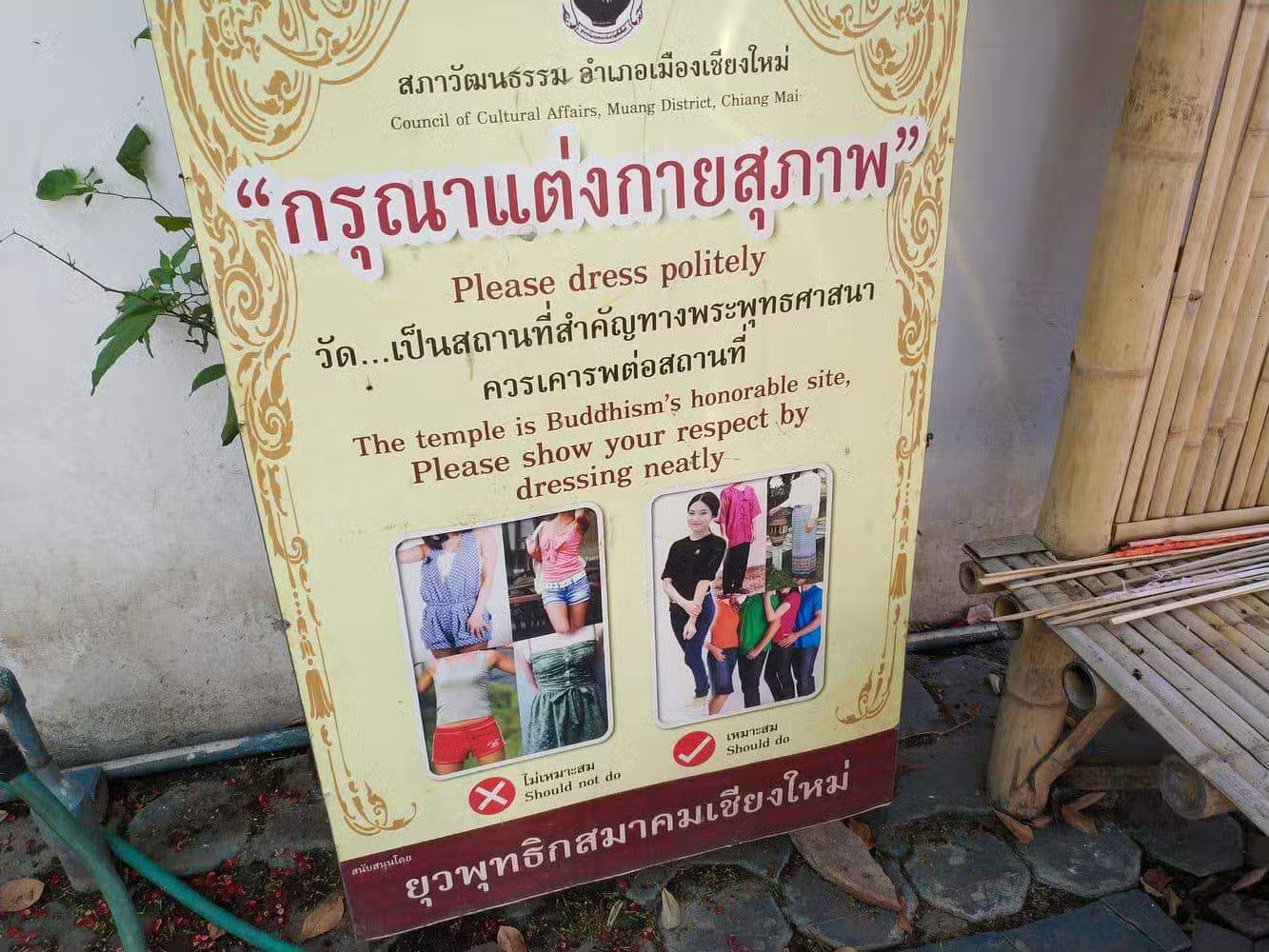
Cover shoulders and knees, remove shoes before entering prayer halls and keep voices low around the shrines. Follow posted photography restrictions and avoid pointing your feet towards Buddha images when seated. Children can enjoy the large Buddha and outlook, with adult guidance around stairs and worship areas.
Hours, Admission and Time to Allow
Plan a sightseeing visit within the published 8am to 5pm window. Religious activities can have different arrangements, and particular halls may not be open throughout the day. Check directly if you are travelling for a ceremony or need access outside normal visiting hours.
General temple entry is free, with donations and offerings optional. Flowers, food and transport are separate purchases. Carry some small cash if you intend to make an offering, while keeping the visit separate from any admission charged by neighbouring attractions.
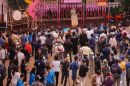
Allow around 45 minutes to an hour for the main courtyard, Luang Pho Than Chai shrine and terrace. Leave longer for the stair climb, prayer or a busy holiday visit. Weekends and important Buddhist dates can bring more worshippers and slower movement around the main shrine.
Getting to Wat Phra That Doi Kham
The temple is in Mae Hia, around 15 kilometres southwest of central Chiang Mai, above the Royal Park Rajapruek area. The published address is 108 Moo 3, Mae Hia, Mueang Chiang Mai 50100. It has its own hill road and entrance; visiting it does not mean entering the botanical park below.
Approaches from the city use the western and southwestern road network towards Route 121 and Royal Park Rajapruek, then the signposted temple climb. Give your driver the full Doi Kham name, because Doi Suthep is a different hilltop temple with a different route.
A taxi, hired car or privately arranged songthaew can take you to the upper arrival area. Agree the return and waiting arrangement before leaving, especially if you plan to descend by the stairs. Allow extra time for the narrower hill road and parking on busy days.
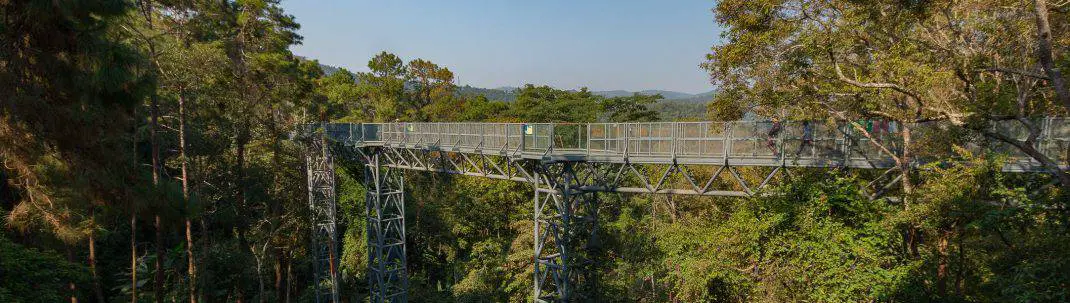
Royal Park Rajapruek can make a substantial second stop nearby, with its own ticket and walking requirements. Combine them only if you have time to enjoy the gardens as well as the temple, and confirm each destination’s hours rather than assuming one schedule applies to both.
Wat Phra That Doi Kham FAQs
Is Doi Kham the same temple as Doi Suthep?
They are separate temples. Doi Kham is in Mae Hia, southwest of central Chiang Mai near Royal Park Rajapruek. Give your driver the full temple name to ensure the correct hill road.
Why do people bring jasmine garlands?
Jasmine is a characteristic offering at the Luang Pho Than Chai shrine, associated with prayers for blessings and gratitude. Visitors can observe respectfully or ask how to make an offering; purchasing flowers is optional.
Do you have to climb the stairs?
Vehicles can use the road to the upper visitor area, while the naga-lined stair approach is an alternative. Agree the appropriate drop-off with your driver and ask about any access assistance you need.
Is there an entrance charge?
General entry is free. Donations and offerings are optional, while flowers, meals and transport cost separately. The temple visit does not include admission to Royal Park Rajapruek.
How long should you allow?
Around 45 minutes to an hour suits the main shrines and viewpoint. Add time for the stairs, prayer or crowds during weekends and religious celebrations.
What is the best time for the view?
A clear morning can be a comfortable time to visit, but visibility changes with haze and weather. Plan the temple and shrine visit as well as the outlook so the outing remains rewarding in less clear conditions.
Can you visit Royal Park Rajapruek on the same trip?
The park is nearby below the temple and can be combined by road. It is a separate attraction with its own admission and a substantial garden visit, so allow additional time and confirm both schedules.



Do You Have a Question to Ask?