




















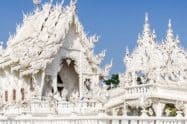
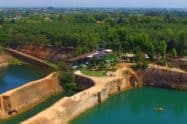










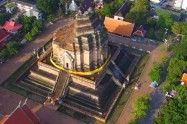




Wiang Kum Kam is an archaeological settlement south-east of Chiang Mai where temple ruins stand among present-day houses and local roads. Instead of entering one enclosed ancient city, you move between excavated foundations, brick chedis and temples that remain places of worship.
Associated with King Mangrai before the establishment of Chiang Mai, the settlement offers a different perspective on Lanna history from the busy Old City temples. Its low-lying position beside the Ping River and the layers of sediment covering its remains help explain why archaeology is central to understanding the site.
A route through the temples and ruins
Start with a small selection of sites rather than trying to see every surviving foundation. Wat Chedi Liam, Wat Chang Kham and one or two excavated temple areas make a useful introduction, with each showing a different part of the settlement’s story.
Wat Chedi Liam
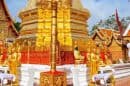
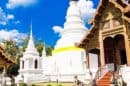
Wat Chedi Liam, also known as Wat Ku Kham, is the most recognisable landmark. Its tall, stepped, angular chedi has tiers of niches containing Buddha images, giving it a very different silhouette from the rounded stupas seen elsewhere in Chiang Mai.
The temple remains an active religious place. Take time to look at the chedi from the permitted grounds, then observe the same etiquette you would use at an Old City temple: cover shoulders and knees, remove shoes where requested and give worshippers space. Present-day restoration is part of what you see, so do not interpret the entire standing structure as untouched medieval fabric.
Wat Chang Kham and the excavated sites
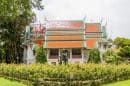
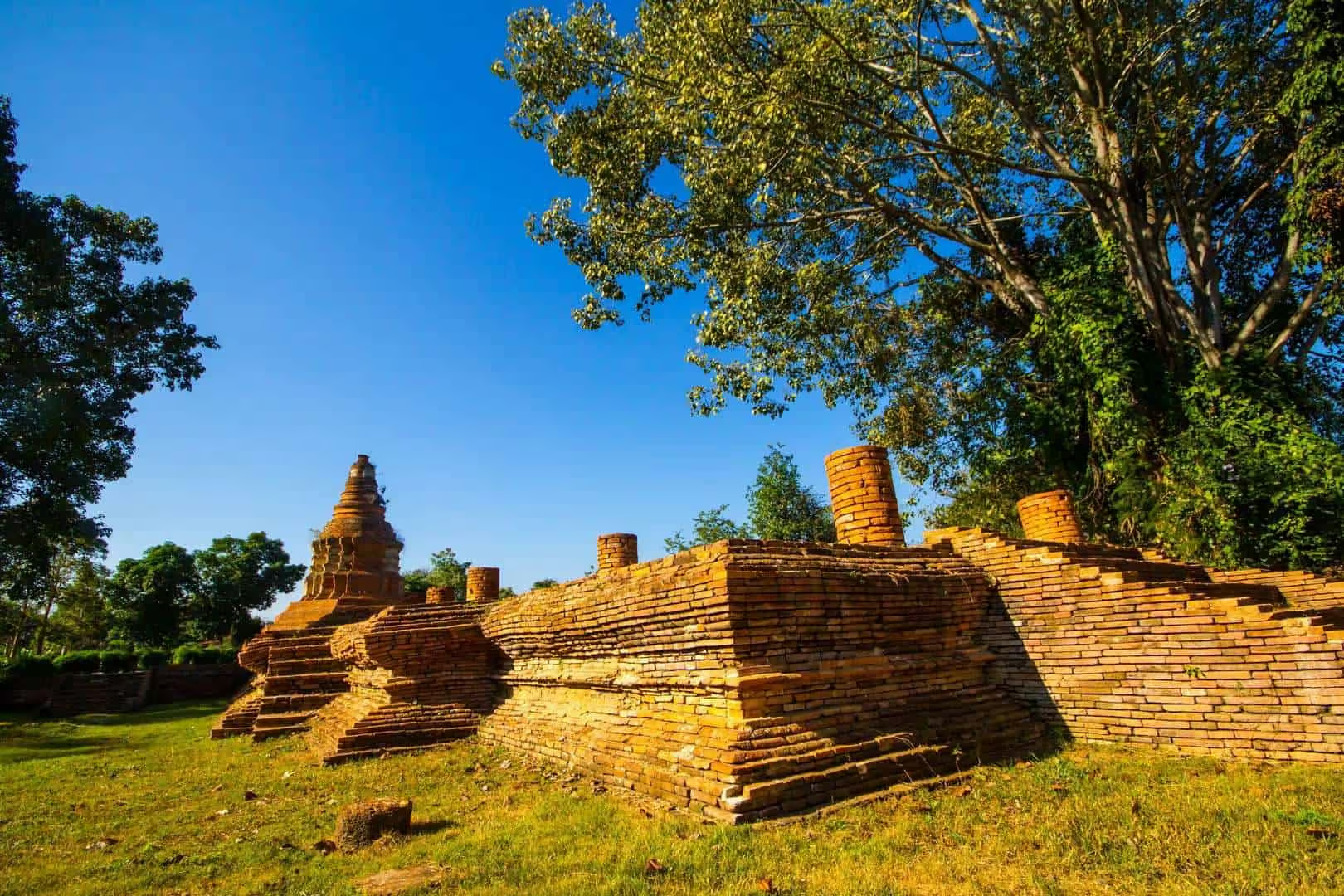
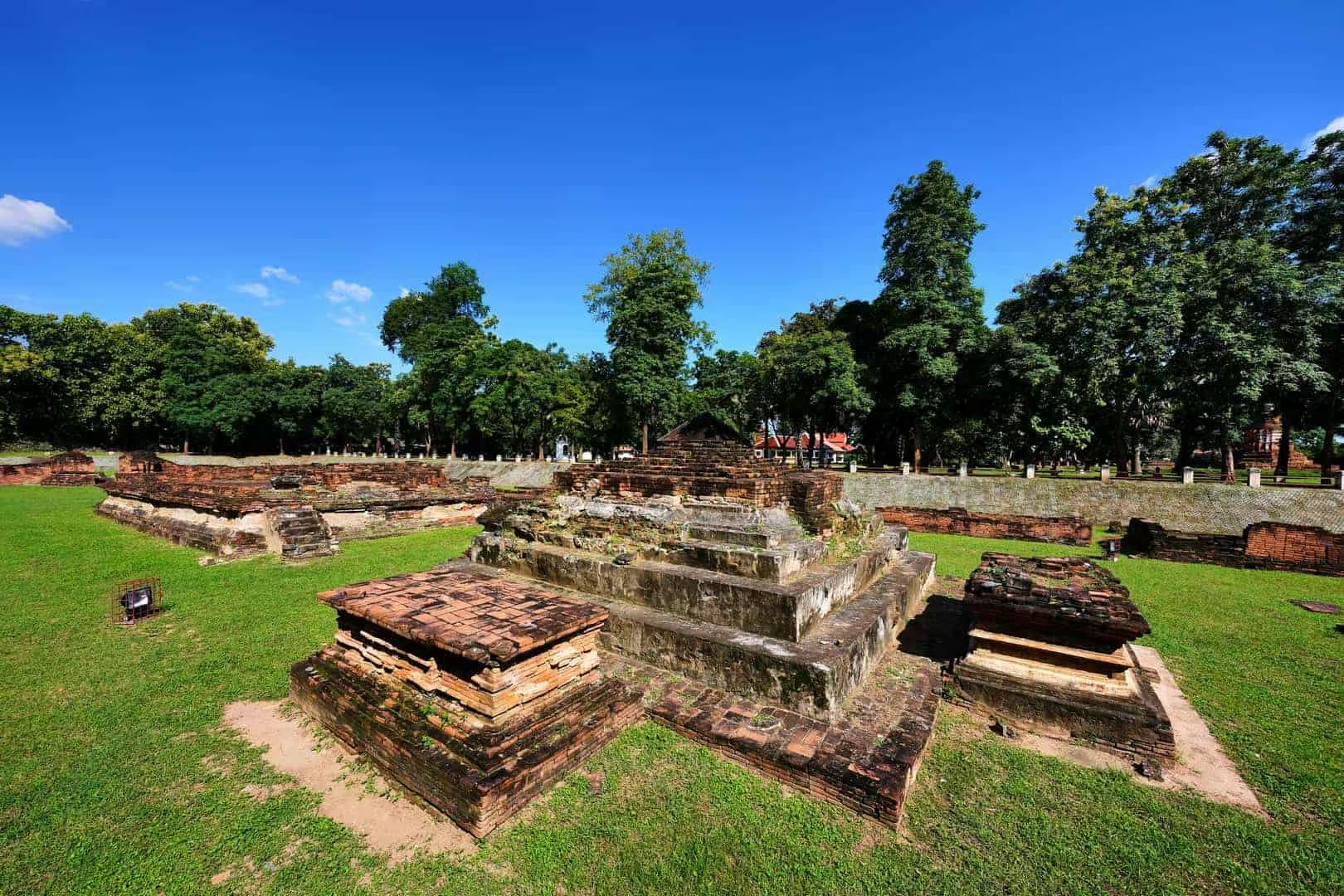
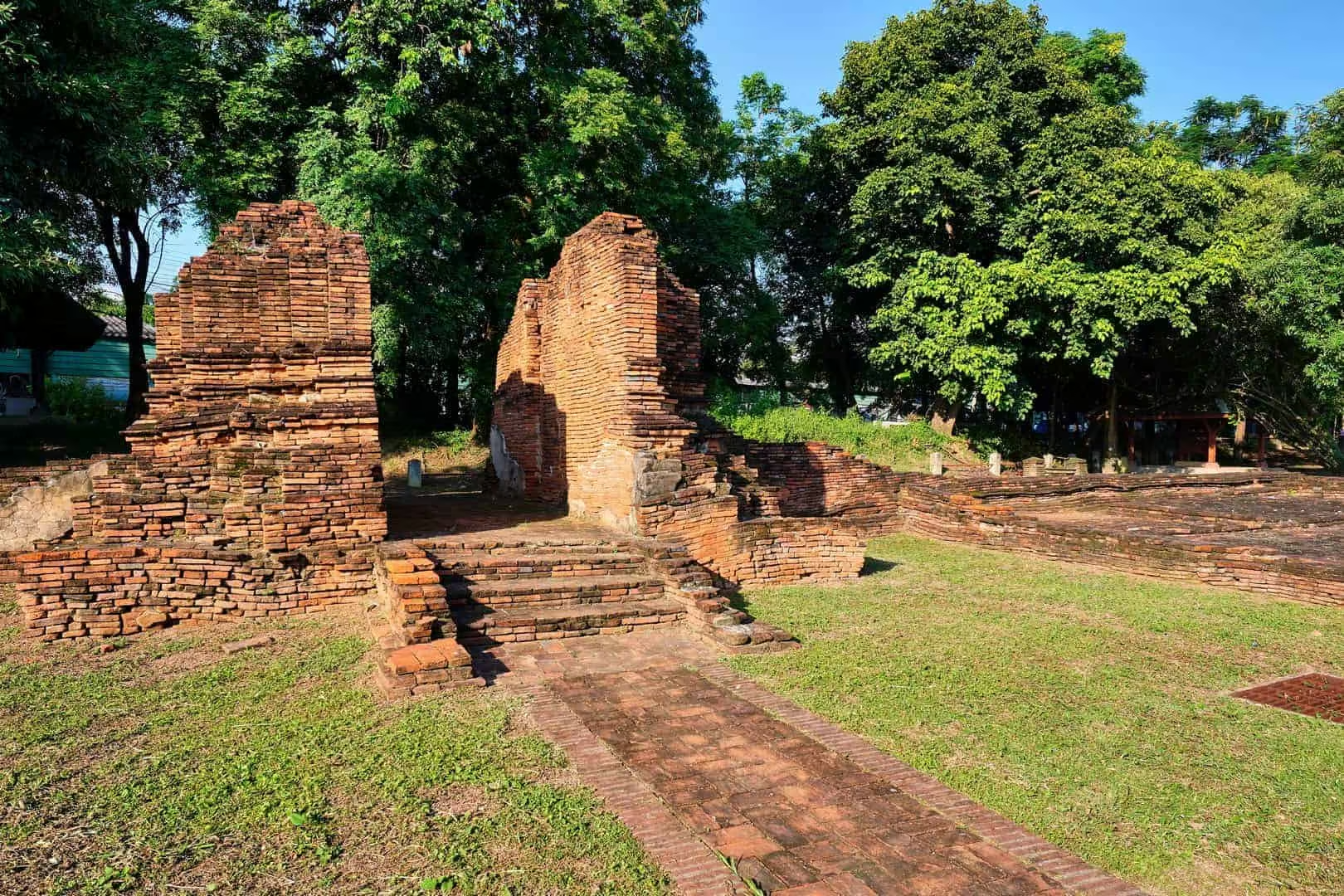
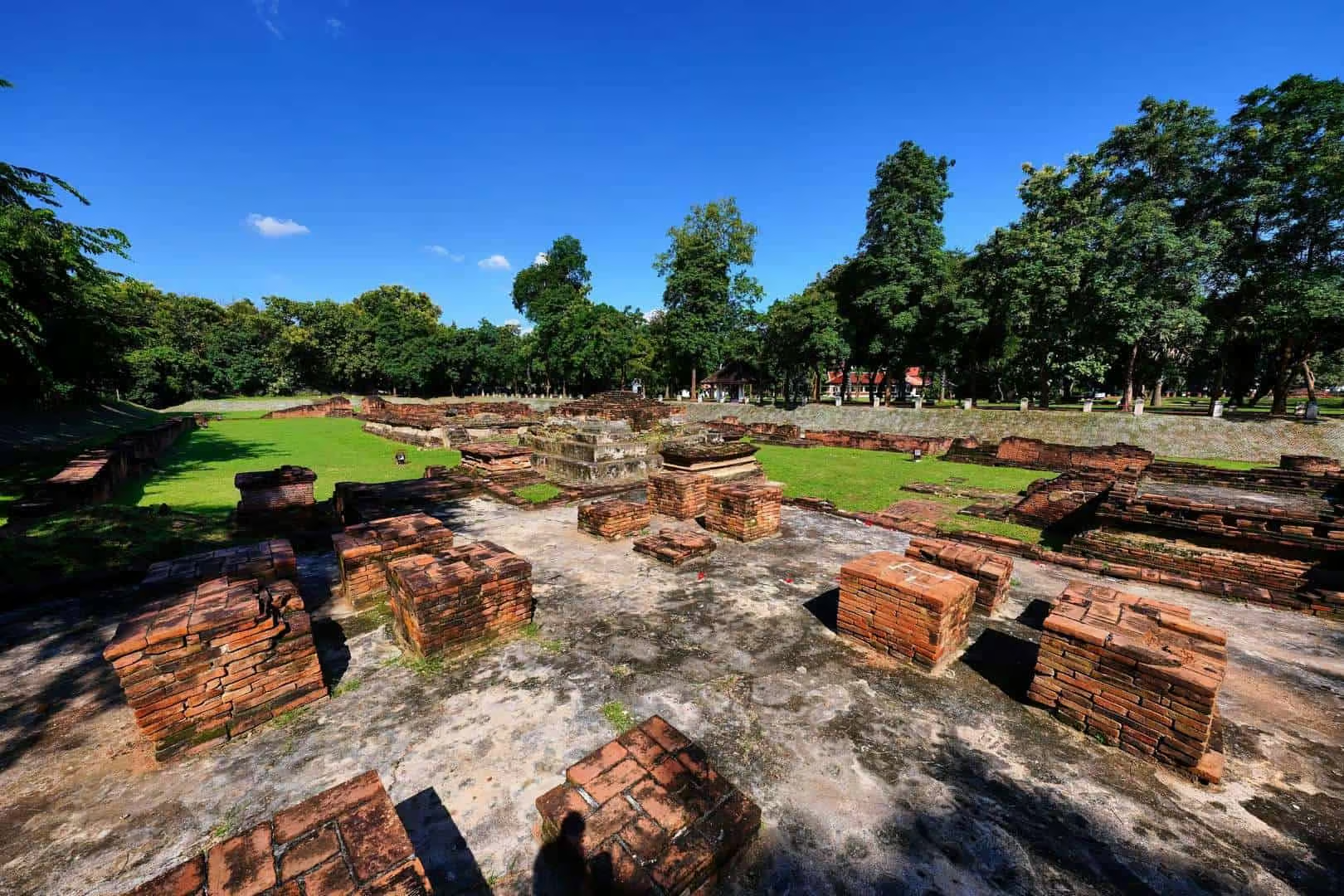
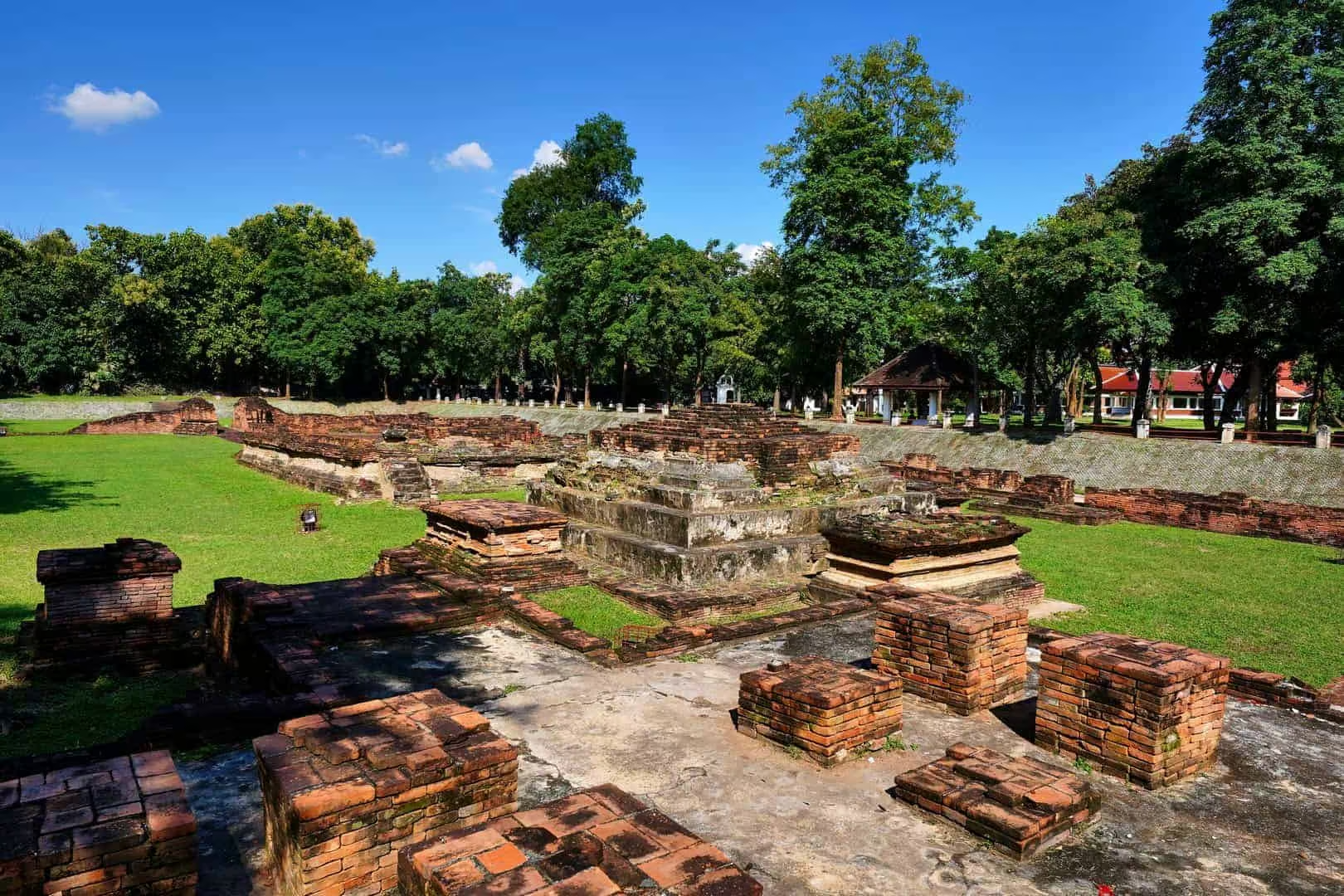
Wat Chang Kham is another living temple connected with the archaeological story. It provides a useful contrast with areas where only brick bases, columns or chedis remain. The visit becomes more rewarding when you look for the plan of a former worship hall rather than expecting an intact building at every stop.
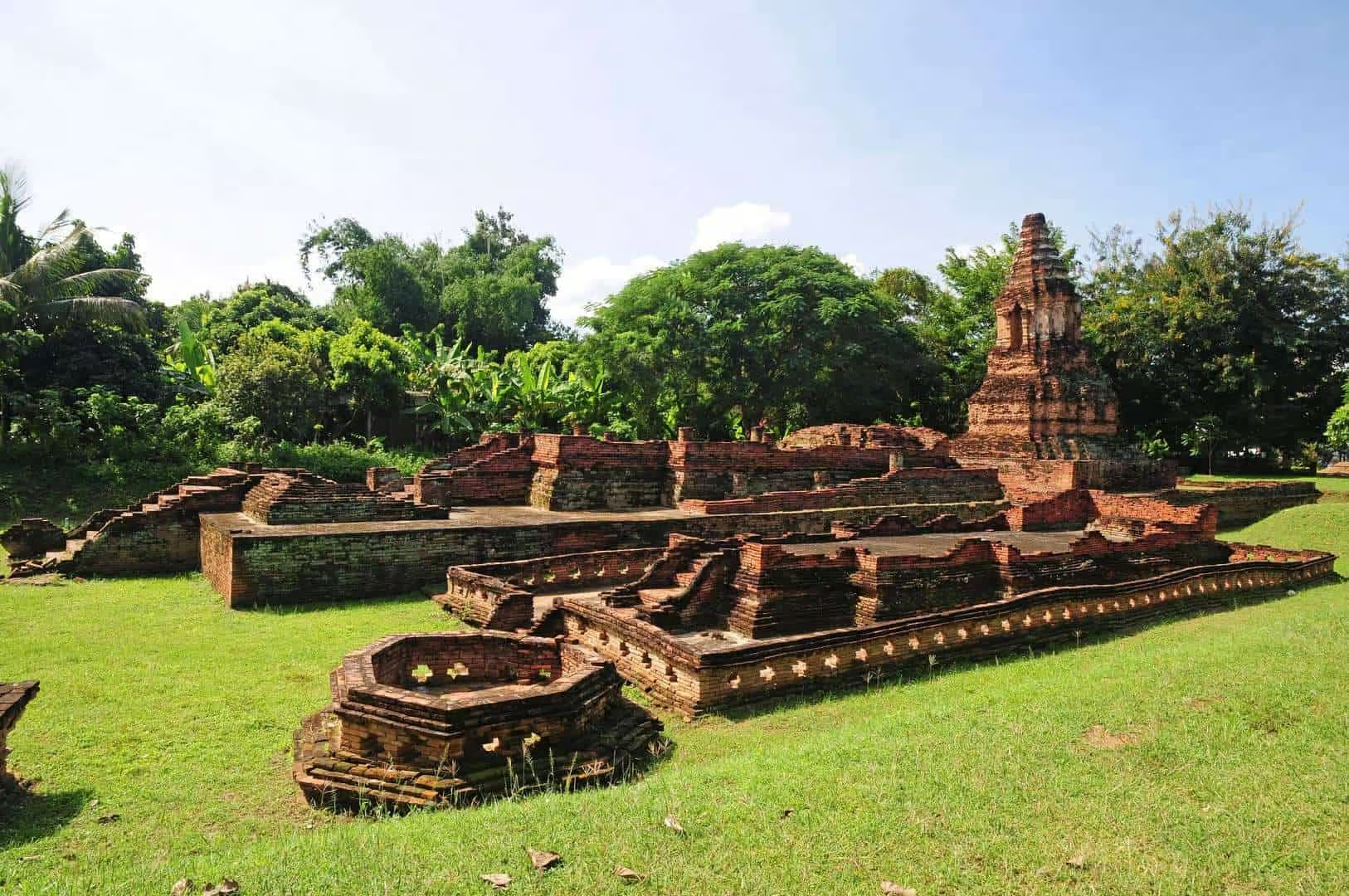
Wat E-Kang and Wat Pu Pia are worthwhile additions to a longer route. Wat E-Kang has a substantial red-brick chedi, while Wat Pu Pia rewards a closer look at the surviving architectural details. At excavated sites, the position of surviving brickwork reveals the scale and orientation of the old temple complex. A local guide can help connect these fragments with the settlement’s history; without that context, several low foundations may look similar.
Keep off the ancient brickwork and use the paths around the ruins. These places sit within a neighbourhood, so respect private homes and do not treat every lane or adjoining garden as public archaeological access.
Planning a half-day visit
The information centre is a useful first enquiry point for a local map, historical background and the day’s tour arrangements. Confirm its opening before making an indoor exhibition the centrepiece of your visit. The wider settlement and individual temples do not necessarily share one opening schedule.
A compact route can take a couple of hours, while a guided circuit with several stops works well as a half-day from Chiang Mai. Morning is comfortable for exploring exposed ruins. Bring drinking water, a hat and comfortable shoes; shade is uneven, and muddy ground can complicate a visit after rain.
Some neighbouring sites can be walked between, but the whole settlement is spread out. A bicycle, hired vehicle or locally arranged tour lets you cover more ground. Ask which ruins a carriage or tram circuit includes, how long you can stop and whether the quoted amount is per person or per vehicle. Availability and prices should be agreed locally rather than assumed from an old fixed fare.
Admission and getting there
Many outdoor ruins and temple grounds can be visited without a general site ticket. Budget separately for guiding, transport and any information-centre admission or special service. Carry cash for local arrangements and confirm the total before starting a circuit.
Wiang Kum Kam lies in Tha Wang Tan, Saraphi district, south-east of the Old City and close to the Chiang Mai-Lamphun road. Use the information centre or your chosen first temple as the destination. A taxi, tuk-tuk or hired driver from Chiang Mai is straightforward, but arrange the return trip as well as the outward fare.
Cycling from the city is an option for confident riders, although the approach involves urban traffic before reaching quieter lanes. Do not choose a bicycle simply because the ruins are near Chiang Mai on a map. Once there, allow time to navigate between sites rather than treating the area as one pedestrian-only park.
Wiang Kum Kam FAQs
Is Wiang Kum Kam an underground city?
Many remains were buried by sediment and later excavated, but visitors explore outdoor ruins at ground level. It is not a subterranean attraction with tunnels to walk through.
Which sites should I prioritise?
Start with Wat Chedi Liam and Wat Chang Kham, then add an excavated site such as Wat E-Kang. This gives you a mix of a distinctive standing chedi, a living temple and archaeological remains.
Can I explore on foot?
A short route between nearby sites is possible, but the wider settlement is spread across local roads. A bicycle or locally arranged vehicle helps if you want a more extensive circuit.
Do I need a guide?
A guide is useful for interpreting foundations and understanding how the settlement developed. Independent visitors can still enjoy the temples, especially with a map and a deliberately small route.
How much does a carriage or tram tour cost?
Ask locally for the current fare, route and duration. Establish whether the price covers your whole group or each passenger, and whether guiding is included.
What should I wear?
Wear comfortable shoes and clothes suitable for active temples, with shoulders and knees covered. Bring water and sun protection because many ruins are exposed.





Do You Have a Question to Ask?