












































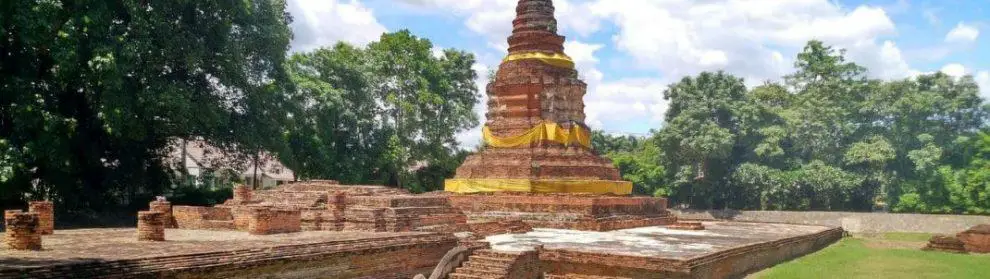
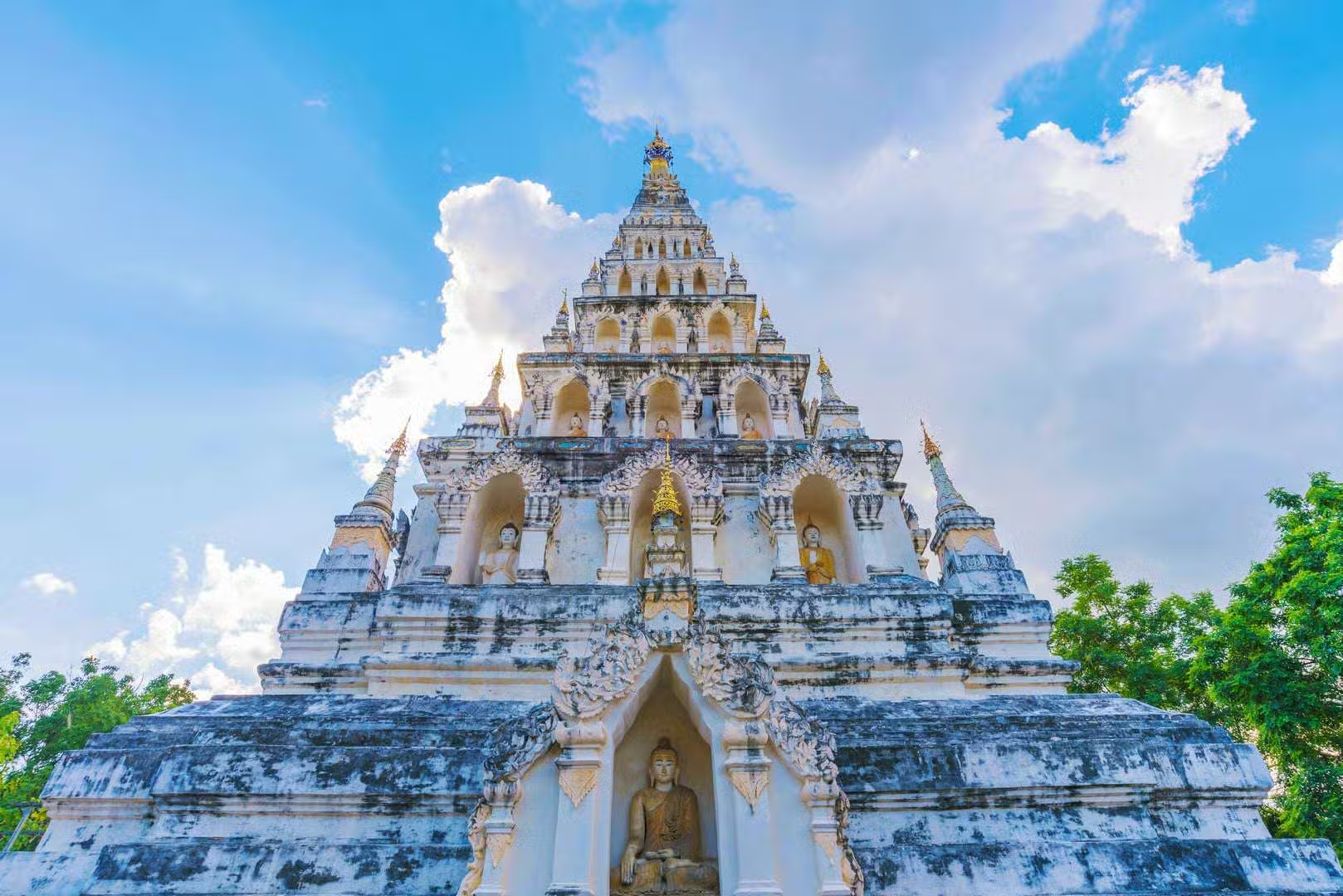
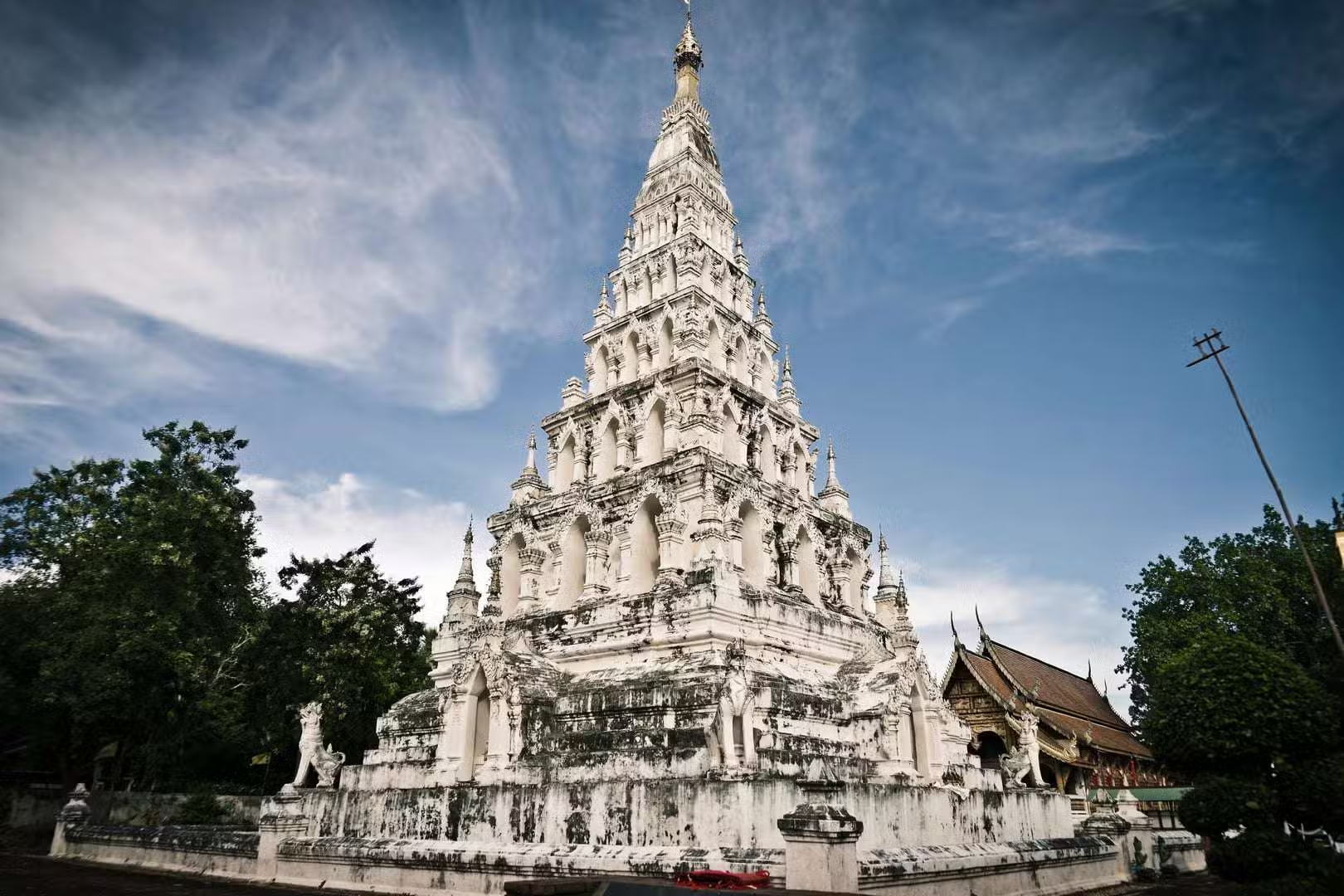
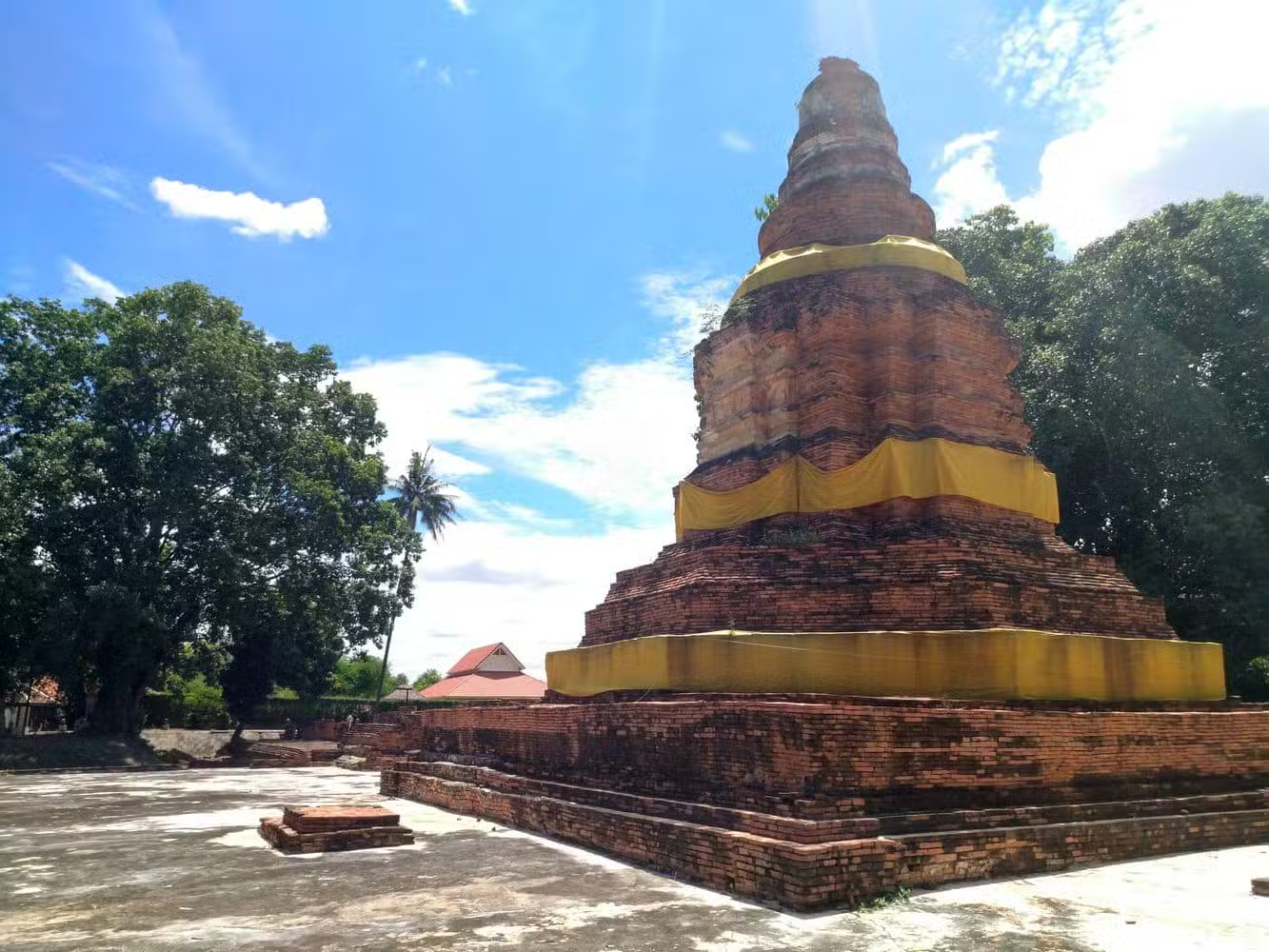
Wat Chedi Liam stands in Wiang Kum Kam, the historic settlement south of Chiang Mai, with a square, tiered chedi that looks strikingly different from the rounded stupas of many city temples. Rows of standing Buddha images fill its niches, making it a worthwhile stop for visitors interested in the region’s older architectural traditions.
The temple is in Tha Wang Tan, Saraphi district, close enough to combine with other Wiang Kum Kam remains. It remains a religious site, so approach the courtyard and any open halls as a temple visit rather than an unrestricted archaeological playground.
Reading the chedi’s shape
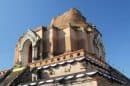
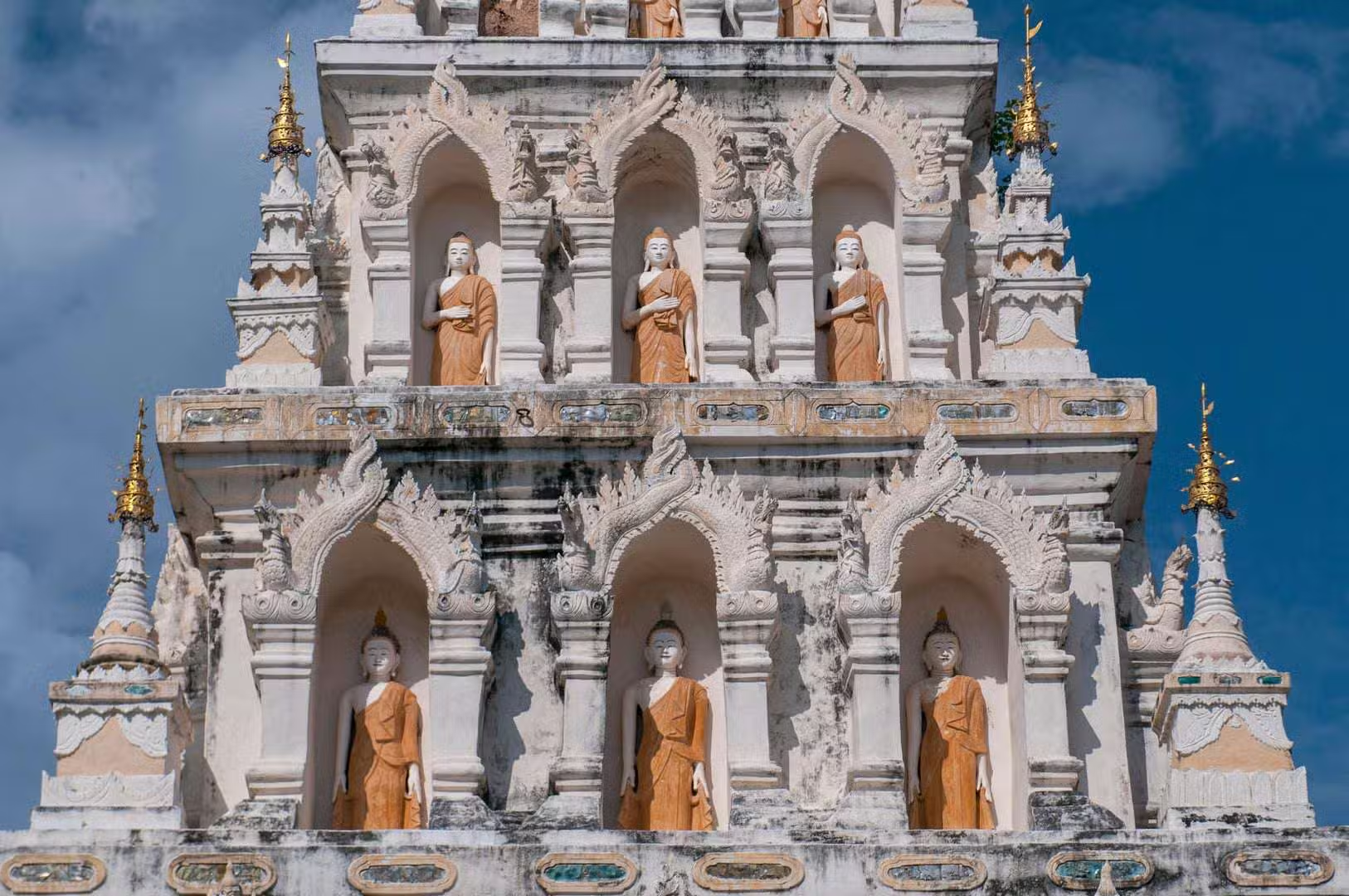
The chedi rises through five diminishing square tiers. Its four faces contain a total of 60 Buddha images, with the repeated niches giving the structure its distinctive rhythm. Step back to see the overall pyramid-like form, then move around the base to compare how the figures, arches and stucco details appear on each side.
Its design is associated with the Mon-Hariphunchai tradition and is often compared with the square chedi at Wat Ku Kut in Lamphun. That comparison is useful if you have already visited Lamphun: the form provides a visible connection between sites that might otherwise seem unrelated on a travel itinerary.
Carved and moulded ornament around the niches includes floral details and serpent-like forms. Notice the difference between the repeated layout and the individual decorative elements. Photographs from only one face show the basic design, but walking around the structure gives a better impression of its proportions and repetition.
Wiang Kum Kam and the early Lanna story
The temple is associated with King Mengrai and a foundation in 1288, before Chiang Mai was established in 1296. It was formerly known as Wat Ku Kham. This places it within the story of Wiang Kum Kam and the development of Lanna, rather than making it another later temple on the Old City circuit.
The chedi has been restored over time, including work associated with a Burmese patron in the early twentieth century. Its present appearance therefore includes later intervention as well as the older design. Enjoy it as a historic monument with a continuing life, without assuming every visible surface is unchanged medieval work.
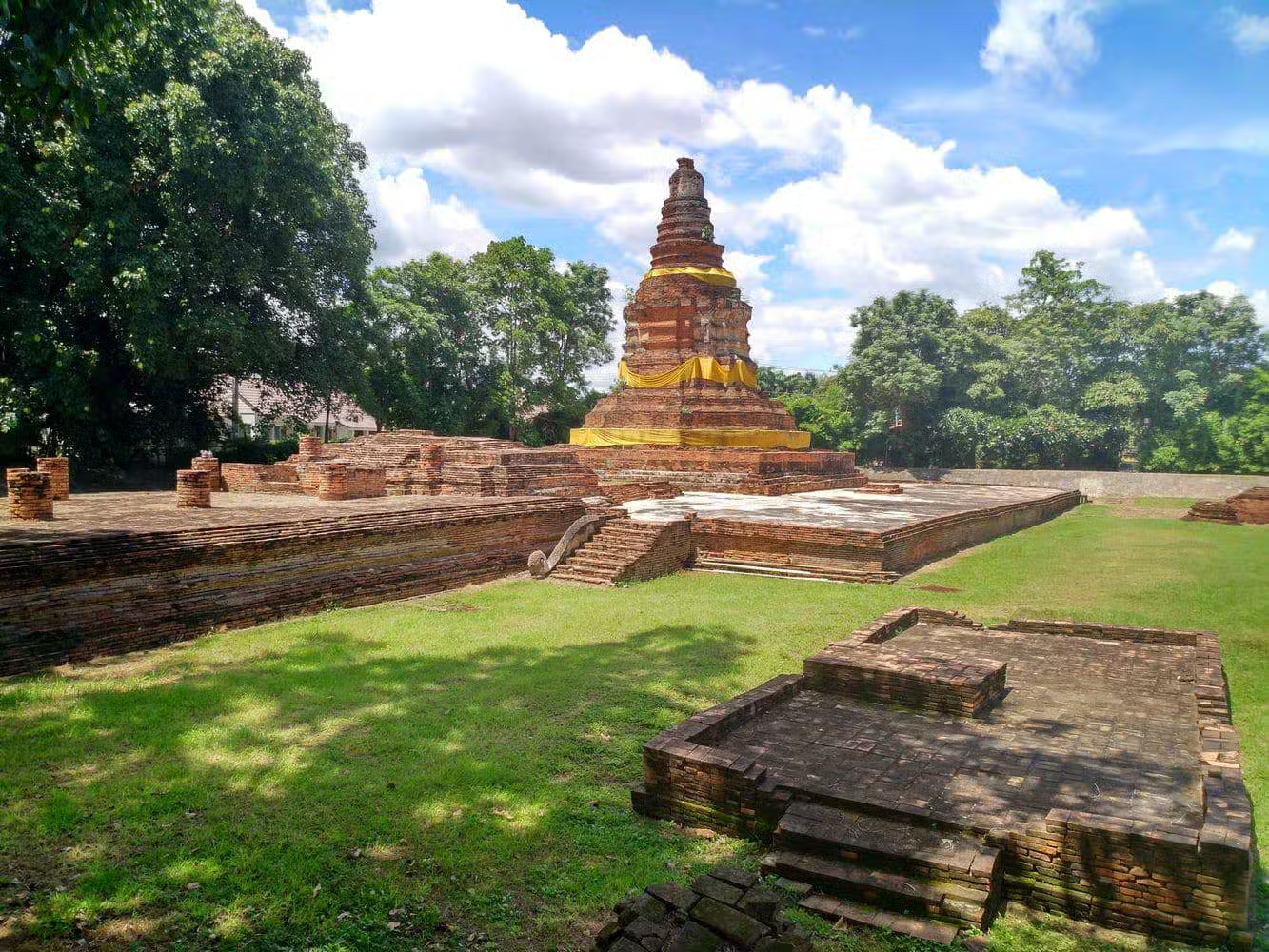
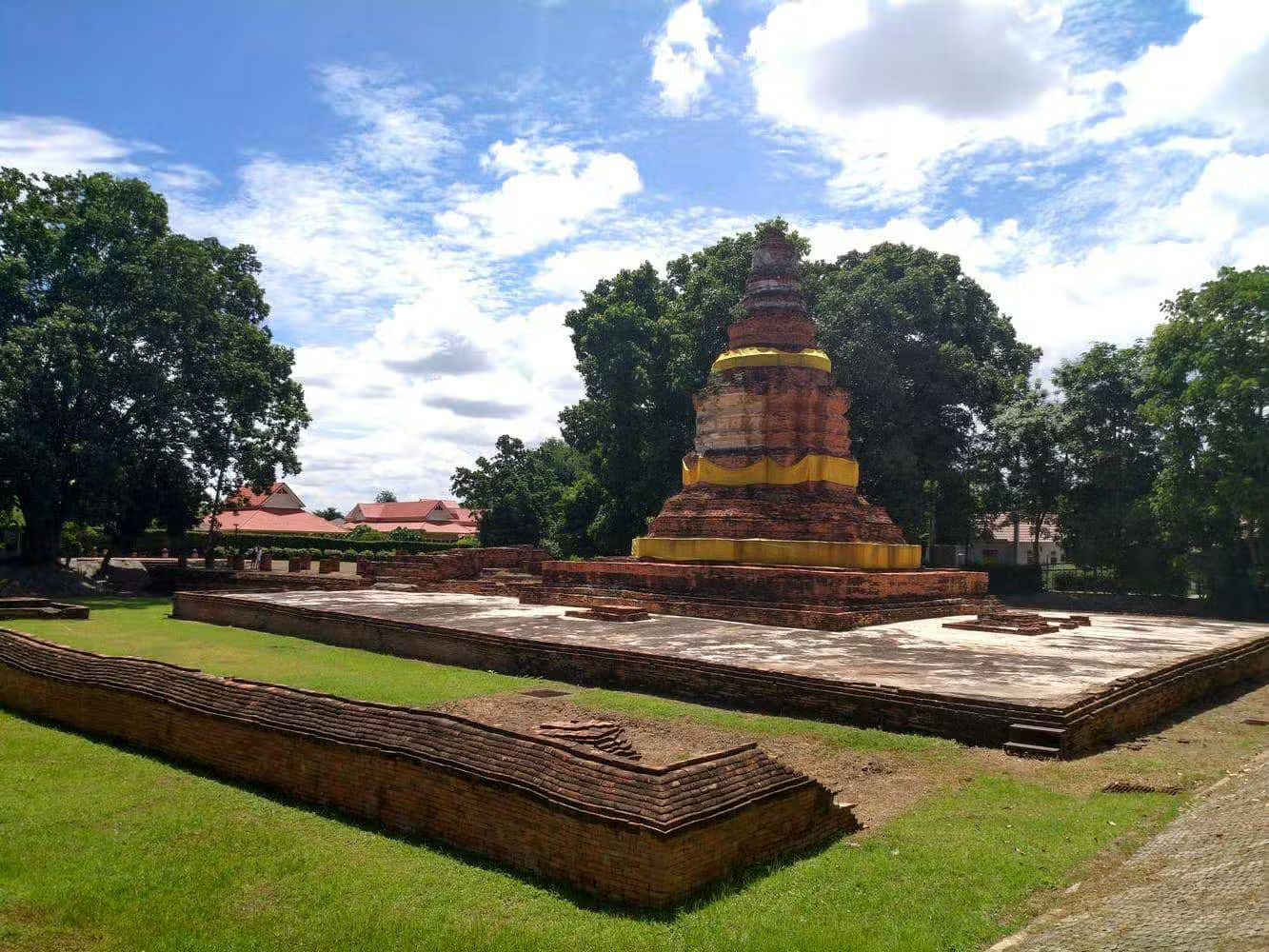
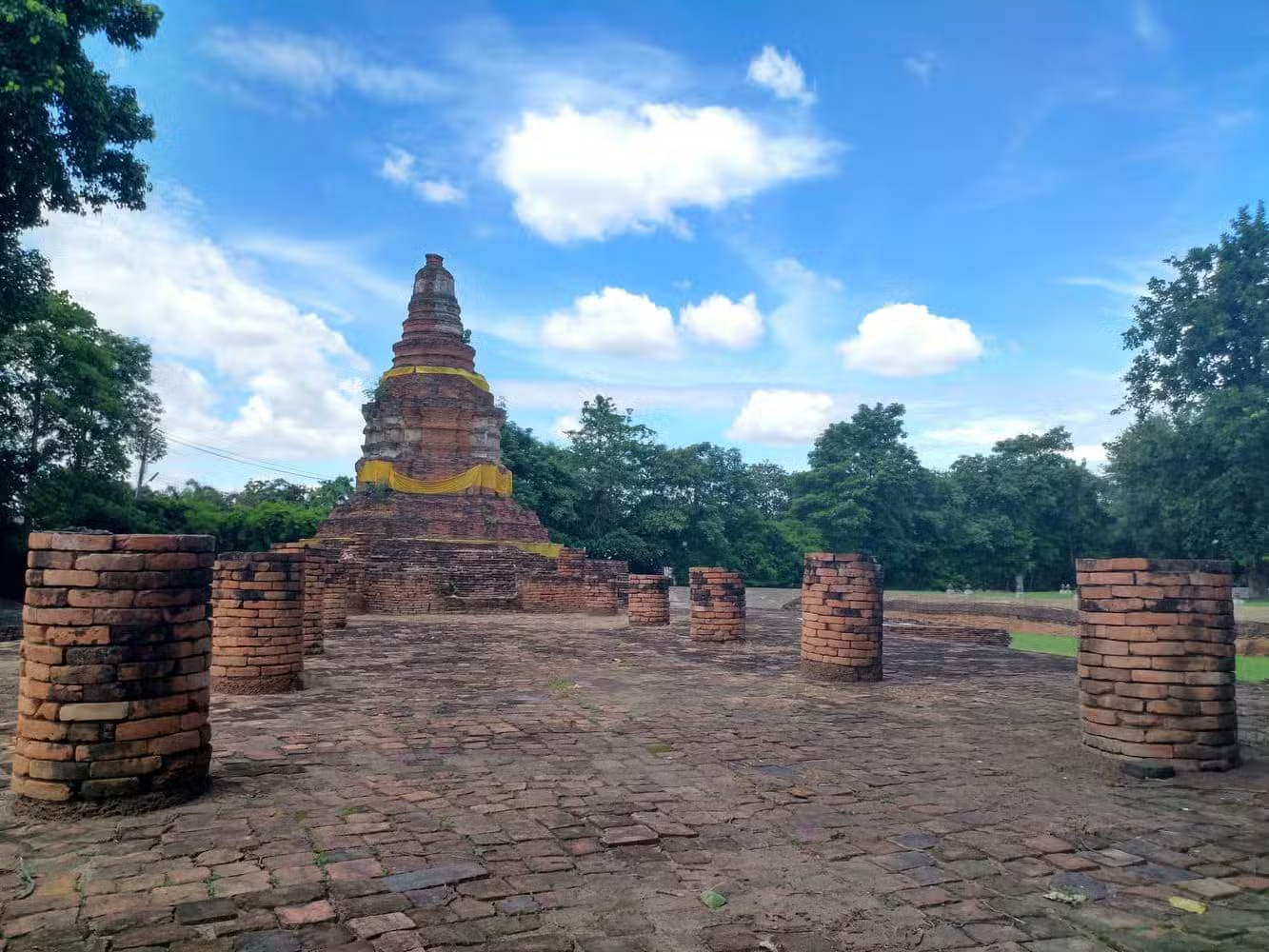
Nearby Wiang Kum Kam sites provide further context through temple foundations and other remains. Choose a few stops that interest you and allow for travel between them; they are spread through a modern inhabited area, rather than contained within a single museum building. Wat Chedi Liam’s standing structure offers a useful contrast to places where the surviving remains are lower and harder to interpret.
Making a respectful visit
Begin with the chedi and courtyard, then enter an open hall only where visitors are permitted. Worship, cleaning or a ceremony may limit interior access. Cover shoulders and knees, remove shoes when required and keep a respectful distance from people praying.
Do not climb the chedi or touch the Buddha images and decorative surfaces. A normal walk around the base provides plenty to look at. If you want a quieter moment to study the architecture, choose a daytime visit and leave extra time rather than depending on a particular event or market taking place.
Getting there and combining nearby sites
Use Wat Chedi Liam in Tha Wang Tan, Saraphi, as your destination when arranging transport from Chiang Mai. The temple is south of the city in the Wiang Kum Kam area. A booked car, tuk-tuk or local driver can help combine it with the scattered historic sites.
General admission is free. Plan to visit in daylight and confirm hall access locally. Around half an hour is a reasonable starting allowance for looking at the chedi, with longer needed for worship, photography or a wider Wiang Kum Kam route.
Bring water and sun protection for moving between sites. If hiring a driver for the area, settle the route, waiting time and return destination before departure. A short temple stop and a broader archaeological outing require different amounts of time.
Wat Chedi Liam FAQs
What makes the chedi unusual?
It has five square tiers with standing Buddha images in repeated niches, rather than a rounded bell-shaped profile. Walking around all four sides helps you appreciate the 60 images and the structure’s symmetrical design.
Where is Wat Chedi Liam?
It is in Tha Wang Tan, Saraphi district, in the Wiang Kum Kam area south of Chiang Mai. Use the full temple name and area when booking transport, particularly if you plan to visit several nearby remains.
Is there an admission charge?
General entry is free. Visit during daylight and respect any restrictions on individual halls, ceremonies or sacred spaces; access to the courtyard does not guarantee every interior will be open.
How old is the temple?
Its foundation is associated with King Mengrai in 1288, before the establishment of Chiang Mai. Later restoration has contributed to what visitors see today, so its history includes both the early foundation and subsequent care.
Can I combine it with Wiang Kum Kam?
Yes. It is a useful standing monument to include among the area’s other temple remains. Arrange a route and transport between sites, since the historic settlement is spread through a present-day neighbourhood.




Do You Have a Question to Ask?