



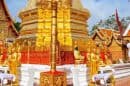
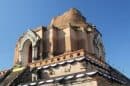
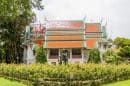

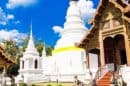
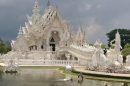









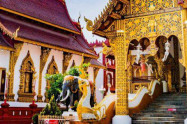

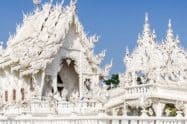








Wat Ket Karam, also written Wat Gate Karam, is a Buddhist temple on Charoen Rat Road on the eastern side of Chiang Mai’s Ping River. Its layered assembly-hall roof, white chedi and connection with the historic Wat Ket community make it an interesting addition to a riverside walk.
The temple offers a different setting from the busy Old City monuments. Here, religious architecture sits among streets shaped by river trade and the families who supported the neighbourhood over generations.
The Chedi and Year of the Dog
The white chedi is an important focus of worship within the compound. Its association with people born in the Year of the Dog helps explain the dog figures visitors notice around the temple.
In northern Thai belief, certain sacred sites are linked with the twelve zodiac years. Wat Ket’s chedi is one of these places, and visitors may see devotees making offerings or paying respects. Give worshippers space rather than treating the statues only as photo props.
Assembly Hall and Riverside Heritage
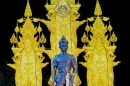
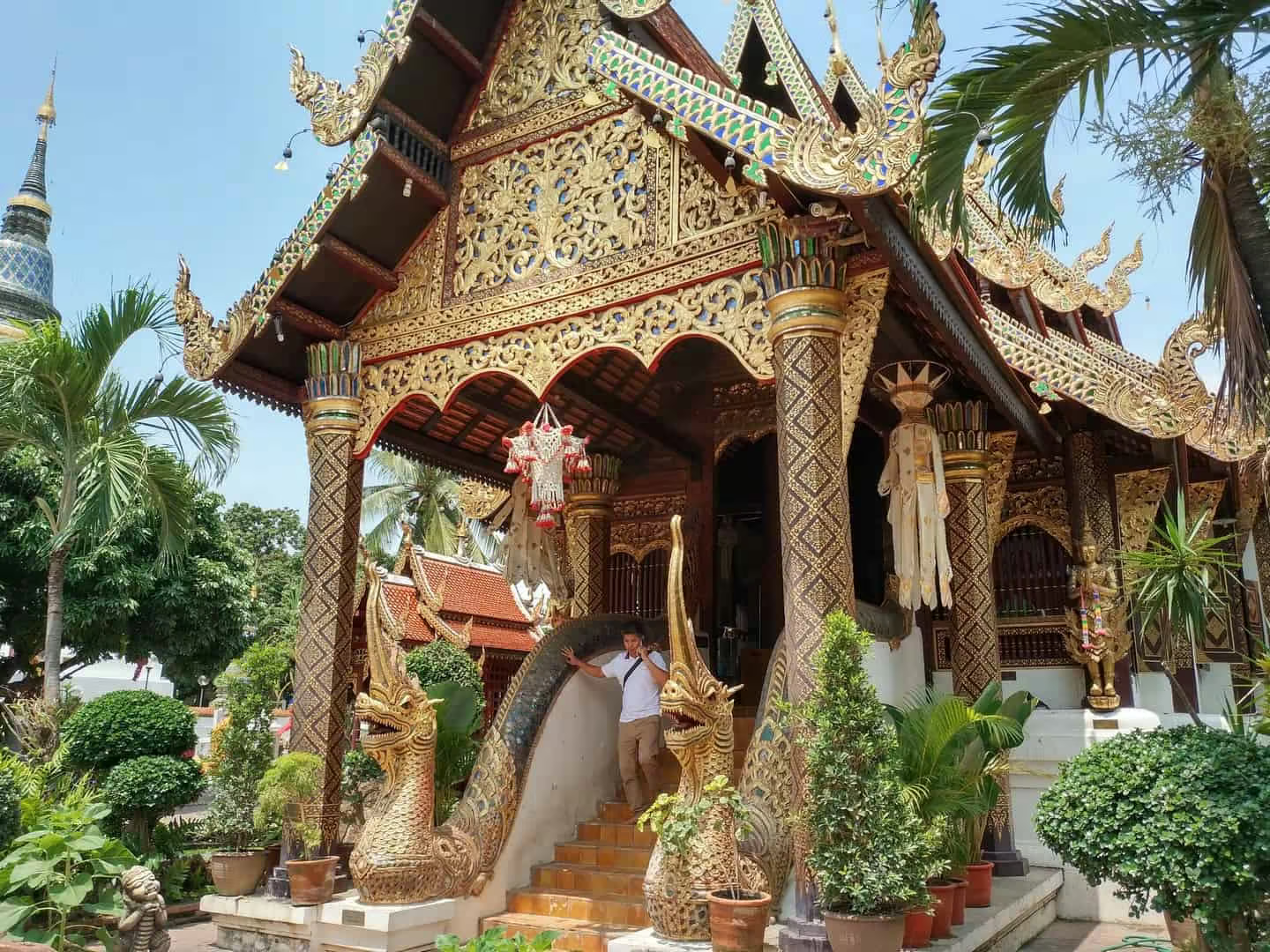
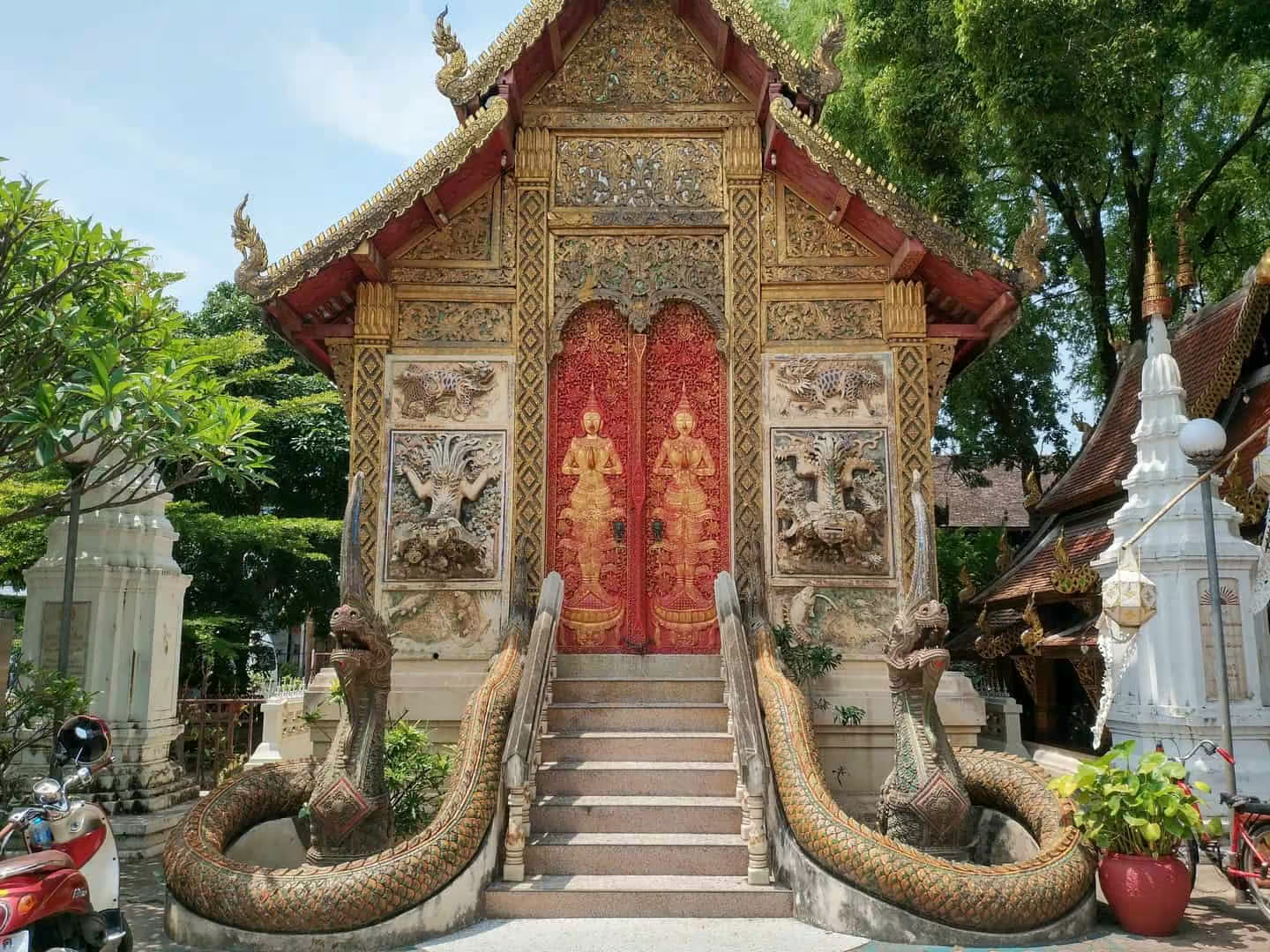
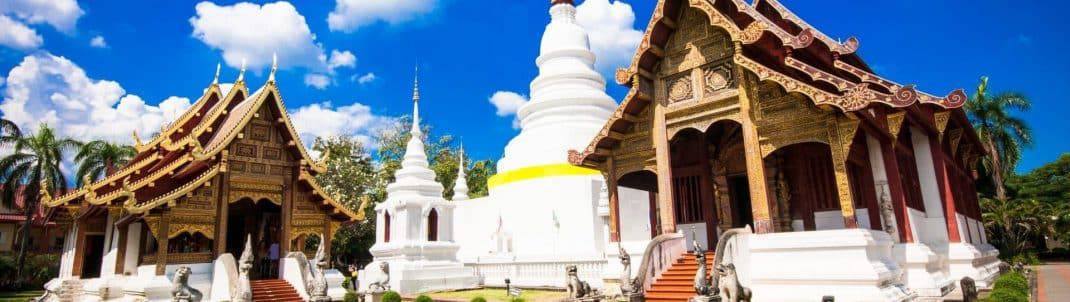
The assembly hall’s elaborate, layered roof is one of the temple’s most recognisable features. Look at the gilded floral work and carved details before entering, then explore the interior quietly when it is available to visitors.
The Wat Ket neighbourhood grew through commerce on the Ping River. Chinese merchants and other residents contributed to the temple’s upkeep, and its decoration reflects the community’s patronage alongside northern Thai Buddhist traditions. A visit becomes more rewarding when you continue along the surrounding streets and notice the older buildings and shopfronts.
The Wat Ket Museum
A community museum within the temple grounds has preserved historic photographs, household objects and other material connected with local life. The photographs are particularly valuable for understanding the riverfront before modern Chiang Mai expanded around it.
Museum access should be checked separately from temple access. The museum has been undergoing restoration, so do not plan on entering its collection simply because the courtyard is open. Ask at the temple about the current arrangements; a visit to the halls and chedi can still be worthwhile without the museum.
Visiting the Temple
Allow about 30 to 45 minutes for the temple, with more time if the museum is accessible or you extend your visit into the neighbourhood. Daylight is the most useful time for architecture and photography. General temple admission is free, with donations welcome.
Wear clothing covering your shoulders and knees, take off shoes at the entrances where required and follow signs around sacred areas. Keep voices low and avoid interrupting ceremonies or photographing people praying without permission.
The compound includes thresholds and steps, so visitors who need a step-free route should ask about access to individual halls. There is no need to enter monks’ residential quarters to appreciate the temple’s architecture.
Getting to Wat Ket Karam
The temple is on Charoen Rat Road in the Wat Ket neighbourhood, on the east bank of the Ping River. It is near the eastern end of the Chansom Memorial footbridge, which links this area with the Warorot Market side of the river.
From the Old City, take a taxi or red songthaew to Wat Ket Karam, or include it in a walk through the riverfront and market district. Make sure your map identifies the temple itself rather than a similarly named museum listing.
Wat Ket Karam FAQs
Is Wat Gate Karam the same temple?
Wat Gate Karam and Wat Ket Karam are English spellings of the same temple. It is the riverside temple on Charoen Rat Road in the Wat Ket neighbourhood.
Why are there dog figures?
The chedi is associated with the Year of the Dog in northern Thai zodiac traditions. Visitors born in that year may come to pay respects and make offerings.
Can I visit the museum?
Check with the temple before planning a museum visit because restoration can affect entry. Access to the temple grounds does not guarantee that the museum collection is open.
How much time should I allow?
Around 30 to 45 minutes suits a look at the temple. Add time for the museum when available, nearby streets or a walk across the river to Warorot Market.
What should I wear?
Cover your shoulders and knees and remove shoes where required. Follow the temple’s signs and give people praying or making offerings plenty of room.








Do You Have a Question to Ask?