



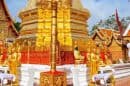
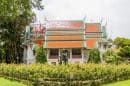

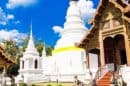


























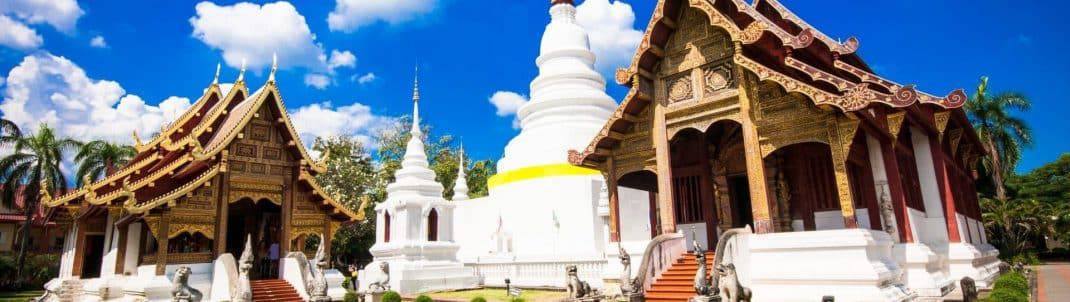
Wat Ou Sai Kham is a small temple on Chang Moi Kao Road, just outside Chiang Mai’s Old City near Tha Phae Gate. Jade Buddha images are its defining feature, accompanied by a decorated prayer hall, a scripture library and a white-and-gold chedi.
The compact grounds suit a short stop while walking through the Chang Moi area. Instead of a large monument itinerary, the visit offers a chance to notice coloured stone, carved detail and the different buildings of a working neighbourhood temple.
Jade images and the prayer hall
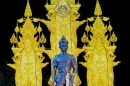
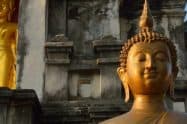
The jade Buddha images show variations in colour, with green, grey and other shades creating a different appearance from the gilded figures familiar in many Chiang Mai temples. Look closely at the stone where access allows, but treat the images as objects of worship: viewing them does not imply permission to touch or handle them.
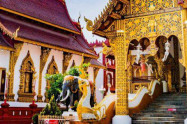
The viharn, or prayer hall, combines its Buddha images with decorative doors, gilded ornament and painted stories. Murals in the dimmer interior reward a slower look after the bright courtyard. Keep clear of anyone praying, remove shoes where indicated and follow any photography restrictions.
The library, chedi and smaller details
The Ho Trai, or scripture library, is a timber building associated with preserving Buddhist texts. Its exterior adds another architectural element to the small compound; it is not necessarily an open public reading room. The old pulpit is another feature to look for where the relevant hall is accessible.
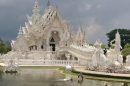
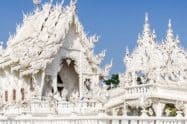
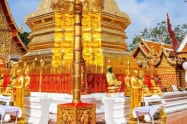
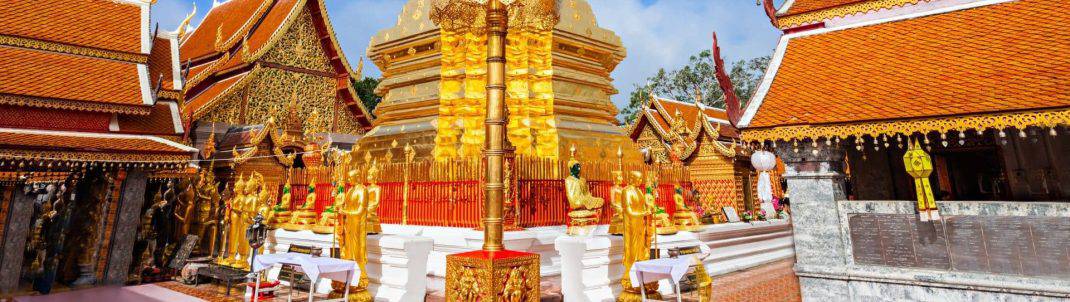
The chedi has a white lower structure and a gilded upper part, with smaller decorative elements around its base. White chinthe guardians at the entrance and Dhamma wheels along the enclosure offer details to notice as you enter or leave. An image of Phra Mae Thorani, the earth goddess, connects with Buddhist stories of the defeat of Mara through water wrung from her hair.
History and visiting arrangements
The name is often translated as Temple of Golden Sands. The site’s early foundation is uncertain, while its rebuilding is commonly associated with 1841 after a period of abandonment. Local history also describes an earlier chedi enclosed within the larger structure; the visible temple should not be assumed to have been built all at once.
Admission is generally free. Visit during daylight and follow the access available at each building. Allow around 20 to 40 minutes for a short look, taking longer if the hall is open and you enjoy architectural detail.
Dress with shoulders and knees covered and speak quietly around worshippers. The small size does not establish that every approach is step-free, so ask about the hall you wish to enter if steps are difficult for you.
Walking from Tha Phae Gate
The temple is on Chang Moi Kao Road in Chang Moi, a short walk north and east of Tha Phae Gate outside the moat. Look for the temple entrance on the side street rather than expecting it to face the gate square. A taxi or songthaew can also bring you to the Chang Moi area.
Combine the stop with the neighbourhood’s shops and cafés or other nearby temples, allowing for traffic at street crossings. The jade images are a useful reason to choose this particular temple if your time only permits a few smaller visits around the Old City.
Wat Ou Sai Kham FAQs
What is Wat Ou Sai Kham known for?
Its jade Buddha images distinguish it from many nearby temples. The decorated prayer hall, timber scripture library and chedi add architectural interest to a compact visit.
Where is the temple?
It is on Chang Moi Kao Road outside the Old City, near Tha Phae Gate. Approach through the side street rather than looking for an entrance directly on the gate square.
Is there an admission charge?
General entry is usually free. Respect any arrangements for donations or access posted within the compound, and remember that a hall may be closed even when the grounds are open.
When should you visit?
Visit during daylight, with the morning a useful choice for a quieter architectural stop. Ceremonies and temple activities can affect access to interiors.
How long should you allow?
Around 20 to 40 minutes is a useful starting point for the grounds and an open hall. Spend longer if you want to examine the images and decorative detail without rushing.




Do You Have a Question to Ask?